“I’ve seen more famous works of art in the last 24 hours than I have in my entire life” – Ian
It was a bit of a late start but that gave the sun time to break through the clouds as we set off on the RER train to Versailles for a full day of exploring this famous former palace. The entrance was dramatic with the profusion of gold ornamentation sparkling in the sun.
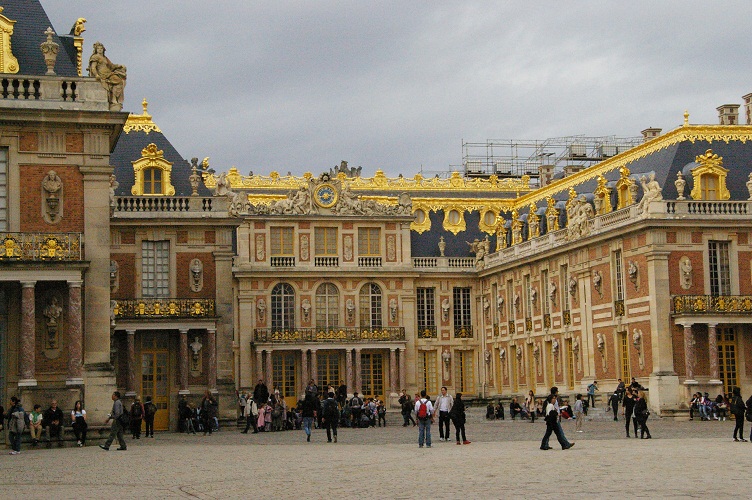
Palace of Versailles
Most people start with a tour of the main building, then move into the gardens and maybe to the Grand and Petit Trianons. We decided to reverse it and avoid the worst of the crowds. Our first thought on viewing the immense landscaped estate was “what a great place for a sprintO”. By the time we’d walked for several kilometres we were thinking you could run an entire Easter carnival in the bounds of the park. We had no idea the Trianons were so far away. But it was a lovely walk, viewing the myriad fountains (unfortunately not operating on weekdays), classical statues, and 800 hectares of formal gardens.
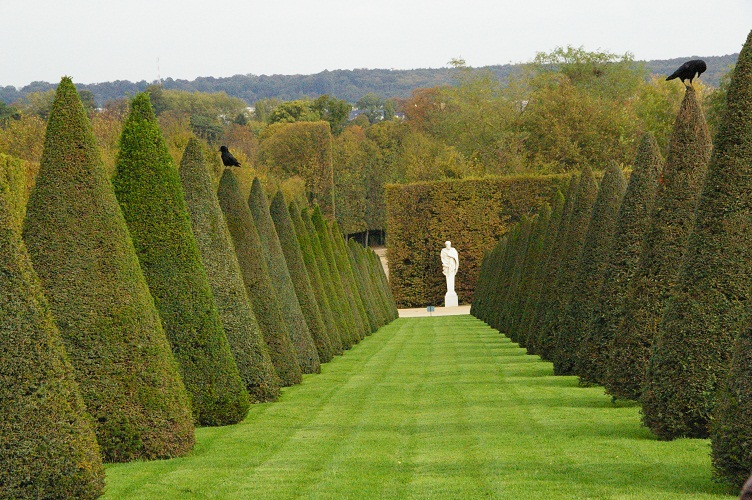
Great places to hide controls
The Trianons were less formal residences used when the King wanted to escape the bustle of life at the palace or hang out with a mistress; after finding out how public their lives were, I don’t blame them. Even their daily 10pm supper was observed keenly by any courtiers who cared to sit in – the paparazzi of the day. The Grand Trianon is rose coloured thanks to the pink marble attached to the sandstone, and features a beautiful colonnade between the two wings.
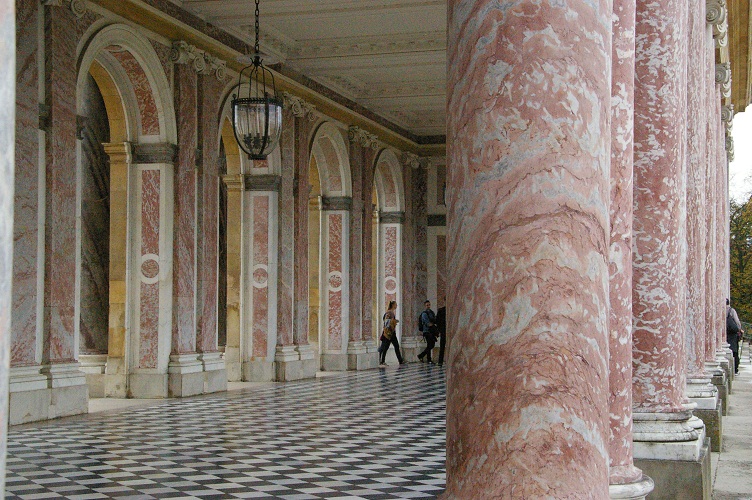
Grand Trianon’s marble columns
The 50 fountains with their 620 jets of water once used more water than the whole city of Paris. A massive machine pumped the water to a tank above the palace, then gravitational hydraulics did the rest. Even now with electric power and recycled water, the fountains are unsustainable, hence the restricted operation.
Our final stop after a long climb uphill was the Palace itself. We followed an audio guide through the royal apartments and into the spectacular Hall of Mirrors. Extravagant opulence is an understatement; it’s no wonder there was a Revolution with such an extreme display of wealth and indulgence, which must have been a stark contrast to the poverty of many Parisians. Fortunately post=Revolution the Palace was preserved, although the furniture and works of art were removed. Versailles is now a listed World Heritage site and is certainly very impressive.

Hall of Mirrors
On our way home we paid a visit to the Musee D’Orsay, a beautifully renovated former railway station which makes a perfect exhibition space for Impressionist and Post-Impressionist art. Monet, Renoir, Degas, Pissaro, Cezanne, Gaugin, Van Gogh, Rodin … there are so many famous works here. The view out of the windows from the 5th floor is lovely, Sacre Coeur just visible in the distance through misty rain. A short walk across one of the Seine’s many bridges finished the evening.
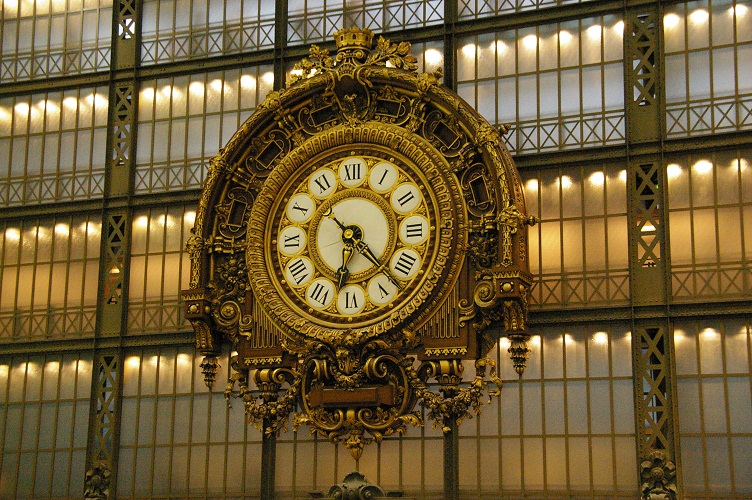
Musee d”Orsay
We have some resident cockroaches, small ones which don’t bother us too much. Ian has taken to naming them before despatching them – “Jean Claude est mort!” he announces. At least they get a dignified sendoff.
Debbie
 dipidydoo