An eagerly awaited rest day saw us lazing around until late morning. Our plan was to drive north to Nuremberg. The itinerary suggested a visit to the Nazi Party Rally Grounds, followed by a walk around the Old Town. But our midday departure put paid to the second half of the day’s plans. We decided that we should see something of the other side of Germany, which is not just a series of pretty Bavarian villages and churches.
We parked the car next to a massive concrete edifice, which was the Kongresshalle, or Congress Hall, built as part of Hitler’s grandiose plans to create a power base for his Nazi Party in Nuremberg. Most of the venues never saw the light of day. The Kongresshalle was only half built; it should have been 30 metres higher, with a roof. Despite this, it remains the largest still existing Nazi construction, and was definitely designed with size and power in mind, rather than beauty. It was meant to rival the Coliseum, no doubt to further Hitler’s image as an Imperial figure.
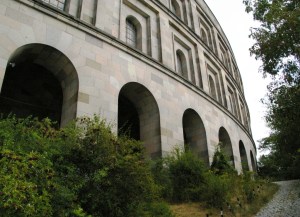
Kongresshalle exterior. Size matters
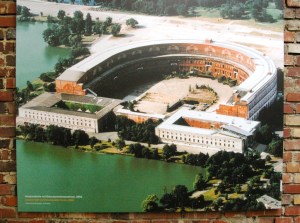
Photo showing the intended design
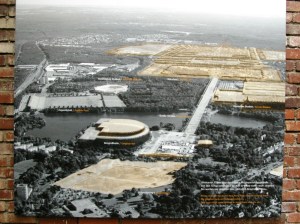
Photo showing the areas that Hitler planned for his megalomaniac plan for Nuremberg
A glass walkway now cuts through the brick interior like a spear, leading to an exhibition which explains Hitler’s cult-like rise to power, the construction and use of the Rally Grounds, and the famous Nuremberg trials. After doing a lap of the exterior, we went inside and spent a couple of informative hours looking at the displays. At the end, you can stand on an open viewing platform looking down into the interior.
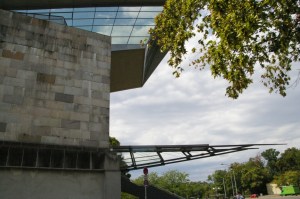
Spear-like walkway through the KongressHalle
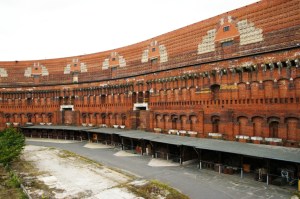
Inside. The walls were to have been 30 metres higher
The nearby Zeppelinfeld is the only structure of the whole concept that was finished and utilised. It’s the place where you see all those Nazi propaganda films, with tens of thousands of people saluting giant Swastika banners, as Hitler overlooks everything from his pulpit on the grandstand. It was purpose built to stage these massive rallies from the late 1920s, which were choreographed to a “T” with nothing left to chance. The giant rooftop Swastikas were famously blown to smithereens by the Americans, but the grandstand and steps remain. These days the venue is used for rock concerts and festivals, but it is not hard to imagine the scenes from the 1930s as you stand at the top of the grandstand and survey the vast field below.
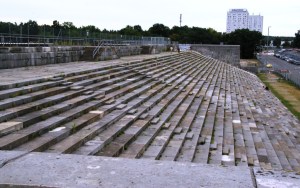
Zeppelinfeld grandstand steps
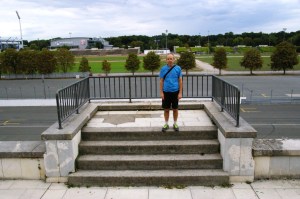
Imagine thousands of chanting, saluting Hitler fanatics on the field behind Ian. Terrifying.
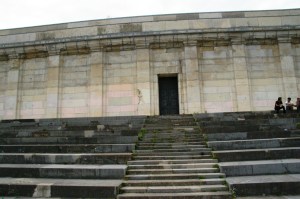
Hitler would have emerged from this doorway, down the stairs and onto his podium
Dissecting everything is the Grand Road, which was to lead to the Marching Grounds. To the west, the German Stadium was meant to hold 400,000 people. It’s now a lake.
It’s hard to tell how all this sits with the locals, and preserving the site remains controversial. But like other places we’ve seen in Germany, they don’t deny or attempt to hide their recent history; instead they make sure that they, and their kids, learn from it and never repeat it. As the graffiti on the wall of the Zeppelinfeld grandstand says “Nie Wieder” (Never Again).
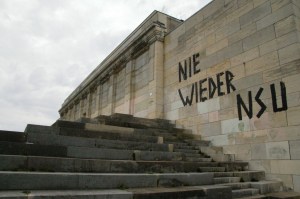
Never again
 dipidydoo