I blame Michael Portillo. The man has spent years traversing Britain by train, hunting out the quirky and obscure on our behalf. Our second “Portillo” was a visit to Barters Bookshop, in the old Alnwick railway station. One of the walls has a list of all the Alnwick railway workers, and there are several Dodds amongst them. We decided to team this up with a stop at Woodhorn Museum, a little further down the coast, and finish the day with a local orienteering event and pub dinner at Seaton Sluice.
How can you not love a bookshop where model trains clickety-clack their way around tracks installed above the well stocked shelves; where quotable quotes give you pause for thought as you browse the thousands of pre-loved books; where 1960s Ordnance Survey maps are lovingly stored in a large wooden map cabinet; where the smell of bacon and eggs wafts from the buffet; where you can curl up with a book or three beside the fireplace.
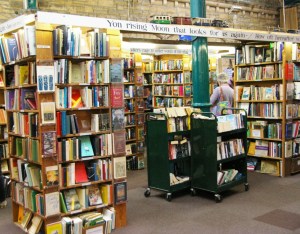
I fell in love as soon as I walked in
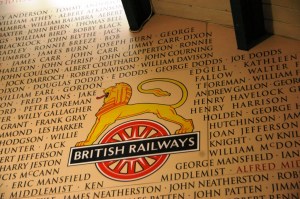
Alnwick Railway workers included Dodds
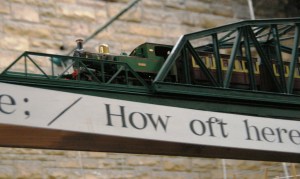
Tracks above the shelves
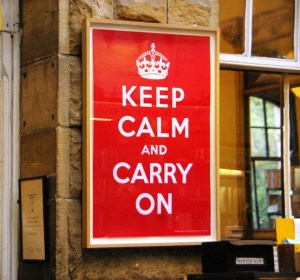
My motto
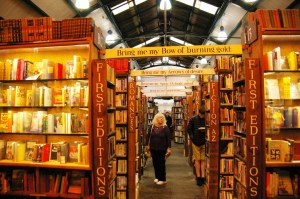
A bit of Blake amongst the First Editions
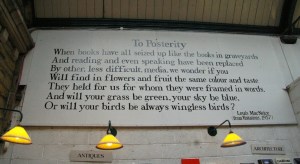
Posterity. Take that, Twitter
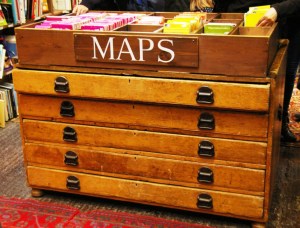
I want one
Apparently half of England loves this shop – it was packed with bibliophiles, along with their kids and dogs (every second person in the UK seems to own a black lab which accompanies them everywhere and is wilfully but charmingly disobedient).
I found a couple of paperbacks that will make good reading, and a 1964 Ordnance Survey 1 inch scale map of Hexham, which shows Toft Hall, Kirkheaton, Elsdon, Otterburn and Monkridge Hall, as well as many of the other places we’ve visited this week. The 55 year time gap has probably not changed the accuracy too much. As for the décor – we are already planning how to reconfigure our bookshelves.
Meanwhile outside, chaos had unfolded in the carpark. So many people were arriving, that gridlock had been created in the woefully inadequate parking area. This called for decisive action, so I leapt out of the car, marched down to the entrance, and directed traffic until things had cleared (or until we were able to make our escape – who knows or cares what happened after that).
Our plan was to have lunch and a quick look at nearby Alnwick Gardens before moving on. Expecting a pleasant stroll through a public garden, instead we were confronted with a three pound parking fee, a sea of cars, and a theme park. Harry Potter and Downton Abbey have both been filmed at Alnwick Castle, and the owners have cashed in big time, by charging outrageous admission fees to the eager masses looking for school holiday entertainment. We took advantage of the free toilets, eschewed the 13 pounds per person to look at the garden, and retreated to the car to eat lunch. I’m sure the gardens are lovely, but they would have cost us over $50 – and there is nothing historical or authentic about them these days.
So it was on to Woodhorn Museum, at Ashington. Our purpose was two-fold. No visit to northern England is complete without seeing something of its coal mining history. Coming from Cornish mining stock, I love looking at old mining stuff. And being the home of the Northumbrian Archives, Ian saw a chance to do a bit of further research on the Dodds.
Woodhorn was one of 70 collieries in Northumberland – there are none left now. Fortunately it was turned into a museum, as there are virtually no traces of the others. Woodhorn had two shafts, and I was able to see the winding mechanism which lowered the cages carrying 22 men at a time, 888 feet underground. There was a very good display called “Coal Town”, which traced the social history of the mine and town right through the late 19th and 20th centuries. Colliery towns were strong communities who supported each other like family through good times and bad. It was incredibly hard work, dirty and dangerous; and the women worked just as hard. But generations of the same family worked down the mines, and it was the community spirit that kept them doing it.
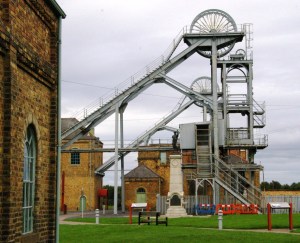
Woodhorn Colliery Museum
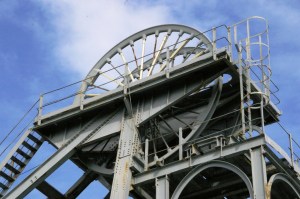
Winding head
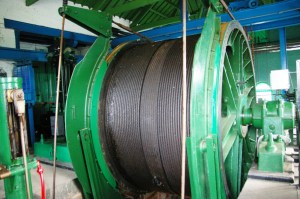
Winder, which lowered the miners 888 feet
The colliery bands are famous, as are the colourful banners that they marched under at picnics and other social occasions, and rallied under when politics reared its ugly head. But at Ashington, a group of miners discovered a love of art, and they started painting scenes from their daily lives. Self taught, they copied the style of artists they saw in galleries, before gradually developing their own. The museum features a display of these Pitmen Painters; the paintings are very evocative and tell the stories of the workers and their families. It was the Thatcher era mining strike of the 1980s that broke the mining unions and caused the closure of the coal mines, and the end of a way of life.
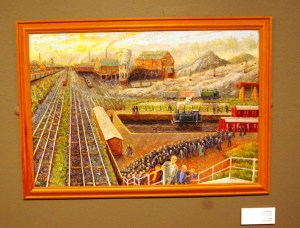
Pitmen Painters
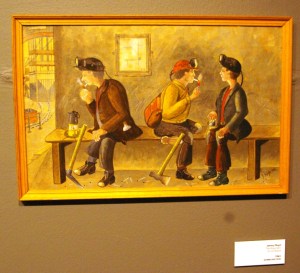
Everyday life depicted
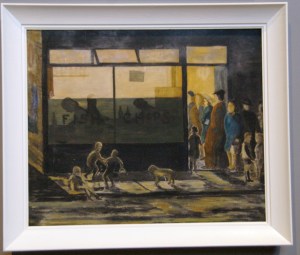
This artist understood light
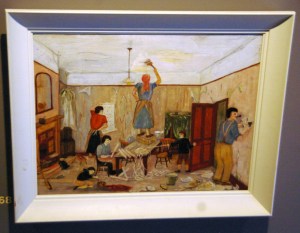
Getting the house ready for Christmas
Meanwhile, Ian was having his own “Who Do You Think You Are” moment – with the help of a researcher, he was able to see some records which confirmed that Elsdon’s St Cuthberts was indeed the family church, with the marriage of Thomas Dodd to Frances Coxon taking place there in 1790. The Dodds also lived and worked at Monkridge Hall for longer than he thought, and at another farm, Troughend, in the 1840s. Unfortunately the church records are incomplete, but it was great to be able to confirm this fact, which definitely put them in this area. Barters Books had a Northumberland history book which placed the Dodds here from the 1100s, explaining the origin of the name and connecting it to a monk called Eilal from that time.
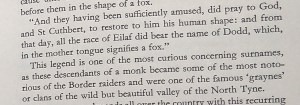
Dodd origins
It seems highly unlikely that the reiver Dodds of the Redesdale district were not the ancestors of the 18th century farm labouring family of Elsdon. They had not travelled more than 50 miles from home, until George decided to sail to Australia. Dodd is still a very common name round here; much more so than in Melbourne.
We made our way down the coast via Newbiggin-by-the-Sea, where we paused to look at wind turbines out in the North Sea; then onwards through Blythe to Seaton Sluice.
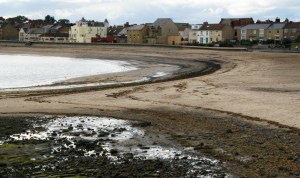
Proof that Britain has sand
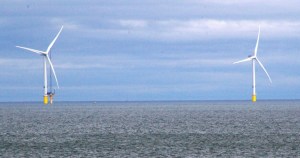
North Sea
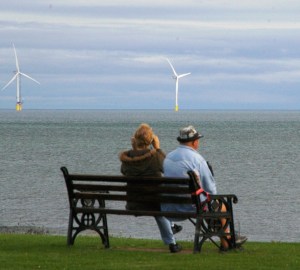
“Sometimes I sits and thinks; sometimes I just sits”
The Newcastle orienteers were gathering in a small church car park ready for a 6pm start, and wondering who had the keys to the loo. We’d already reserved a table for 7.15 at the Kings Arms, so we changed into our DROC tops, and lined up for our starts. It was all very familiar. In exchange for our entry fee we were given cardboard control cards, and told to take a pen and write the code from the control plates as we went. It was colour maps and line courses, but not very complicated. My course was really just a run around the town, with not a lot of route choice, but a chance to see the sluice and the seaside. Ian’s was a bit more interesting. My ankle was not too happy, after yesterday’s walk. I was quite relieved to finish after 48 minutes, which somewhat surprisingly put me into 4th place, and not far off third. Ian’s 38 minutes had him in second, a bit over a minute away from winning. It was nice not to be last in an overseas event!
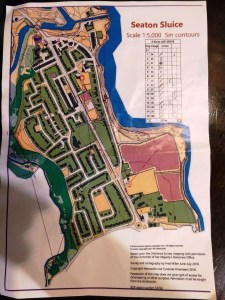
Ian’s course at Seaton Sluice
Unfortunately we didn’t have time to chat afterwards, so we bid farewell to the club members, and headed to dinner. They had a separate GF menu, so Ian opted for crispy chicken stir fry and rice, while I chose a lamb casserole with a suet and leek dumpling. Ian’s dessert was called a “King’s Mess” and it had sugar upon sugar upon sugar. Apparently there were berries in there somewhere, which no doubt soaked up the calories. I chose a raspberry cheesecake, which was accompanied by “Jammie Dodger” icecream. Jammie Dodgers are jam biscuits, and they had been crushed up into vanilla ice-cream. Delicious. Why don’t we have these back home??? I could go native very easily.
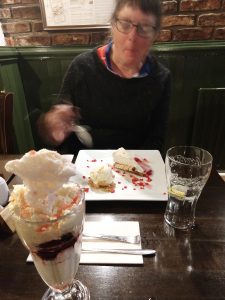
Ian’s Kings Mess and my Jammie Dodger ice cream and cheesecake
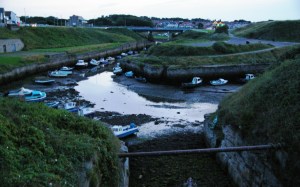
Saeaton Sluice, low tide
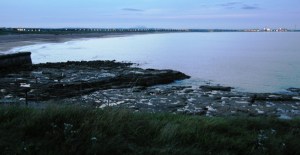
Whitley Bay at 9pm
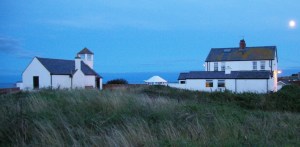
Seaton Sluice coastal cottages
 dipidydoo