Our last port in Iceland was Reykjavik, and it was a busy day. We were booked on a small bus tour of the famous Golden Circle, which covers the most spectacular sights in the south west. With at least four cruise ships in port, it was crowded everywhere, which is one of the unavoidable downsides of cruising – everyone wants to see the same things at the same time. It would be nice to be able to do things at your own pace; having said that, the tours we did were both very good and comprehensive, and lasted at least an hour longer than advertised.
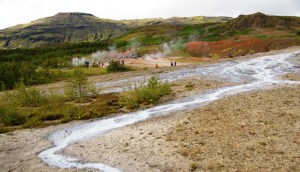
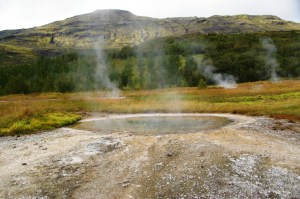
As we drove east from Reykjavik, our guide explained that there was geothermal activity everywhere, and we could see multiple plumes of steam rising from the hillsides. Geothermal energy is used to heat most of the homes in the country, and allows every town to have at least one warm, year-round swimming pool.
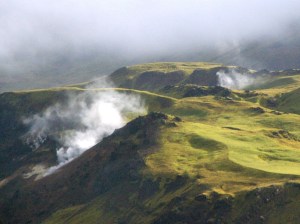
Natural steam vents
Iceland experiences about 30 earthquakes a day, most of them too small to be felt; every so often there is a larger one. We called in at the small town of Hveragerdi, where a 2008 earthquake measured 6.3. Houses and roads were severely damaged, but luckily there were no serious injuries or fatalities. A small shopping centre houses a display about the earthquake. It also has a glass floor where you can stand on either side of the North America-Europe continental rift. Would you build a shopping centre on the edge of two tectonic plates? Me neither. It left us wondering about building insurance here.
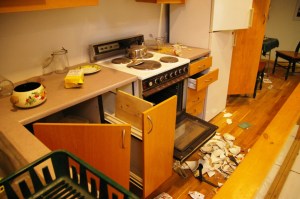
Result of an earthquake
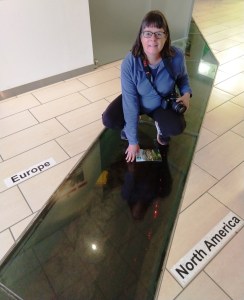
Caught between two continents
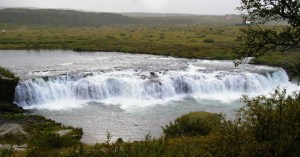
Continuing on through a holiday region where vacation houses, restaurants and hotels mingle with boulder-strewn lava fields, we visited the very pretty Faxi waterfall, where salmon can be found. This was the first time we’d needed our rain jackets on this trip. Reykjavik was putting on quite a show weather-wise, with storm clouds and rain one minute, and bursts of sun the next.
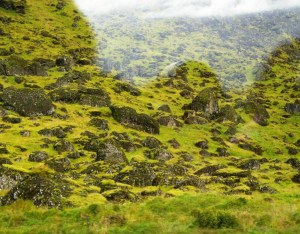
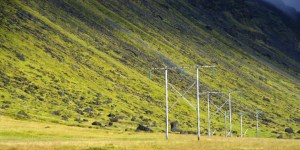

Faxi waterfall

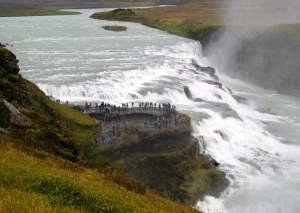
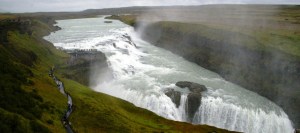
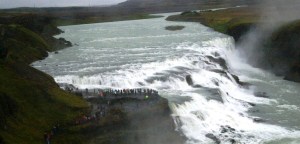
Faxi was just a warmup for one of the main attractions – the spectacular Gullfoss waterfall. This giant torrent is a double waterfall, where the river first drops 11 metres, then a further 20 metres into the gorge, which is 2.5 km in length. Although the rain had now cleared, we needed the rain jackets for the spray! The power of the water going over was immense. We took full advantage of the lower and upper viewing areas, but it was hard to take photos to do it justice. Iceland has thankfully not gone the way of Niagara Falls by over-commercialising its natural attractions; usually there is just a simple dirt or gravel trail, with some steps and boardwalk, and a rock-based viewing platform or two. Any buildings are well set back from the viewing areas.
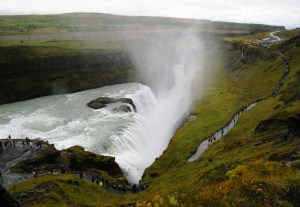
Dramatic Gullfoss
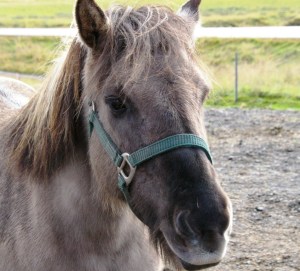
 We met some Icelandic ponies, who were happy to see us, and obviously very used to attention (and food) from tourists. Our guide told us they are very good tempered and make excellent ponies for kids. Hence they are in high demand. If an Icelandic pony is exported, it is never allowed to return, to maintain the purity of the breed.
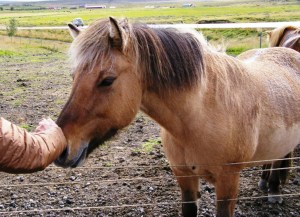
Feed us … we’re cute!
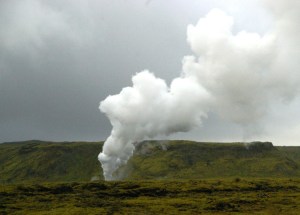
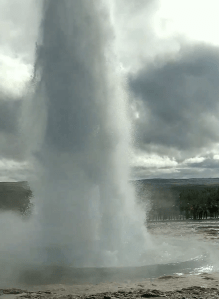
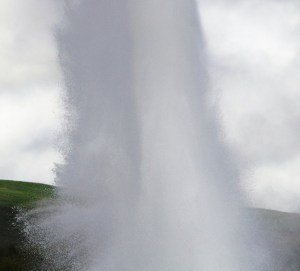
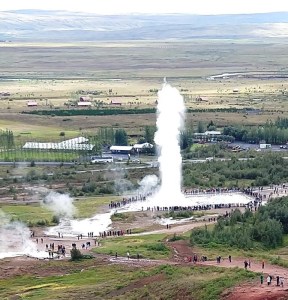
The next major stop was Geysir, which as the name suggests, is a thermal area, with a highly active geyser called Strokkur, although the original geyser a short distance away is now inactive. Strokkur is very stunning to watch, but a nightmare to photograph. It erupts every 6 or 7 minutes, forming an amazing iridescent blue metre-high dome before shooting water and steam high into the air. All of this happens very quickly, and with no warning. It’s quite a challenge, and rather entertaining watching everyone else also trying to get the perfect photo. We came close, but never quite captured the dome properly. Ian went high up on a nearby ridge and managed to film it. Luckily the enormous tourist shop is across the road and doesn’t impinge on the views. And it has free toilets (so far we are yet to pay to use a loo on this trip, which is a noteworthy achievement).
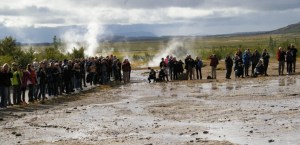
Waiting …
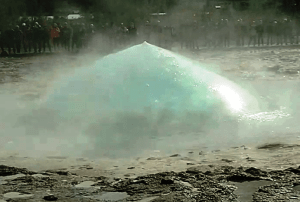
The magic blue dome forms

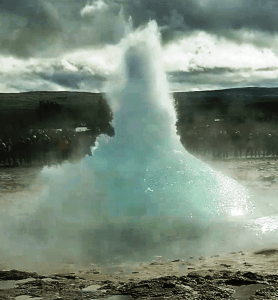
Thar she blows!
Pingvellir (also called Thingvellir) National Park is a UNESCO world heritage site, and also the location of Iceland’s first Parliament, in 930 AD. Until 1271, when Norway took over, every important decision affecting the country was debated here, including the acceptance of Christianity as the main religion. A national flag marks the spot, which apparently was chosen because it formed a natural auditorium and allowed speakers to be heard clearly. The Parliament regained its powers in 1843, but was re-established in Reykjavik.
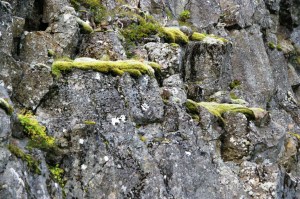
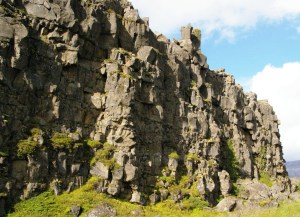
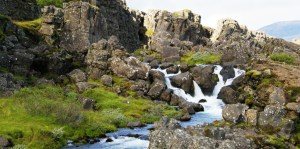
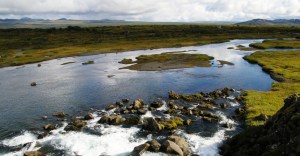
The park is also famous for the Reykjanes Ridge, where the Eurasian and North American tectonic plates meet. They are moving apart at a rate of 1 mm per year. As you follow the path under towering lava cliffs with their twisted shapes and moss-covered pillars, it’s easy to imagine you are in a world of elves, trolls and Vikings. The views over the nearby lakes, with their small volcanic crater islands, are beautiful. It would be a lovely place to explore more thoroughly, but as always, time was limited.
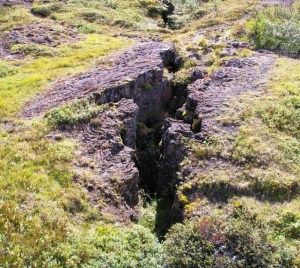
Europe (left) and North America (right)
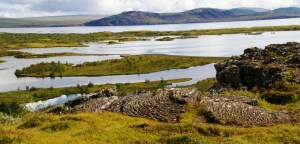
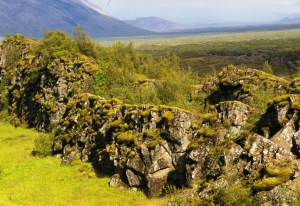

Elves live here
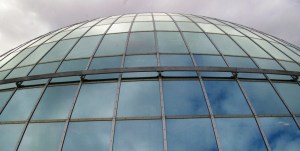
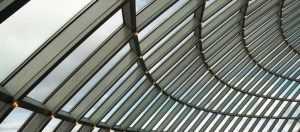
We arrived back in the city late in the afternoon, with our guide offering to give us a quick look at the main sights. We called in at Perlan (“Pearl”), where a striking domed glass roof has been constructed over the city’s water storage tanks, enclosing a revolving restaurant with panoramic views.


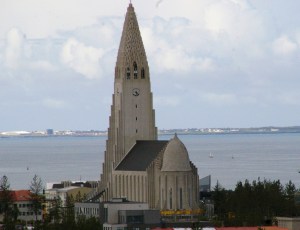
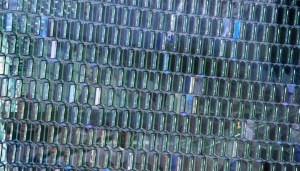
Then we paused at the Hallgrimskirka, whose basalt columns and spire dominate the skyline. The town hall sits partly suspended in the lagoon in the old town, and the new concert hall, Harpa, with its coloured cubes, is a piece of modern architecture on the water’s edge. Our guide also pointed out the Sun Voyager sculpture which looks across to the mountains opposite, and the house where Gorbachev and Reagan held their initial peace talks back in 1986.
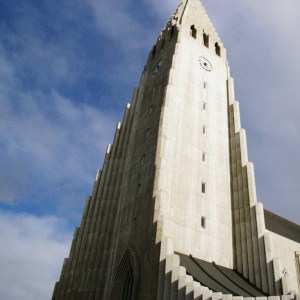
Hallgrimskjirka
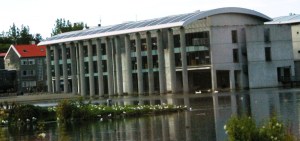
Floating town hall
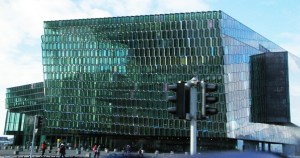
Harpa Hall
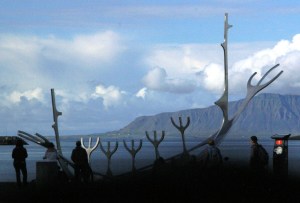
Sun Voyager
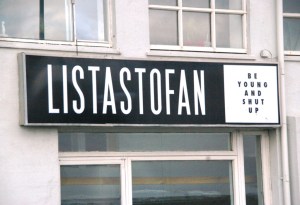
Reykjavikian humour (or maybe they mean it?)
On our return to the ship, we spotted nesting puffins! Ok they were inanimate and fluffy, but they are the only puffins we will get to see on this trip. Had we known, we could have brought stuffed lyrebirds to adorn our cabin window.
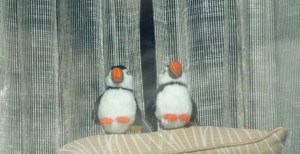
Cruising puffins. At least we saw real orcas
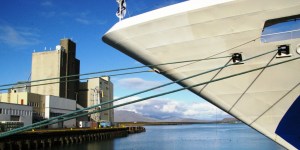
By now the sun was out, the skies were blue and there was no wind. The ship’s hot tub looked inviting so we took a pre-dinner dip, and pretended we were in the Blue Lagoon (regrettably there was not much similarity, but it was nice). Afterwards we were entertained by an Icelandic singer who had competed in Eurovision. We were suitably star struck. She had a very good voice and was quite entertaining, so we enjoyed her show, which included some Icelandic songs as well as songs we knew. Then it was time for our late night sailaway, so we watched the twinkling lights of Reykjavik gradually disappear into the distance as we headed for our next port, Oban in Scotland.
We feel that we’ve had a short but reasonable sample of Iceland, and have really enjoyed it. We may never make it back here due to the distance, but I would be happy to return if the opportunity arose one day (though probably not in winter!) The natural colours, shapes and textures in the landscape will remain with me. The contrast of dark lava and soft gold-green moss casts a unique light on the hillsides. The power of water is evident everywhere – in the rising clouds of steam, the bubbling hot springs, the glacial rivers and waterfalls, and the stunning fjords.
Stockholm Syndrome
Two days on the North Sea. Grey sky, grey sea. Wake up. Eat. Trivia. Eat. Trivia. Eat. Go to sleep. Repeat.
This morning, Ian went to craft class and made a Venetian mask. This afternoon, he joined the line dancing class.
Send help.
 dipidydoo