We were up and about by 6am to take advantage of having mobile data again, which meant we could catch up on the blog and email, and get them out of the way before sightseeing. Back when I was researching our ports, I didn’t find much of interest in Oban itself, so we hatched a plan to take the West Highland Rail train service to Tyndrum and back. We didn’t get ashore until after the morning train had departed. The next one didn’t leave until after midday. At a cost of 17 pounds each, and with heavy skies and rain forecast, we decided to save our money, as the scenic views we’d been hoping for were unlikely to materialise.
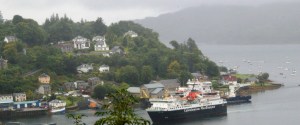
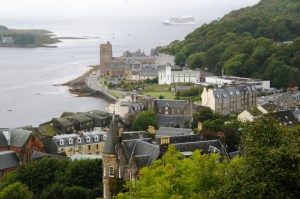
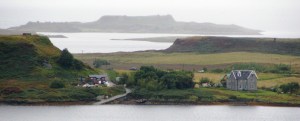
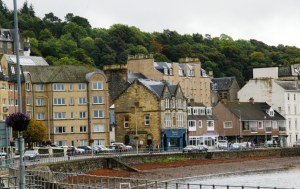
Instead, we decided to walk off all the food we’ve been consuming, by exploring Oban on foot. Despite being by the sea, Oban is hilly. Very hilly. We began by taking a walking path up to a lookout at Pulpit Point, at the southern end of the town. We had misty views over the town, port, and nearby islands. Our ship, anchored outside the ferry channels, appeared every so often like a ghost ship, as the clouds rolled in and out. We took some back streets as we meandered towards the centre of town, crossing the railway line that we would have been on.
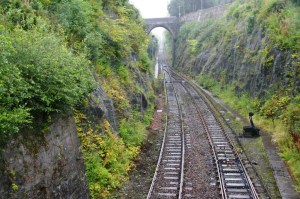
The railway line we wanted to take

Boy on a bridge (note rain gear. Compulsory summer fashion for Scotland)

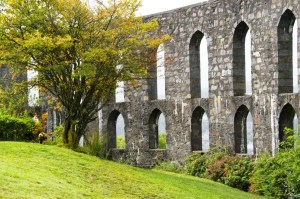
After wending our way downhill to sea level, it was another climb to Oban’s main attraction, McCaig Tower. This imposing coliseum-esque structure was built by John McCaig, mainly to provide employment to local stonemasons and other craftsmen. He planned to add a third tier of arches, along with an observation tower and statues of himself and family members. Building stopped when he died; no doubt the kids were relieved to see the end of their father’s vanity project.
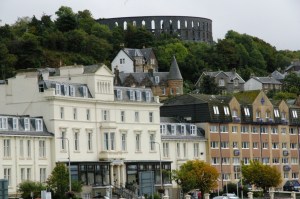
Hard to miss it
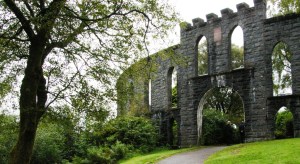
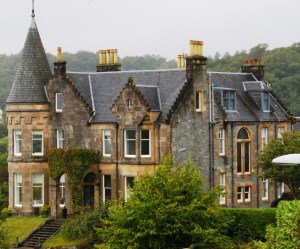
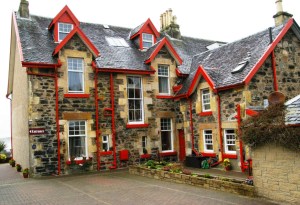
The granite arches have a certain grace to their curves, even if the birds have over-adorned them. The gardens inside are pleasant, and there is an observation terrace with lovely views across to the islands; Mull was shrouded in cloud and not visible today. There are some very nice houses up on the hill nearby. Some of them are guest houses; it would be a long, steep haul from the pier or railway station with suitcases!
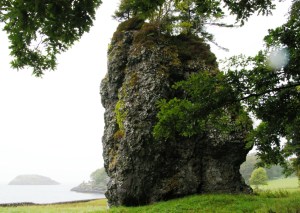
Our explorations took us further north. We emerged on the narrow, pebbled waterfront, followed it past the war memorial, and on to the ruins of Dunollie Castle. As we stood under a spreading tree, it began to rain in earnest, which was our cue to beat a retreat back to town. We passed the “Dog Stone”, and saw some cliffs with caves at their foot, where evidence of human habitation has been found.
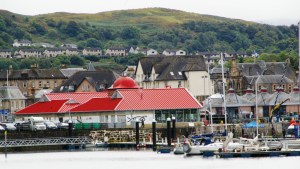
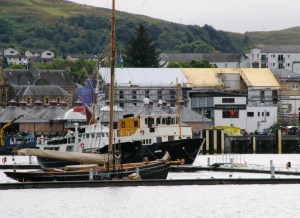
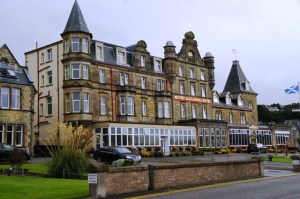
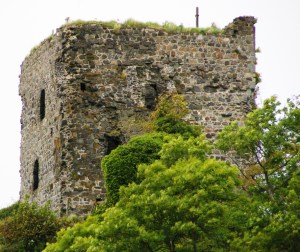
We took refuge in the small “War and Peace” Museum, which was full of historical artefacts relating to Oban life, its role in both world wars, and other general Scottish objects of interest. It was actually rather good, and gave us a chance to dry out and learn something at the same time.
By now we were starting to feel cold, and it wasn’t much longer before we boarded the tender boat to return to our warm, dry cabin for the remainder of the afternoon. Surprisingly we’d spent 5 or 6 hours in Oban simply following our noses. Let’s hope for dryer conditions tomorrow.
Family connection?

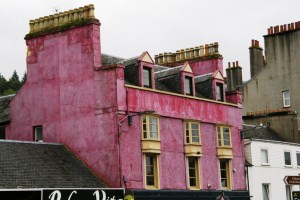
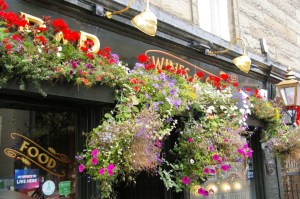
 dipidydoo