Five am. My alarm rings. I roll over, trying to pretend that it’s not our final morning on the cruise, and that we are not about to get evicted. Our packed suitcases tell a different story, and reluctantly we dress, eat our last breakfast, and bid farewell. We turn in our cruise cards (only figuratively, we get to keep them but they no longer afford us any privileges), are waved cheerfully but unceremoniously into Dover Cruise Terminal, and begin wheeling the suitcases all the way back to Dover Priory station.
We board the 7.40am train, bound for Chatham, one of many stops on the line to London via Canterbury. Here we alight from the train, and begin a second long trek to Prospect Row, which is, of course, on top of Brompton Hill. Groan. Our room is, of course, on the third floor. Groan.
You may well ask why we’ve planned a visit here. For Michael Portillo fans, you may recall him visiting the Historic Dockyard and its Victorian Ropery. Ian’s Moulden forebears (not the sheep pillaging Dodds – the maternal side of the family) lived and worked in the Navy for over 100 years, before they moved to London and made (then lost) their fortune as shipping merchants. This was a reasonable excuse for us to make a short side trip.
Dropping our luggage at the accommodation (which has a comfy bed and good wi-fi, but not much else going for it), we arrived at the Dockyard ready to spend the rest of the day exploring. The whole site covers 80 acres, so there was plenty to look at. In retrospect, it would have been easier if we hadn’t been up so early, or walked so far with the cases. However, we had an interesting day despite feeling rather weary.
The Royal Naval Dockyard was established at Chatham, on the river Medway, in the mid 16th century. During its 400 year existence (it closed in 1984), it provided more than 500 ships for the Navy. In its early days it built timber ships. It continually adapted to technology, building steam ships with metal hulls in the late 1800s, then submarines throughout much of the 20th century. The most famous ship from Chatham is Horatio Nelson’s flagship Victory.
It has a number of preserved significant buildings, as well as three warships, the Ropery, and various maritime displays. We began with the Ropery, which is the only one of the original four that is still in operation – any rope that is more than 18 mm in diameter is still made on the quarter-mile long Ropewalk, and Chatham rope is still in high demand, for anything from anchor rope to dog leads. Originally the strands were twisted by hand, which was highly laborious and required a good deal of skill and strength, before they switched to the mechanised process that they still use today. We were treated to a demonstration of how the Ropewalk machinery operates; it was fascinating to see a process that essentially has not changed for several centuries.
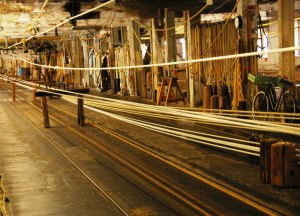
The amazing Ropery
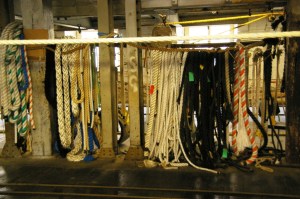
Ropes of all sizes
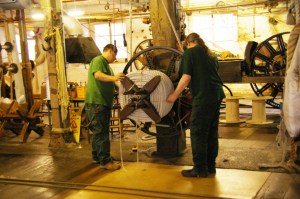
Coiling the newly twisted strands
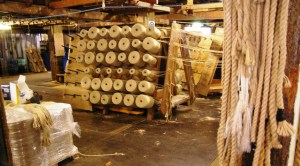
Bobbin heads
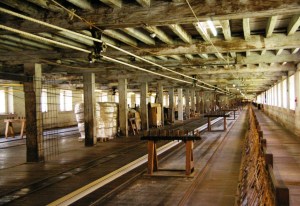
Quarter of a mile
The three warships, in the dry docks, can be examined up close. The highlight was the tour of the Oberon class submarine, HM Submarine Ocelot. Launched in 1962 and used for surveillance during the Cold War, it was the last Royal Navy warship built at Chatham. We were able to go down inside, scramble through round hatches, see what the living conditions were like (pretty bad!) and even look through one of the periscopes. Of all the naval occupations, submariner would have been the toughest.
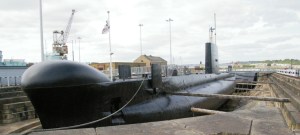
HS Submarine Ocelot
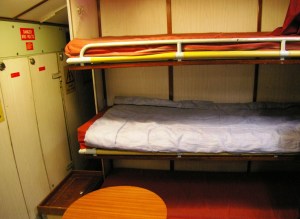
Not the Pacific Princess!
HMS Cavalier is a Destroyer that was built in 1944, repurposed during the 1950s, and retired in 1972. Nowadays she serves as a memorial to the 142 naval destroyers lost in WW2, costing 11,000 lives. In contrast HMS Gannet was a sloop, built in 1878 and protecting British interests around the world. She was powered by both sail and steam, with a composite hull of teak planking on an iron frame. We also saw the amazing covered roof structure of slipway no 3, and a really good exhibition on designing and building the old timber ships.

HMS Cavalier
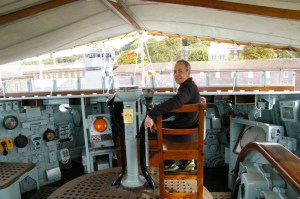
Cap’n Ian is on the bridge
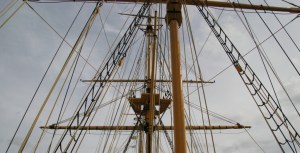
HMS Gannet’s rigging
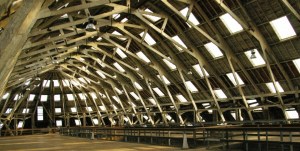
The incredible roof of slipway no 3
Afterwards, Ian ventured to the supermarket and returned with microwave pasta and sauce, along with microwave green vegies and microwave chocolate pudding. It was a simple meal to prepare, but we feel we have dropped a rung or two in the culinary standards to which we have become accustomed.
 dipidydoo