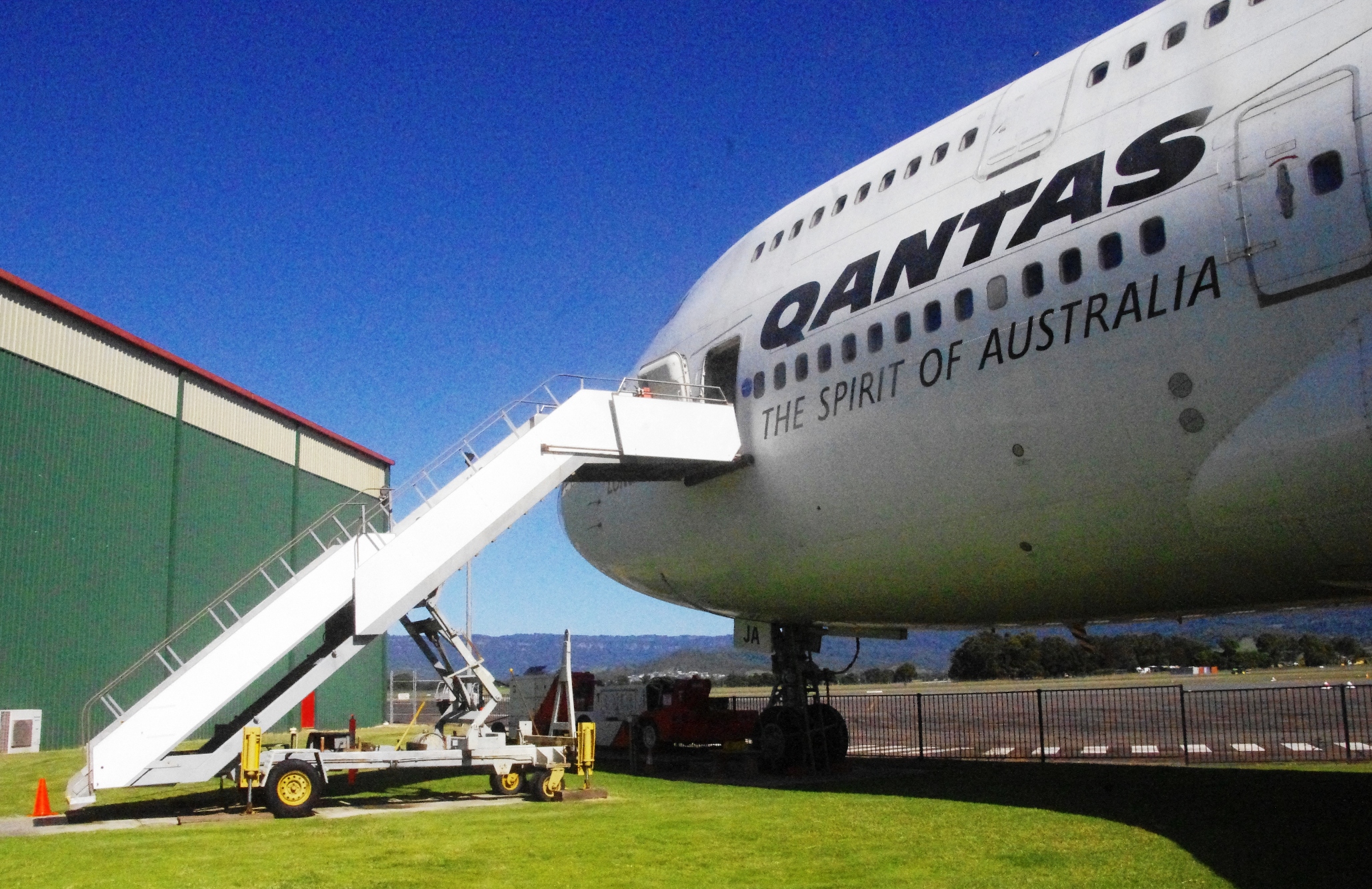
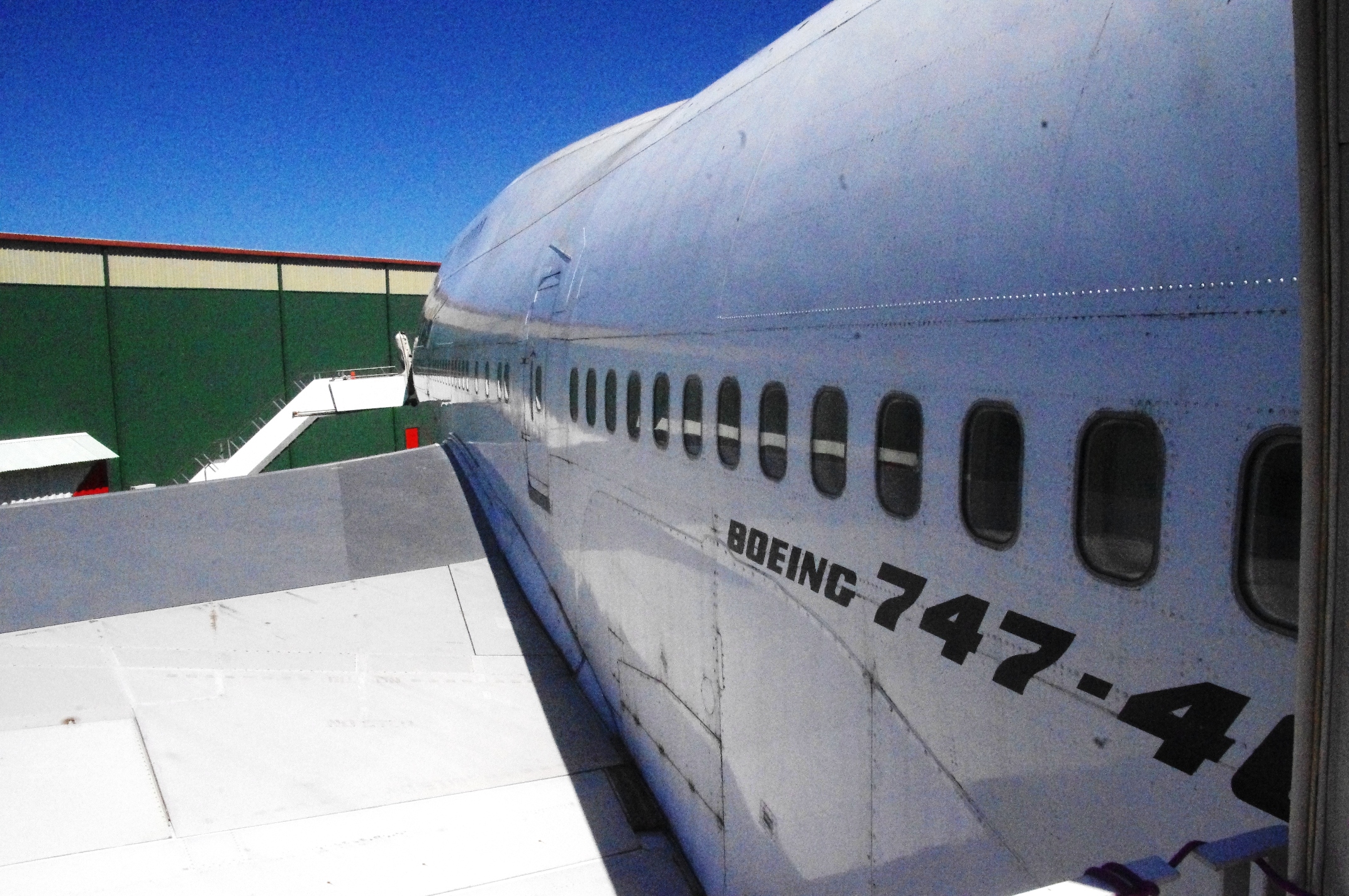
Our last day before beginning the long drive home … months ago when I was googling “Things to do in Kiama”, I discovered the Historical Aircraft Restoration Society (HARS) museum. Looking into it, I discovered that they offered “Premium 747 Tours”. Not cheap, but they offered a complete warts and all tour of the “City of Canberra”, the first 747-400 that Qantas took delivery of, and still the record holder for its 18 hour plus, non stop flight from London to Sydney in 1989. Taken out of service in 2015, it also holds the record for the shortest flight by a 747 – Sydney to Wollongong, a grand total of 11 minutes! This is a piece of history now, as Qantas ceased flying 747s last July.
Although long haul flying is an uncomfortable chore, there is always something miraculous and magical about take-off; even after hundreds of flights, I always get a rush from hurtling along the runway, then feeling these amazing machines lumber into the air. You hold your breath as you watch the ground fall away, and think to yourself “how on earth is this even possible”. Then the seat belt sign goes off, the trolleys begin to rattle, and you sigh and settle back for 24 hours of self inflicted pain and contortion.
The great thing about this tour is that it is with a Qantas pilot, engineer, and cabin crew member, who all know the plane inside out (literally); so you get a unique perspective from each person. And it was a private tour, and very hands-on. We were treated like VIPs from the time we arrived – greeted by name, and escorted into areas that are no-go to regular museum visitors.
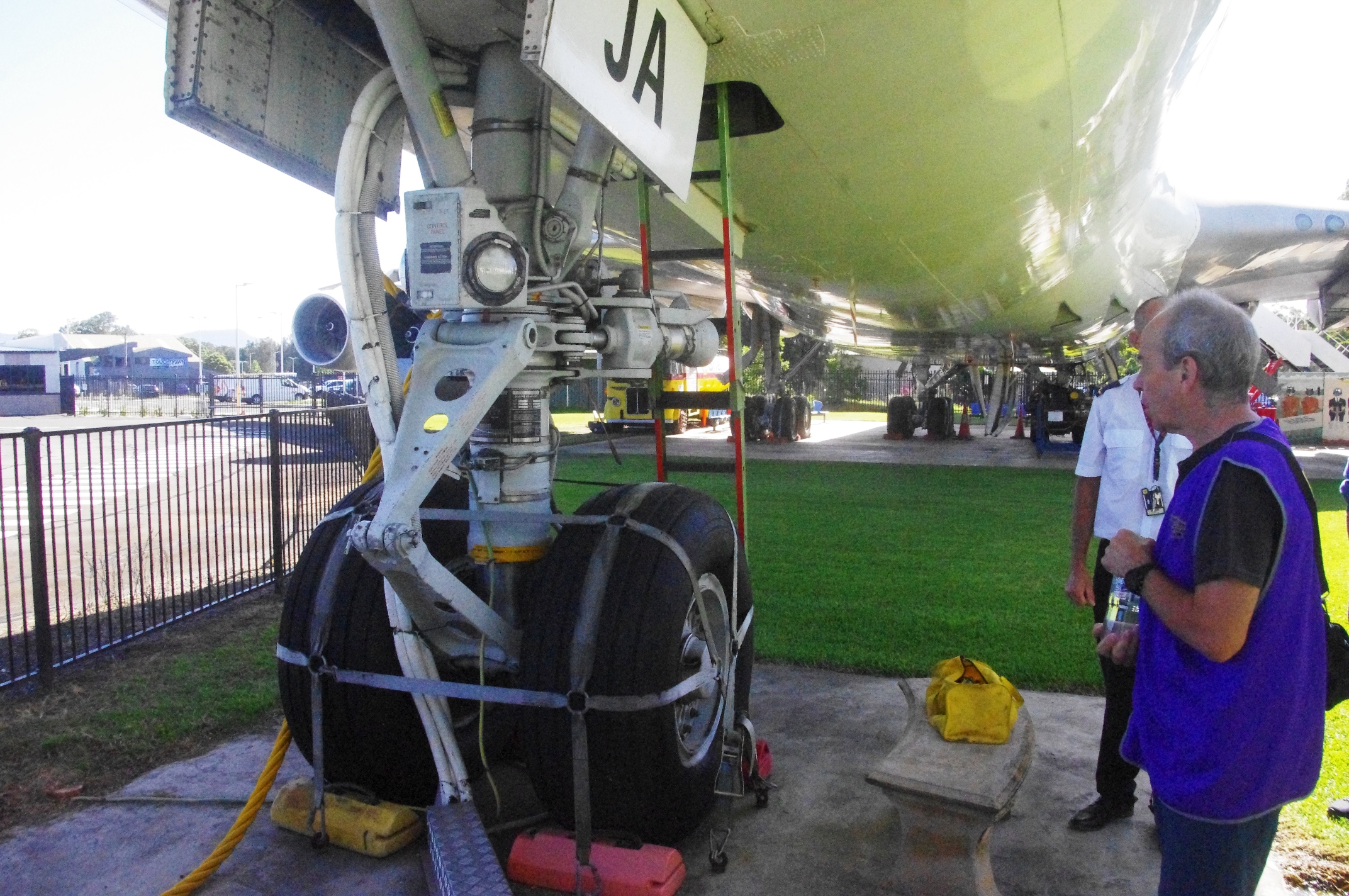
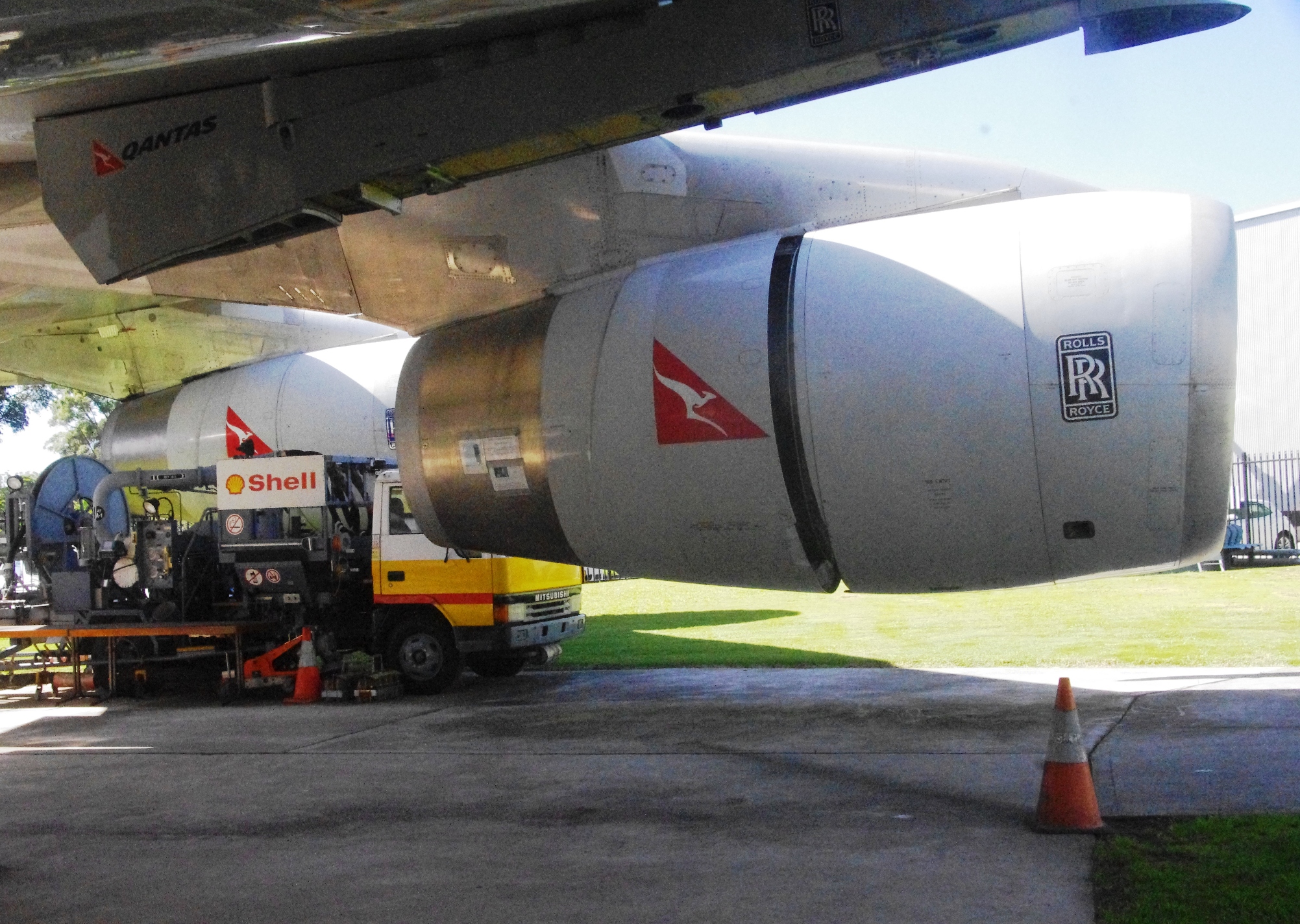
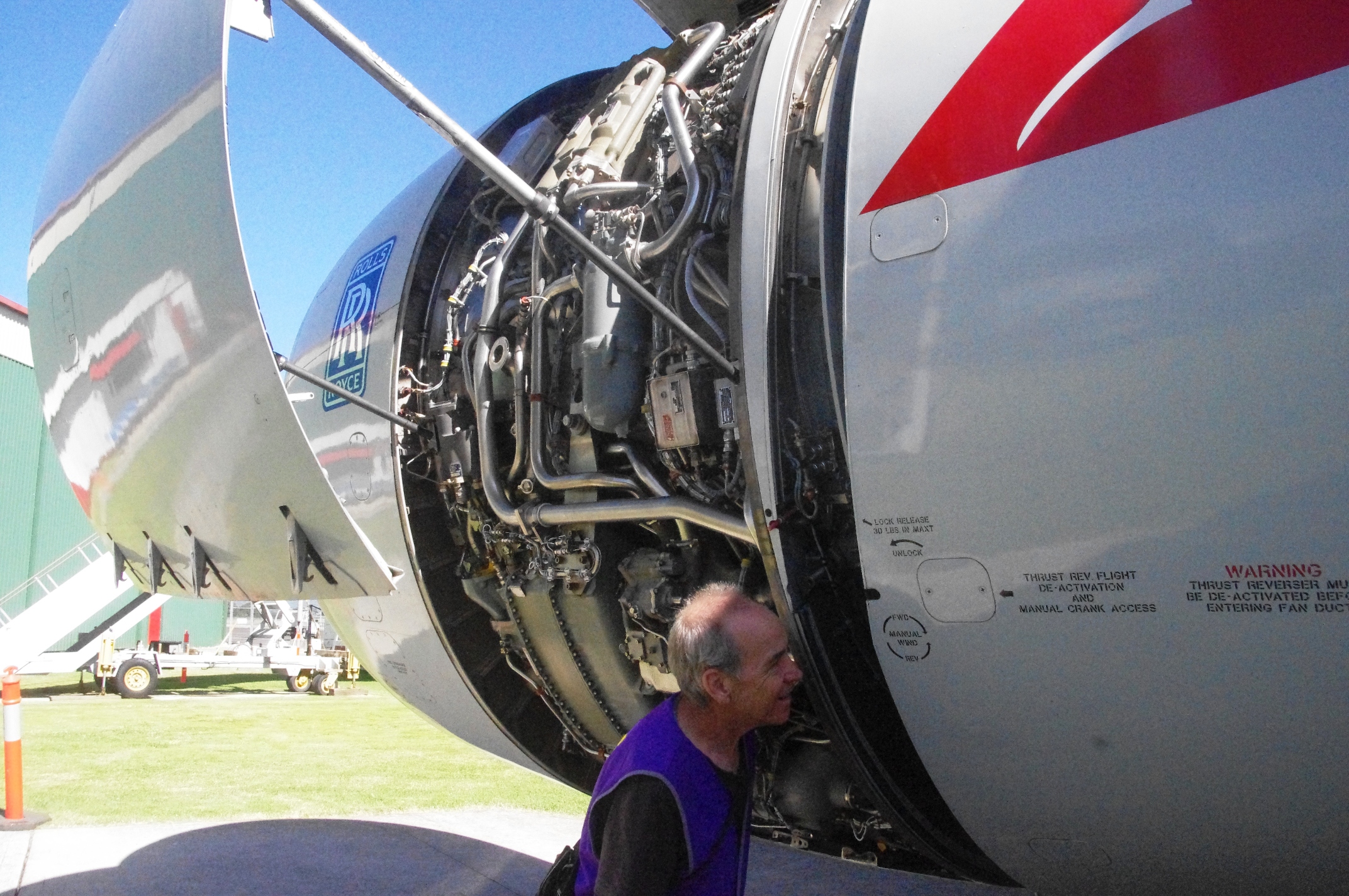
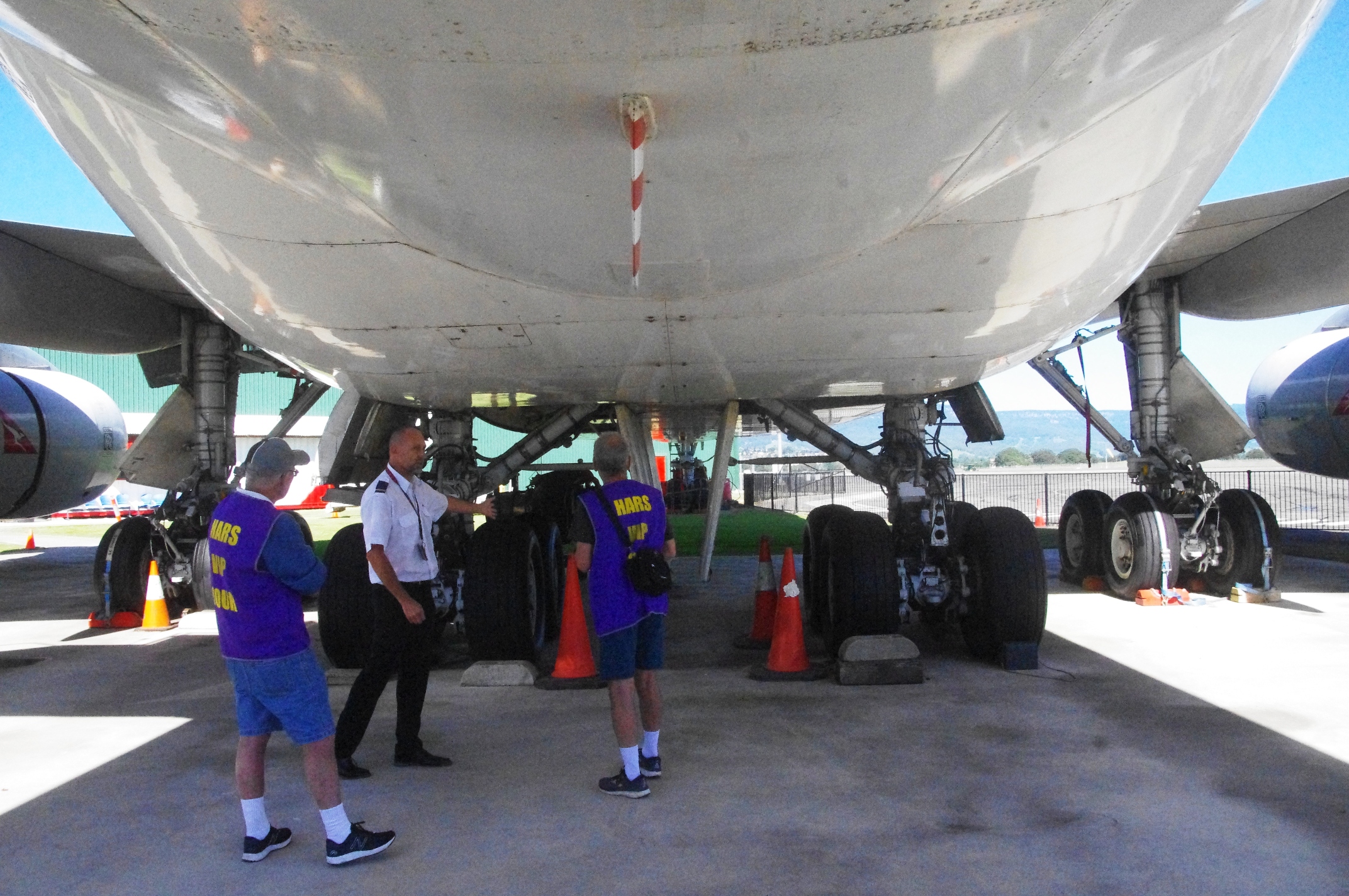
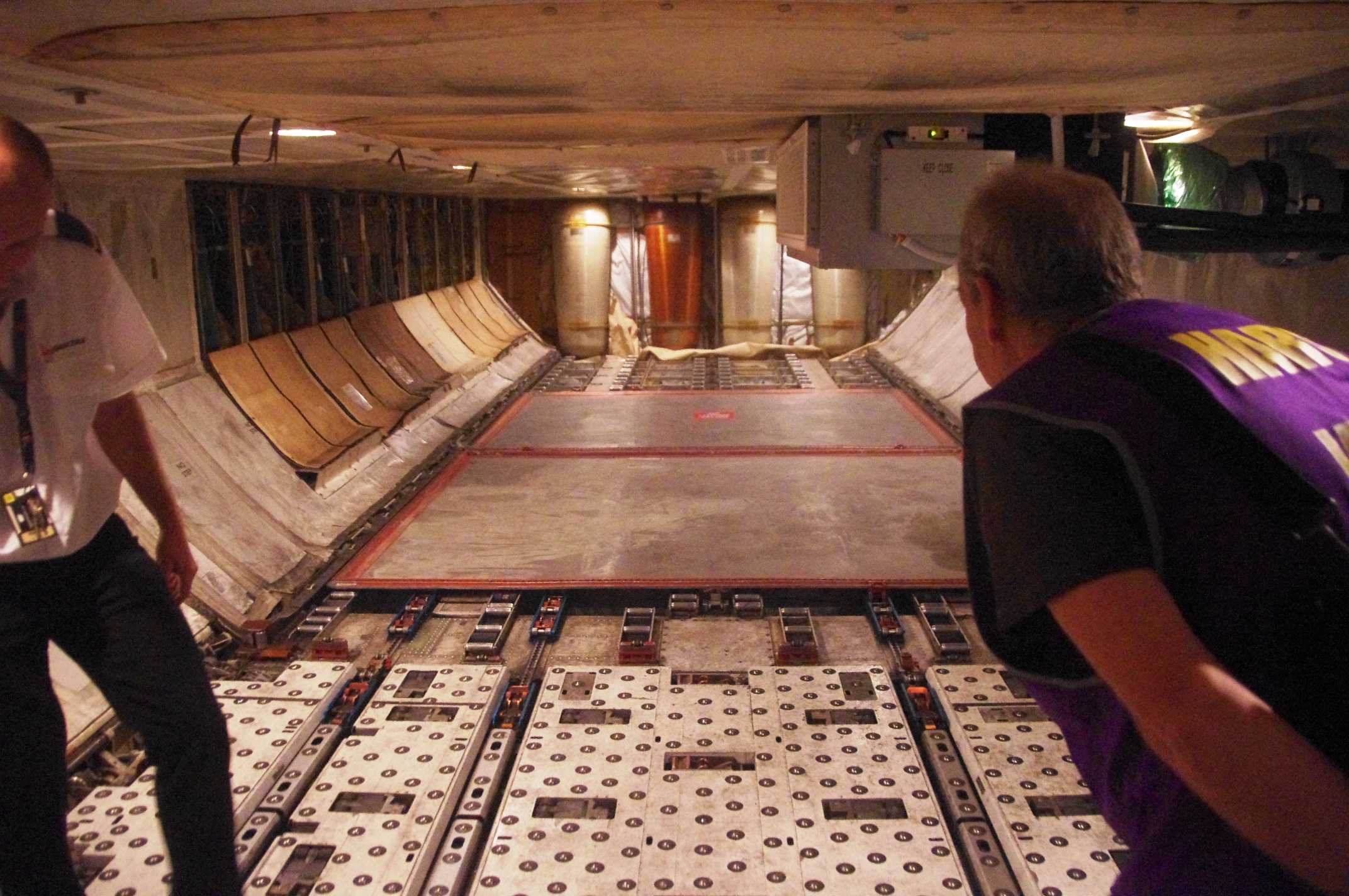
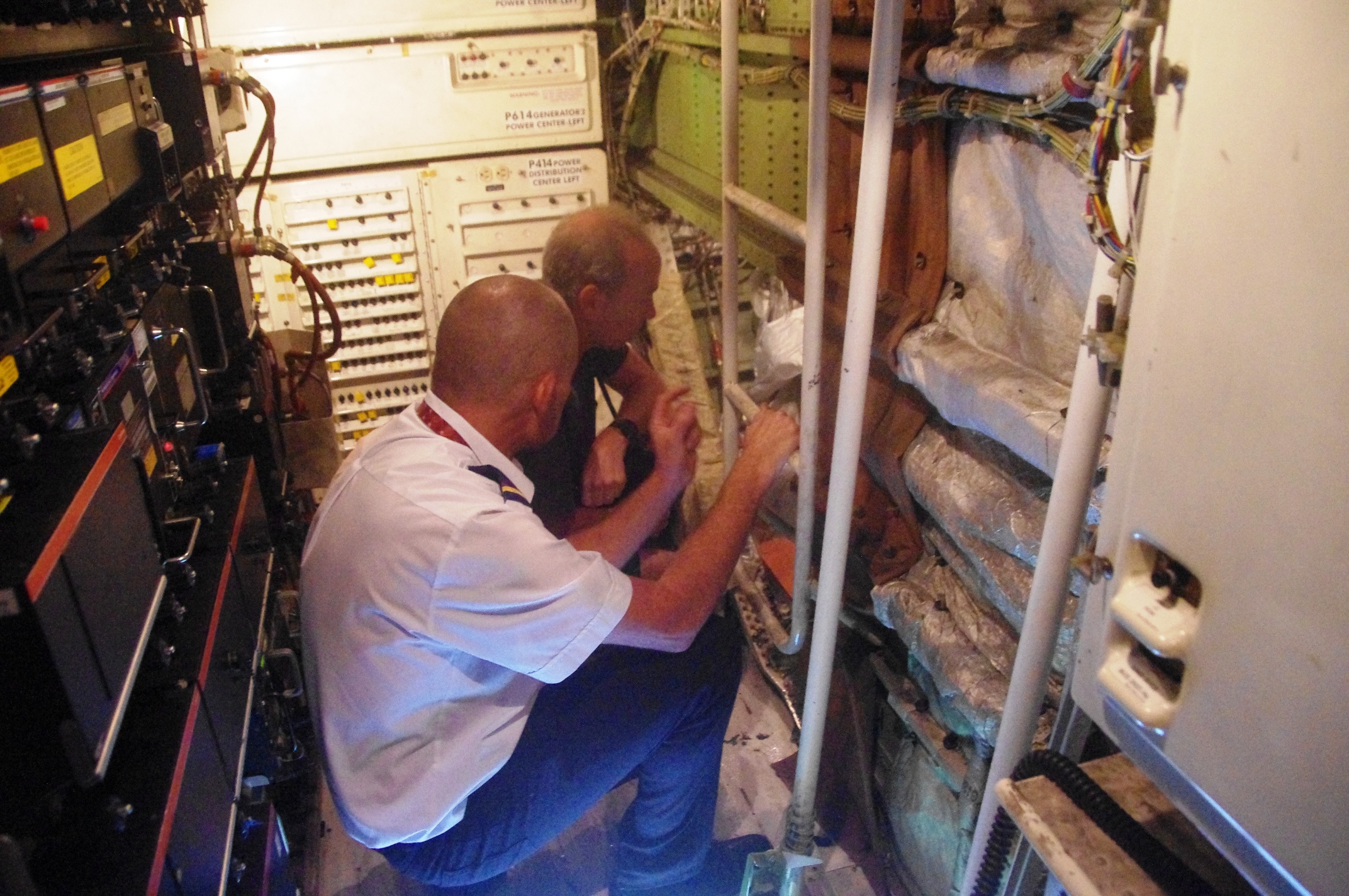
First up, the engineer, Craig, took us on a walk-around, an on-the-ground, up-close look at the plane from every angle. Many hatches are open so you can see the inside workings. We were able to examine the landing gear, engines, undercarriage and flaps; then we were invited to climb a ladder straight up into the plane’s belly, right behind the nose wheel. We were in the Main Electrical Centre (MEC), which is where all the control boxes live. From here we could step through to one of the cargo holds – not as vast as we thought, but it was a strange feeling to walk across the floor, ducking our heads low.
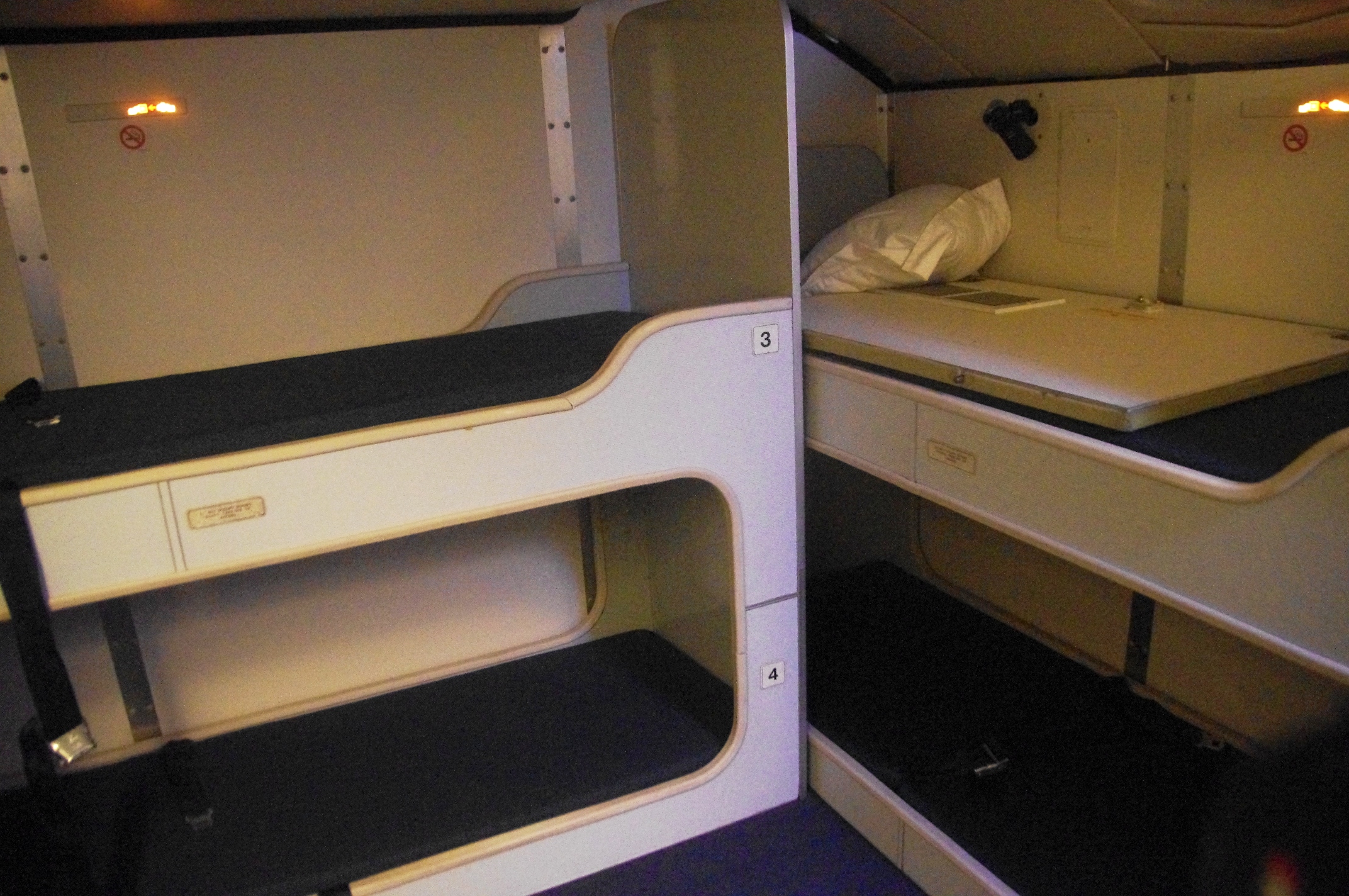
Next we entered the cabin by a more conventional method – the rear stairway. Now we were with Geoff, a recently retired Customer Service Manager, ie in charge of the cabin crew. He took us up the rear stairs to show us the crew rest area, with its configuration of narrow bunk beds where the crew can try and sleep on their breaks. This is also where the “black box” or flight data recorder, is kept. We made our way gradually up to the front, seeing the galleys and the controls for the entertainment system. We tried not to look too enviously at the business class seats/beds.
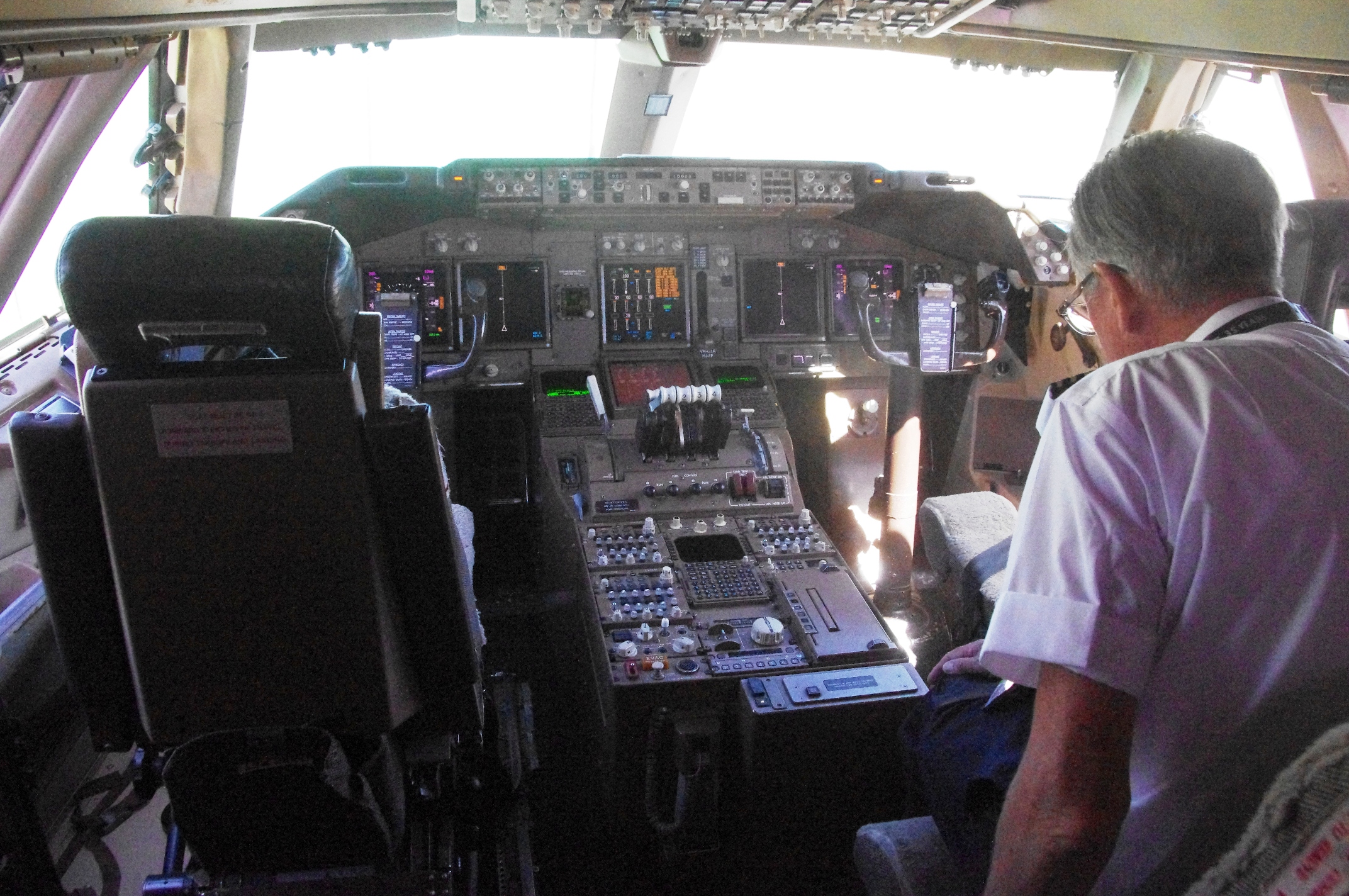
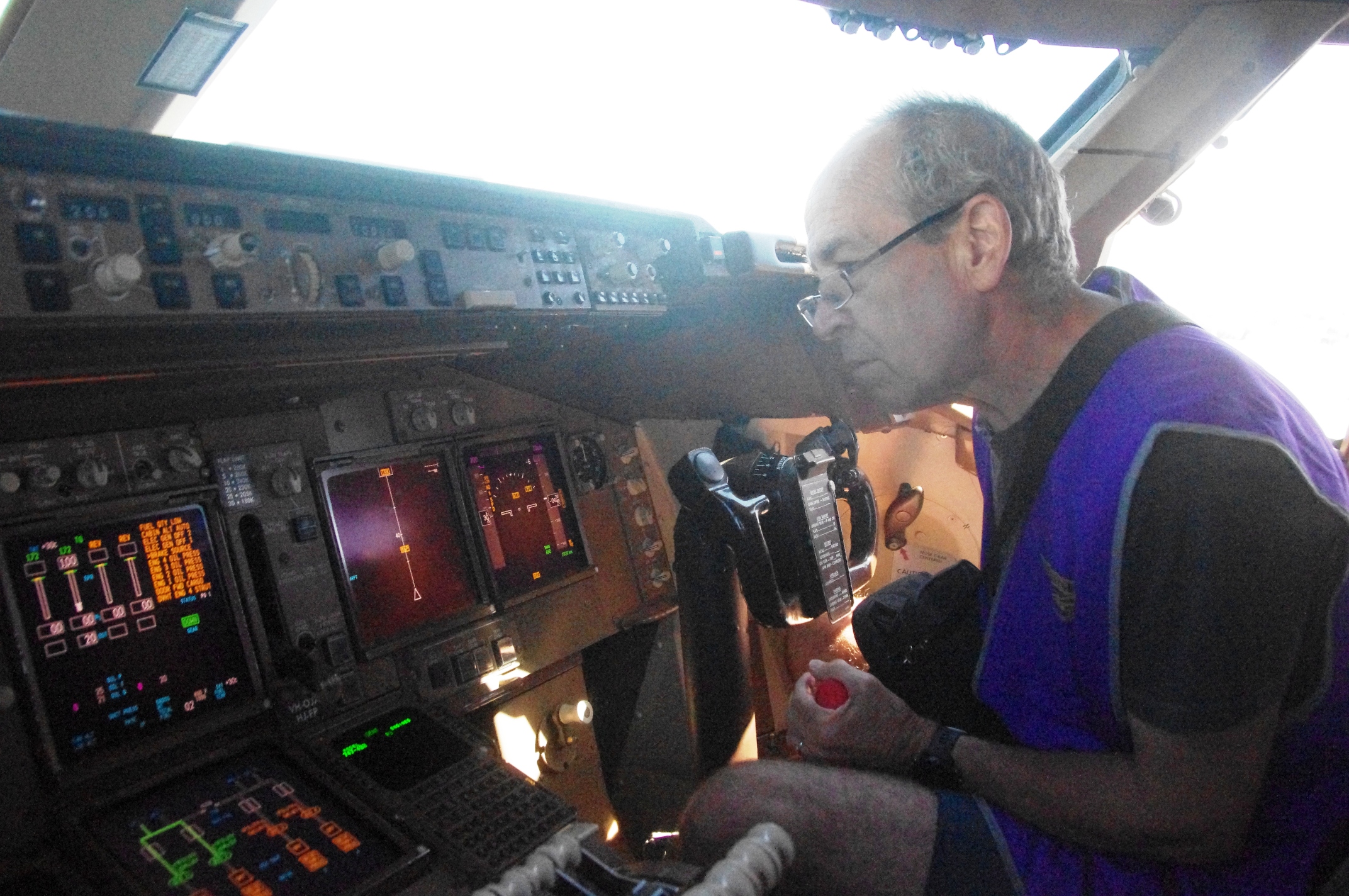
The final, and best part of the tour, was an hour spent in the cockpit with retired pilot David. Although a lot of parts have been removed from the aircraft, it is still possible to power it up and demonstrate a lot of the instrumentation. We were able to flick on all sorts of switches to simulate startup; we set the autopilot. The most fun thing was learning how to enter the flight path data into the system, and seeing our route to Disneyland appear on the screen. Then we dealt with a “non normal” scenario, ie an engine fire. We were taken through the drill of extinguishing it, and the followup procedures. Finally we powered down again. It was quite different from the flight simulation we did in London, with much more focus on the instruments and displays. It was very thorough – Ian even ran out of questions!
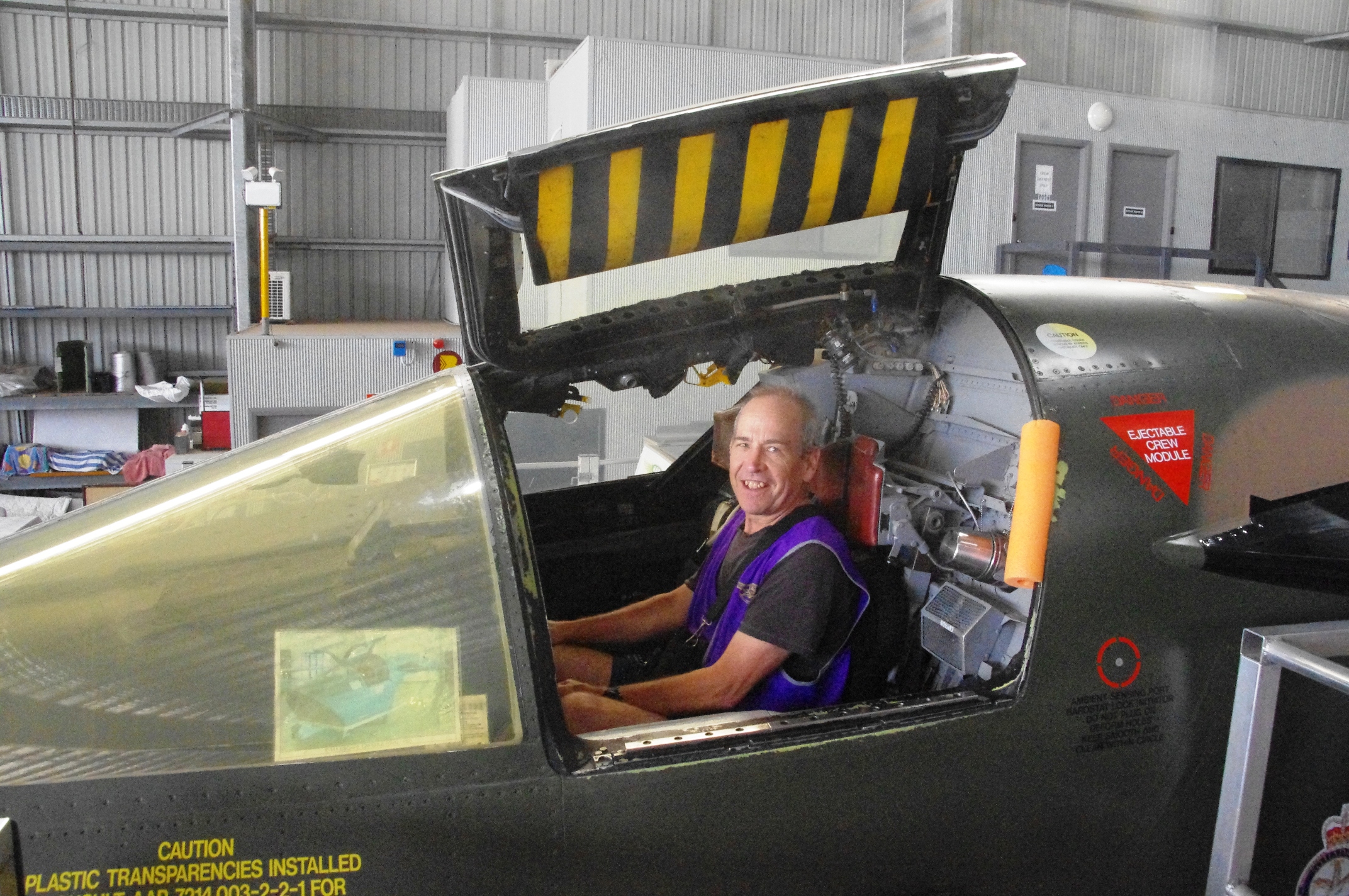
The tour so far had taken four hours, which flew by (pun intended). After lunch, another volunteer, Graham, walked us through the rest of the museum, though this was a bit rushed as there was a lot to see and we only had an hour left. Their collection is very comprehensive, one of the best we’ve seen anywhere, including the more well known museums in Europe and the UK. Like Temora, the focus is on restoring the planes to flying condition. But here, you could clamber inside several cockpits, or into the cabins to see the interiors. There is also a mix of civil and military aircraft, unlike the previous two museums, with their emphasis on military. A regular tour of the museum, without the Premium tour, would easily pass a couple of hours. We ended up spending the entire day – we worked out that the price we paid, as an hourly rate, was pretty good value! Ian gave HARS a “fifteen out of five stars” – high praise. We were surprised that it isn’t more well known outside of New South Wales, it really is top class, and a great way to round out our aviation-themed holiday.



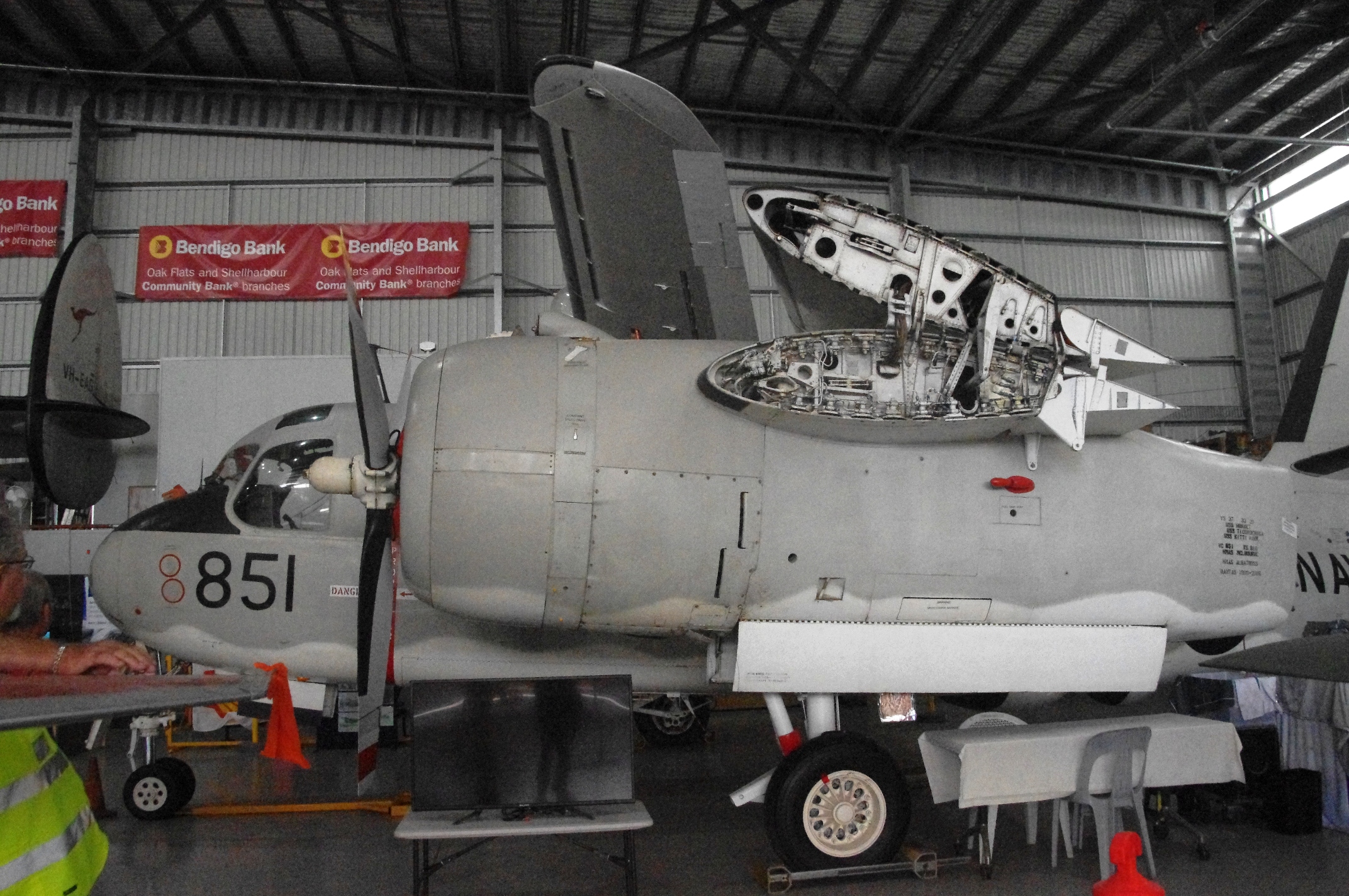
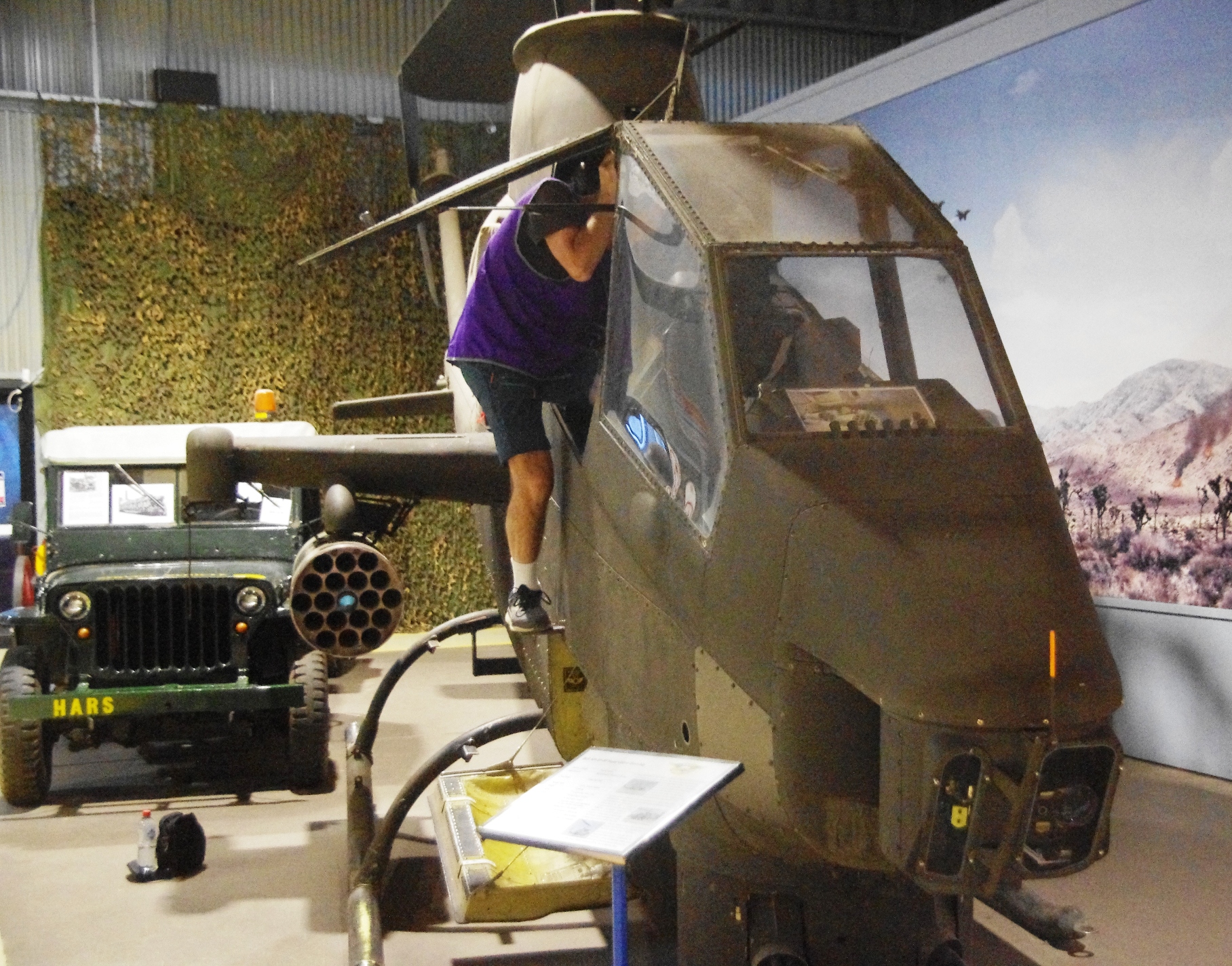

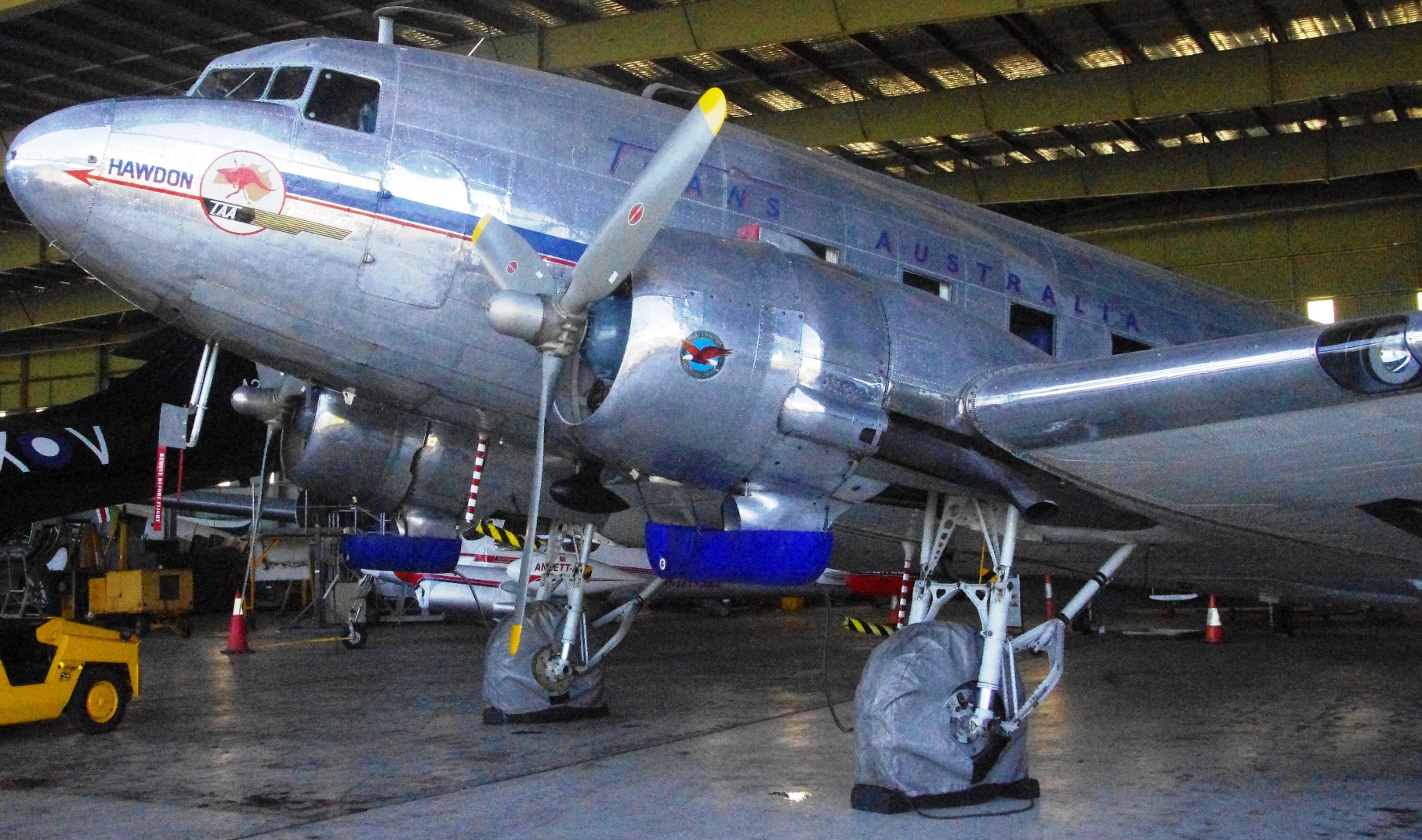
Tomorrow we head for home (stopping in Holbrook for the best pies in the country). This trip, brought about by covid and border restrictions, was really just a way to spend a couple of weeks somewhere other than home (and within a 5 kilometre radius thereof). It seemed a poor substitute for Europe … but it’s been a revelation. We’ve seen things we never knew existed in our own country, and in fact just a day away from home; had experiences that were new, despite our advanced age; been to unique landscapes like the Stockton sand dunes and the Bombo quarry; hiked, orienteered and ballooned; and had fun all the way through. All without the hassle of airports, rental cars, foreign currency, overseas SIM cards, Google Translate … holidaying at home is definitely recommended. Where to next …
 dipidydoo
I think I flew several trans-Pacific flights in that 747-400. Upstairs in Business Class was very comfortable.