At last! After a delay due to heat, then another due to rain, we finally spent the day doing what we came to Taggerty to do – crossing the Rubicon. Fortunately for us it was not a point of no return, but as we followed the aqueduct for much of the hike, the Roman analogy was appropriate.
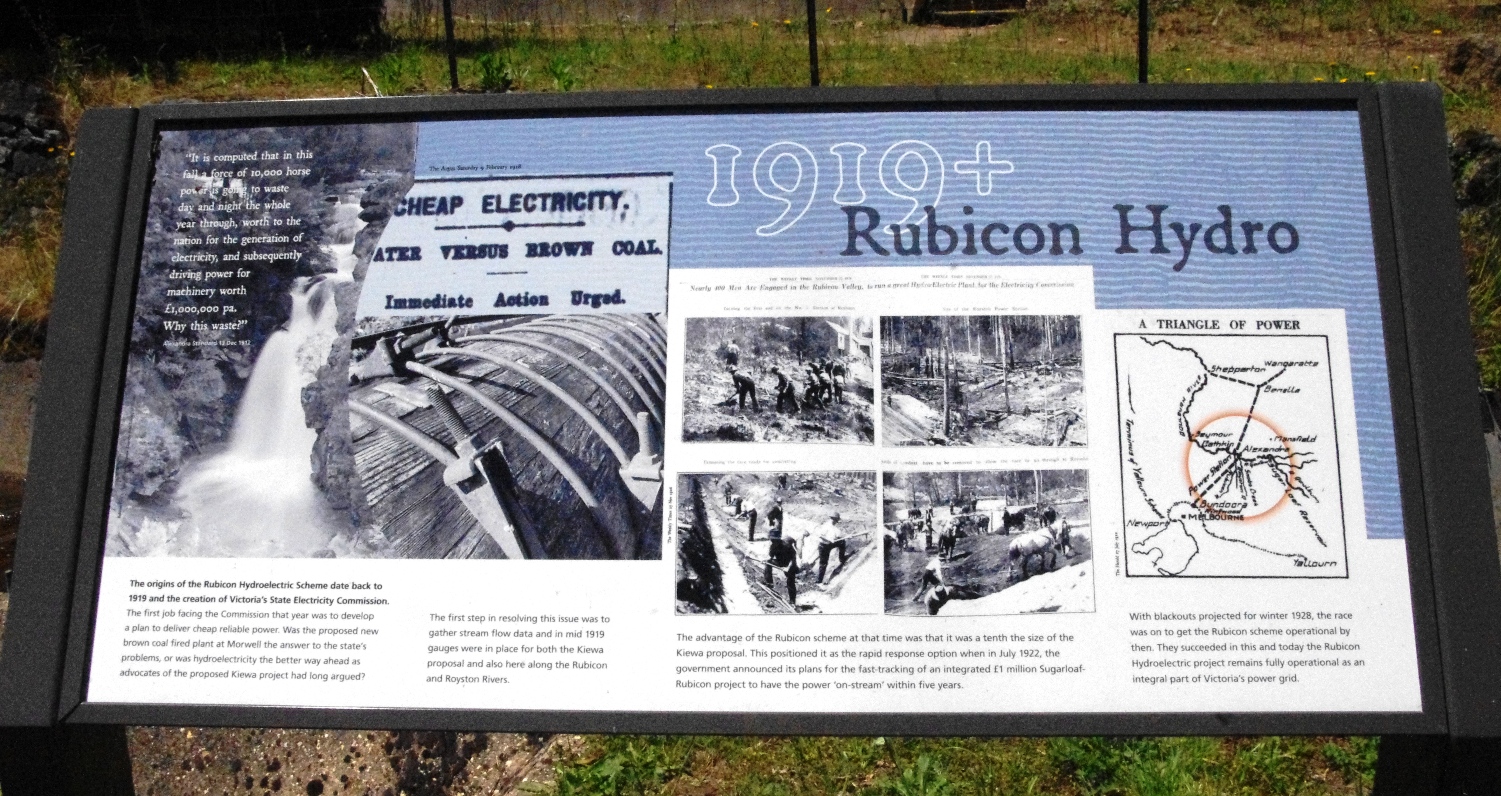
The Rubicon Valley is nestled in between the Cathedral Range and Eildon. It is a former logging area, and the terrain was also suitable for hydroelectricity; way back then, people were advocating for hydro to replace brown coal as an energy source. There is plenty of industrial heritage to see – power stations, pipelines, trestle bridges, a sawmill, tram tracks, and of course the aforementioned aqueduct which became the framework for our meanderings.
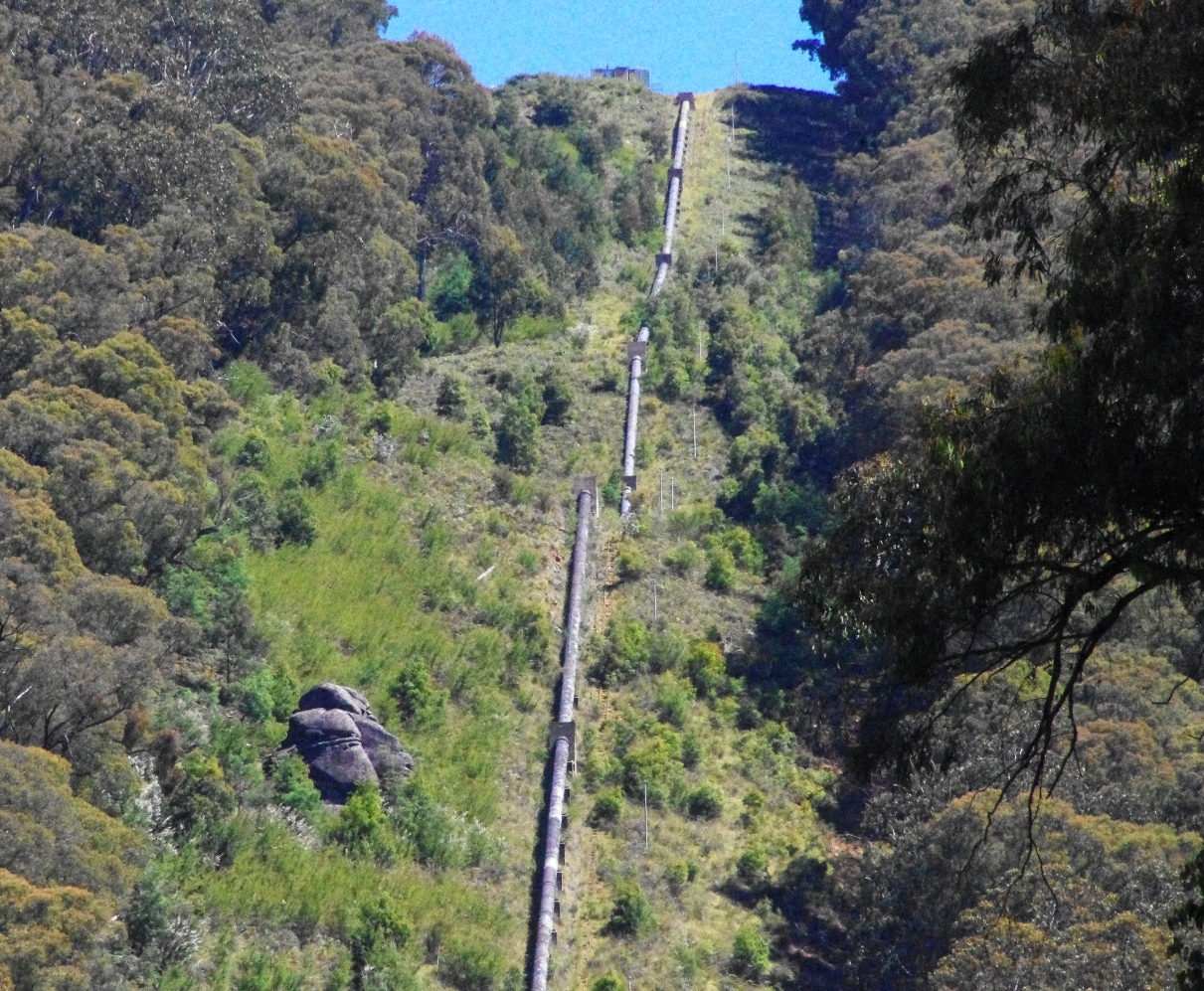
After leaving the farmland behind, the road turns to gravel. Your first taste of what’s to come is an amazing view up the incredibly steep pipeline and haulage tramline, from the Rubicon Power Station. Planning your hike carefully is a requirement if you want to avoid scrambling up or sliding down this monster slope.
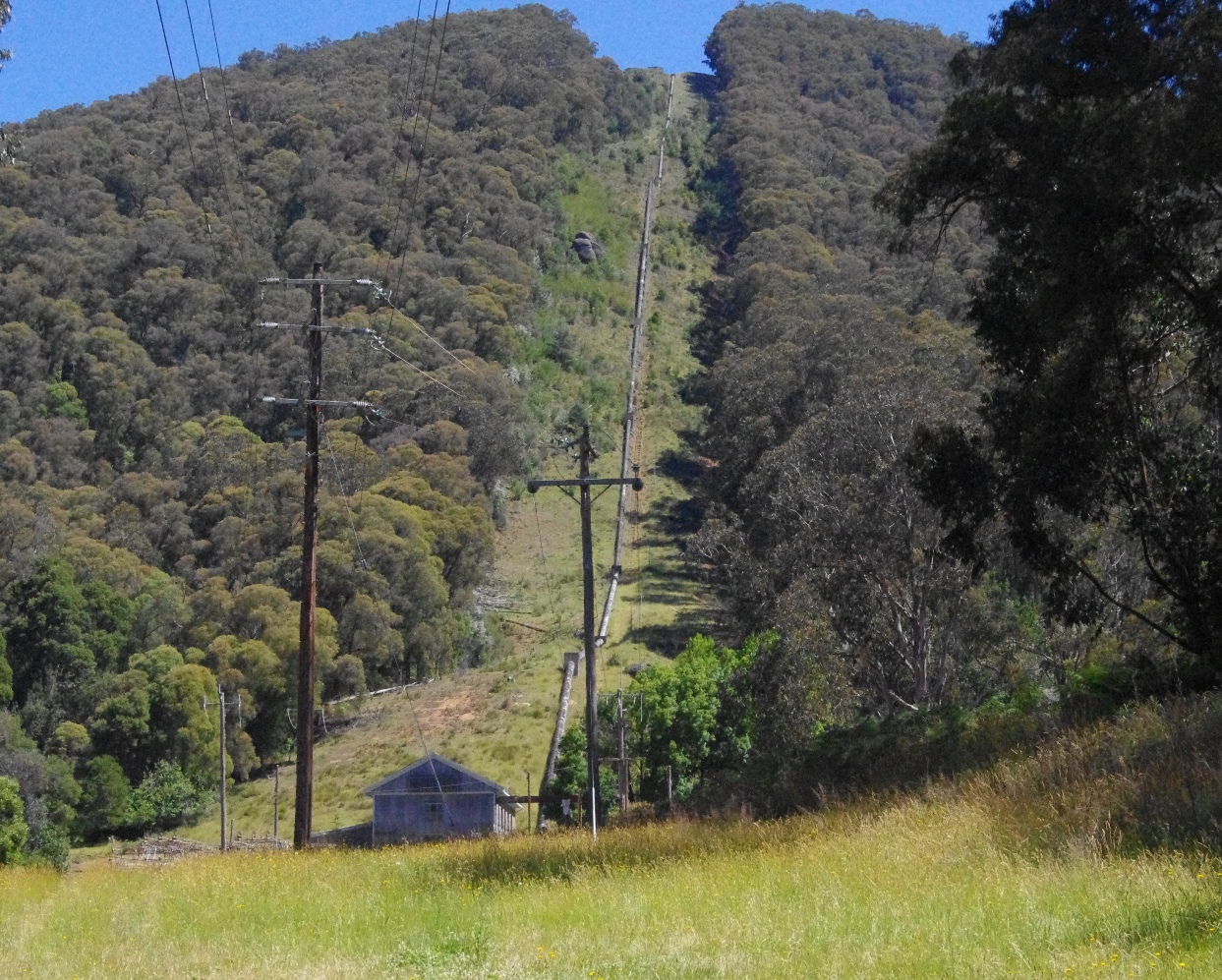
Passing two idyllic campgrounds tucked in beside the pretty Rubicon River, the road climbs very steadily through typical mountain forest. We parked at the junction of Royston Road and LeBrens Road, the designated starting point for our “10 km” trek. We continued the climb on foot, firstly on the road, then diverting onto a forest track which we could see would take us across the head of a gully. It was here that we first encountered the aqueduct as it makes its gradual way downhill.
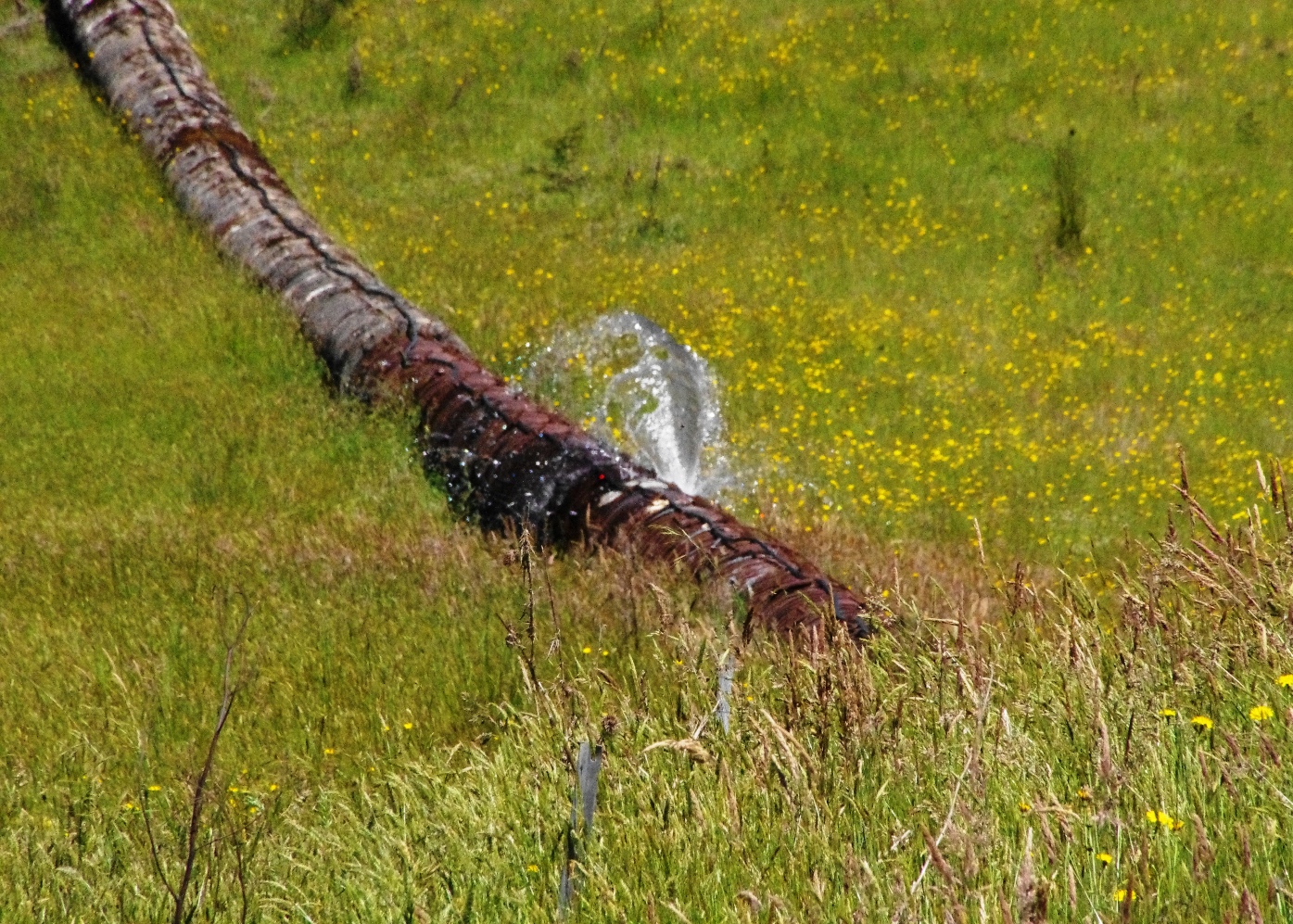
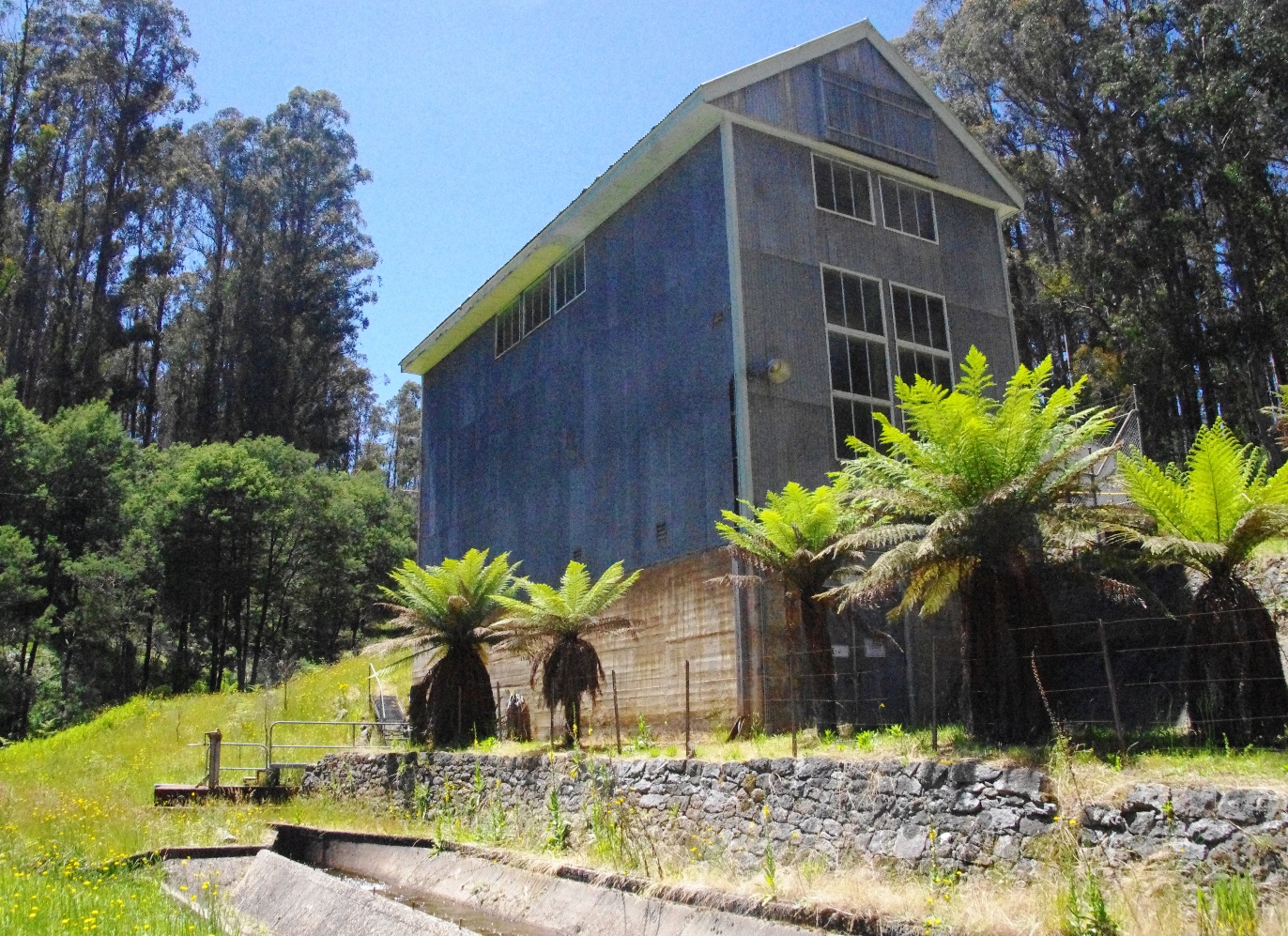
We followed it to the pipeline, which descends abruptly to the Royston Power Station. The first thing we noticed was the pipeline has sprung a leak, and water was fountaining out into the air and onto the meadow. The pipeline is in disrepair, and badly in need of the attention of the Aquarius (we’ve been reading Pompeii so are up with our Roman aqueduct terminology).
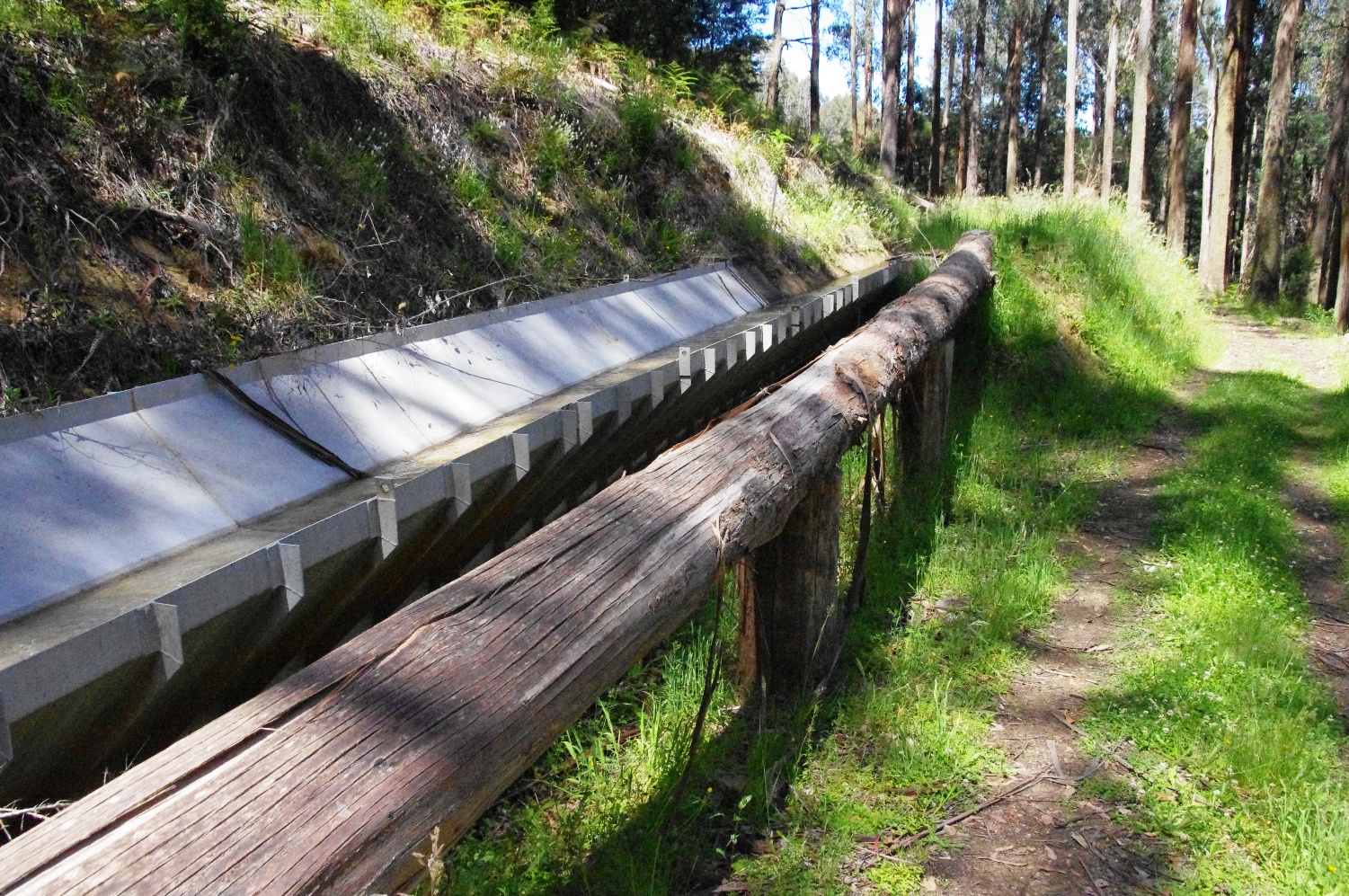
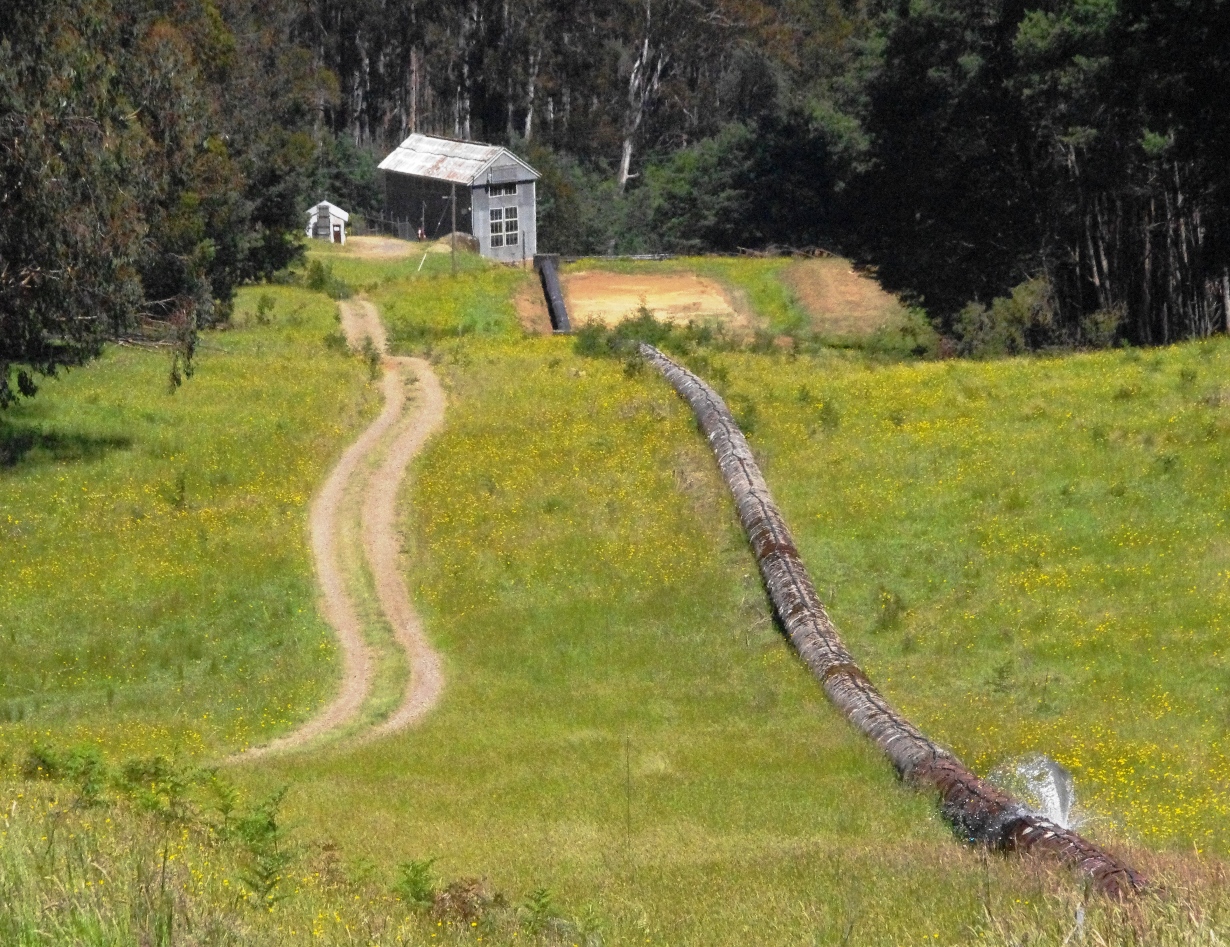
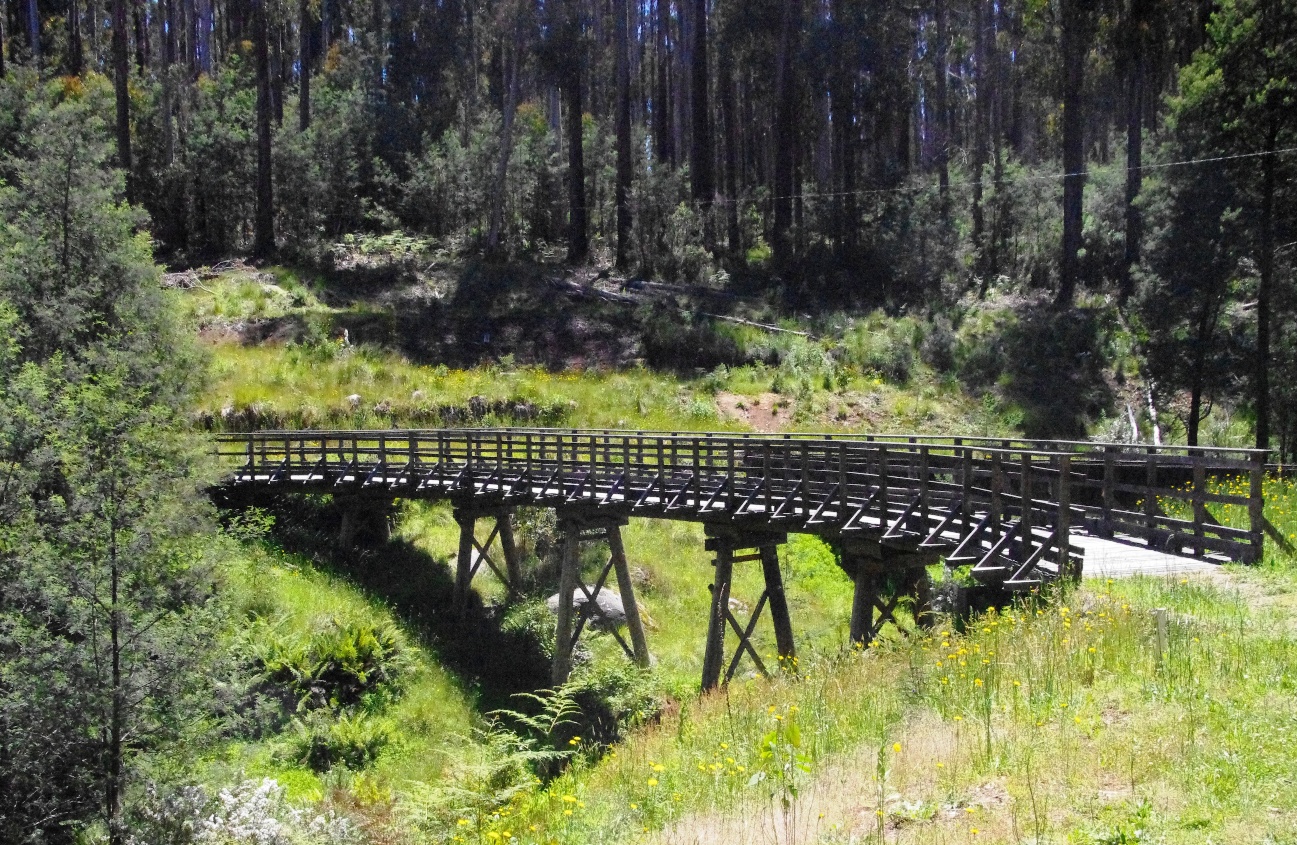
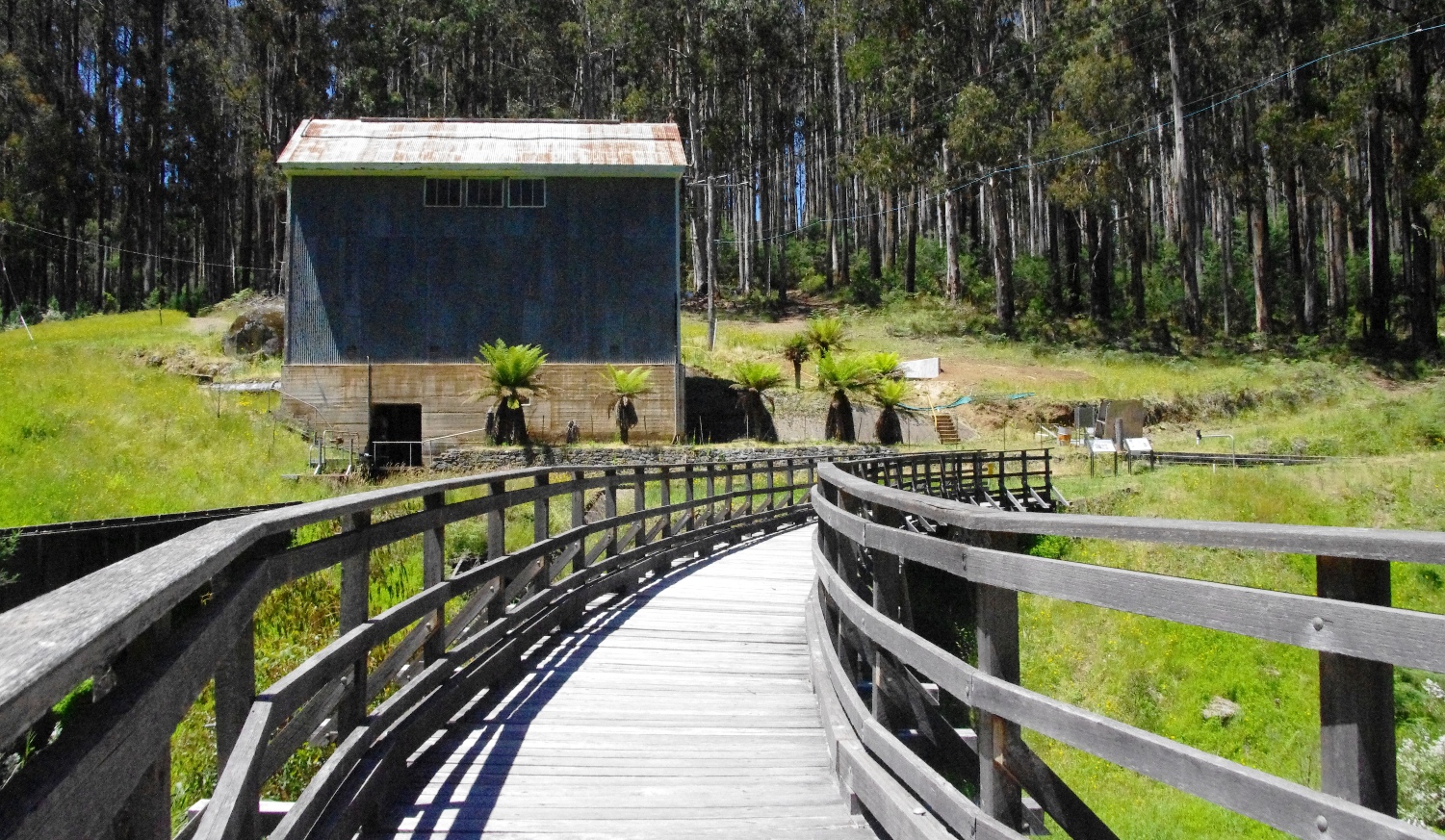
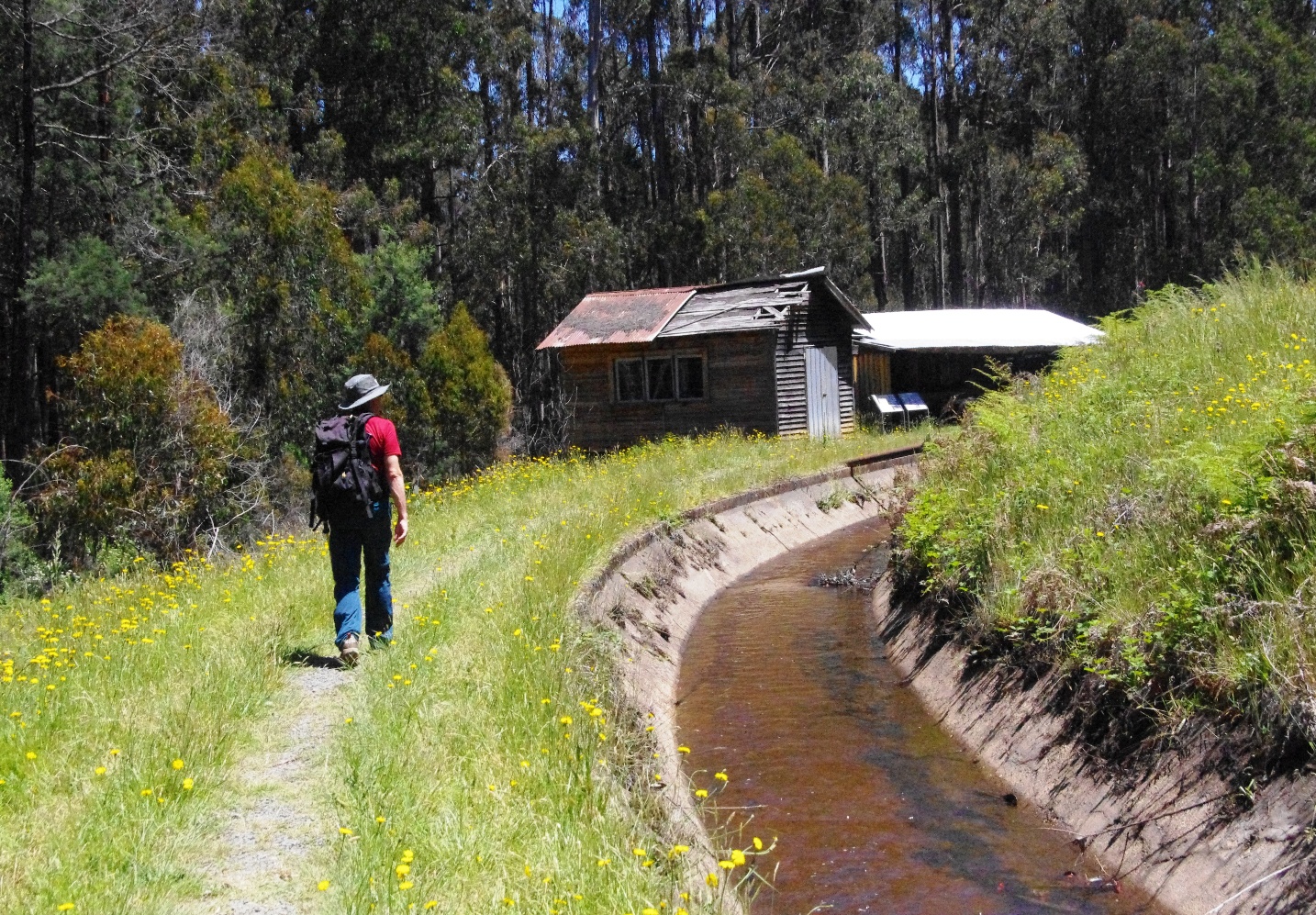
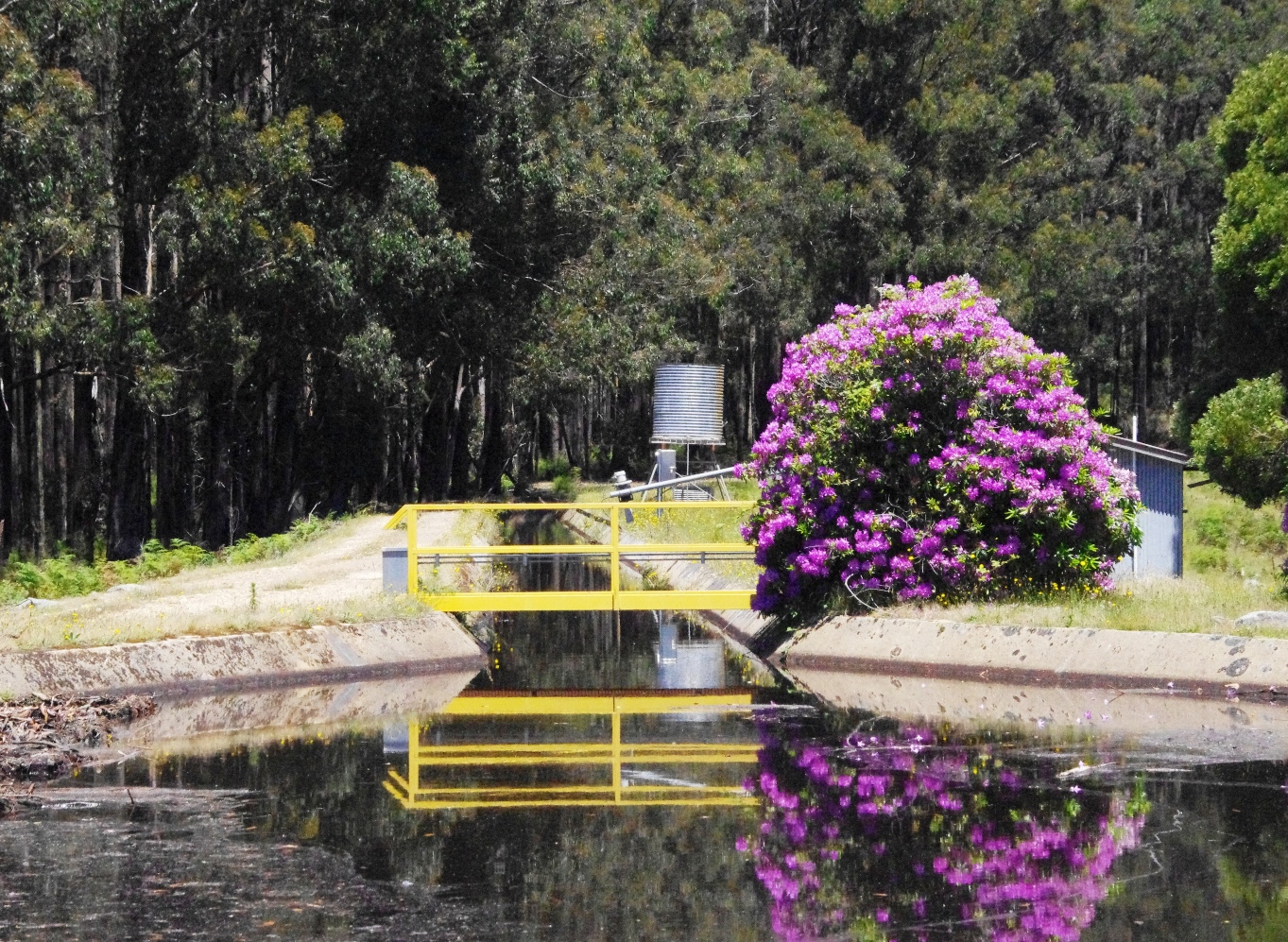
At the Power Station, with its attractive trestle bridge and tramway, we rejoined the aqueduct which would be our companion for the next couple of hours. It made sense to construct the tramway along the same contours as the aqueduct, and the two are side by side. The scenery here was almost European meadow, with plenty of wildflowers contrasting against the green grasses.
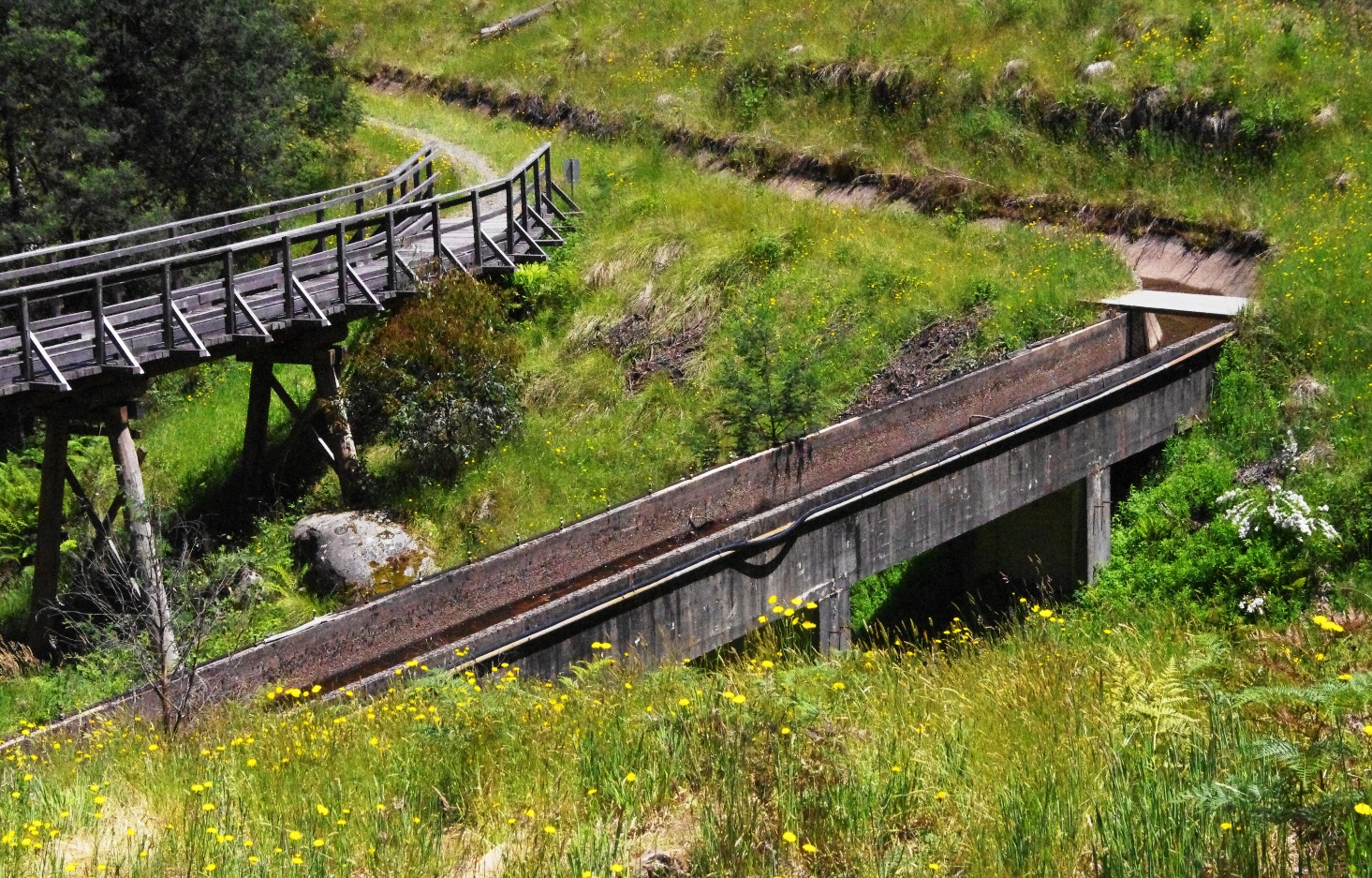
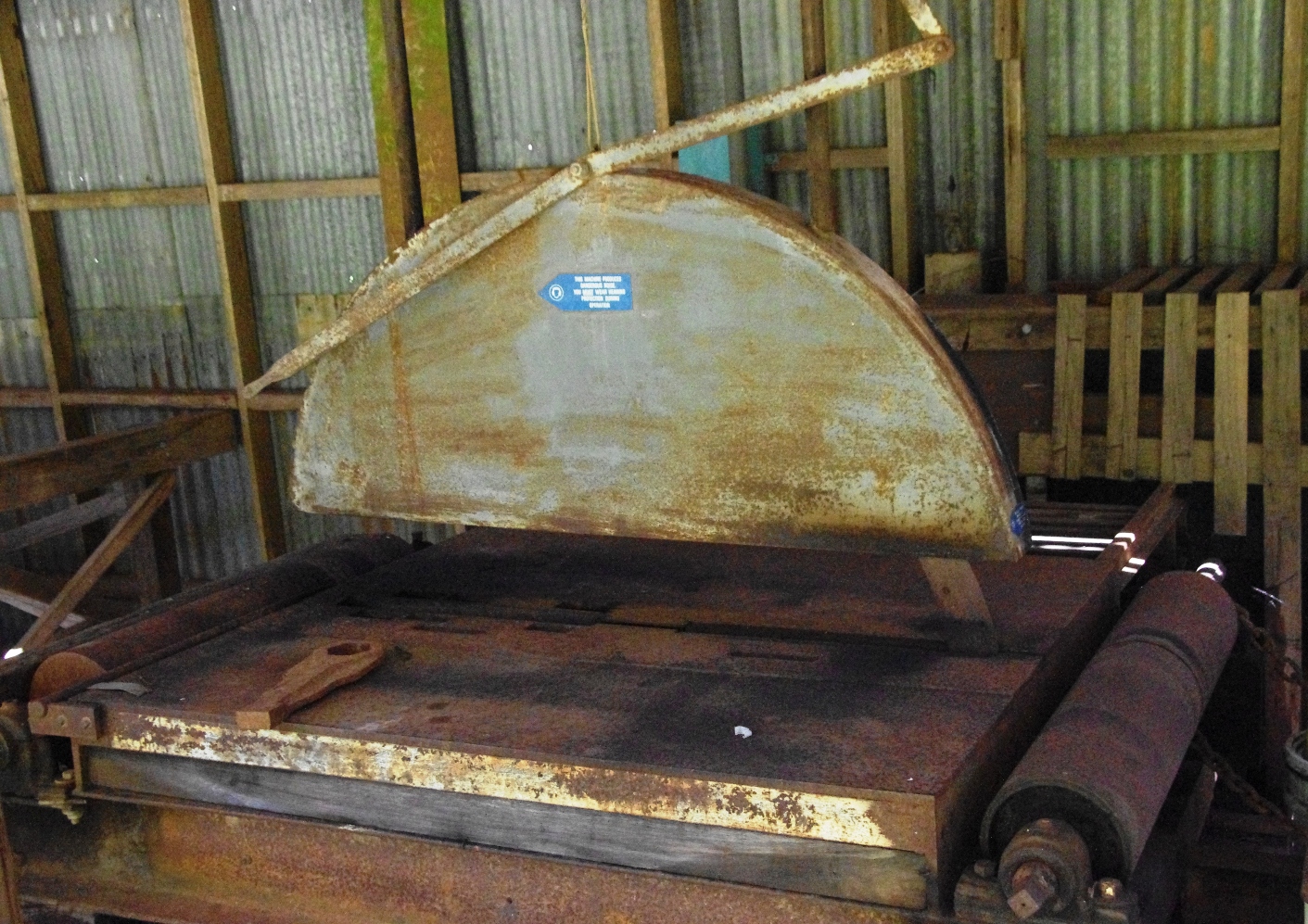
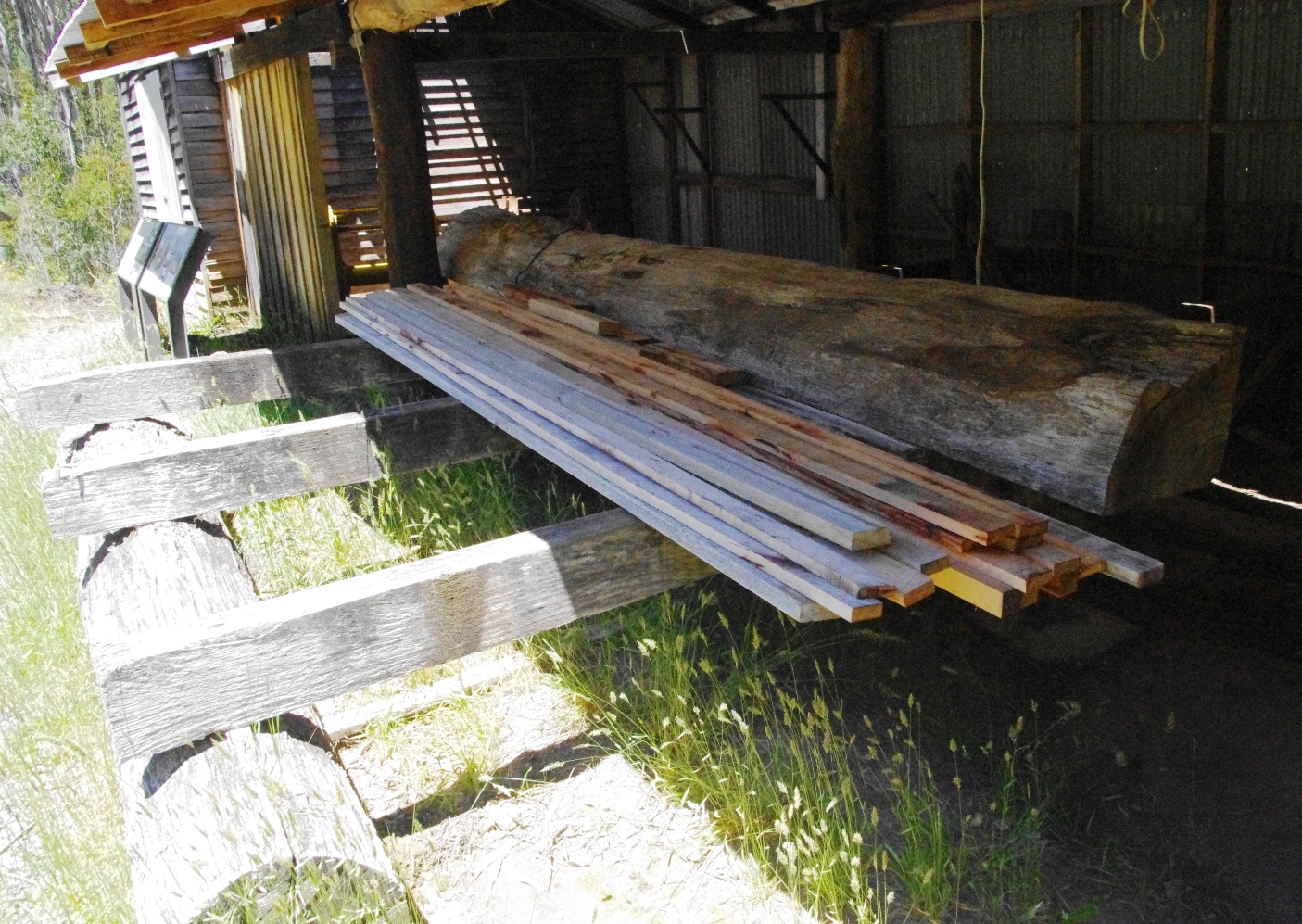
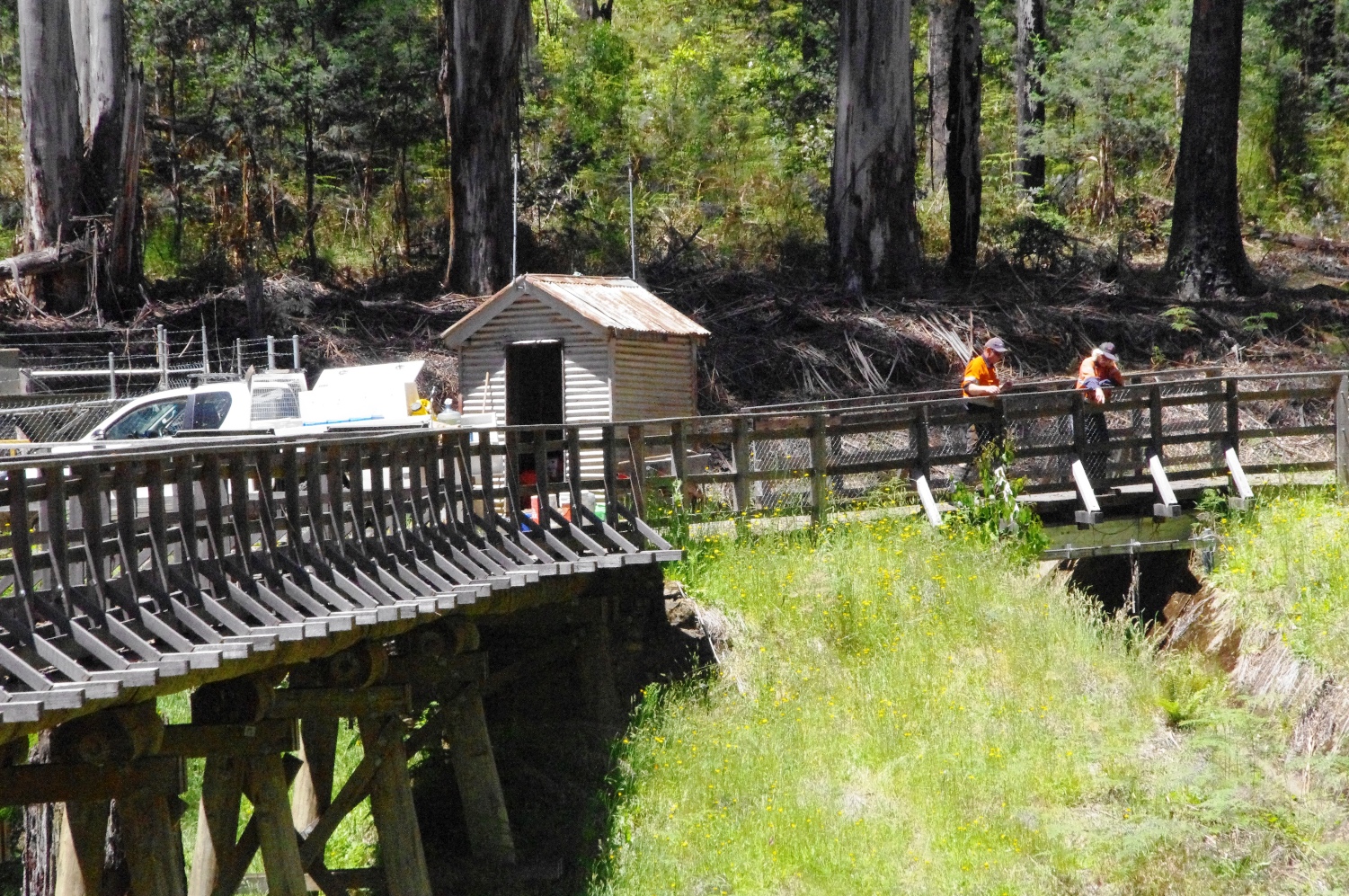
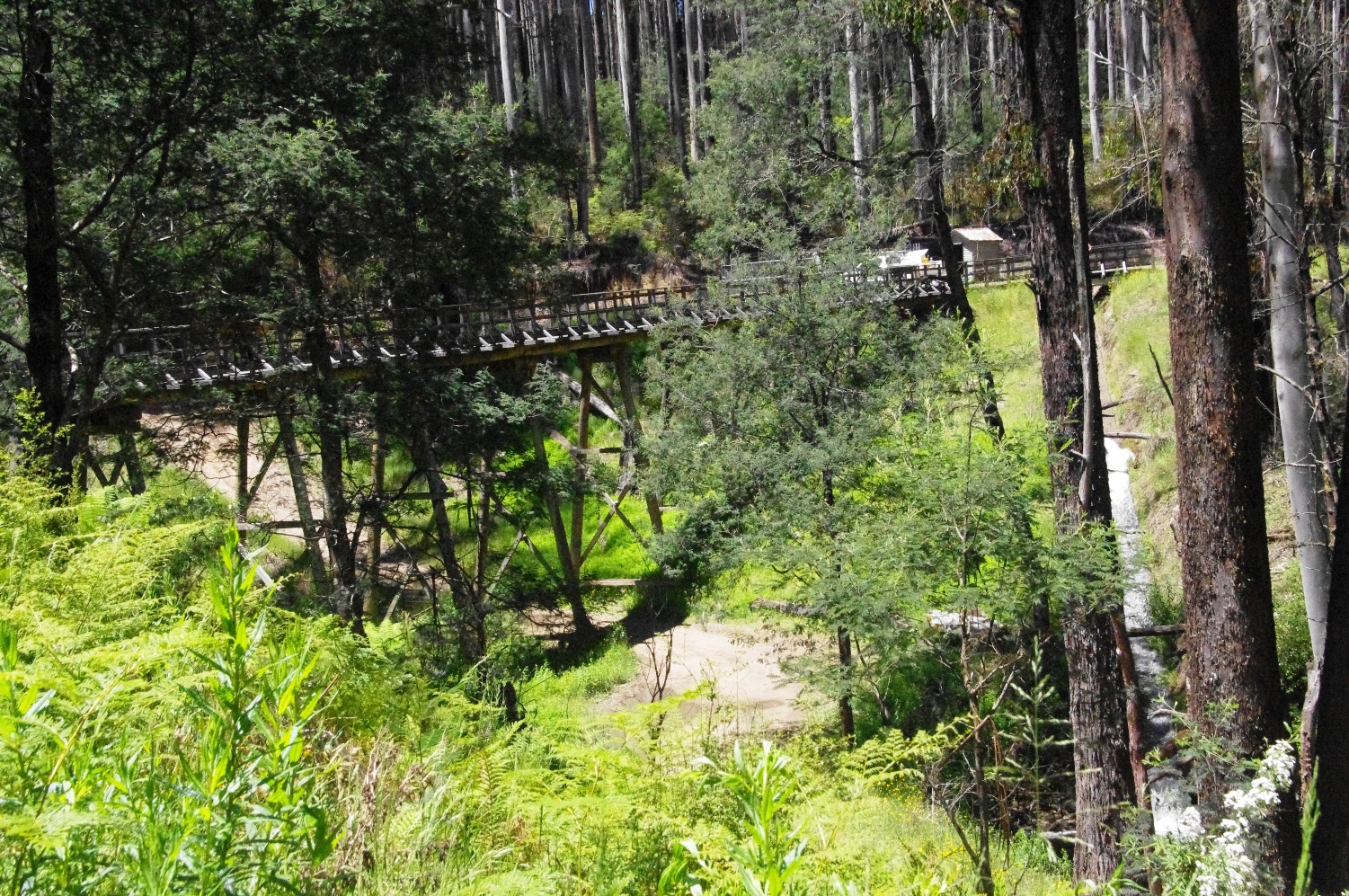
Further around the curve we came across the SEC sawmill; still in working order for demonstrations. We could see the diversionary track to the Rubicon Dam, but this would add another 7 km to the hike so we turned north. Before long we arrived at the Syphon trestle bridge, quite spectacular as it crosses the fern gully. We met some Aquariuses (*Acquarii?) in the guise of maintenance workers, the only people we would see on the trail all day. The forest here was gorgeous, and I cannot figure out why this walk is not more well known; it is so pretty and interesting, and relatively accessible, that it should be crawling with tourists. We were happy that it wasn’t.

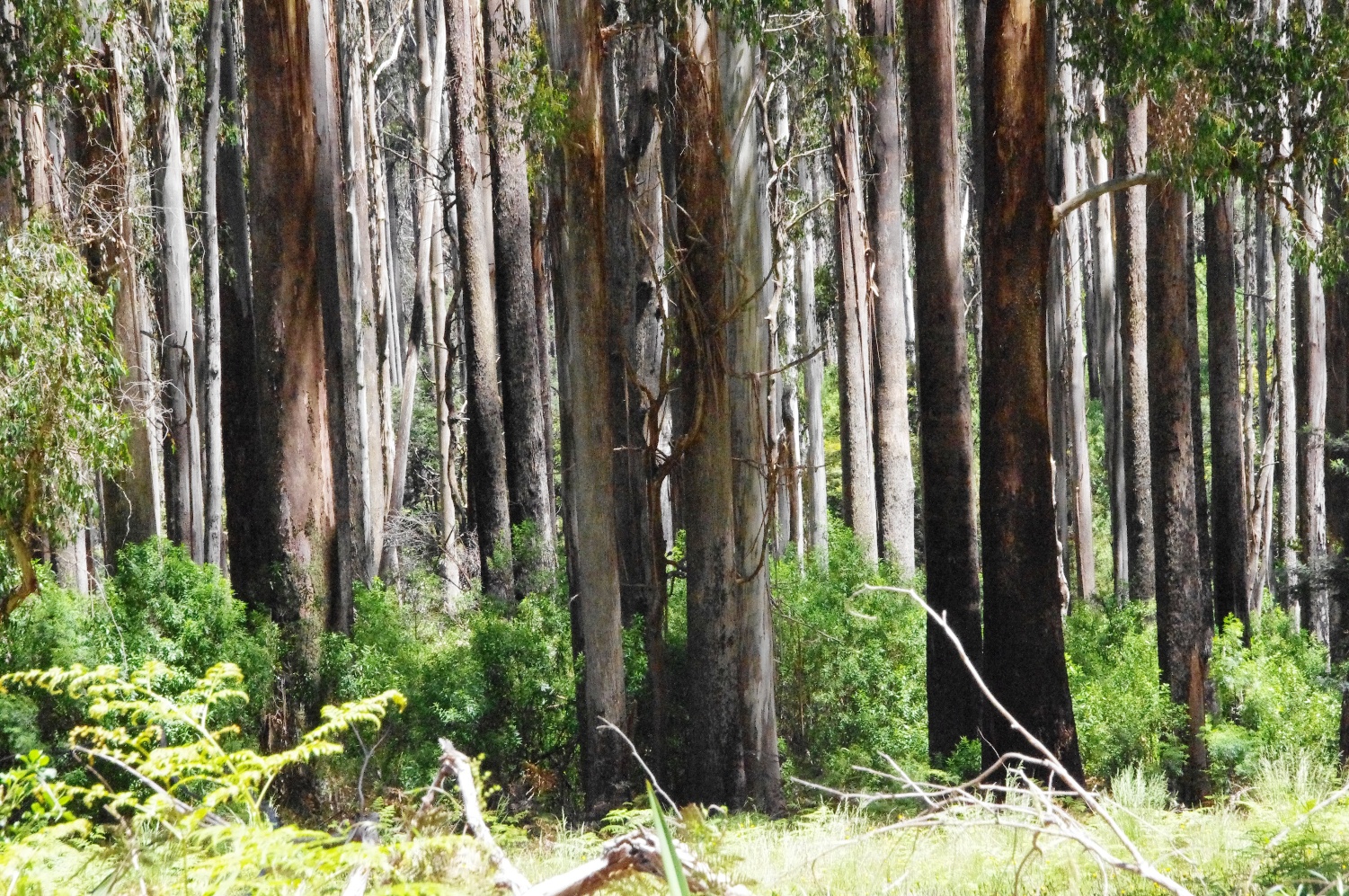
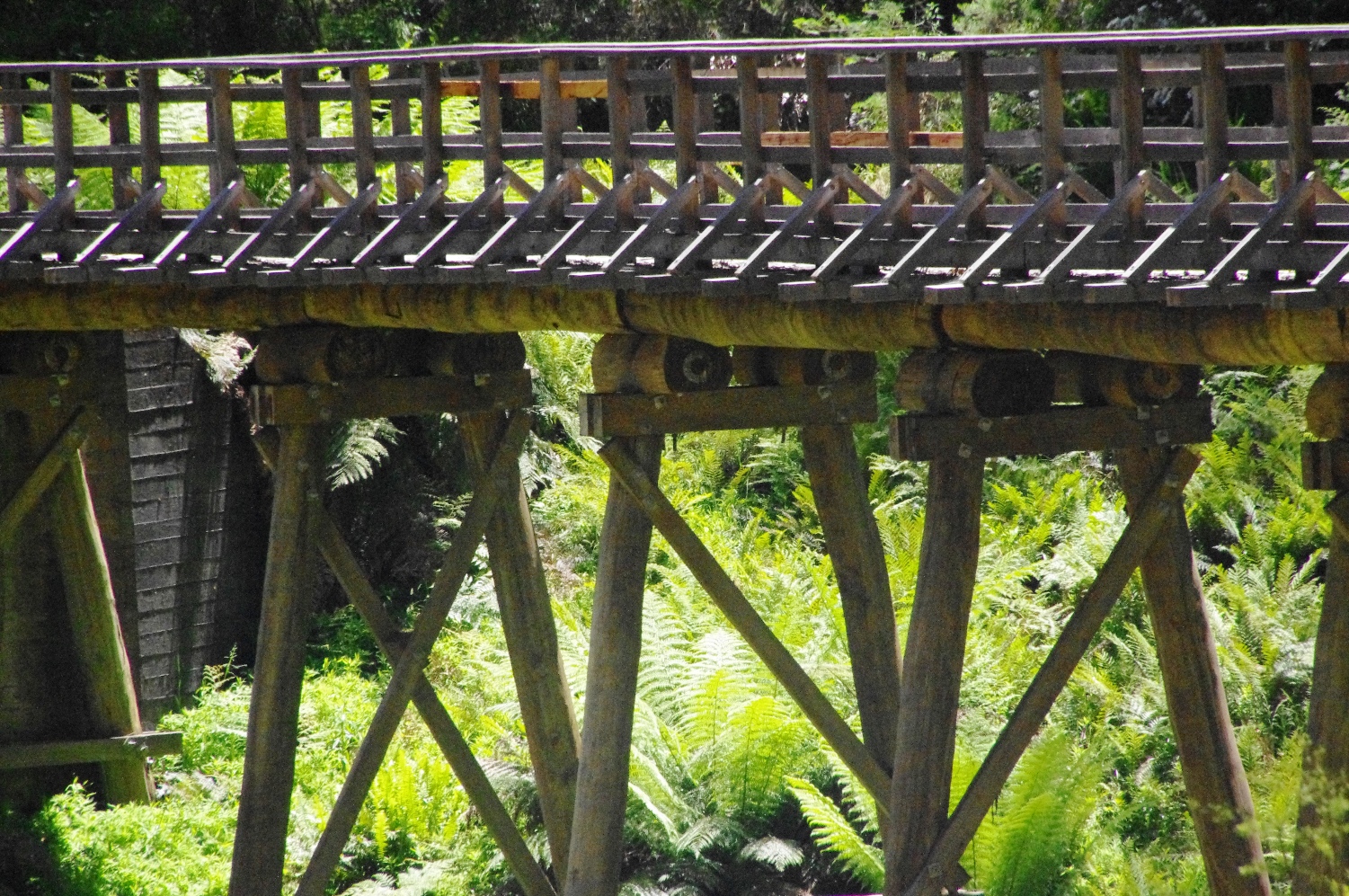
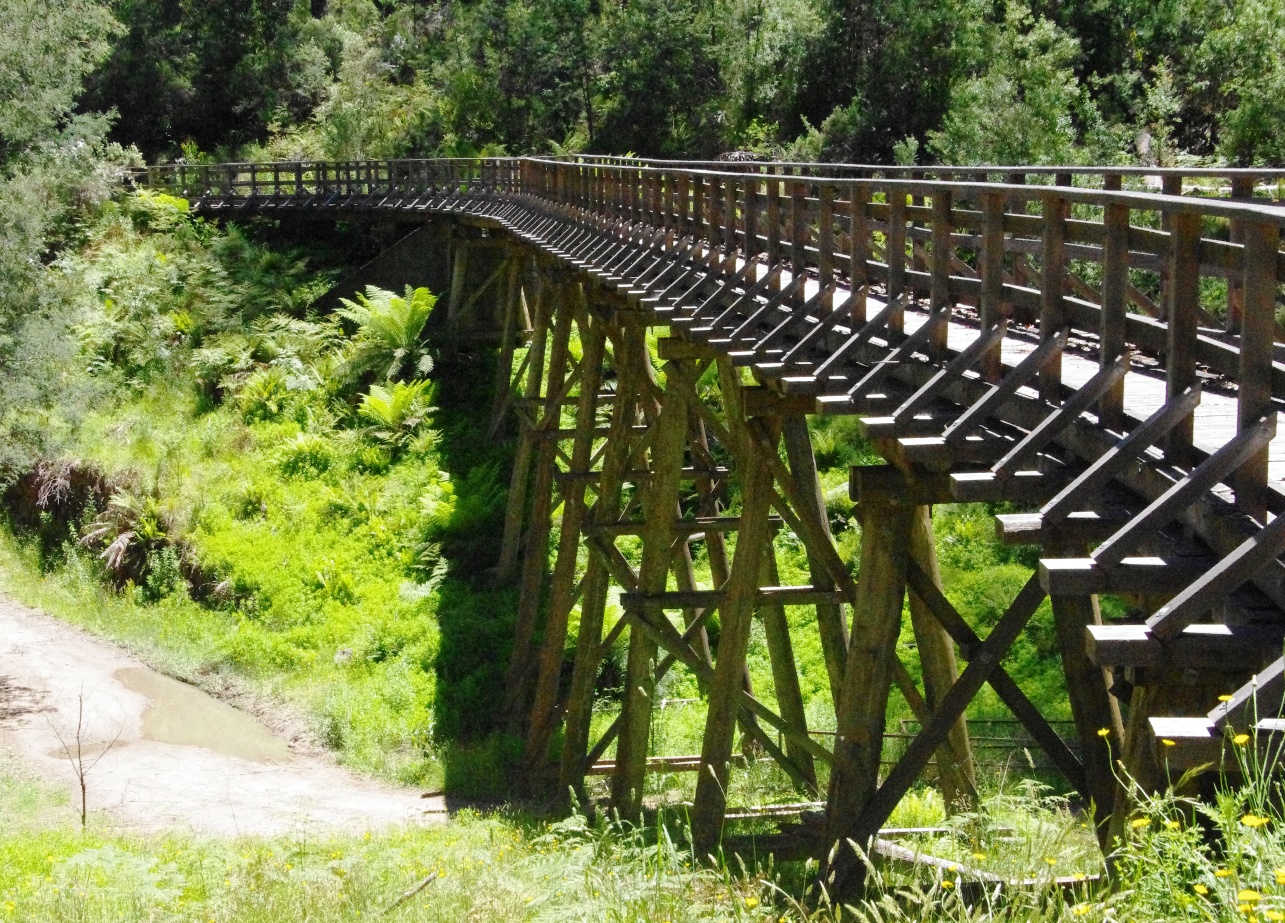
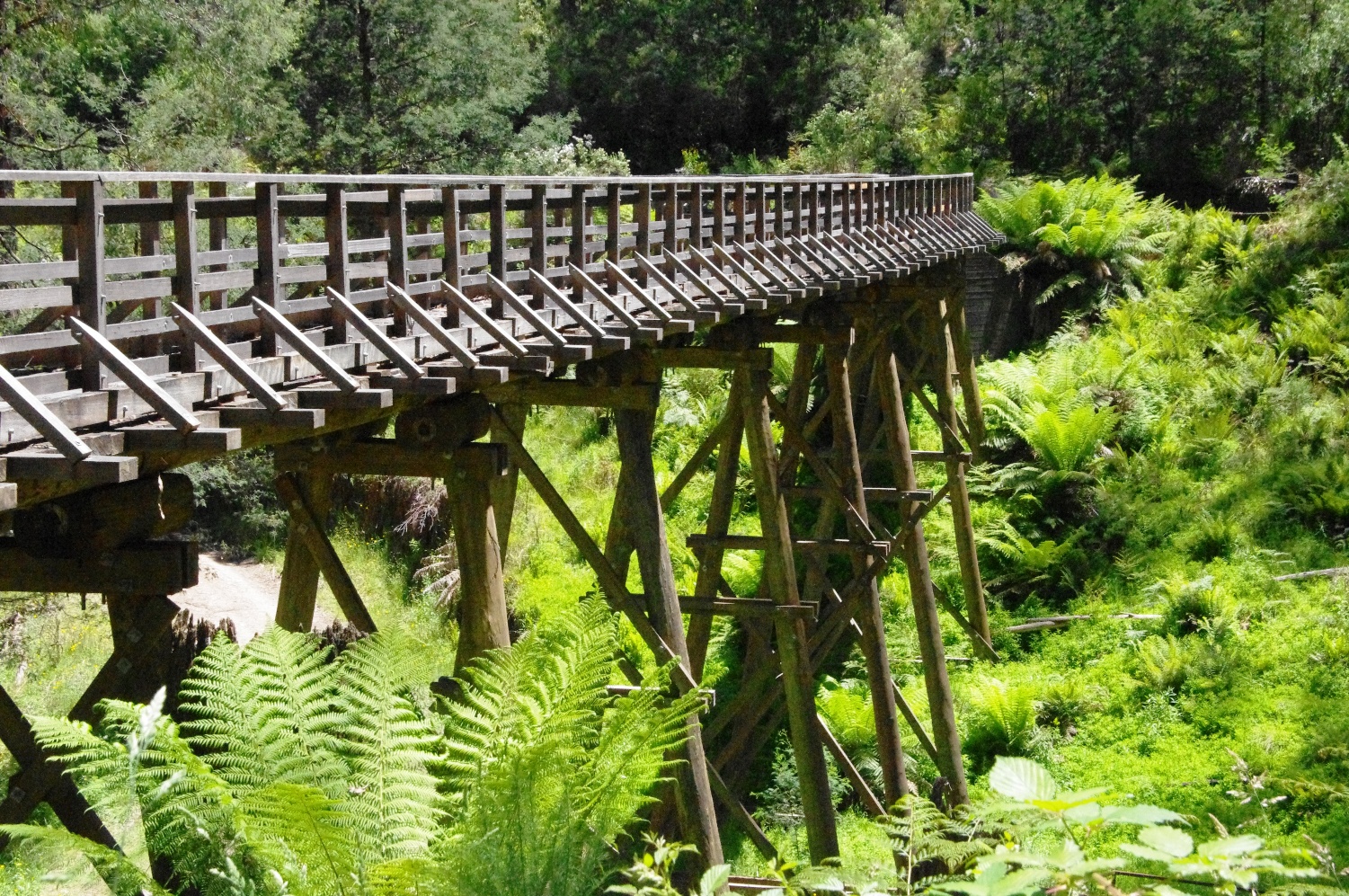
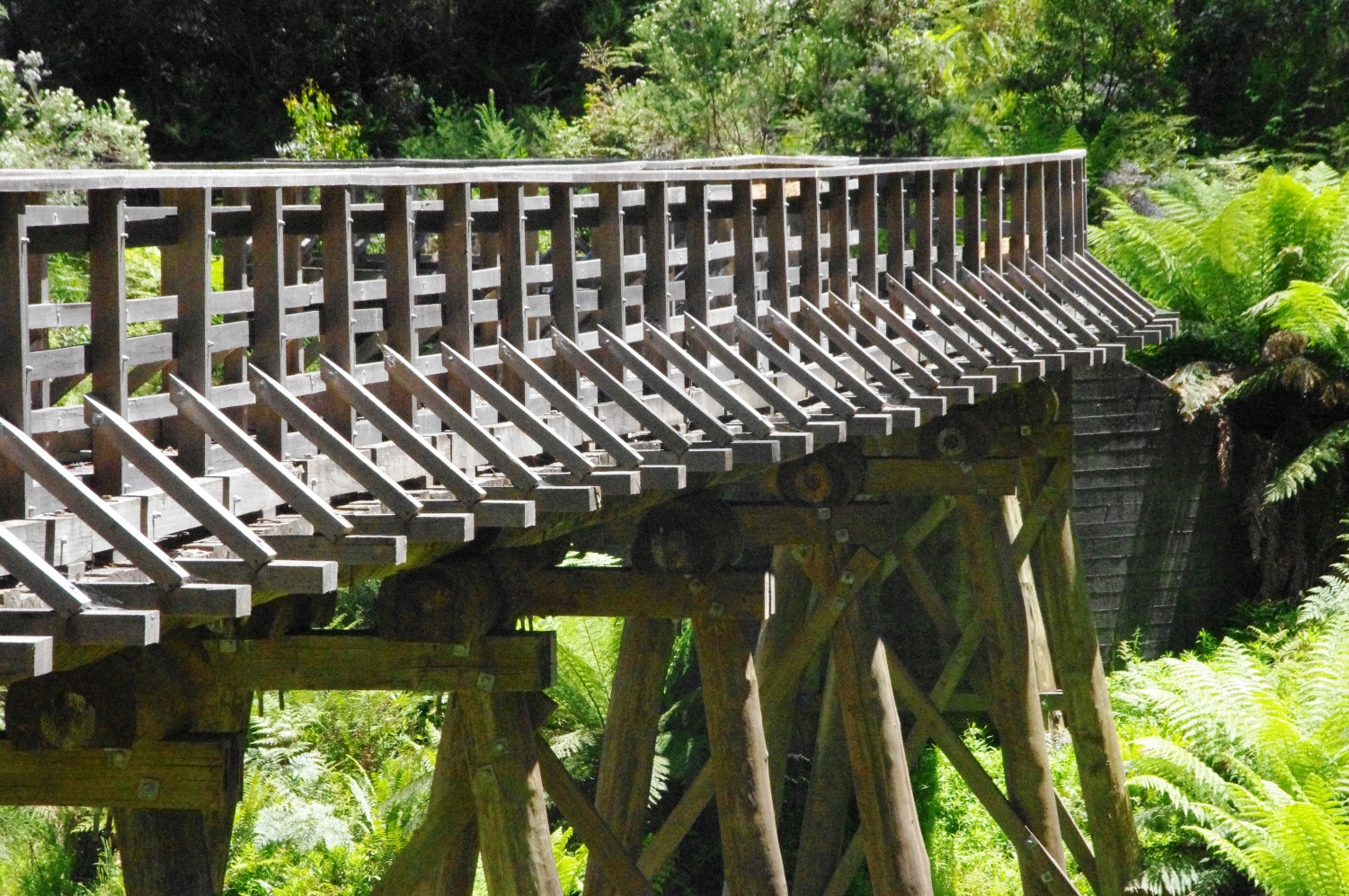
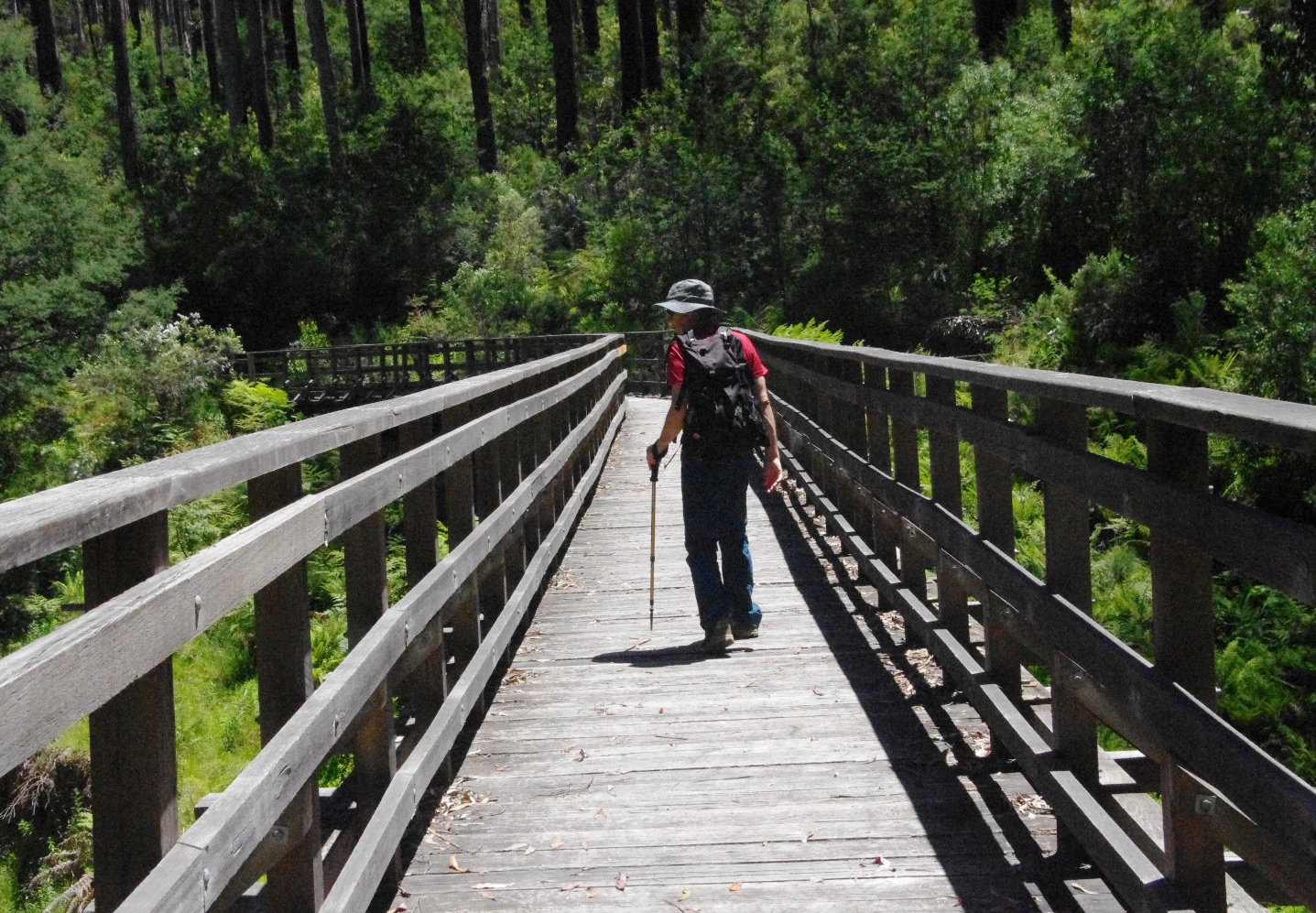
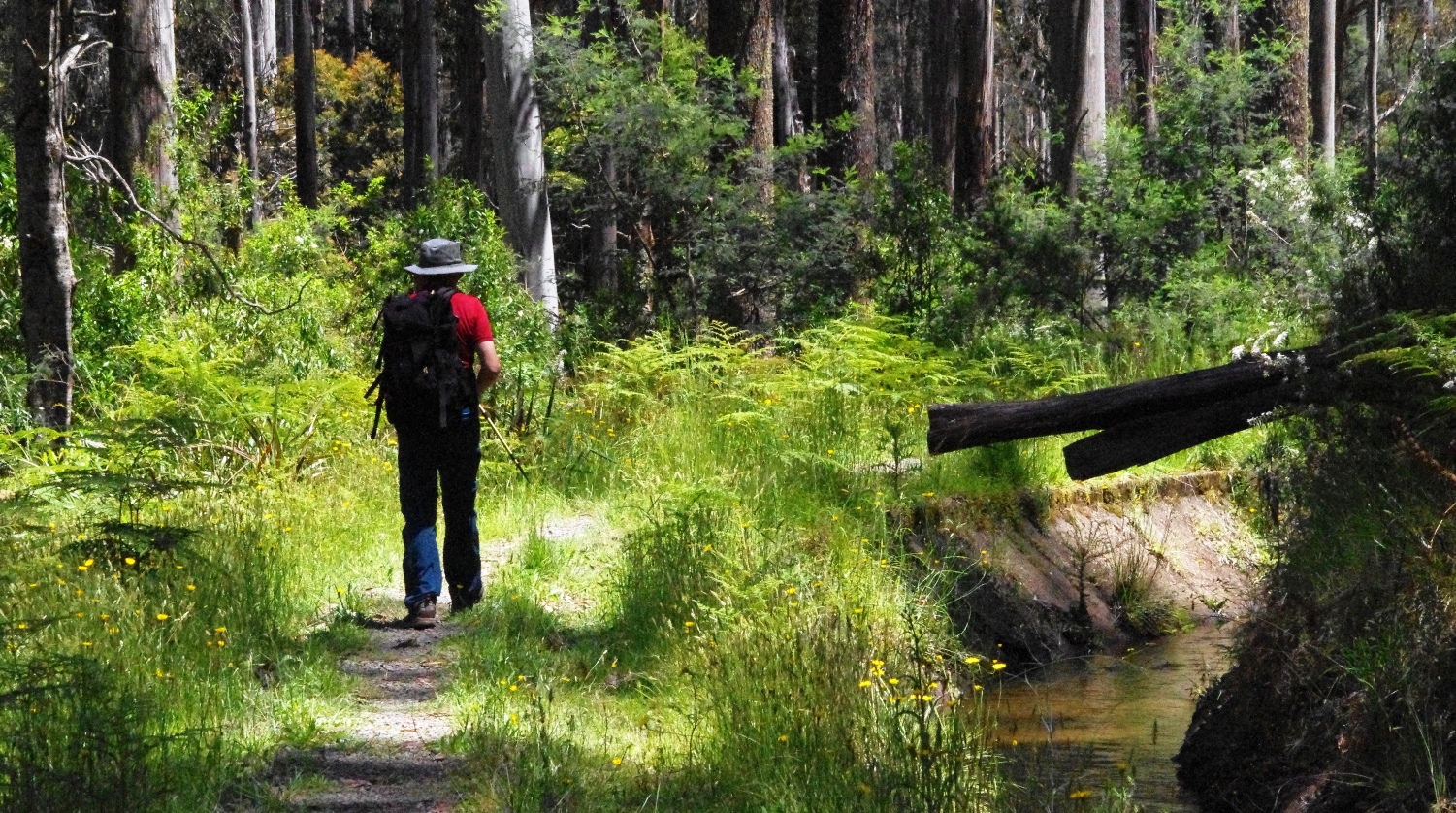

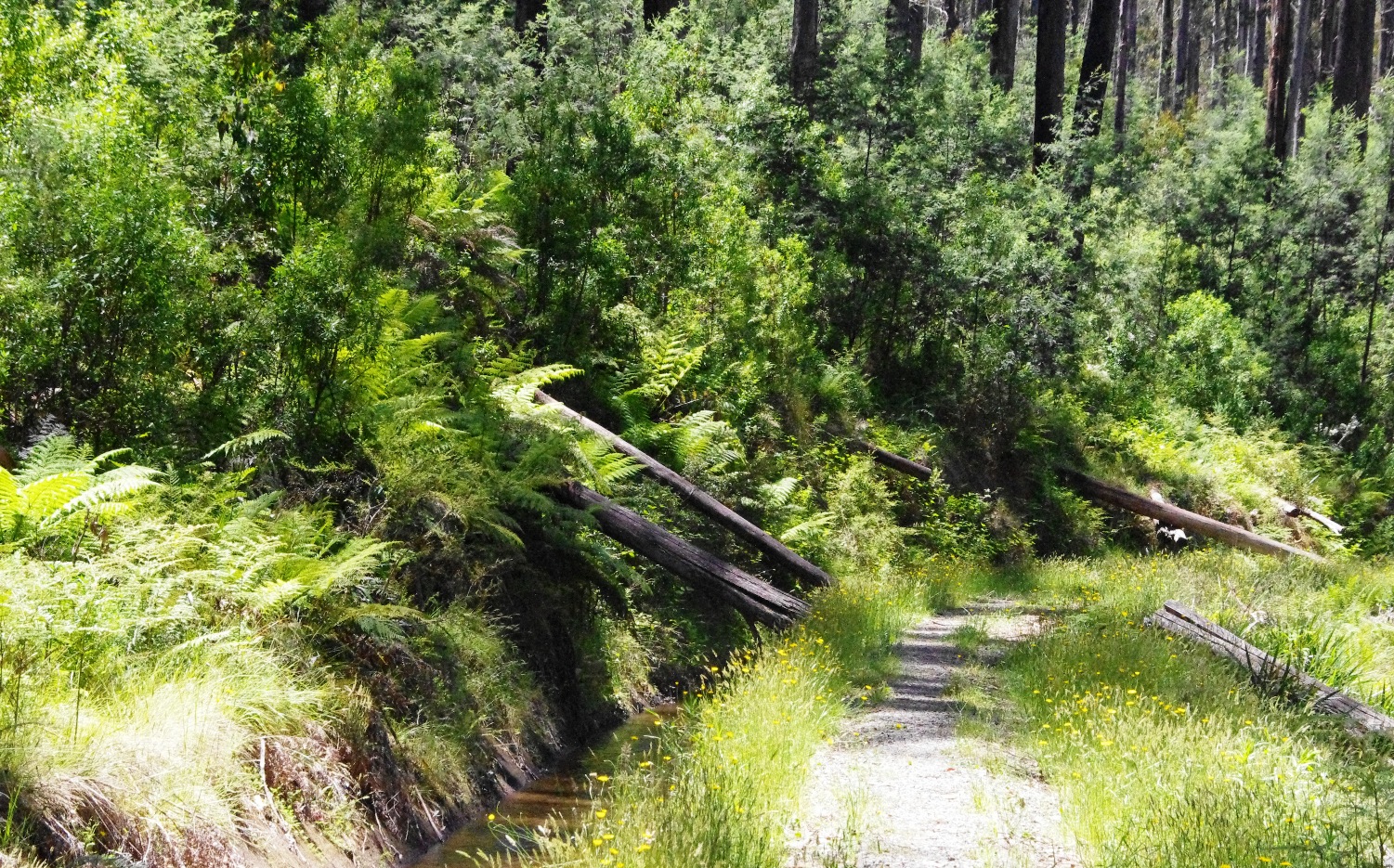
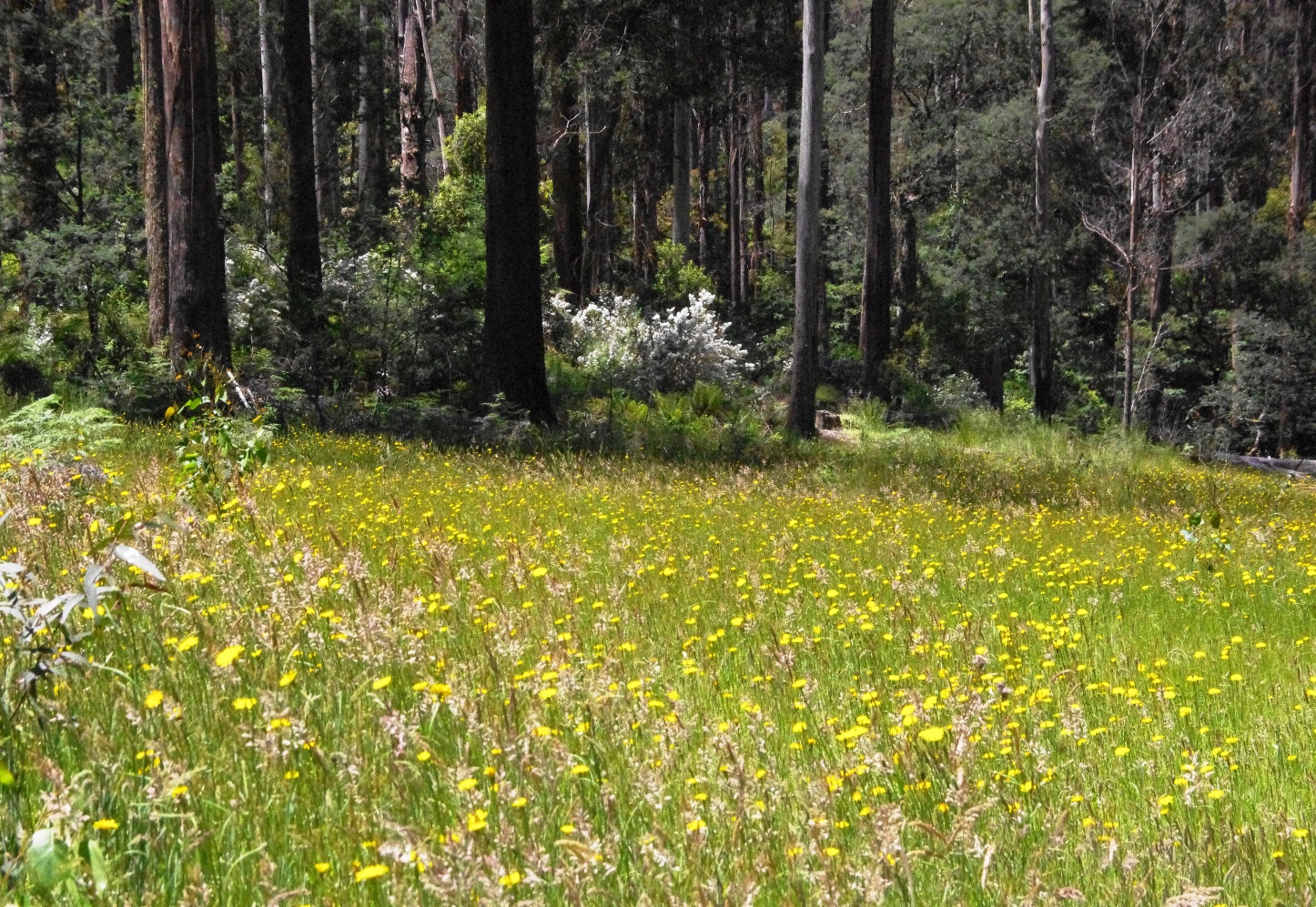
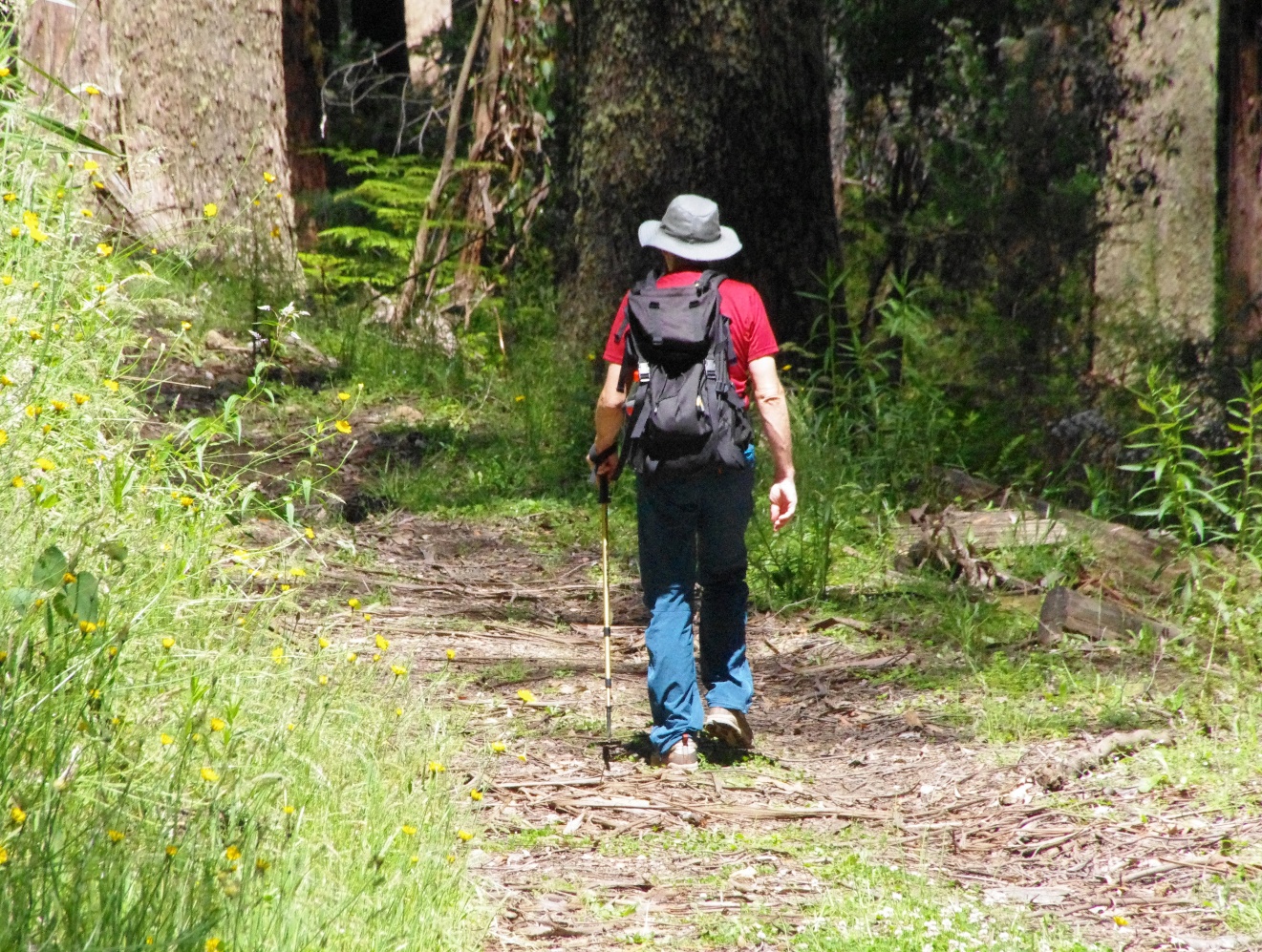
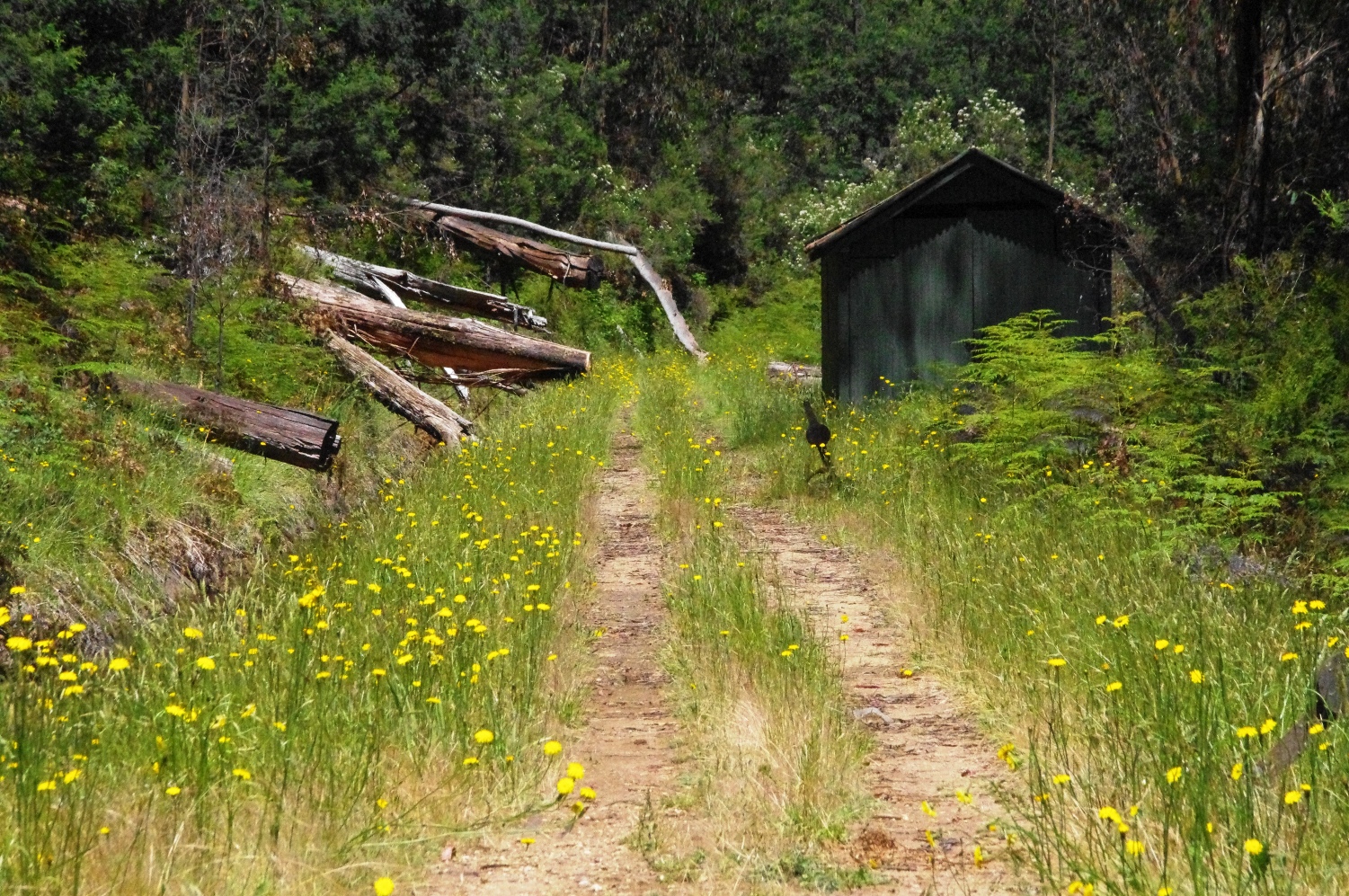
The next section involved following the aqueduct north for about 5 km. Every so often the forest track would deviate, heading straight down into a deep gully and up the other side, while the aqueduct took the longer but flatter route around the gully head. It was shadier taking the flatter route, but the tracks was rougher and more overgrown.
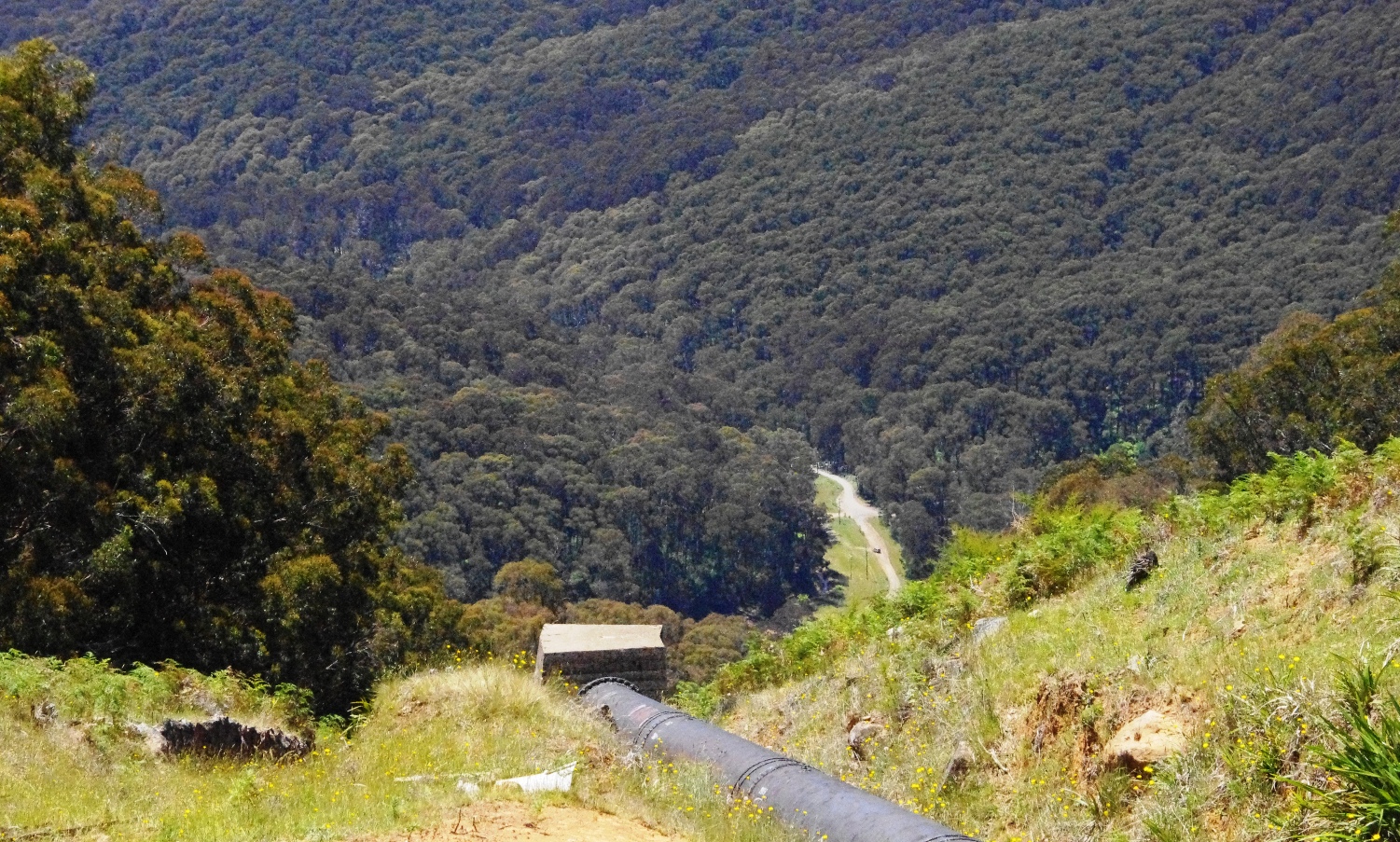
Fortified by sandwiches on a rare ant-free log, we pressed on. Finally we reached the high point, and found ourselves looking down the same pipeline that we’d first seen . It was a very long way down! After admiring the view of the valley and beyond, we turned south again, back into the forest. The last few kilometres were on a relatively flat dirt road, and we made our weary way back to our starting point. Ian recorded 13 km hiked, quite a bit longer than my trail notes had said. I didn’t mind – it was one of the nicest walks I’ve been on, and I couldn’t believe it was such a secret.
We drove on to Marysville, a night in a plush hotel, and a large, excellent quality pub dinner at the Duck Inn, a well earned reward for our efforts. Marysville is of course rebuilding after the 2009 fires, and is completely different to how it looked last time we came (decades ago). The locals have done an excellent job; there are really nice touches everywhere, like the themed bicycle sculptures everywhere. You can see that people care about the town and want it to be attractive and appealing. There was a concert in the small park, but not a lot of people around anywhere else; I guess business picks up on weekends, and for Melburnians this is a day trip rather than an overnight destination.
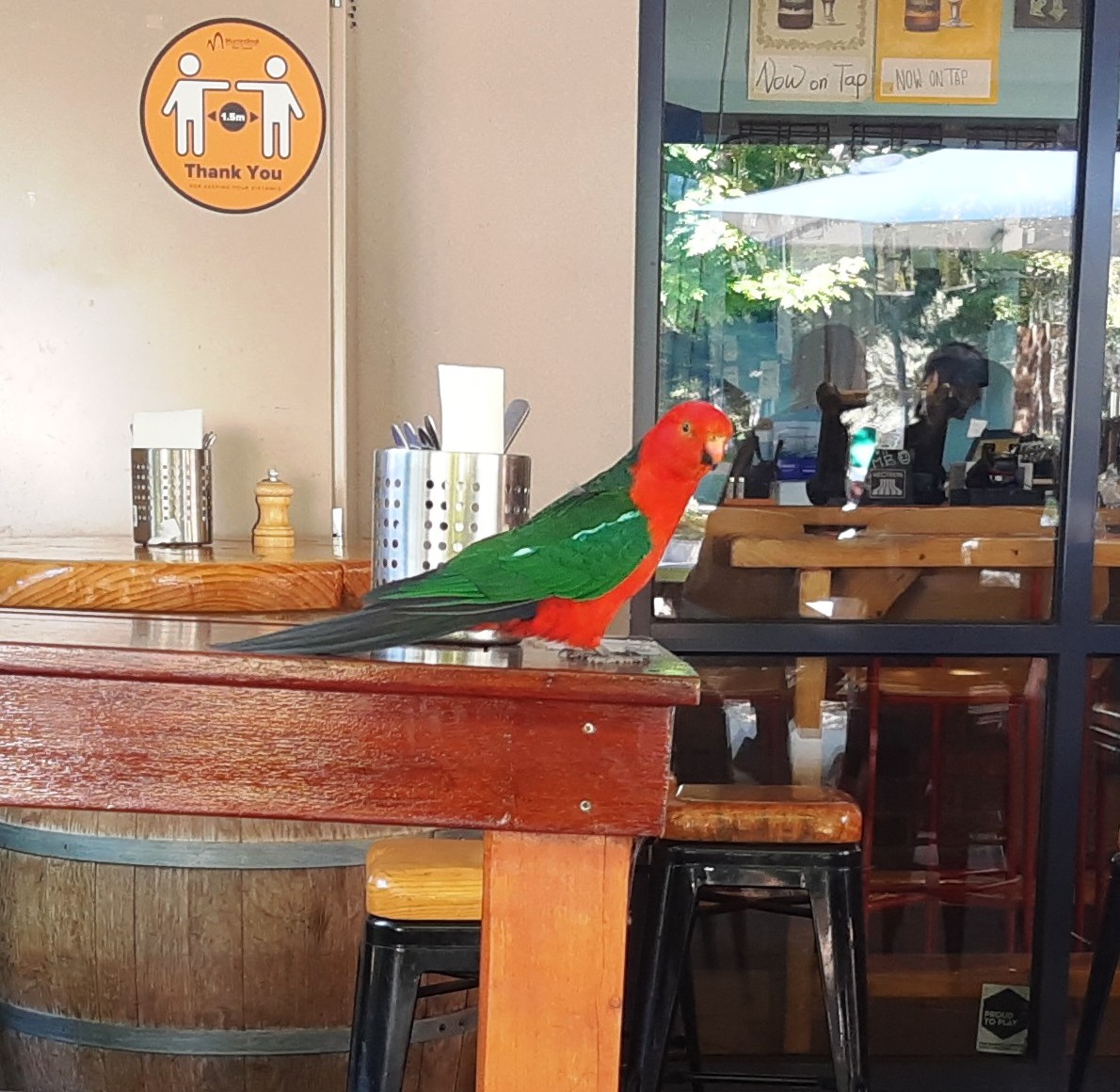
We had some feathered friends join us for dinner – yes this little guy is real!
 dipidydoo