As always, just click on any image to see it enlarged.
Another short trip to use up bookings made in 2021, and unrealised. We deferred this one until after the summer school holidays. After such a wet spring, we were wondering what the weather would hold in store, but its been a hot start to the year, and fire seems more likely than floods.
It was an uneventful drive yesterday to Wangaratta; I’d also booked two nights here for the Victorian Orienteering Champs, meant to be held in September, so it made sense to break up an otherwise long drive. We settled into our home away from home, turned up the aircon, and got an early night.
Refreshed after a good sleep, but woken up by traffic noise from the highway, we didn’t get going until late morning. Our plan was to follow the North East Silo Art Trail, via the Winton Wetlands, which is one of those places we’ve zoomed past many times on trips up and down the Hume, but never stopped to have a look. As we’ve found on all of these short trips, there is so much to be seen simply by detouring off the freeways
We took a route via the Warby Ranges – now upgraded from a State Park to a National Park – and Tamininck Gap, across to Lake Mokoan. We’d cycled in this area about 25 years ago, and vaguely recalled the quiet, and mostly flat, back roads. The temperature was already climbing to 30 degrees.
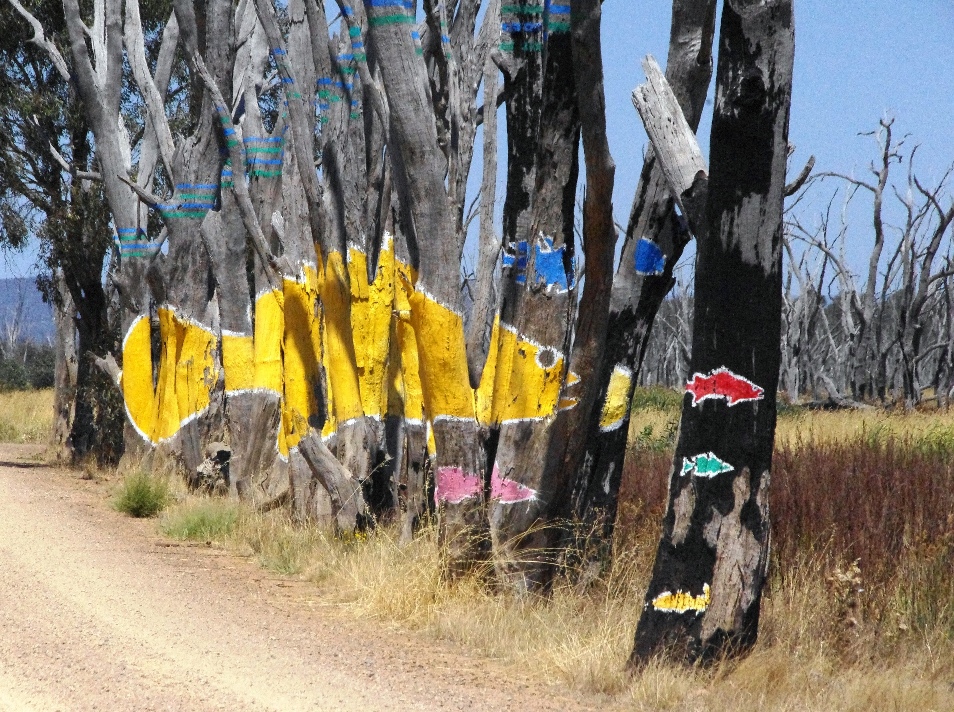
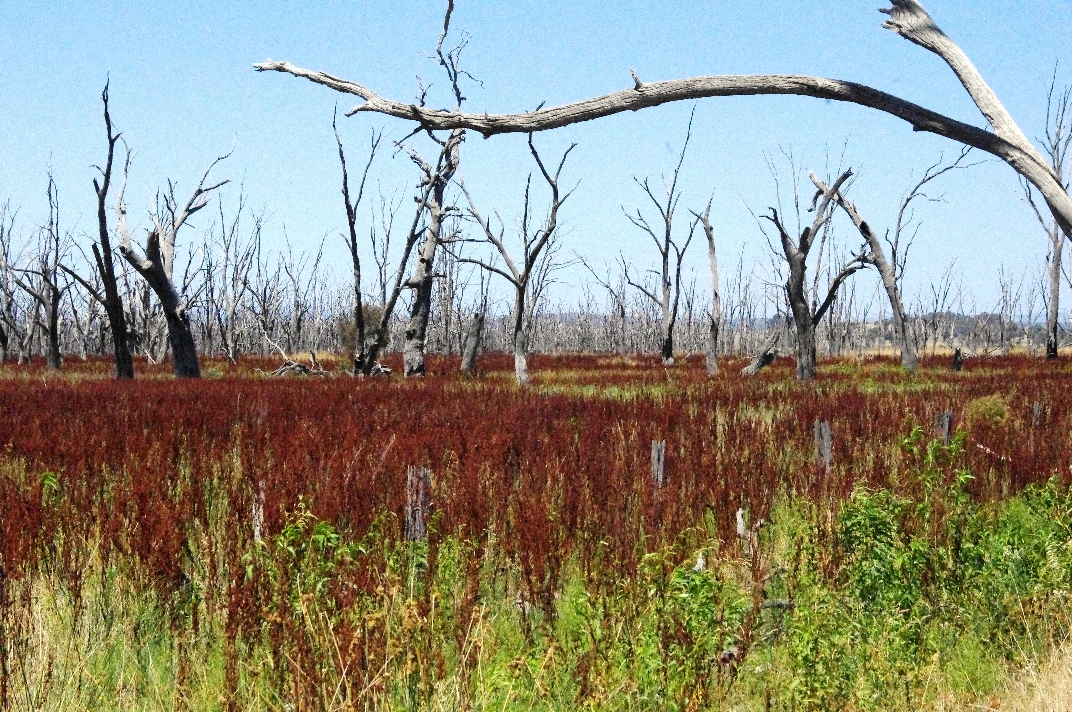
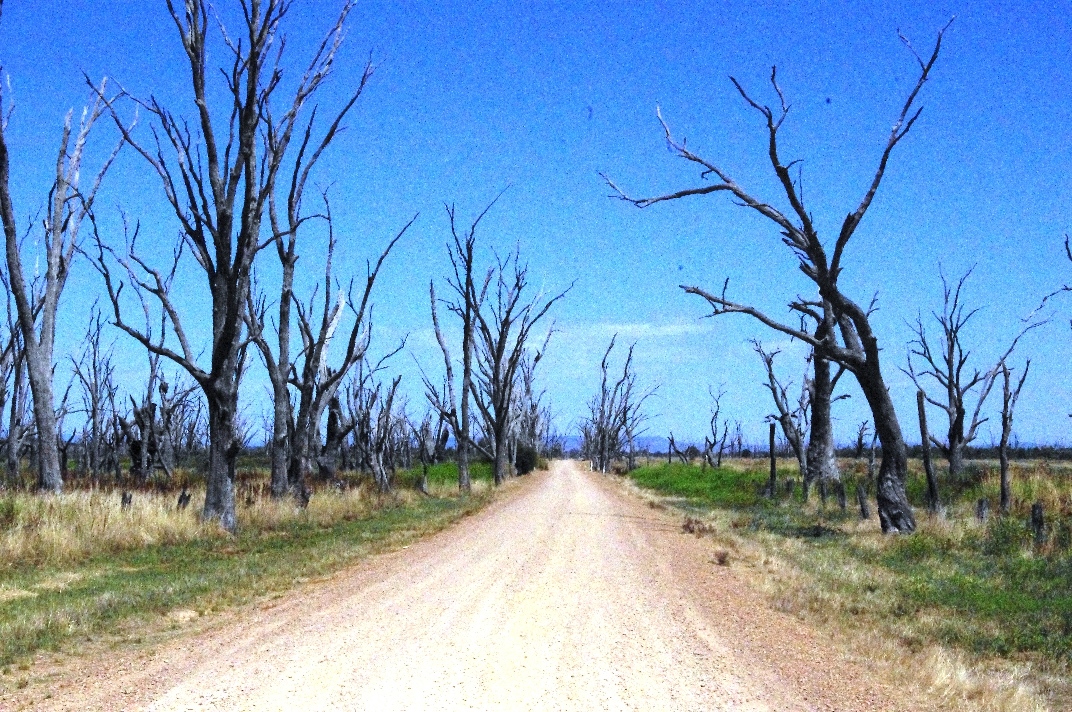
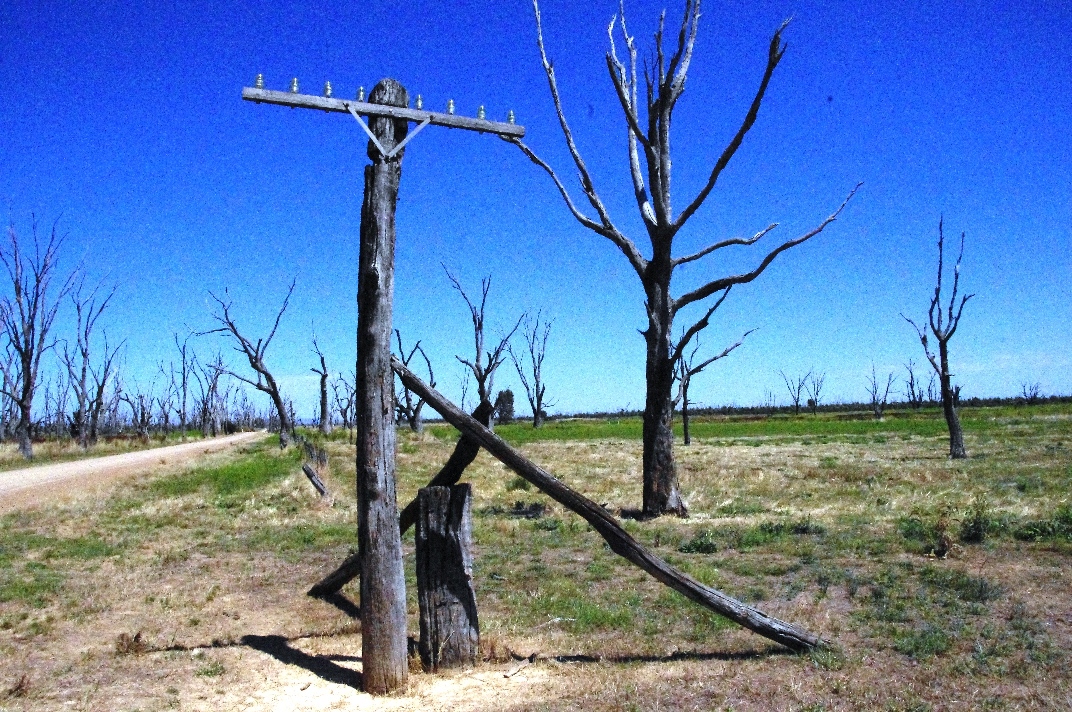
We took the unsealed Boggy Bridge Road, which links several of the art pieces installed at various points within the Wetlands. We paused at the Fish Trees, realising that you have to view them at just the right angle to get the right effect. There was very little water to be seen, and the lifeless river gums were stark against the greens and rusty browns of the vegetation, and the deep blue of the sky. It was an interesting and unexpected landscape.
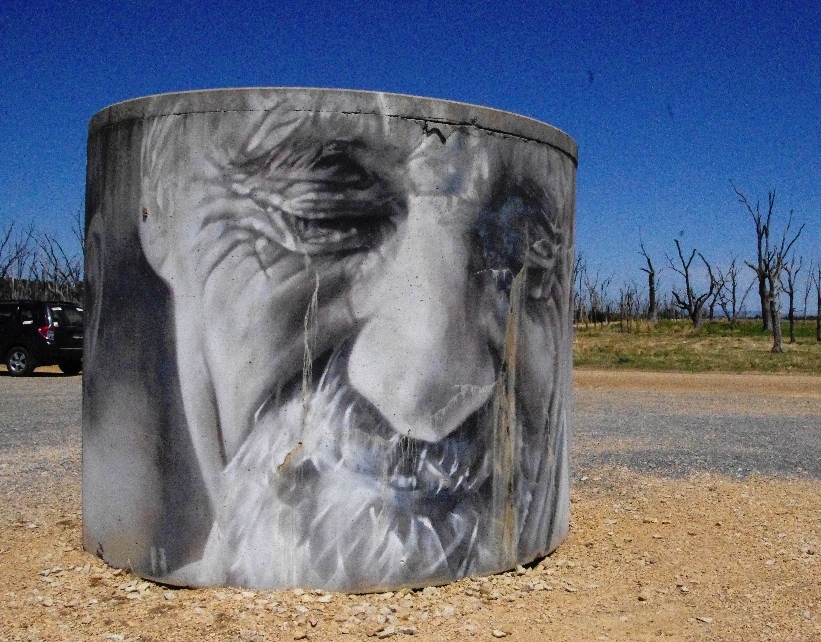
We continued to the CFA Water Tank, situated on a corner of two dusty roads – and wondered if we’d been transported to outback Queensland; it was so hot and dry. The painted tank is part of the Noth East Silo Art Trail (though of course not a silo, but it is a cyclindrical concrete structure). The tank depicts the contrasting faces of three local CFA volunteers. I particularly liked the older man; the weathered lines told many stories.

It was time for a late lunch, and the closest place was The Mokoan Hub café. My zucchini and pumpkin fritters, topped with a fried egg and accompanied by half an avocado and dollops of delicious toppings, were wonderful; Ian had an equally delicious lamb salad, and we finished off by sharing a gently warmed chocolate brownie and cream. Mmm-mmm.
Back out into the blazing heat of the afternoon, and onto the silos. Each small town on the Trail has chosen the subjects for its silos, and there is quite a variety. Each set of silos is only about 10-15 kms apart, and very easy to find.
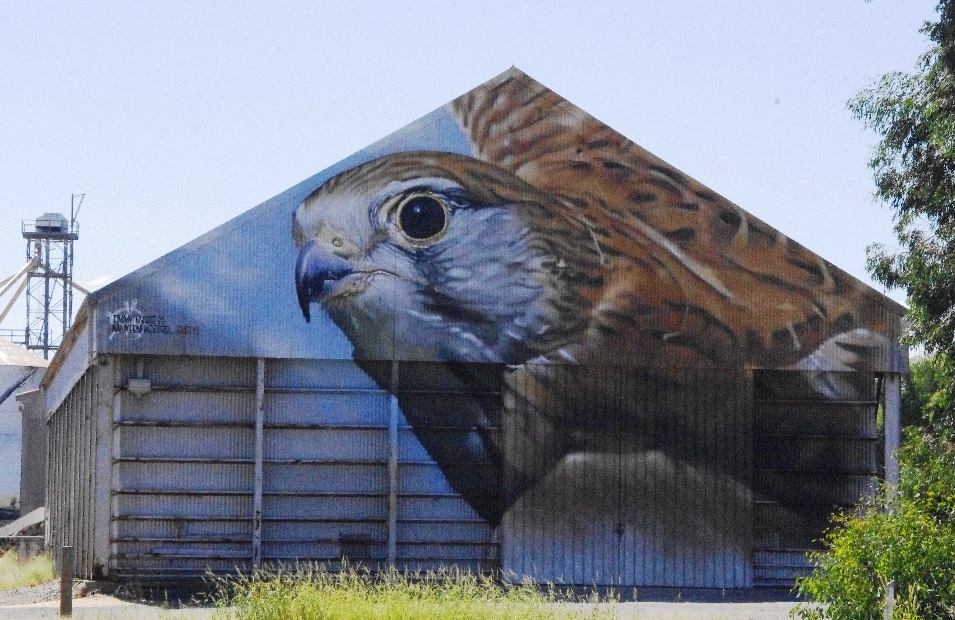
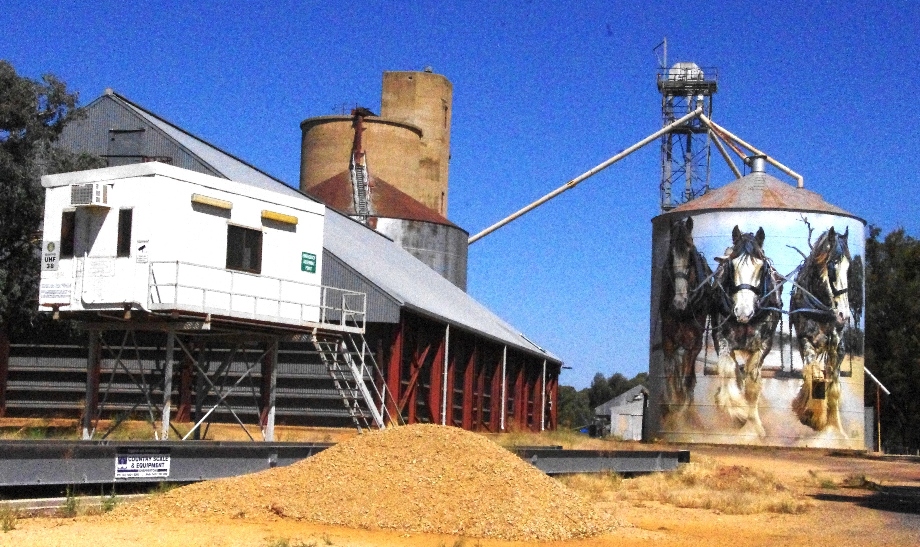
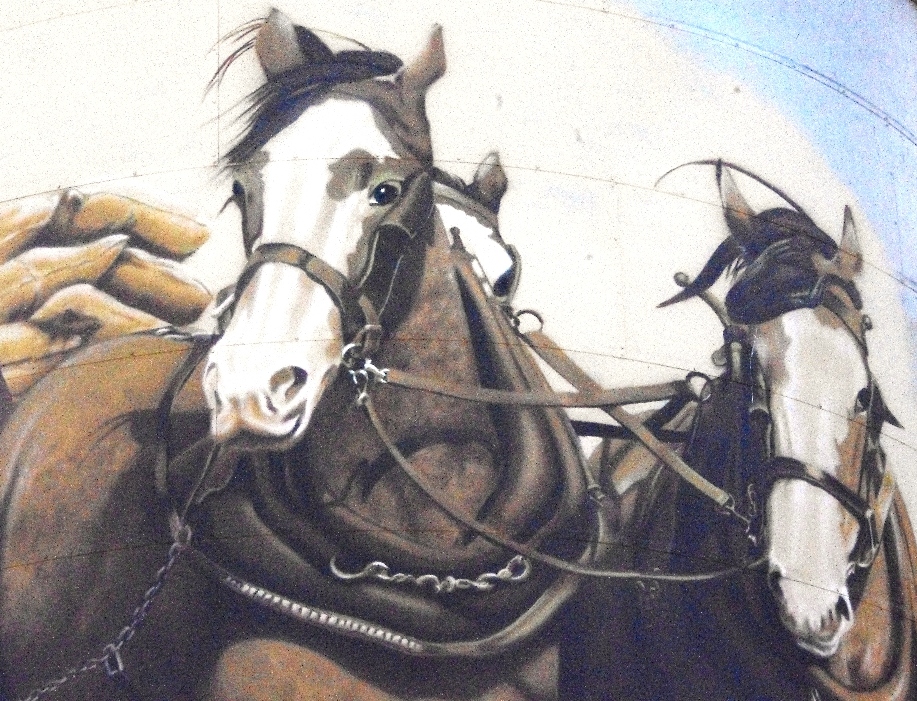
We began in Goorambat, the closest one to Benalla. When you approach from the south, you first see a giant Nankeen kestrel on the side of a huge shed. Next appears a very striking Barking Owl, looking ready to take flight; and the owl’s habitat on the adjacent silo. The detail is amazing, and we wondered how the artists were able to depict their subjects so clearly at such enormous scale, on a curved concrete surface with various orifices such as hatches and stair entrances. On the north side of the same silo, you see three Clydesdale horses, celebrating a well known local stud. Like the owl, these placid giants almost step off their “canvas” towards you.


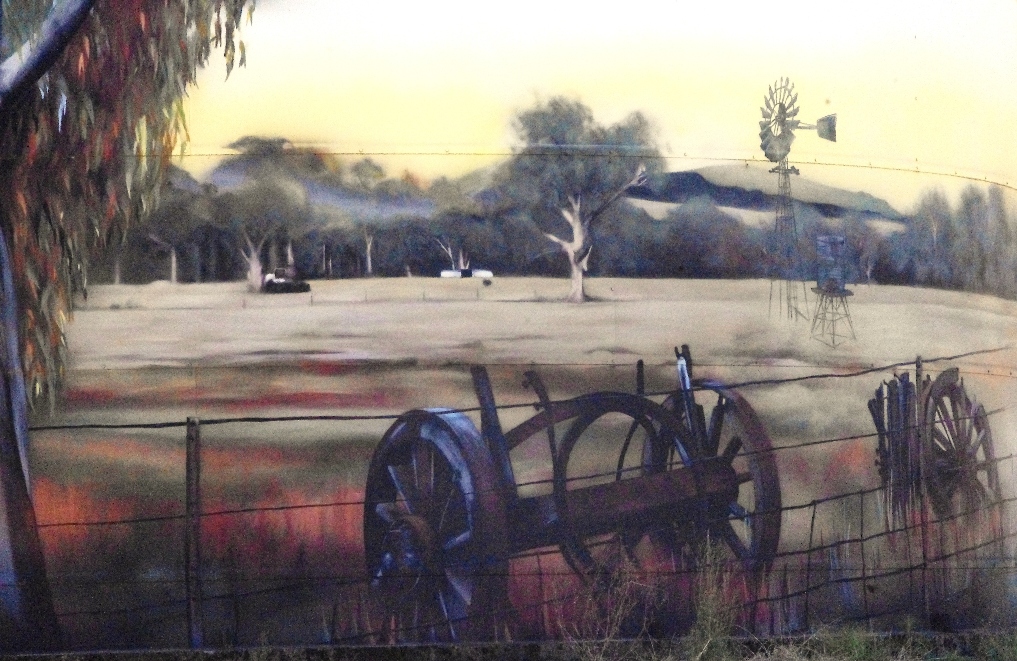

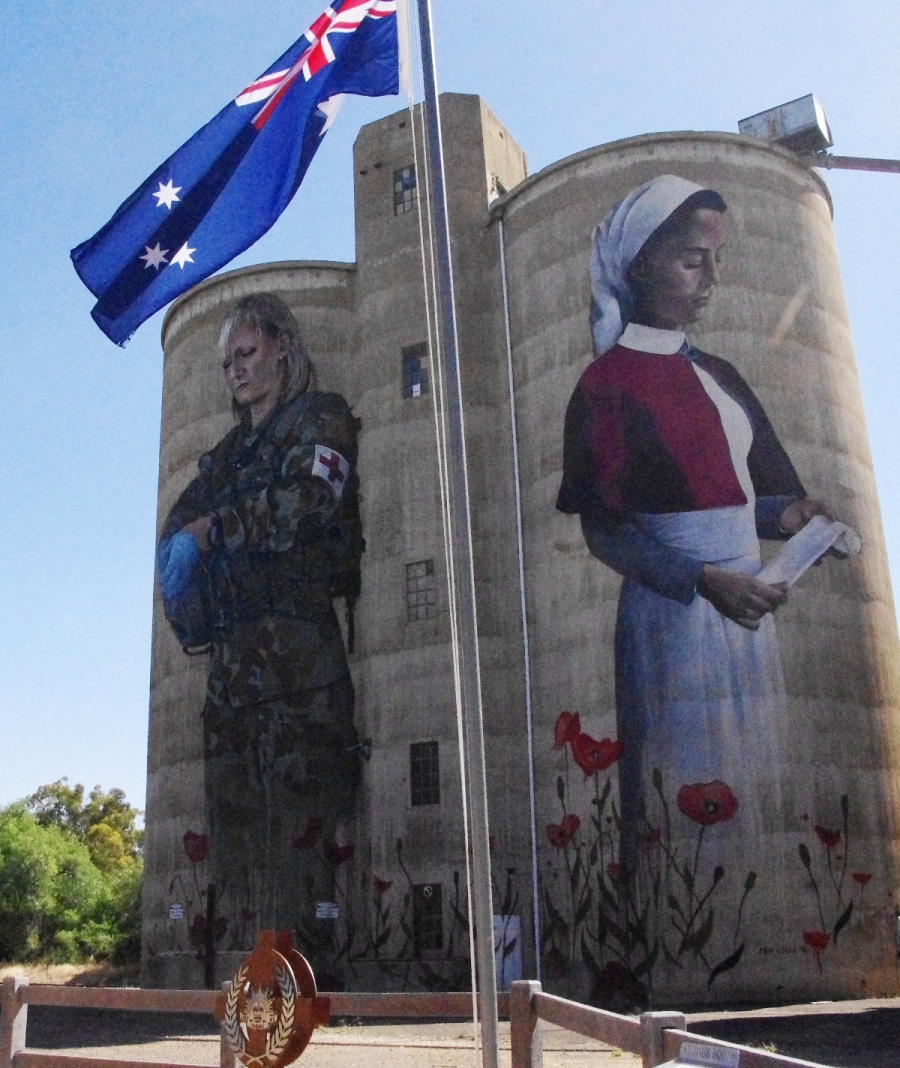
Next town on the Trail was Devenish, and their silos were a memorial to the 50 local men and women who served in war, which was one in six, so must have had a profound effect on the community.. I was struck by the gentleness on the face of the nurse as she wound a bandage.
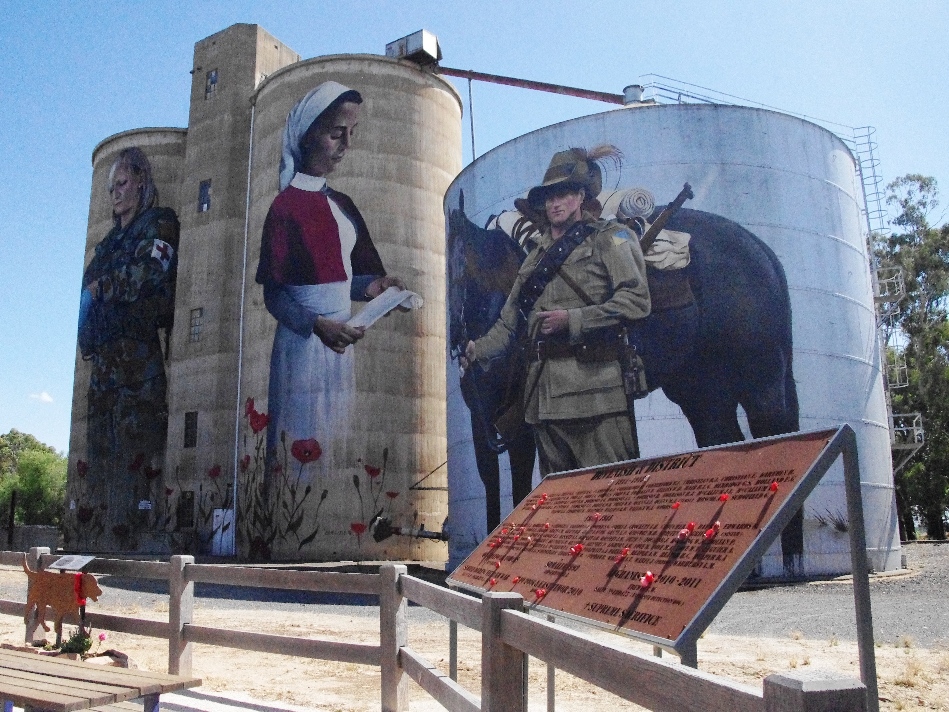
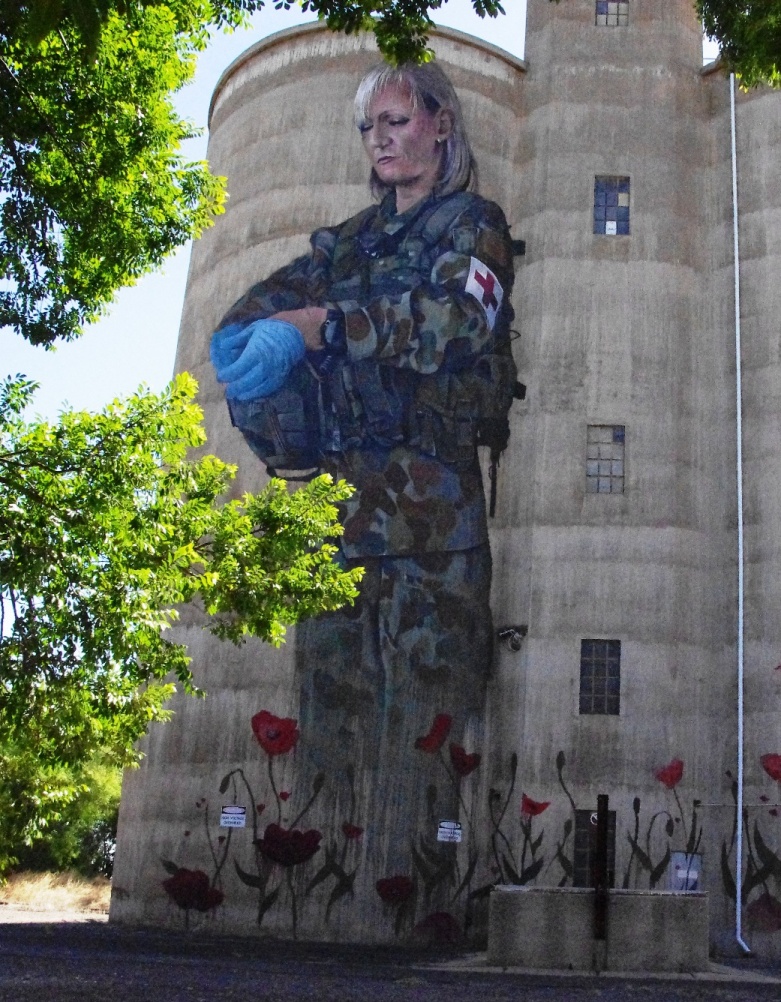

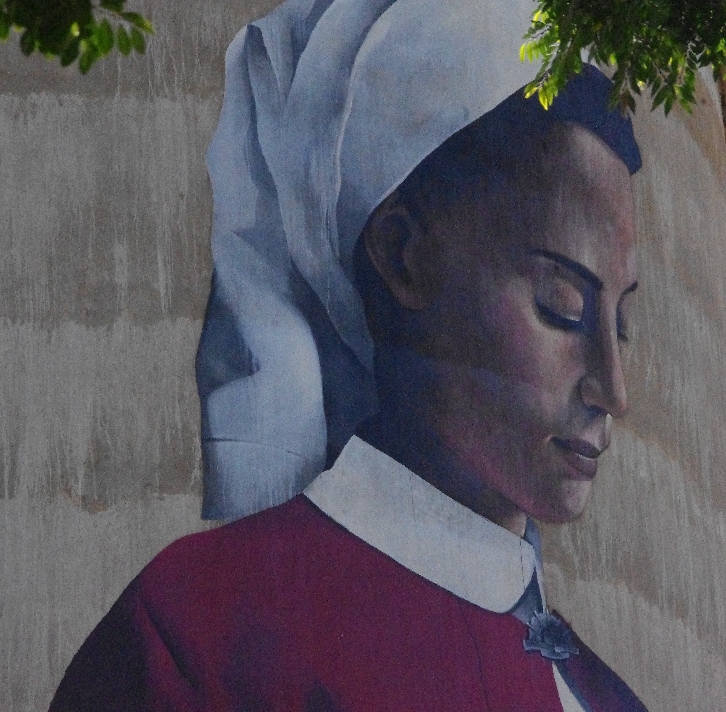
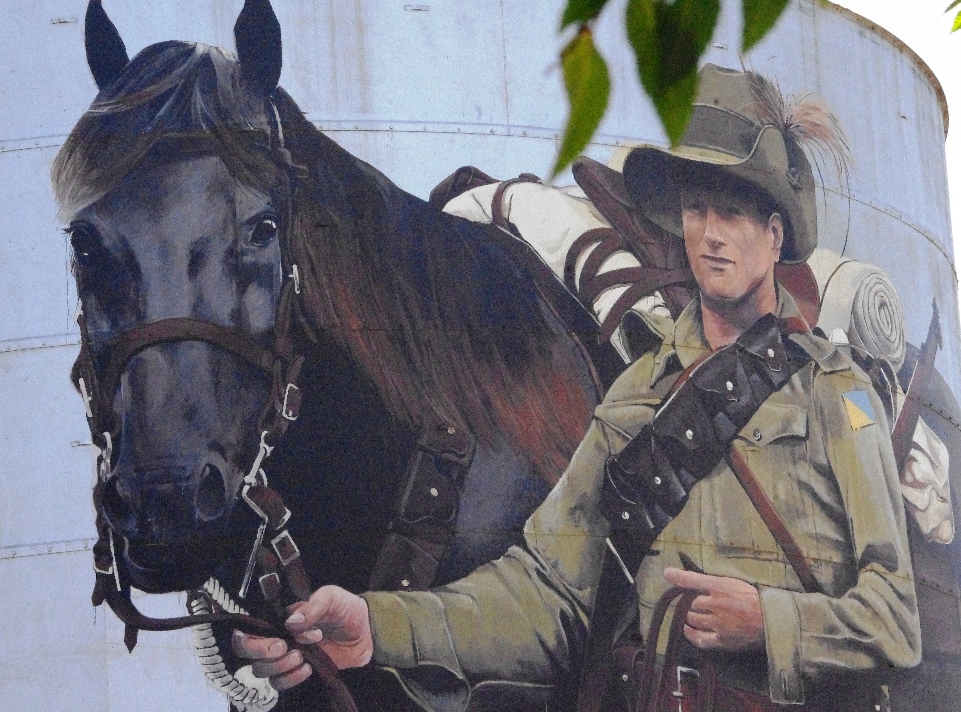
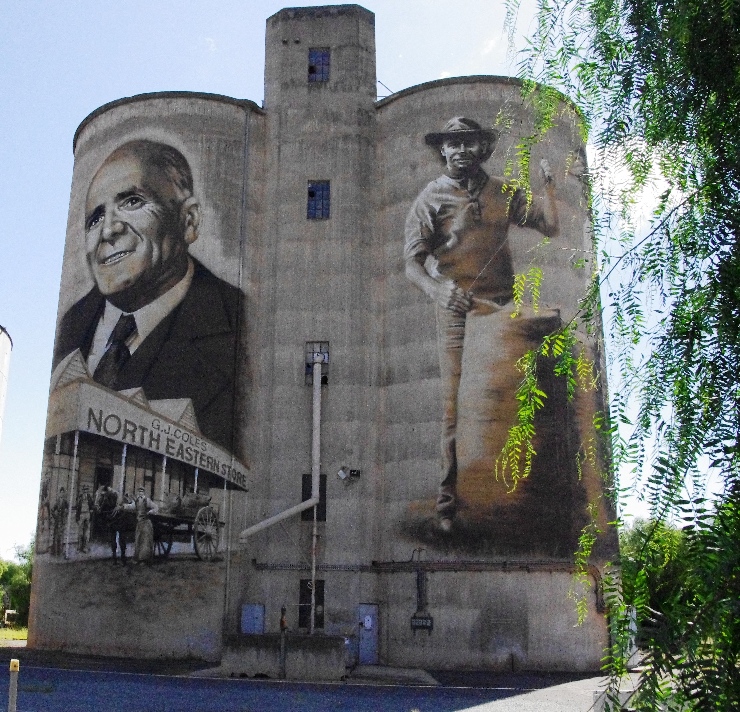
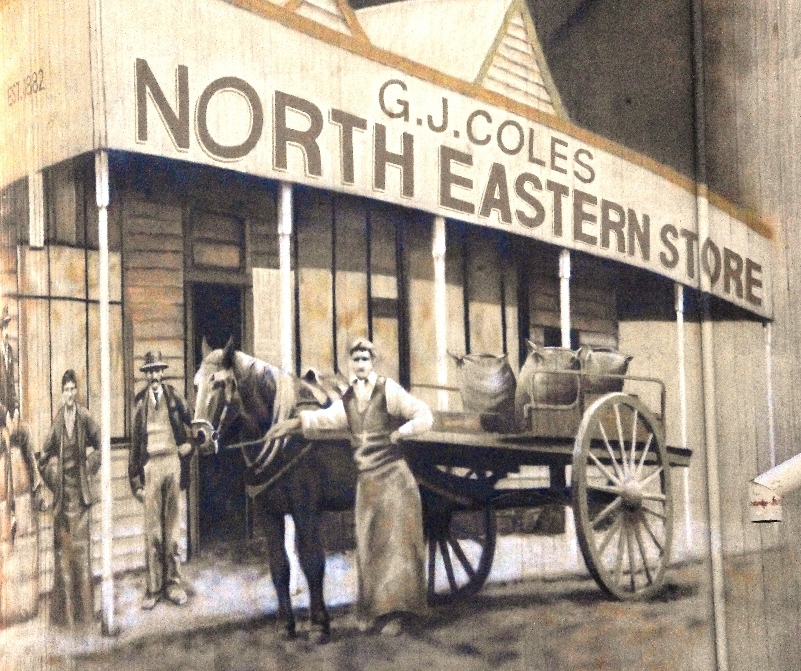
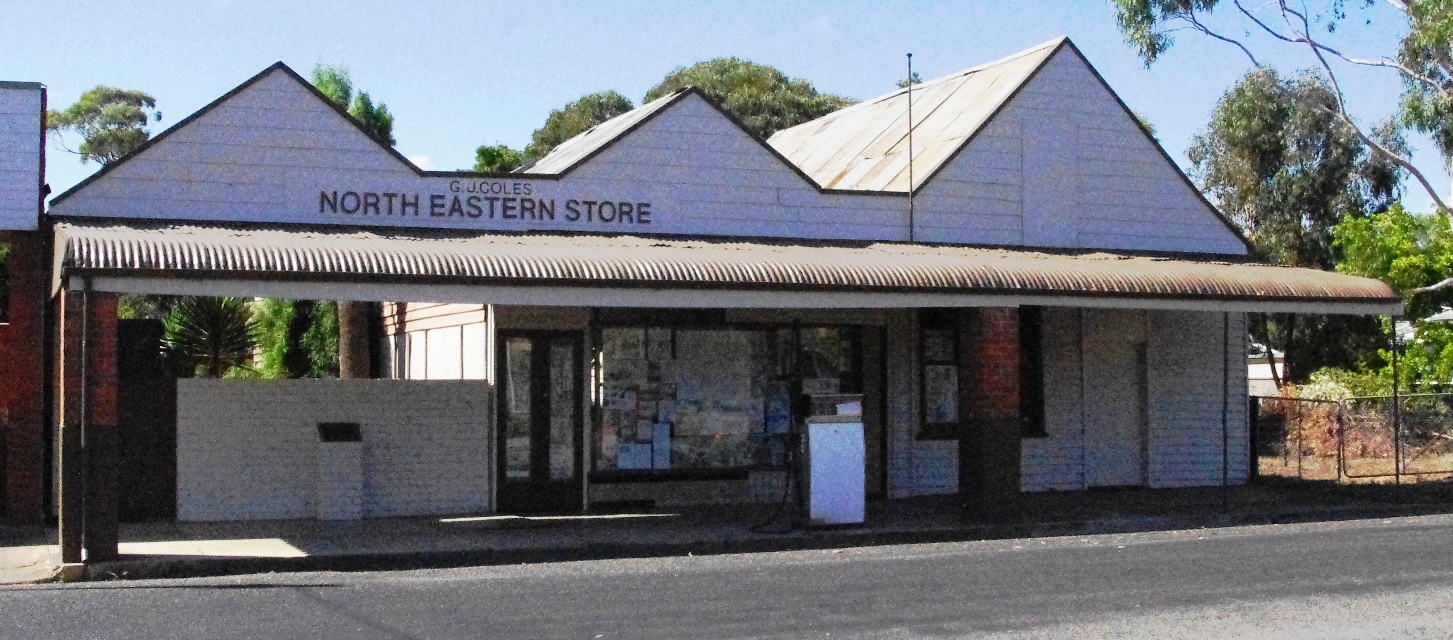
On to St James, whose most famous citizen was G J Coles, founder of the giant corporation. He started off in Geelong, then built two stores in Melbourne. With the profits, he was able to travel overseas and study the business methods of Woolworths and Marks and Spencer. He returned to Melbourne and put what he’d learned into practice, and the rest, of course, is history. One of his early stores is depicted on the silo, then as you drive around the corner, you see it for real.

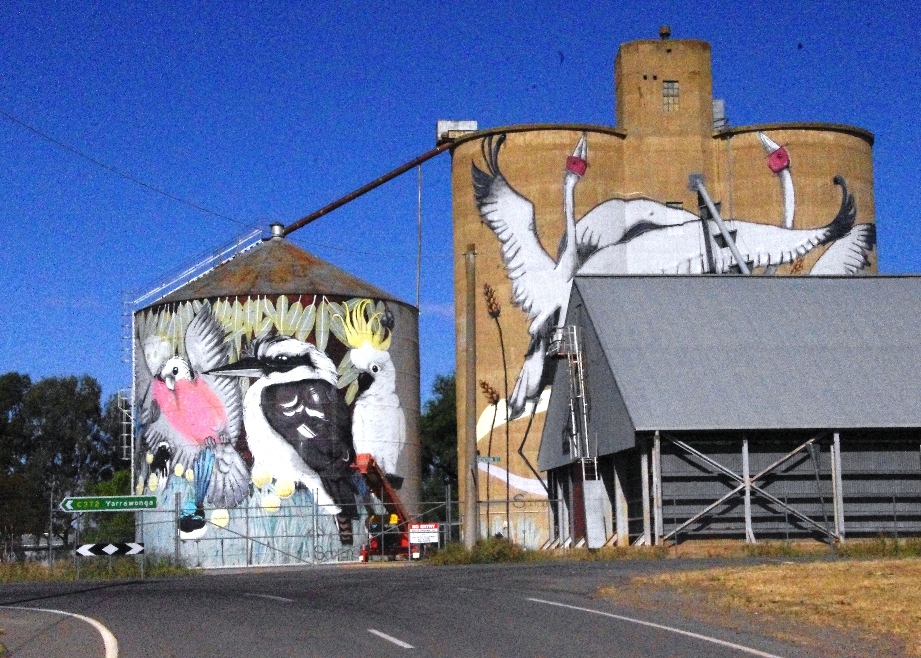
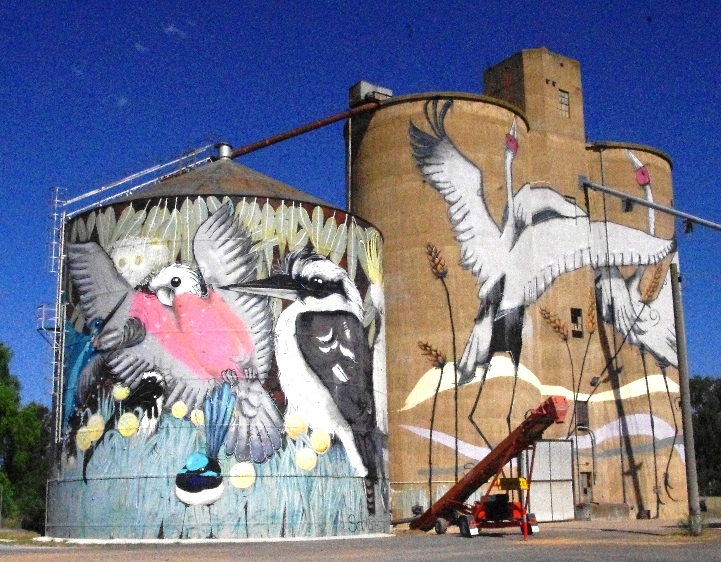
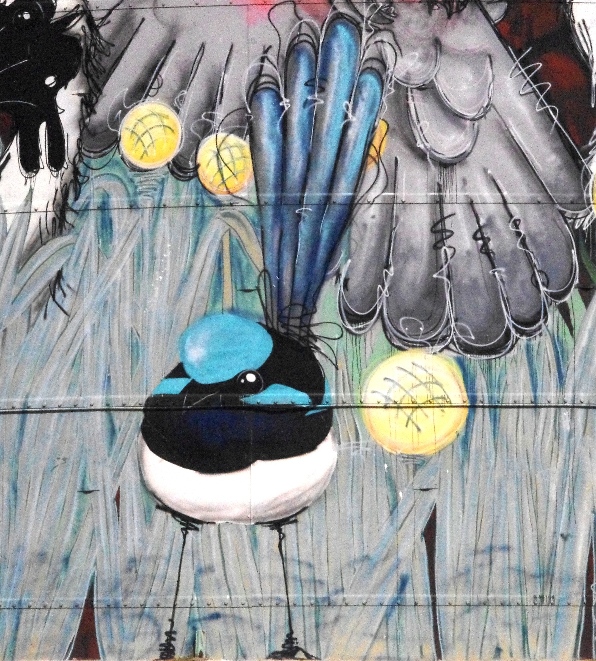
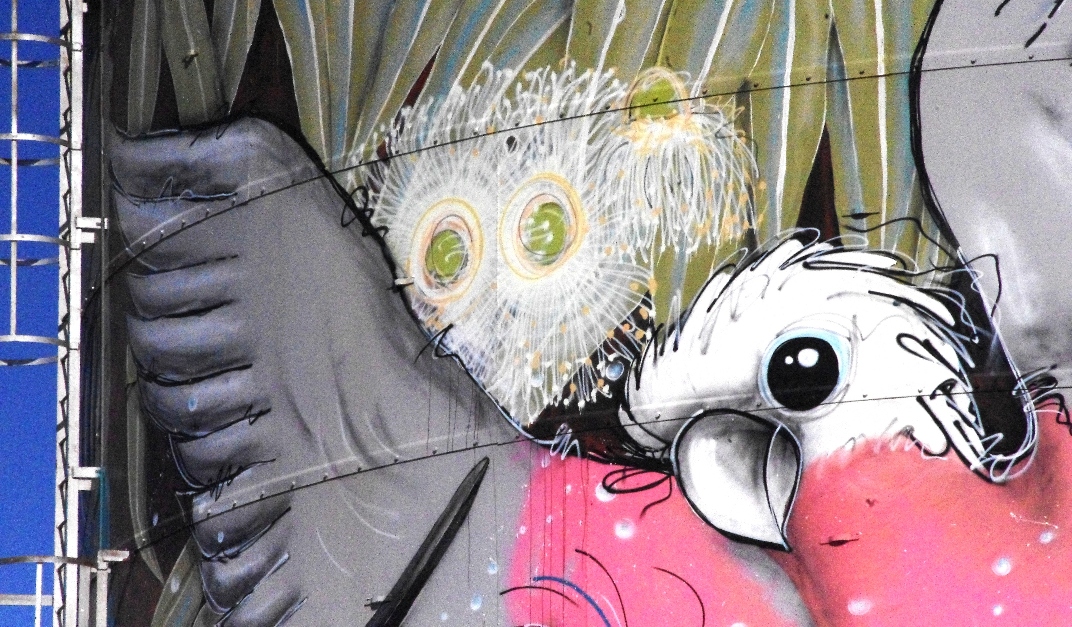
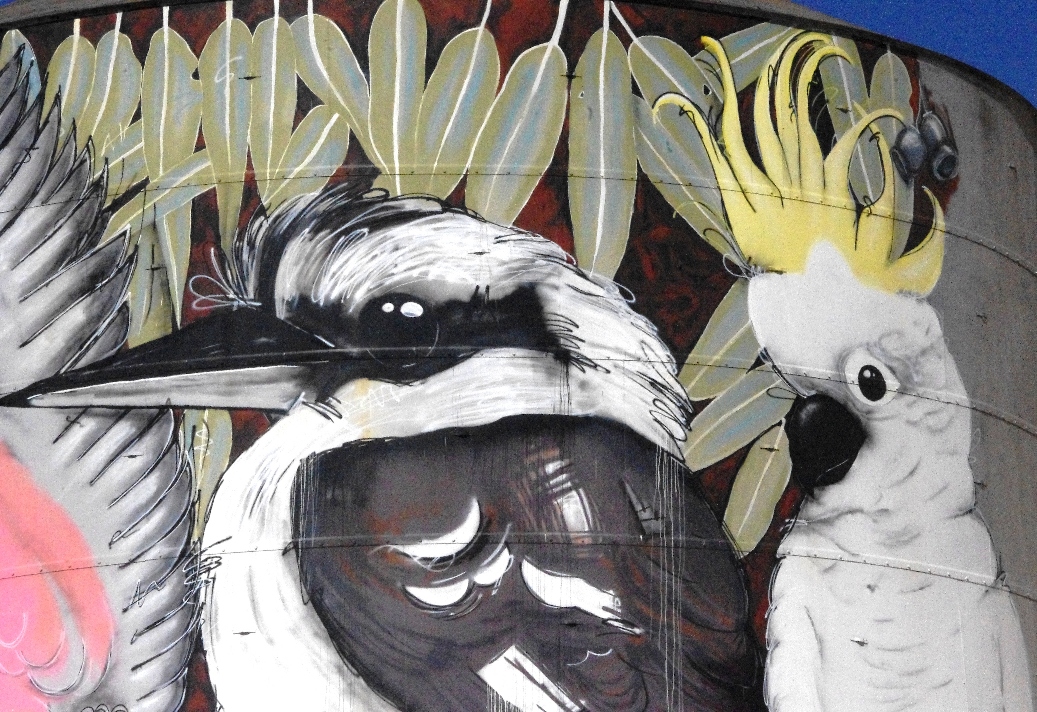
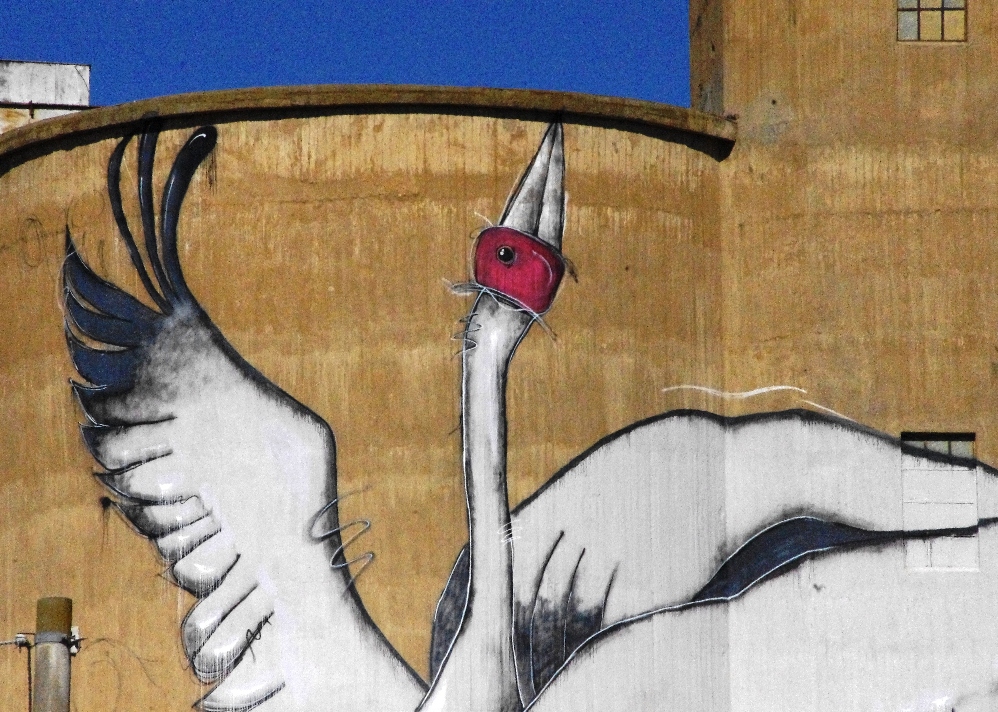
The final location was Tungamah, and these silos were striking because you could see them from quite a distance. These were the first silos to be painted in this area, and the style was different from the others – more artistic licence. They depict an array of Australian birds, and again the detail is superb. My favourite was the superb blue wren, but the galah is also stunning.
By now the outside temperature was 35 degrees, and it was time to head back for a welcome dip in the pool. Tomorrow we hit the road again for a full day of driving as we head to Jervis Bay, our home for the next few days.
 dipidydoo