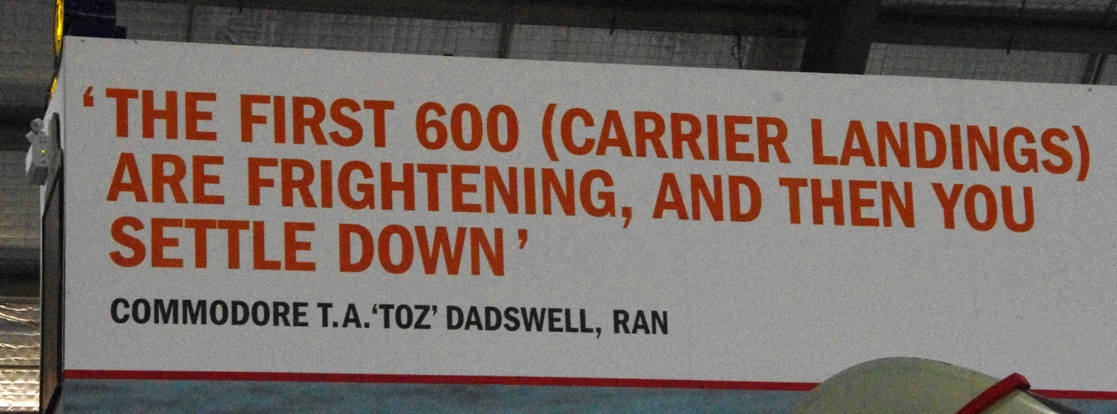
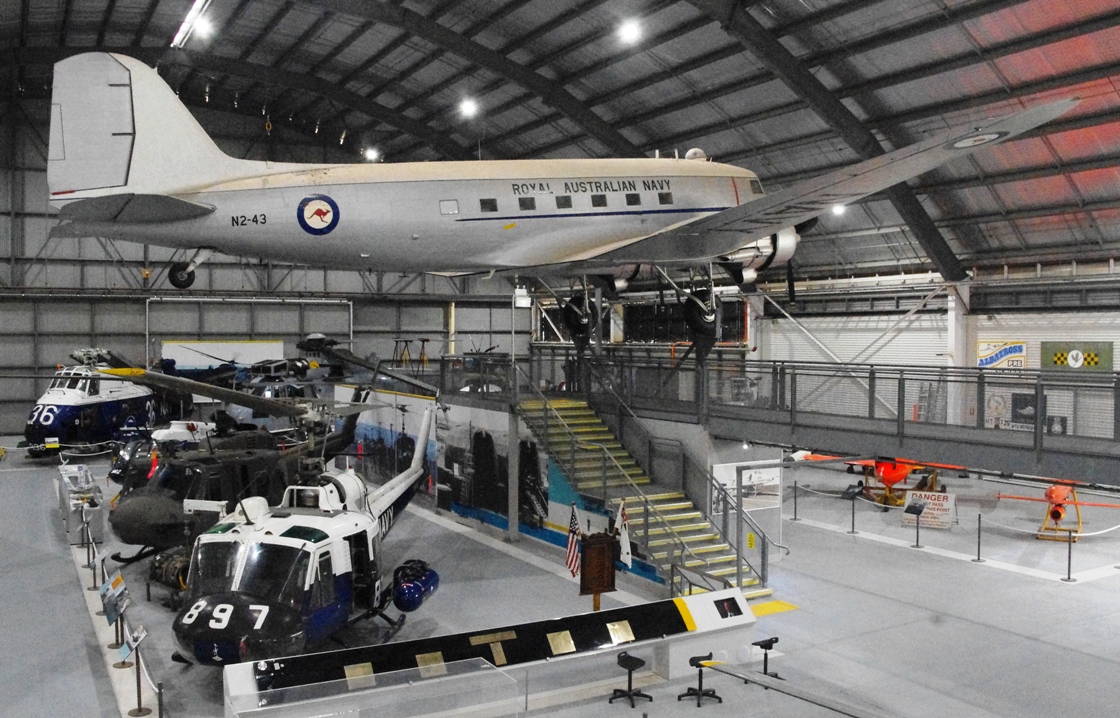
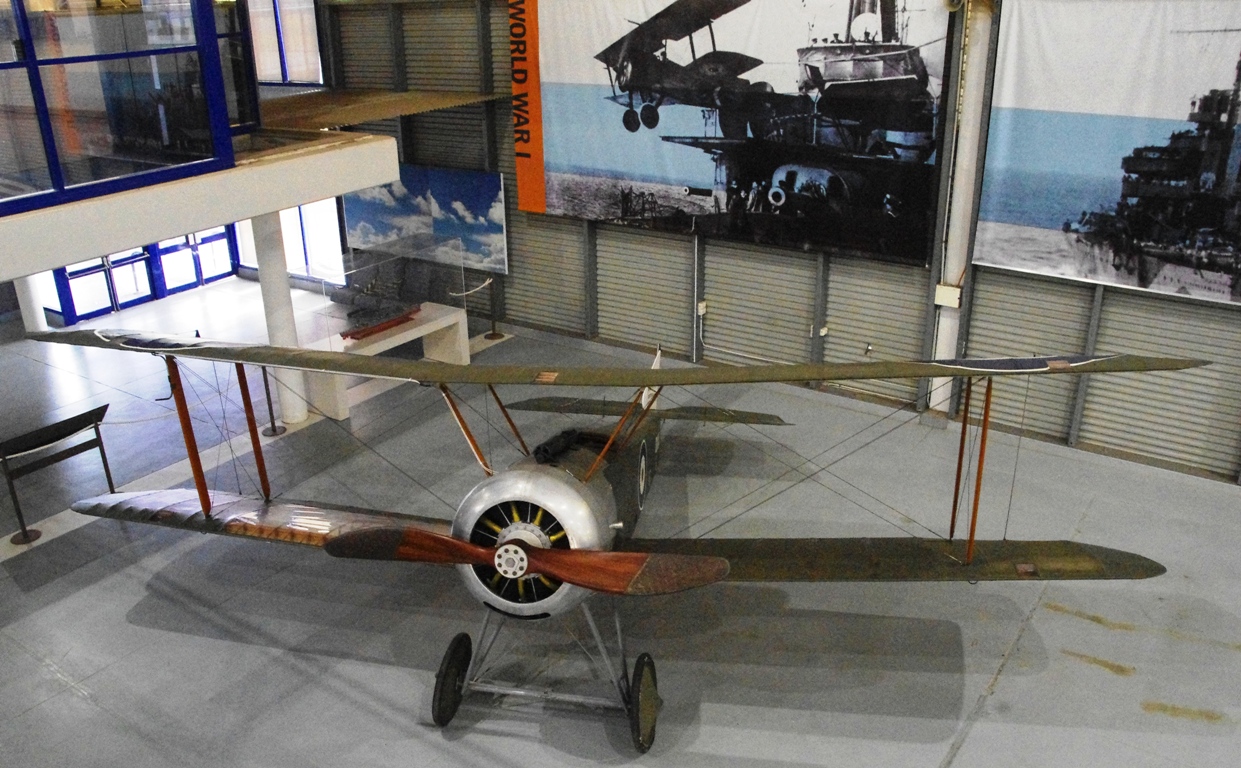
We headed away from the coastline, and inland to Nowra, to pay a visit to the Fleet Air Arm Museum (ie the Navy’s Aviation arm). A very impressive hangar style building showcases the history of Australian Naval fixed wing and helicopter operations throughout the 20th century, beginning with a Sopwith Pup and progressing through the decades. We began with video footage of launches and retrievals from aircraft carriers, including some unfortunate looking miscalculations. The arrestor wire technique has been used for decades. This is where the aircraft dangles a hook, which catches on one of five wires to bring it to a dead stop; the pilot must land at full throttle, in case the hook misses the grab and they have to take off immediately and come round for another attempt. That must take incredible skill and a lot of practice.
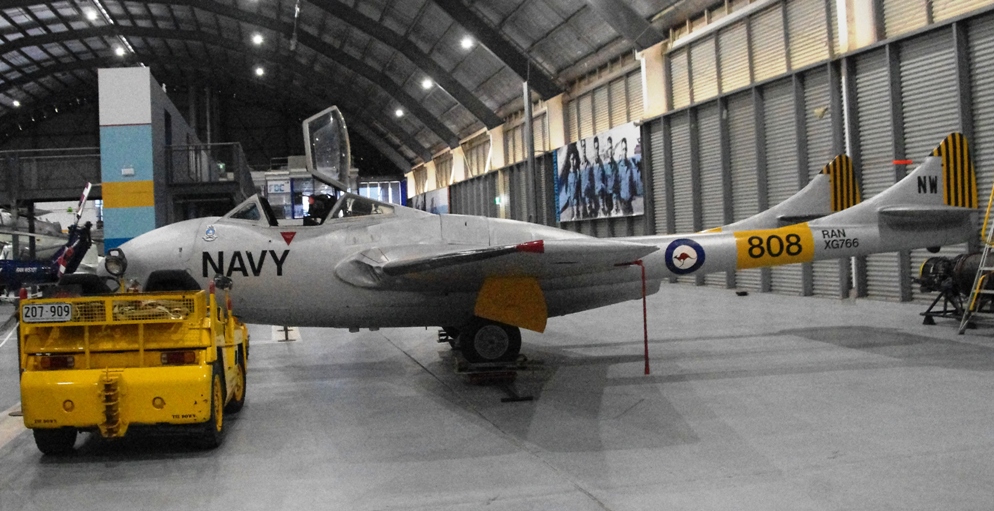
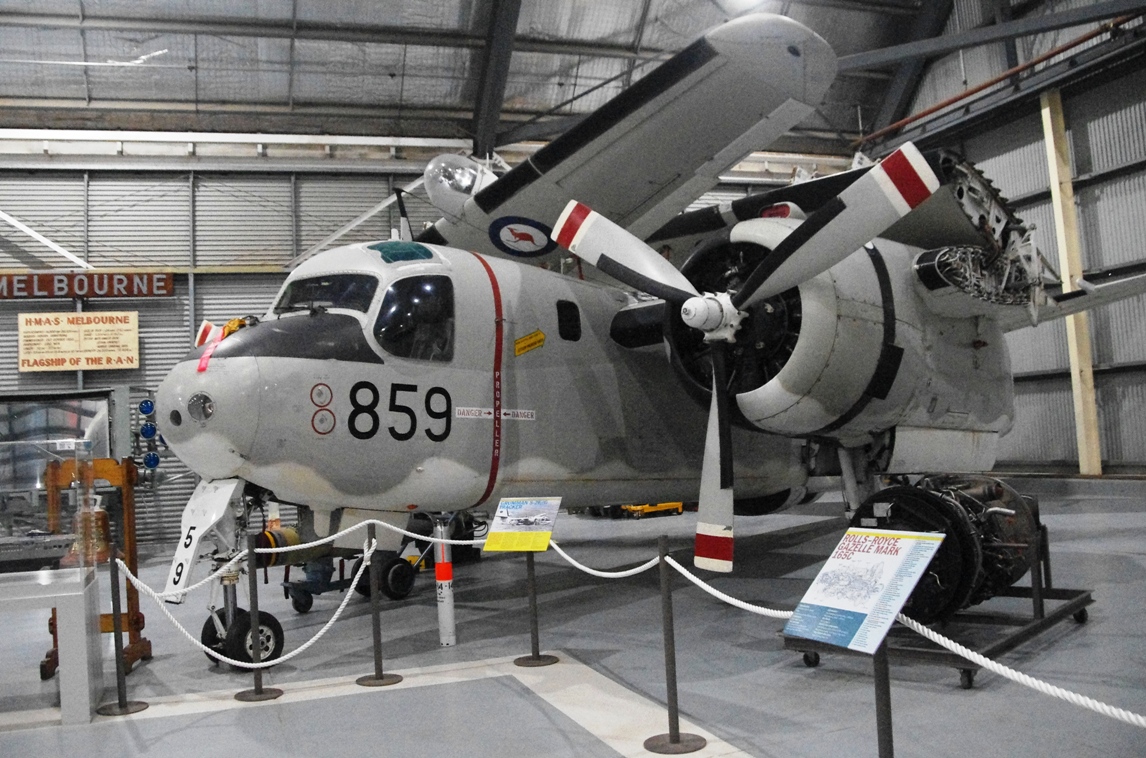
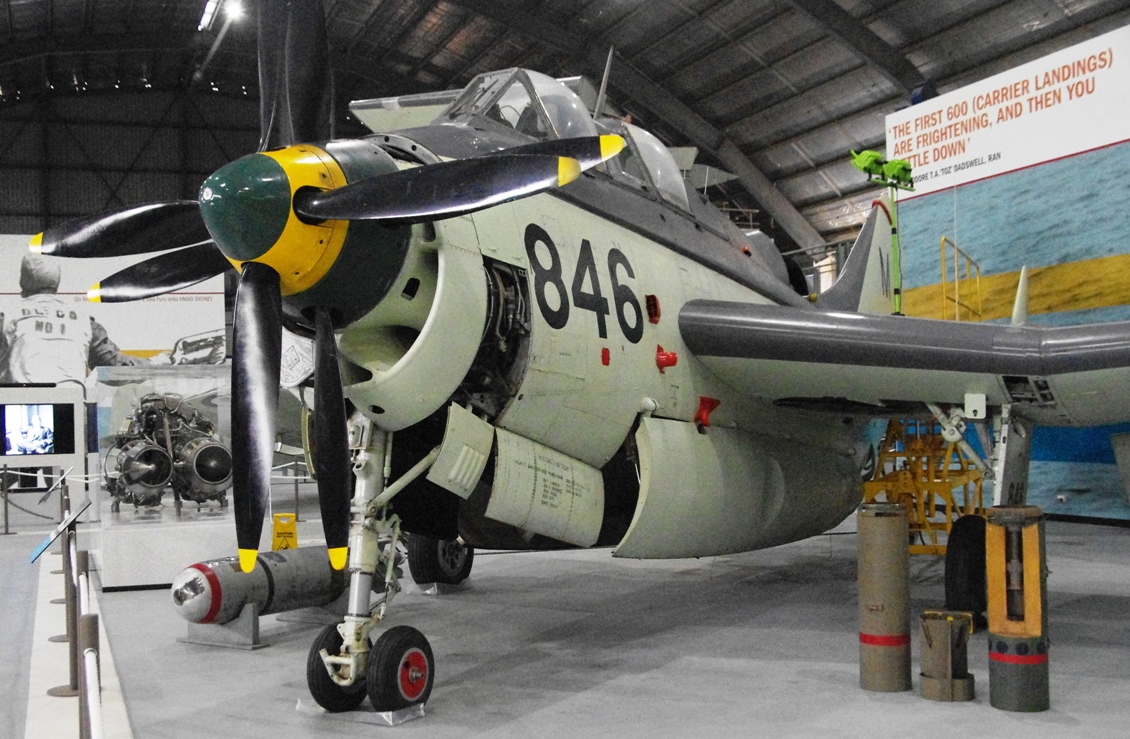
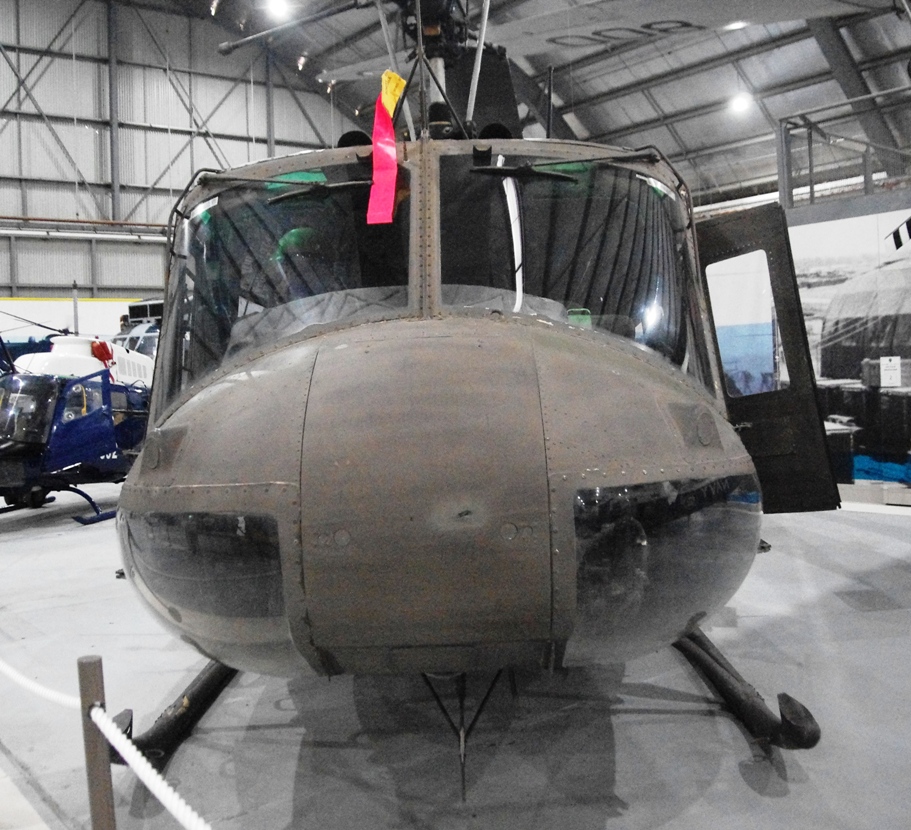
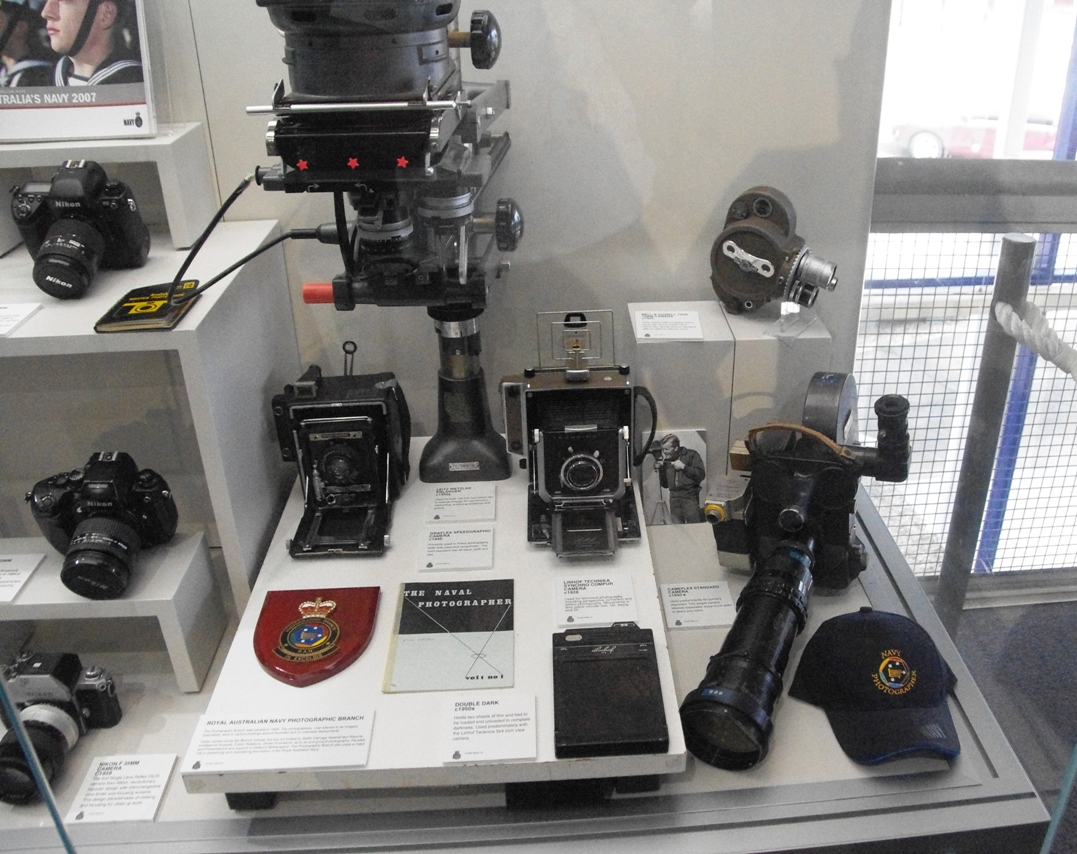
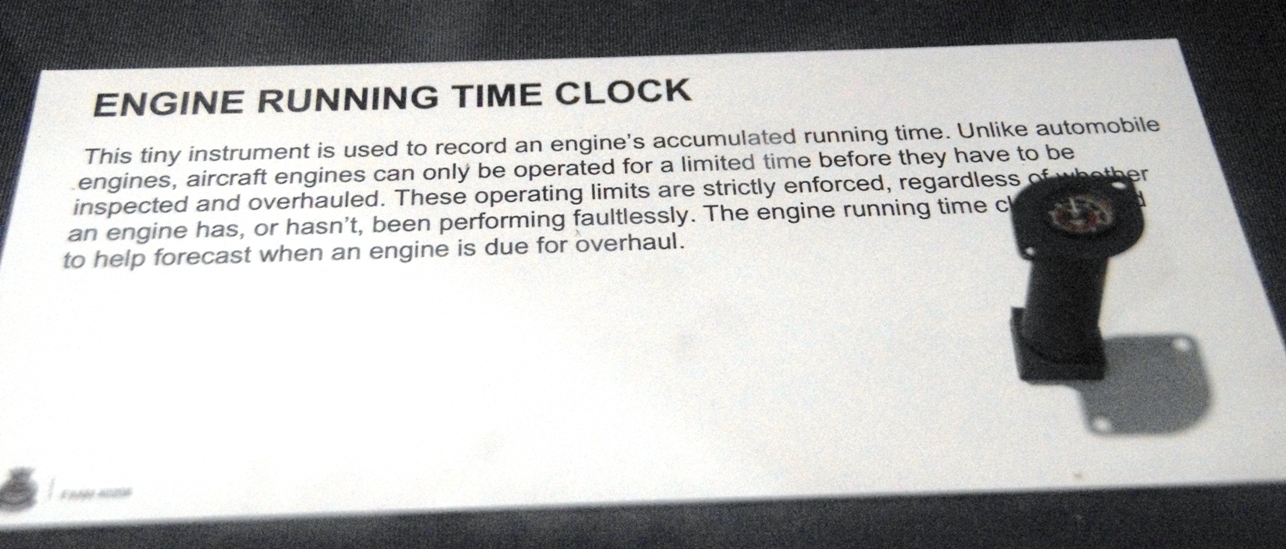
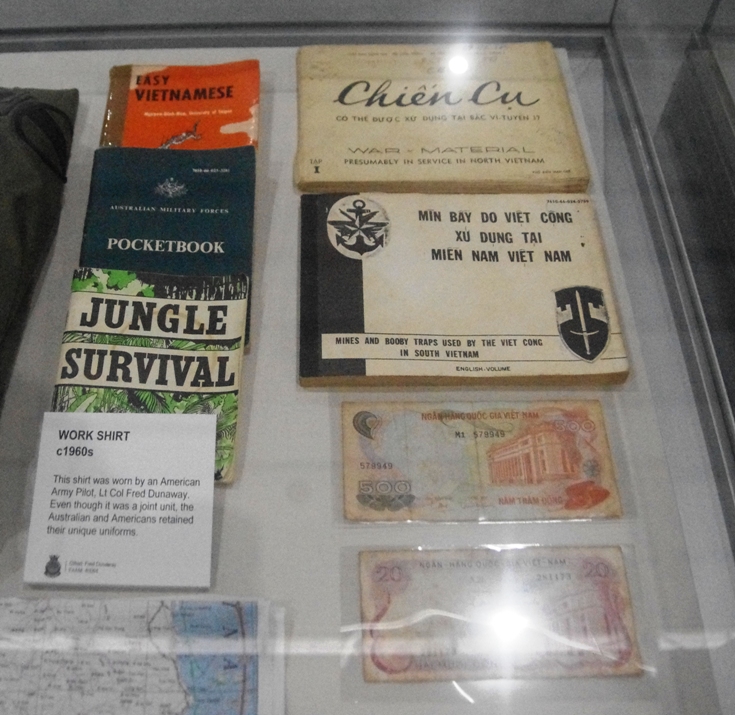
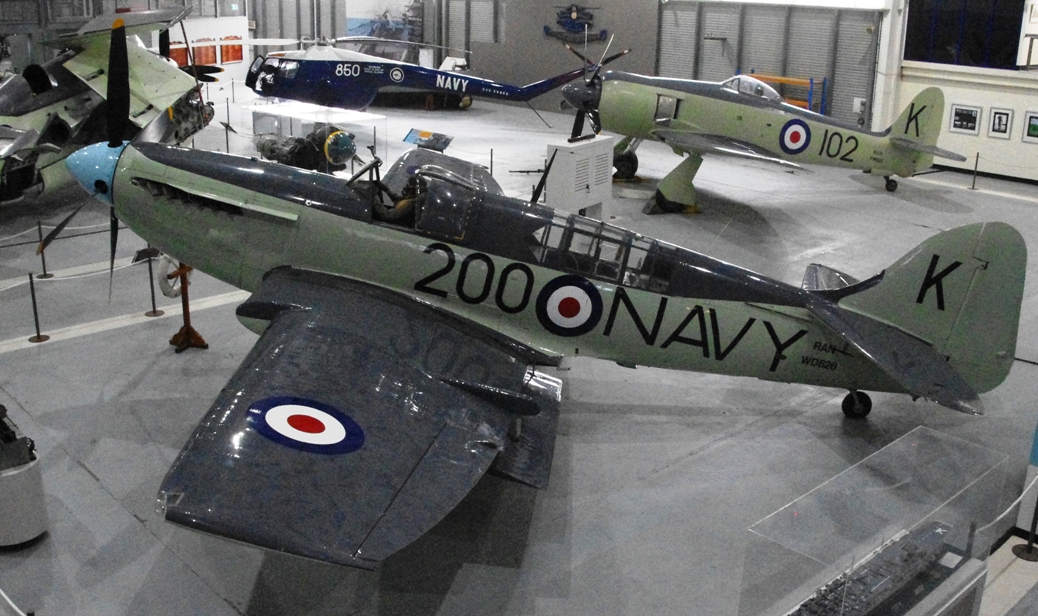
The Museum was built on a “dummy deck” at HMAS Albatross – a large slab of concrete used to simulate a carrier deck. Inside, there are about 30 aircraft displayed, including a Dakota suspended dramatically from the roof. Some aircraft were familiar from the other aviation museums we’ve visited; others, like the ungainly looking Gannet with its unique propellor configuration, were new to us. The helicopters included a Bell Iroquois which flew in Vietnam, and you could almost hear the strains of Wagner and the famous quote “I love the smell of napalm in the morning!” There were also displays of instrumentation and other equipment, as well as memorabilia.

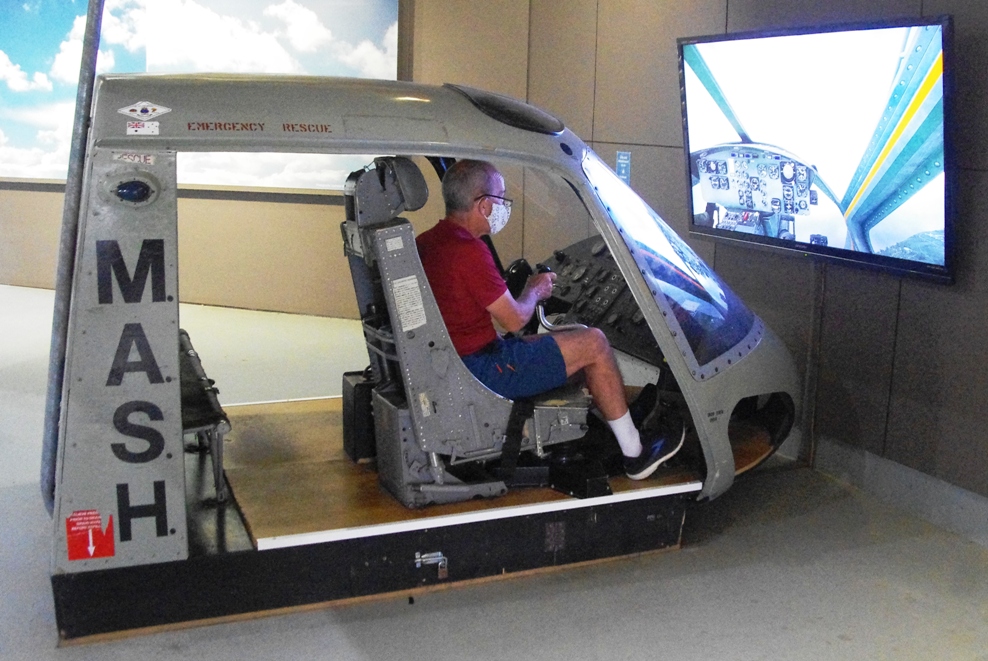
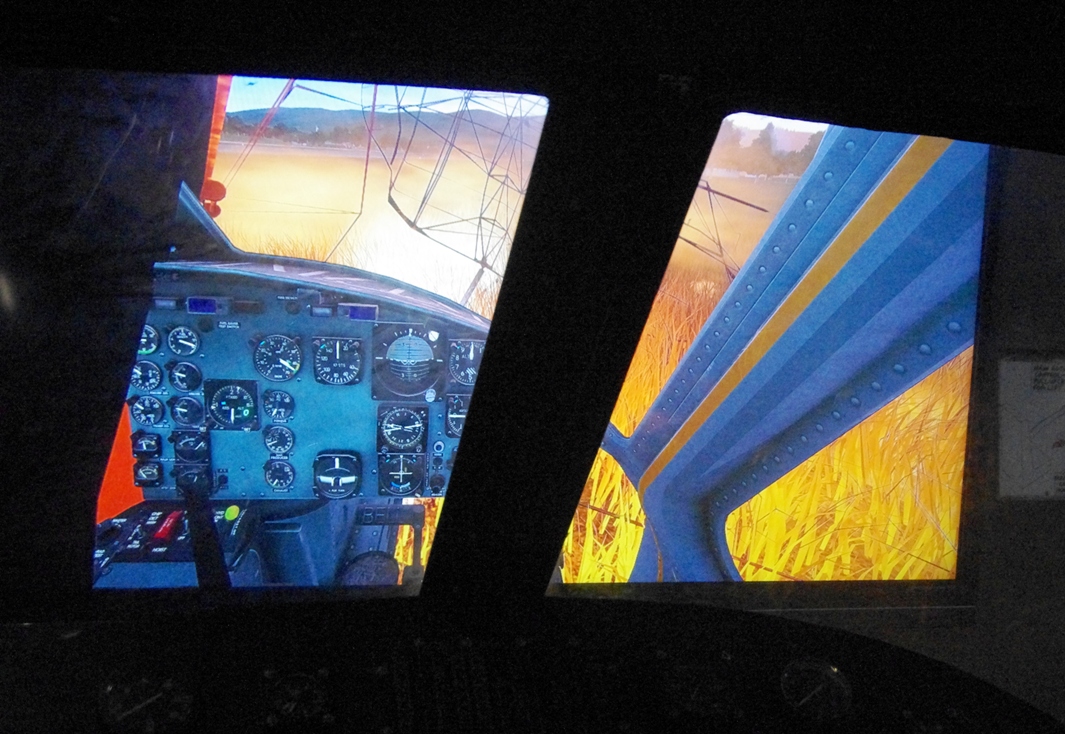
Those of you following along may remember our attempt to “fly” a 747 and A380, at The Emirates Centre flight simulator in London a few years ago. Ian was quite good, and managed to land his aircraft at the notorious Hong Kong airport, while I wiped out the control tower at Athens. Today we discovered that flying a helicopter is way harder than flying a plane. There are foot pedals which control the rudder, a joystick which controls the tilt of the propellor, and a lever that looks like a handbrake, which controls your altitude. Three things to coordinate took too much brain power. It turns out we could each get the helicopter level, eventually, but we could only spin in slow circles, rather than fly forwards. Ian’s attempt at landing ended up in flames in a paddock, while mine finished up slowly sinking underwater, in a very undignified manner. No pilot wings for either of us.

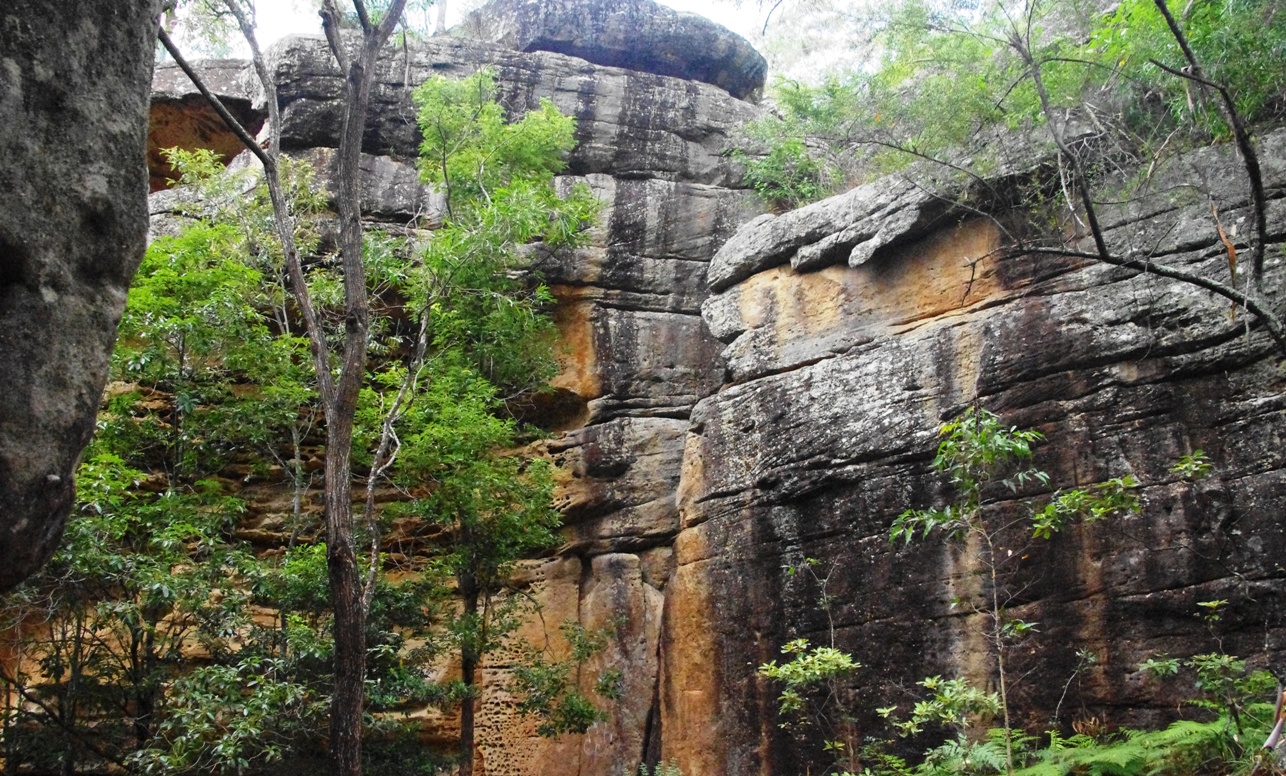
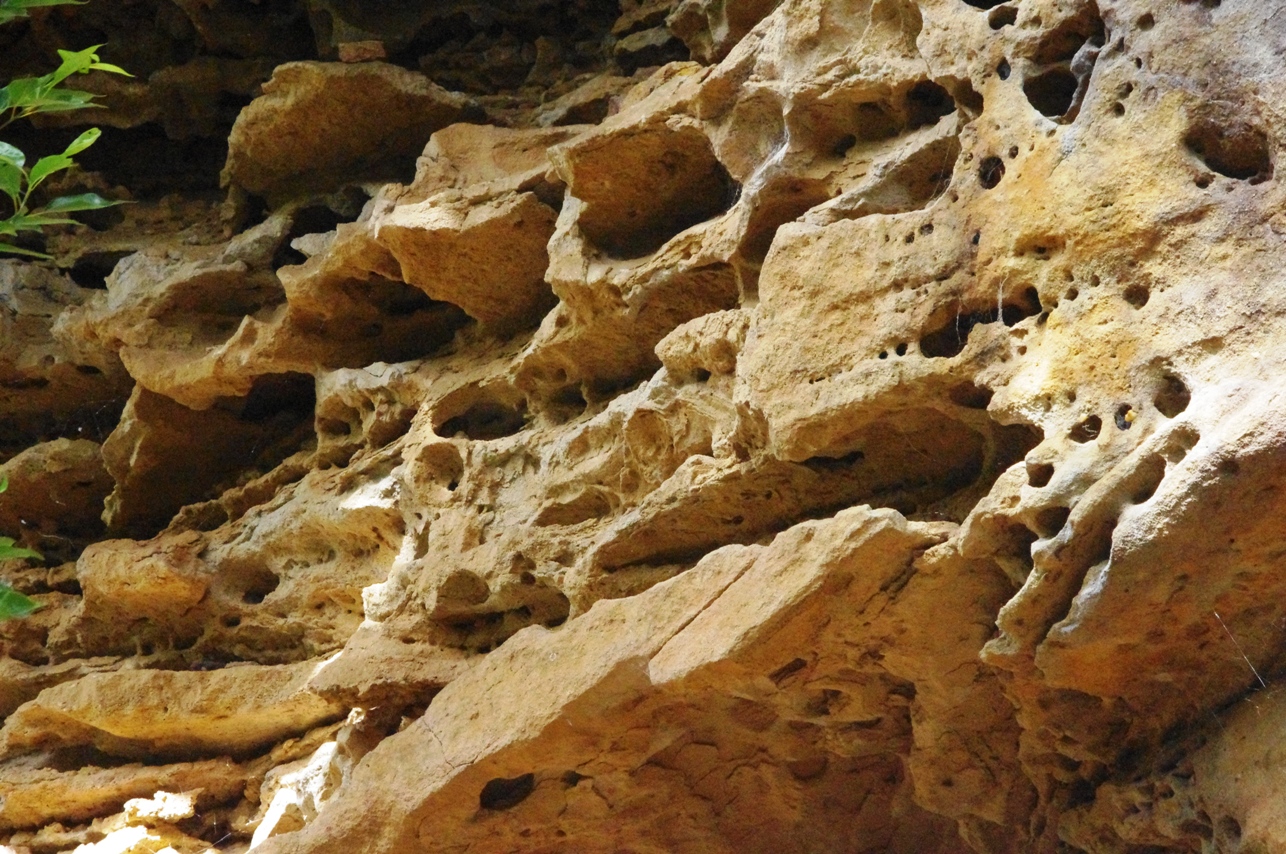
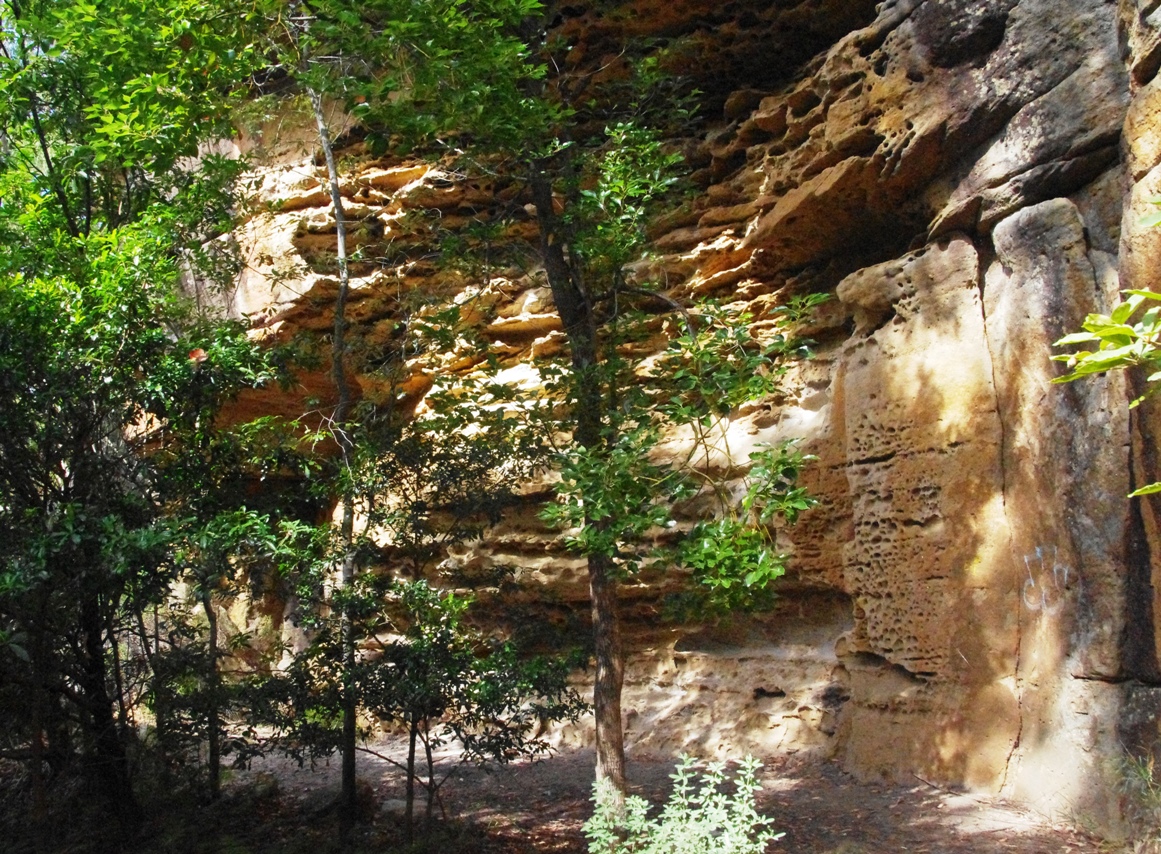
After leaving this trail of destruction behind, we slunk off into Nowra itself. We discovered the Hanging Rock Lookout, tucked away just beyond the covid testing site (no queues), and protruding above the Shoalhaven River. It was not hard to see where the name came from. We also found a set of steps leading down towards the river, through a dramatic sandstone rock canyon, which was very typical of NSW orienteering terrain (although the proximity to the river would have made this largely “impassable cliffs”). We walked as far as the point where we were directly under the overhang, though the trail continues considerably further.


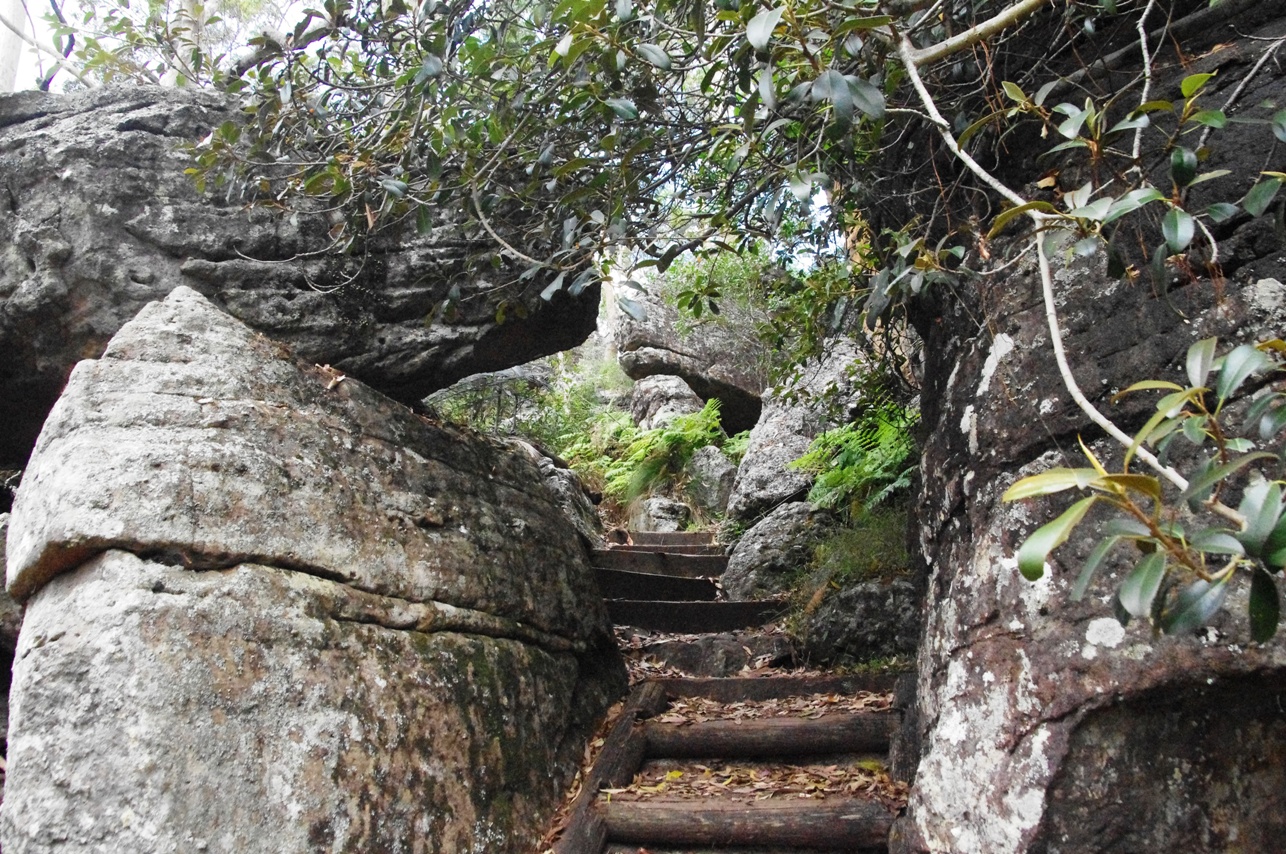


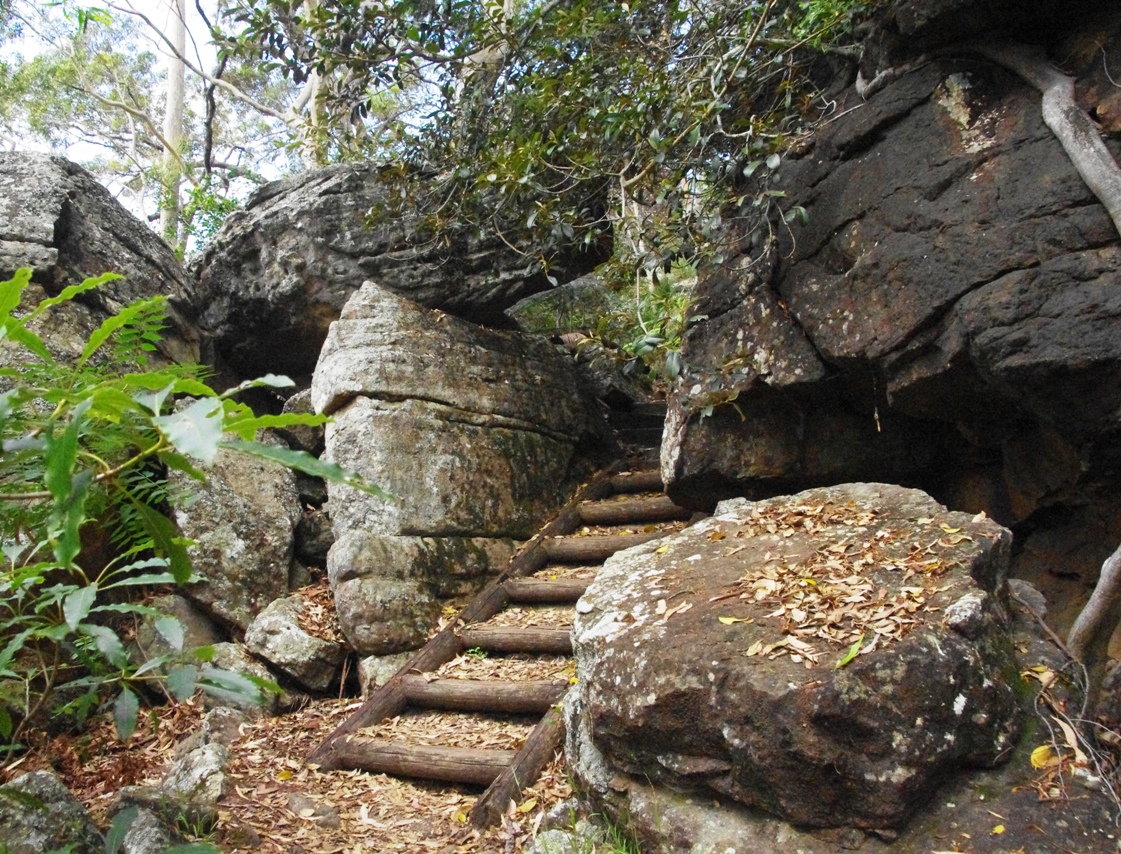


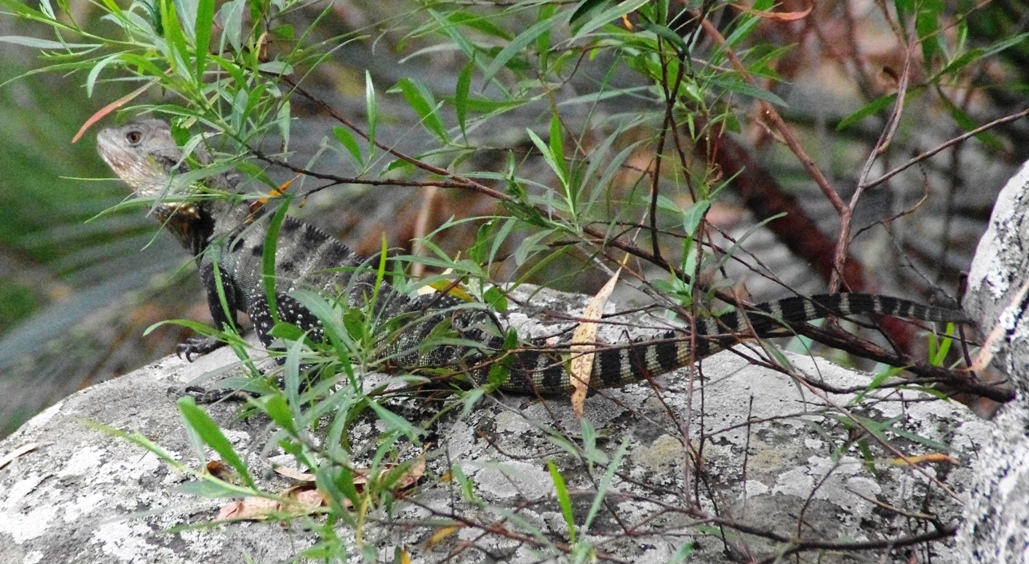
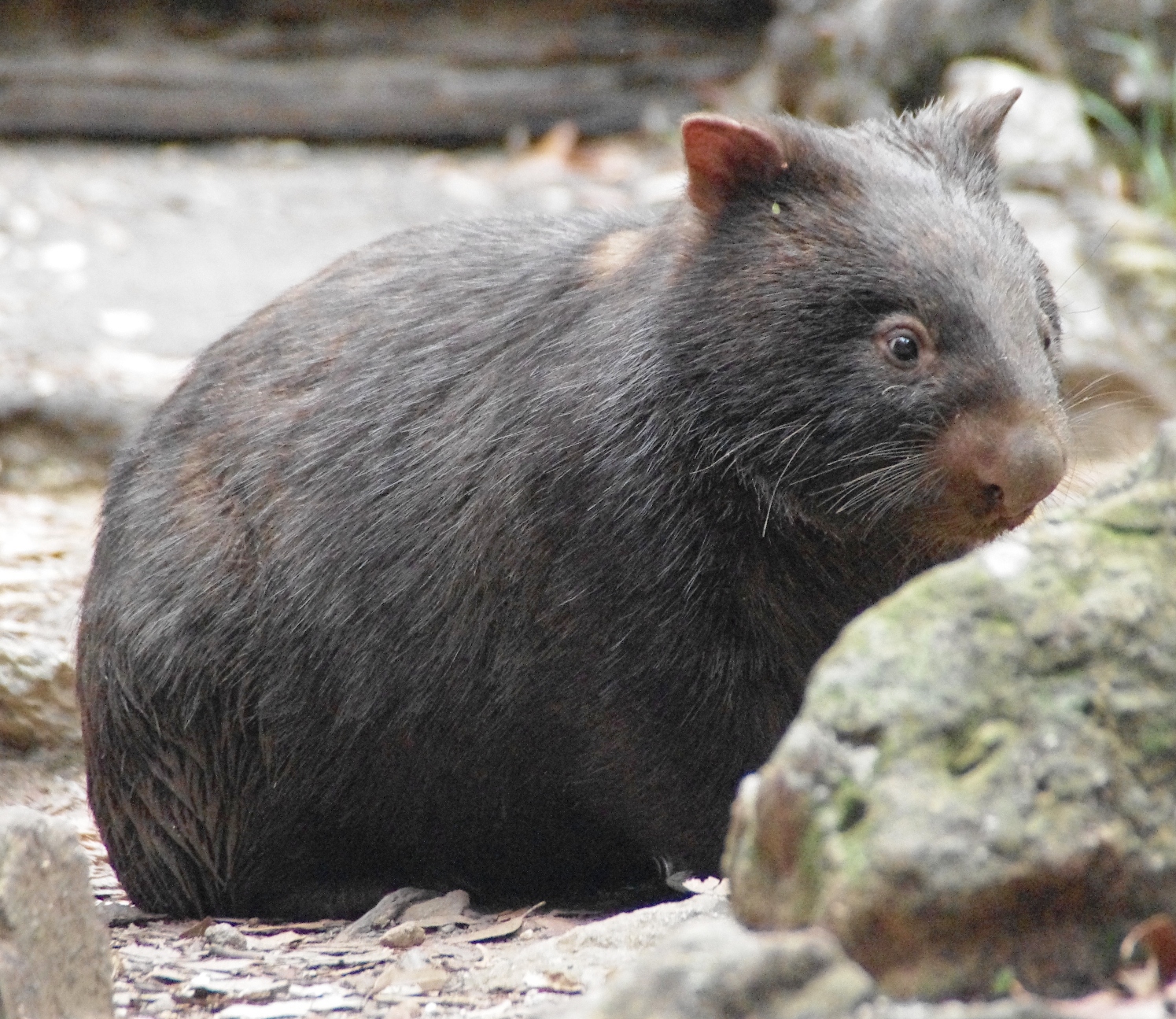
On the way down, we spotted a goanna, trying its best to wish invisibility on itself. On the way back up, we spotted a wombat, almost in the same spot, right beside the track at the foot of the first set of steps. I don’t think I’ve ever seen one in a natural environment before. This one was very cute. I was only able to get a couple of quick photos before it scuttled off into the rocks, at surprising speed.
Sometime today, the requirement to check in with QR codes was removed. We scanned one at the Museum, but by the time we got to the supermarket, the posters had been taken down. The same thing has happened in Victoria. Another change in the endlessly shifting landscape of the past two years.
 dipidydoo