In the words of Arkwright in “Open All Hours”, it’s been a funny old day. In the morning we were hiking up a mountain covered in fox shrines and thousands of vermilion Torii gates. In the afternoon we were shuffling around a Buddhist temple wearing ruby slippers. We weren’t in Kansas anymore, but Kyoto.
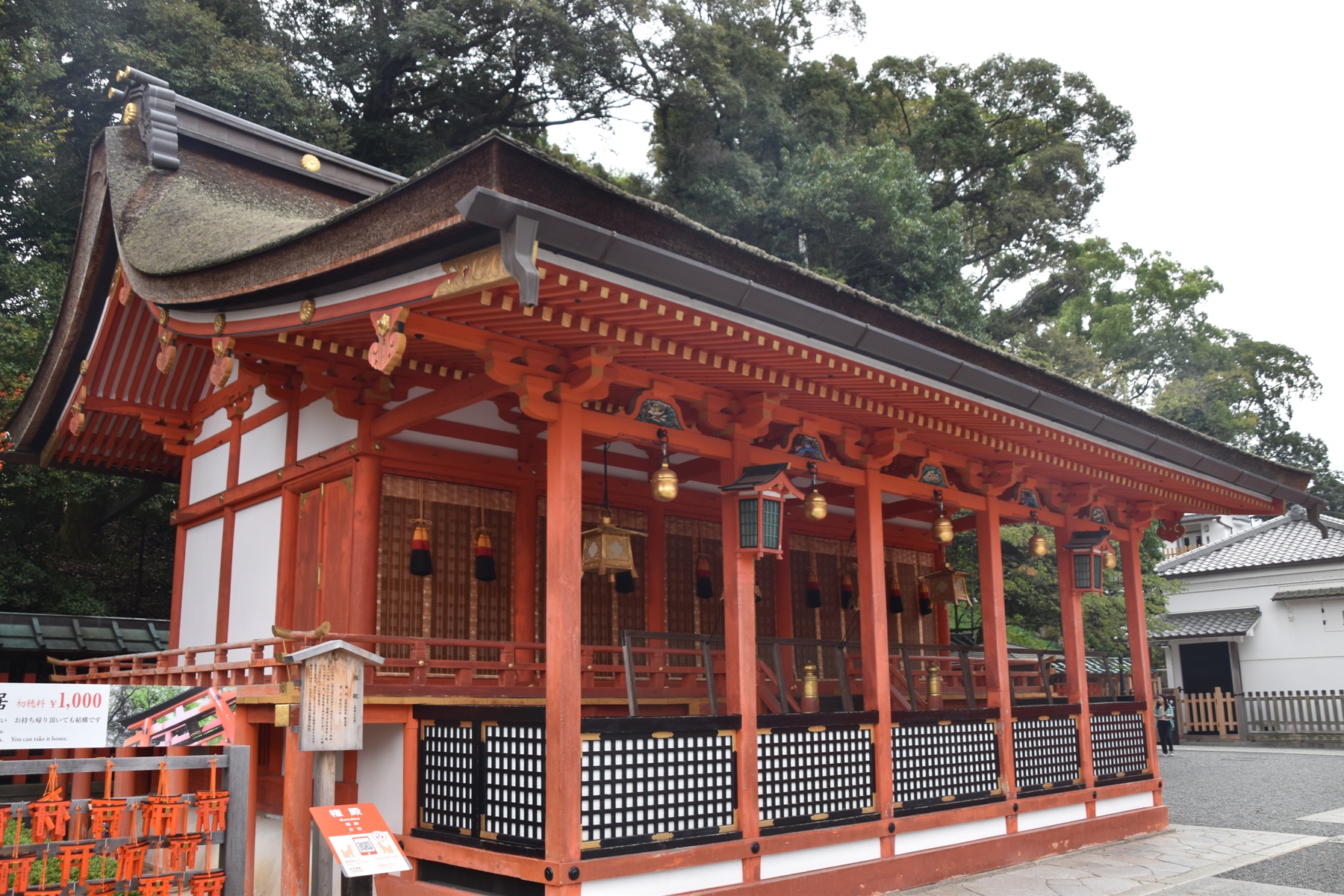
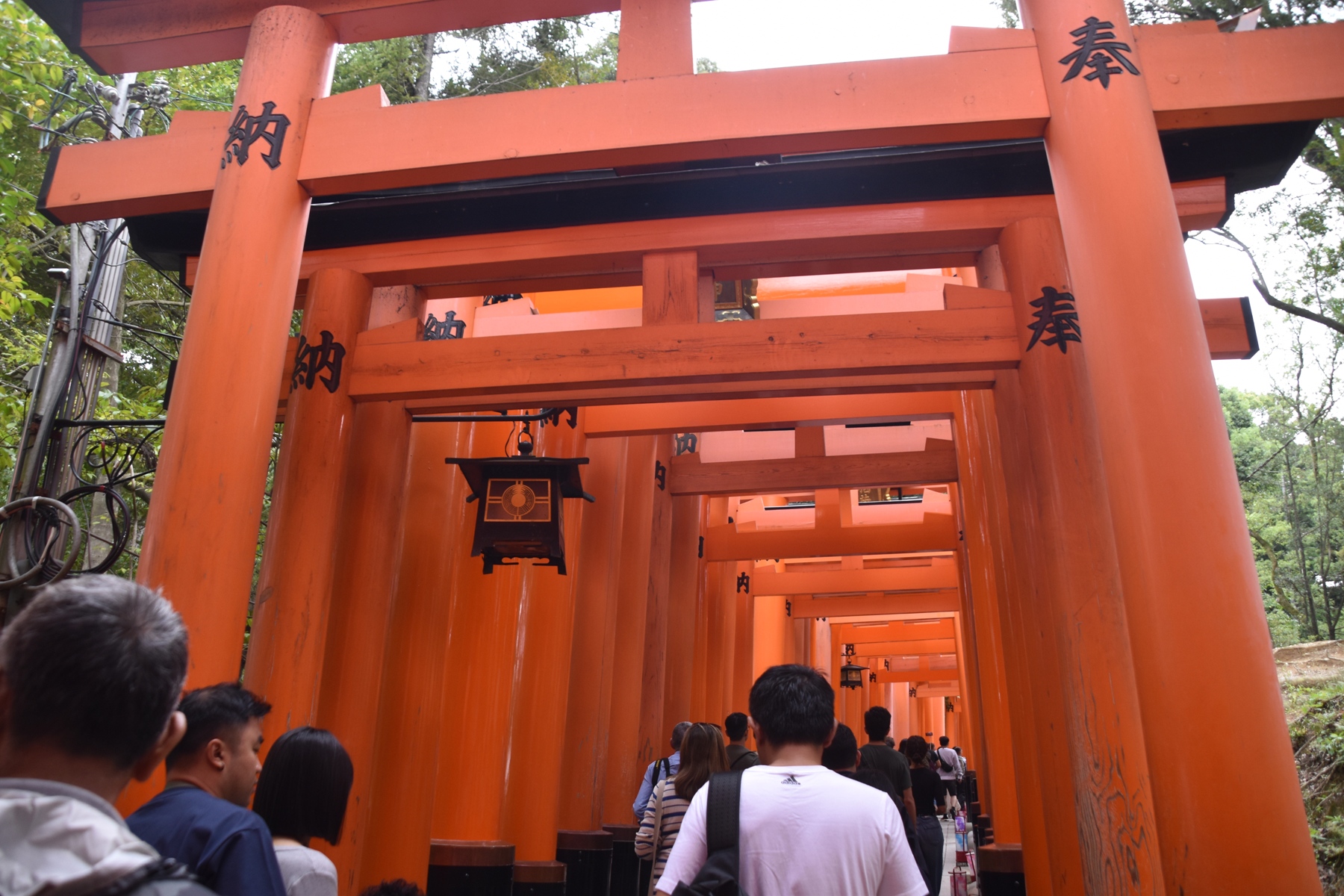
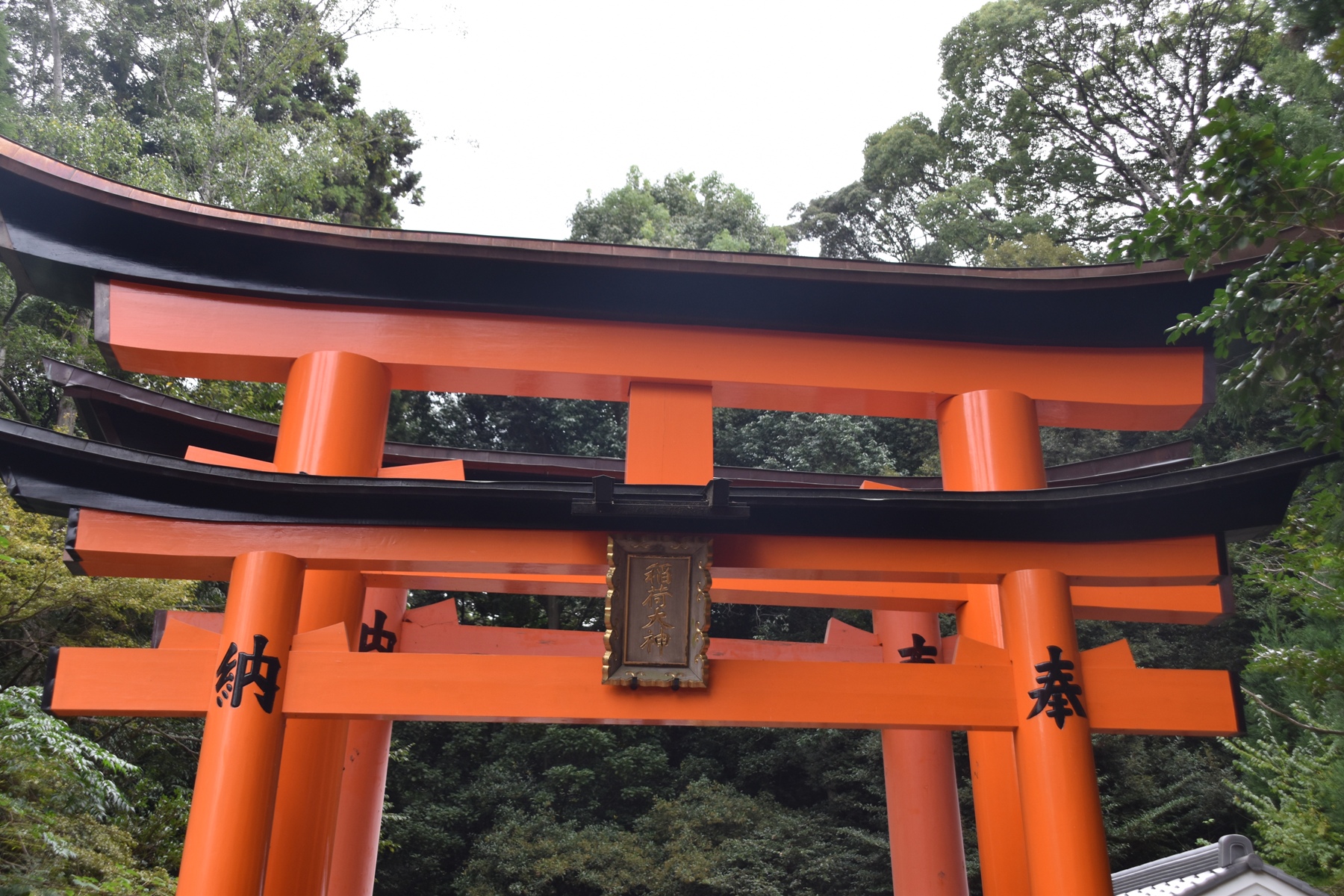
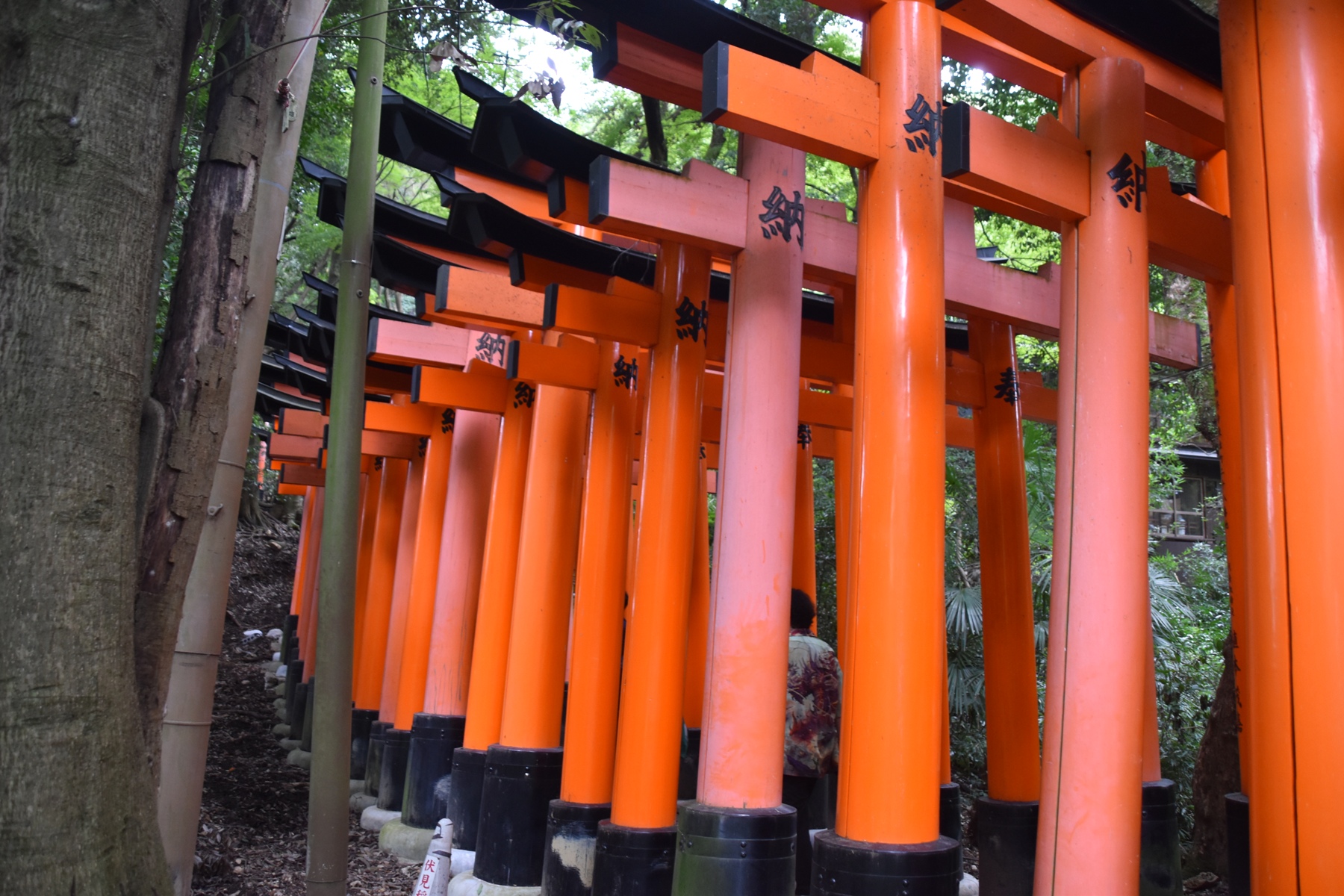
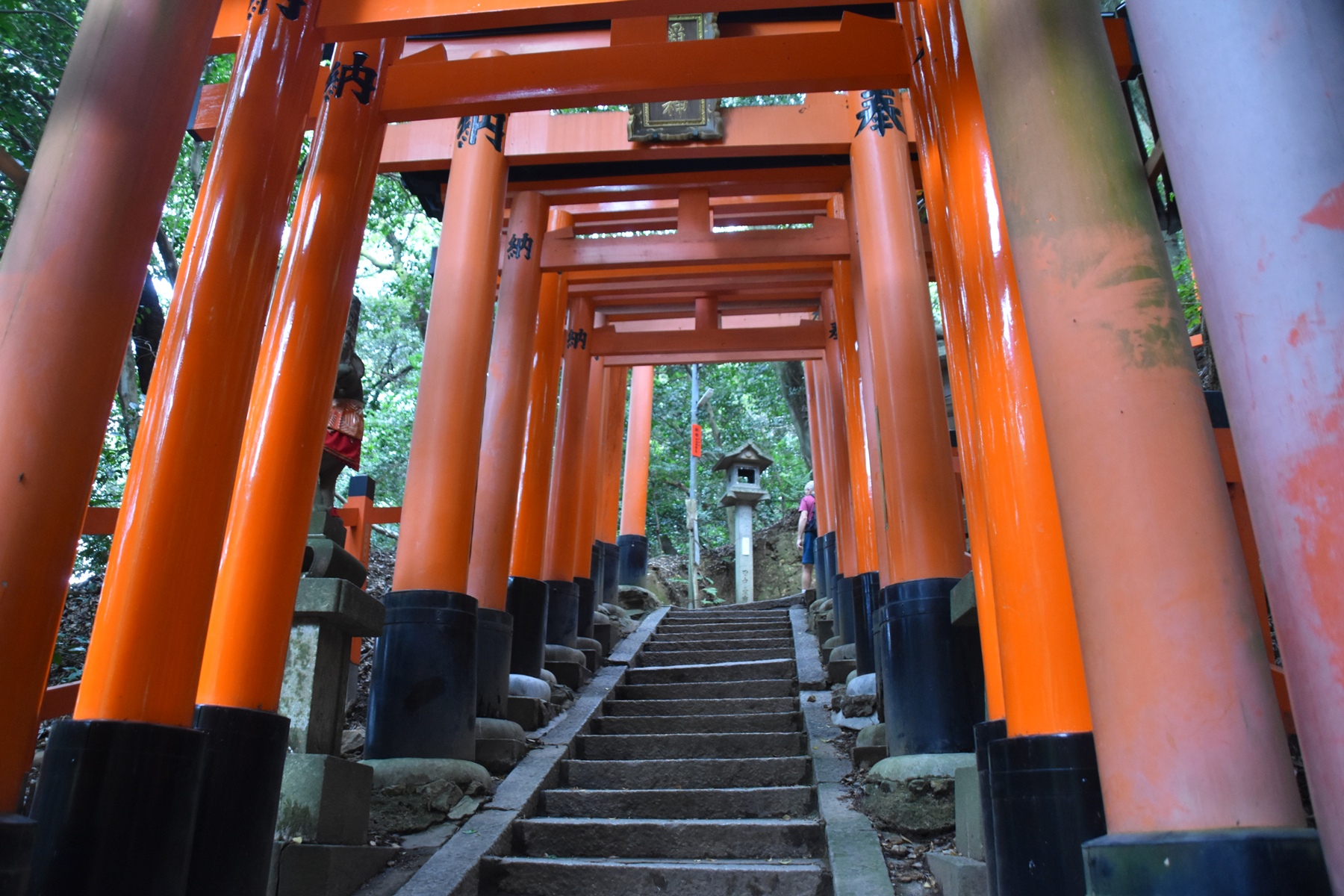
We took the now-familiar train to Shin-Osaka, and boarded the Shinkansen for the 14 minute ride to Kyoto – barely time to get settled. There was a bit of confusion about the train to Inari, but we finally got on board, along with crowds of other people. We hoped they were all going to Nara, but the whole train emptied out at Inari station. It took ages just to get off the platform and go through the ticket gates. Then we crossed the road and joined the throngs at the Fushimi Inari Shrine, famous for the thousands of vermilion Torii gates so beloved of instagrammers. The bottom section features a number of shrines, but we were headed up the hill, so we beelined for the walking path, and entered the Torii gate tunnel.
So did everyone else – as we shuffled along, I felt like a cow being herded down a cattle chute, and I wondered what we had let ourselves in for. All my early photos were of the top parts of the Torii gates, as I vainly tried to cut out people’s heads. Every so often, there was a small side path which led to a group of shrines, or some little shops. As people left the main trail to look at these, the hordes thinned out marginally. We pressed on.
The trail began to climb more steeply, and we hoped this would deter some of the walkers; we started to see more people heading back down. Eventually we reached a junction in the trail, which coincided with a lookout over Kyoto city. I’d read comments on websites like “this is a good place to turn around, as the view beyond here is much the same”. Apparently lots of people heeded this advice – but we had a summit to reach.
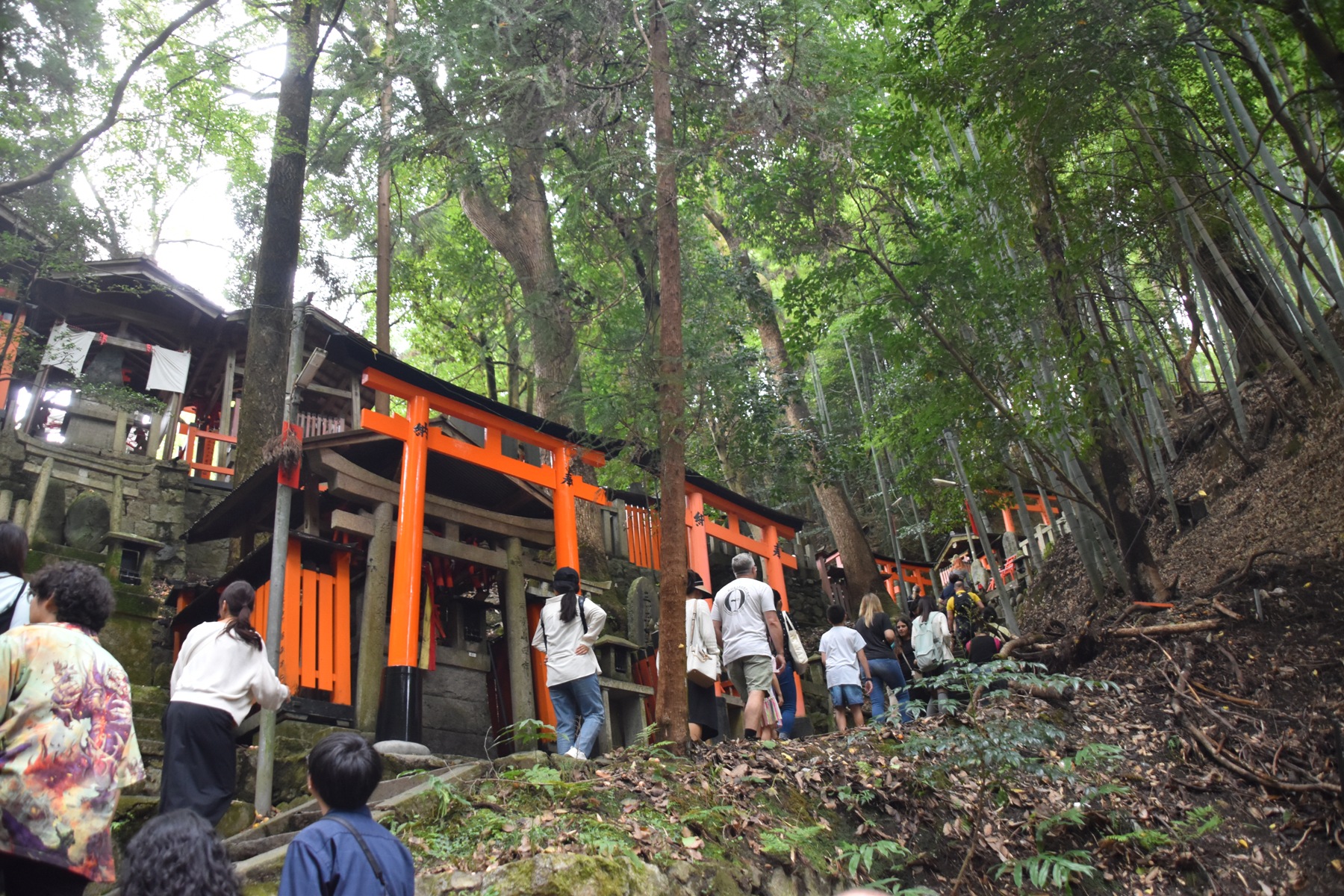
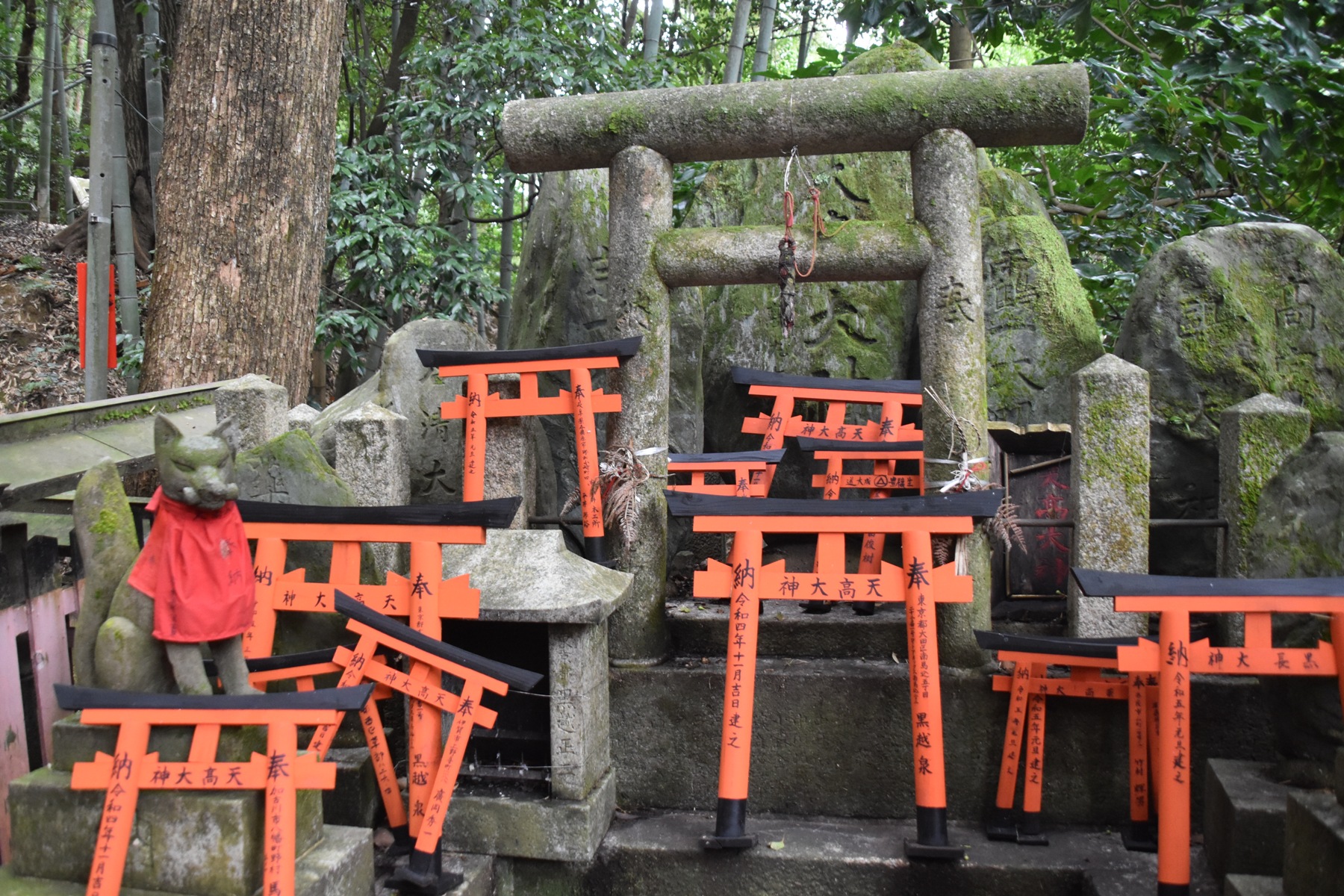
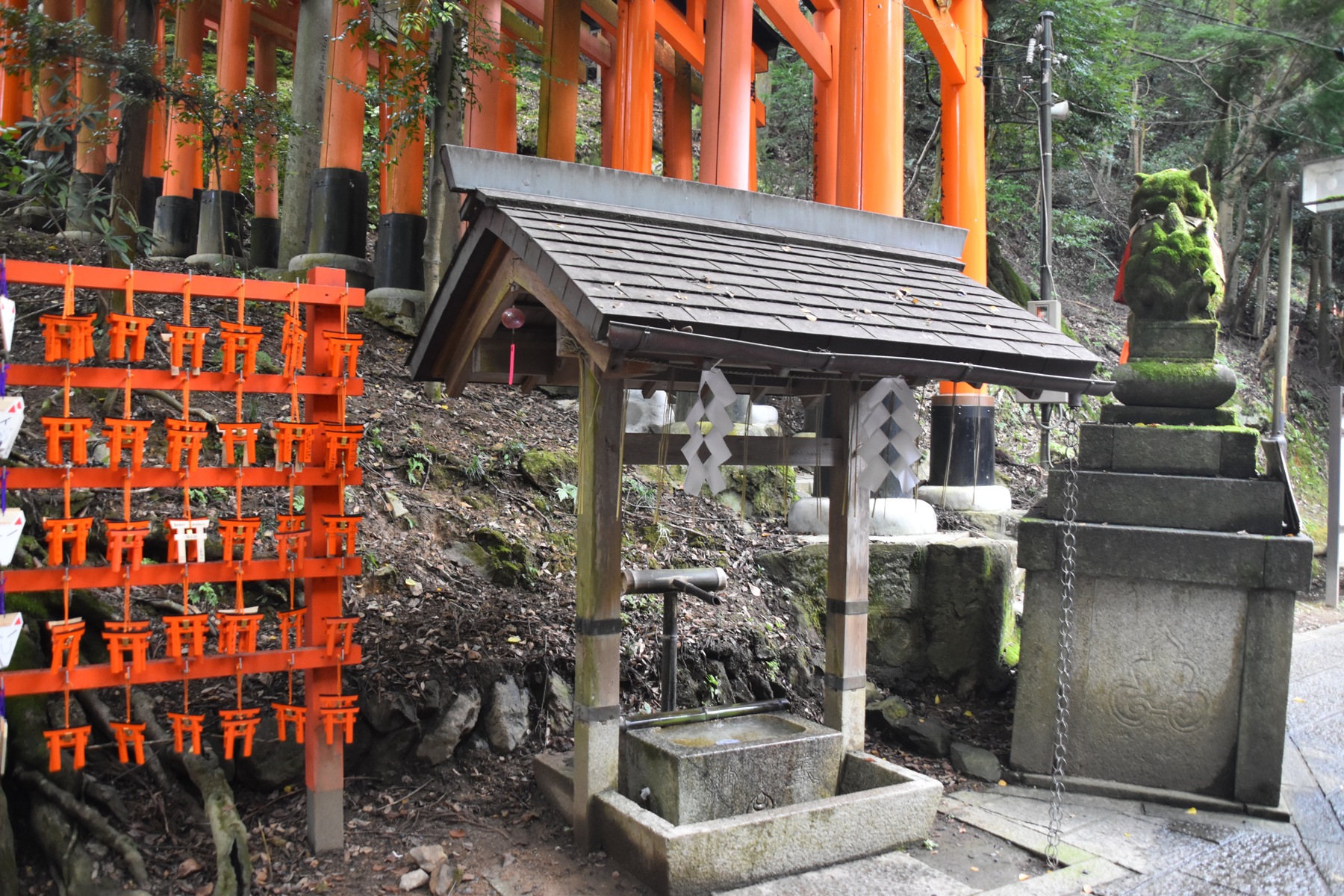
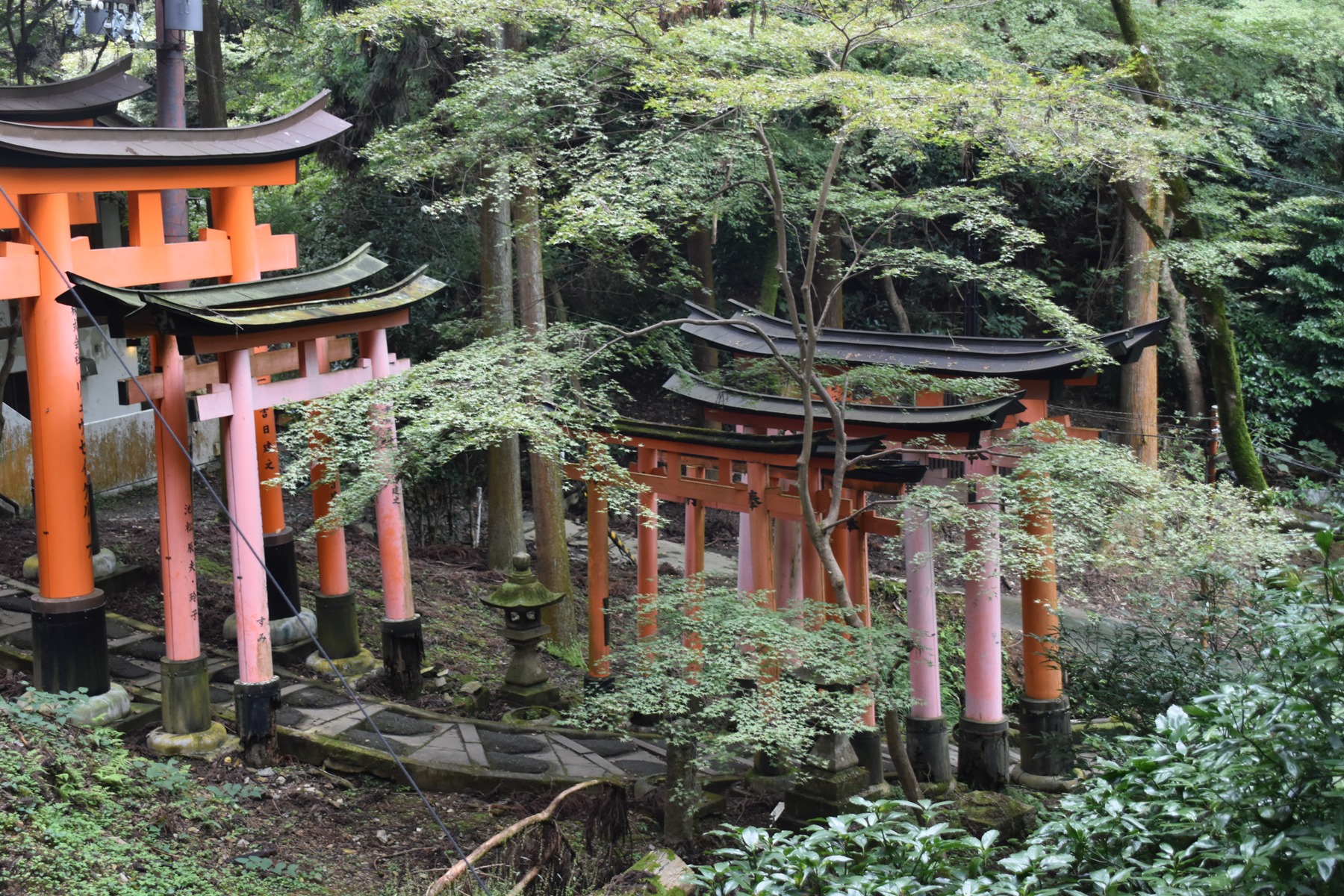
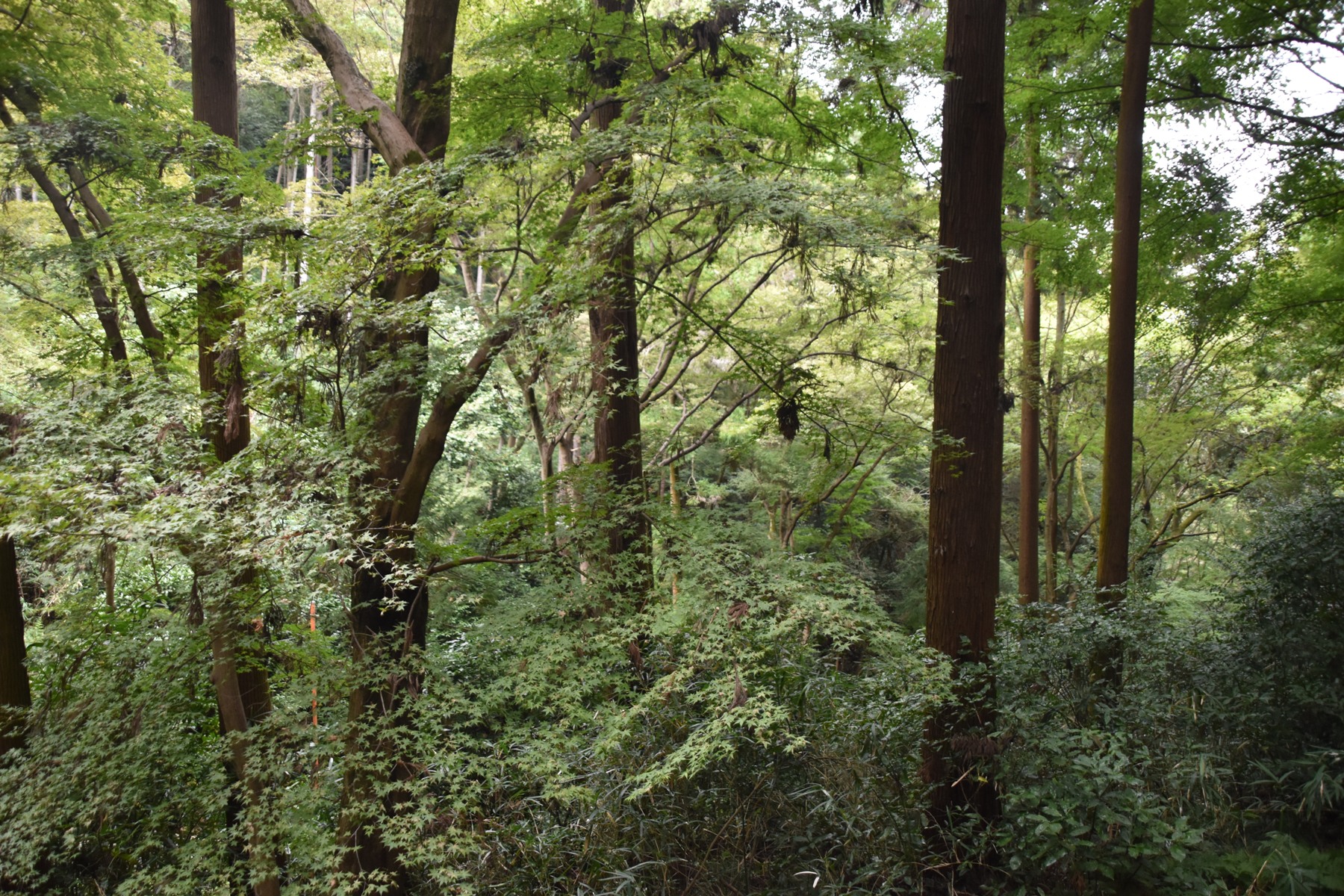
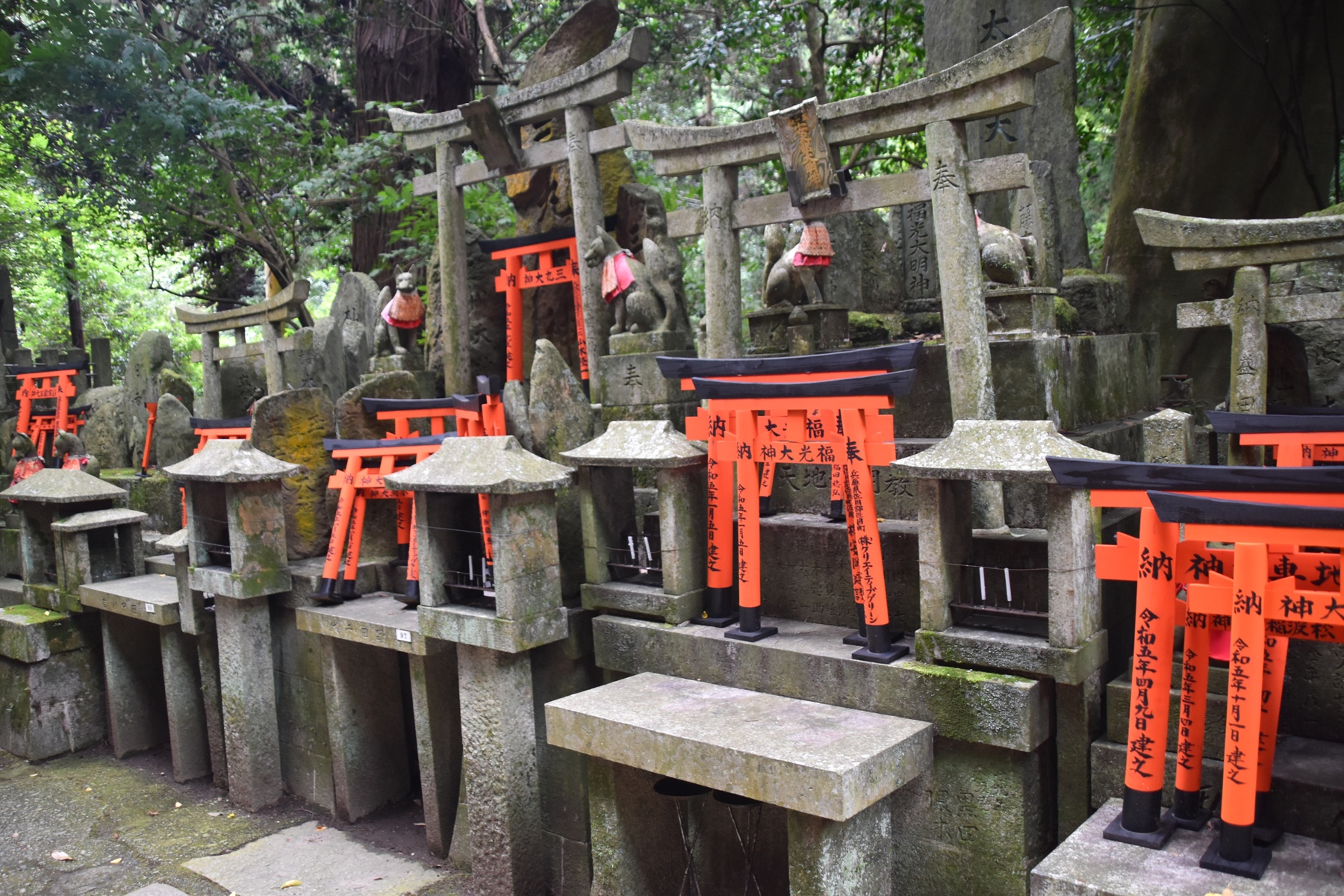
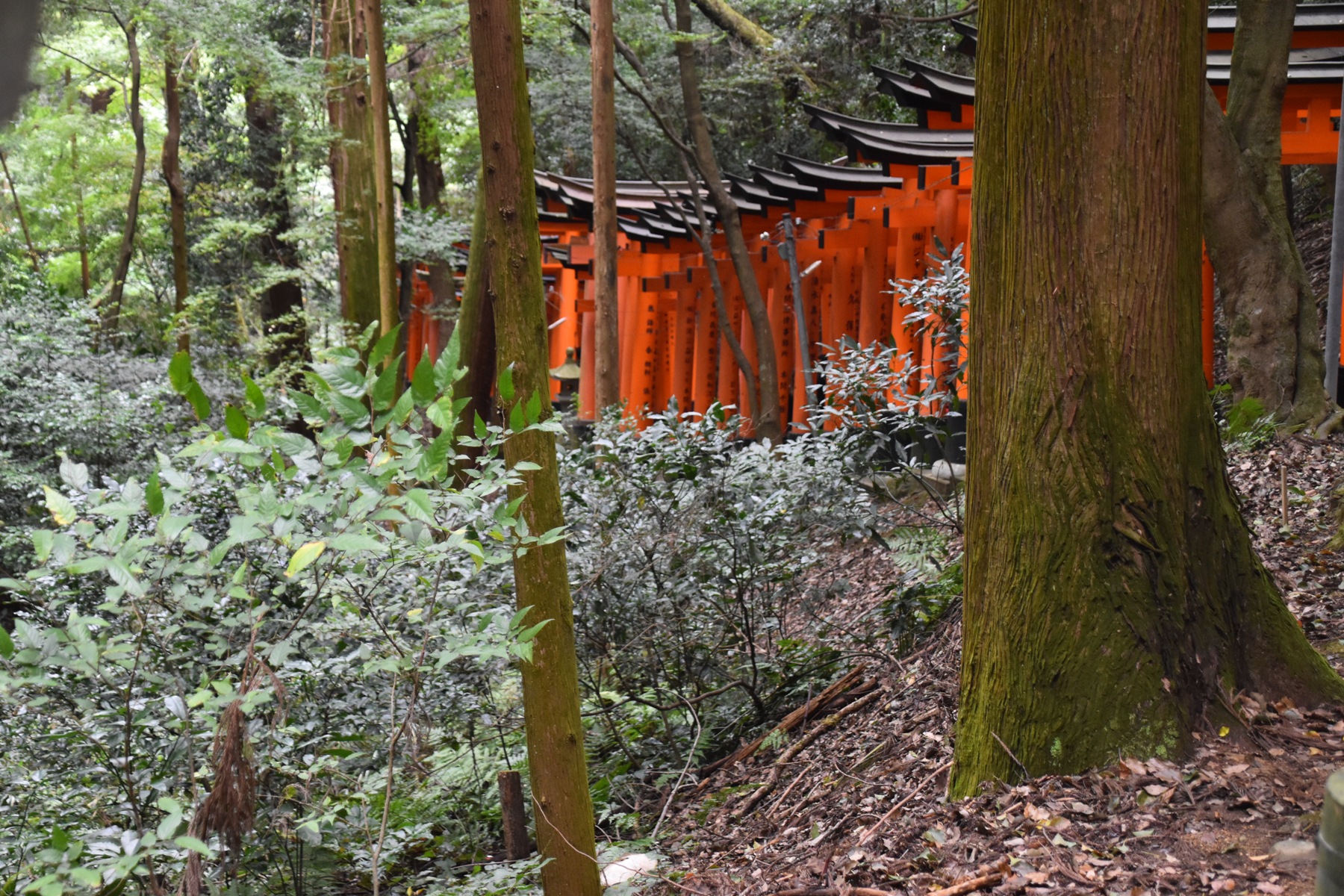
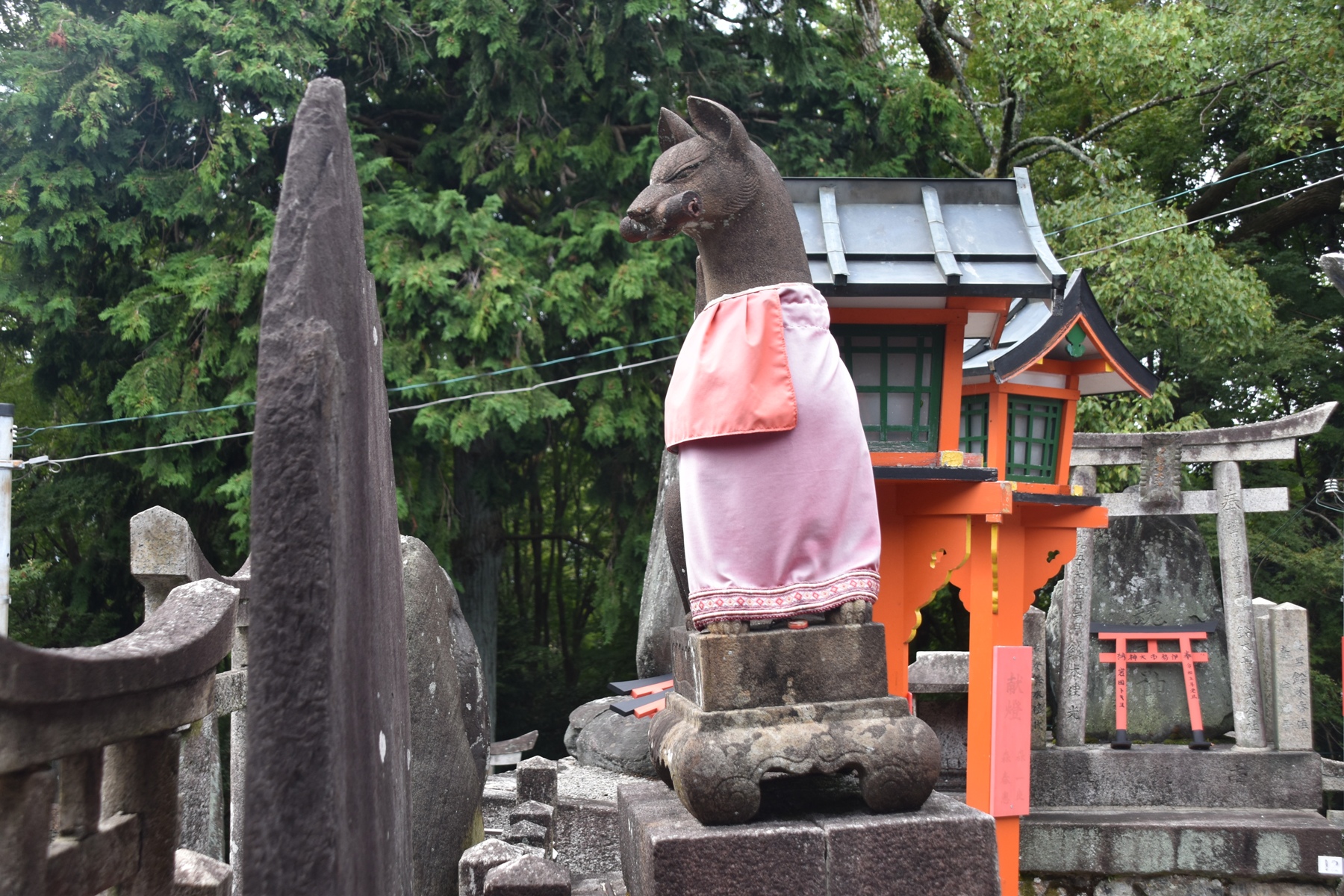
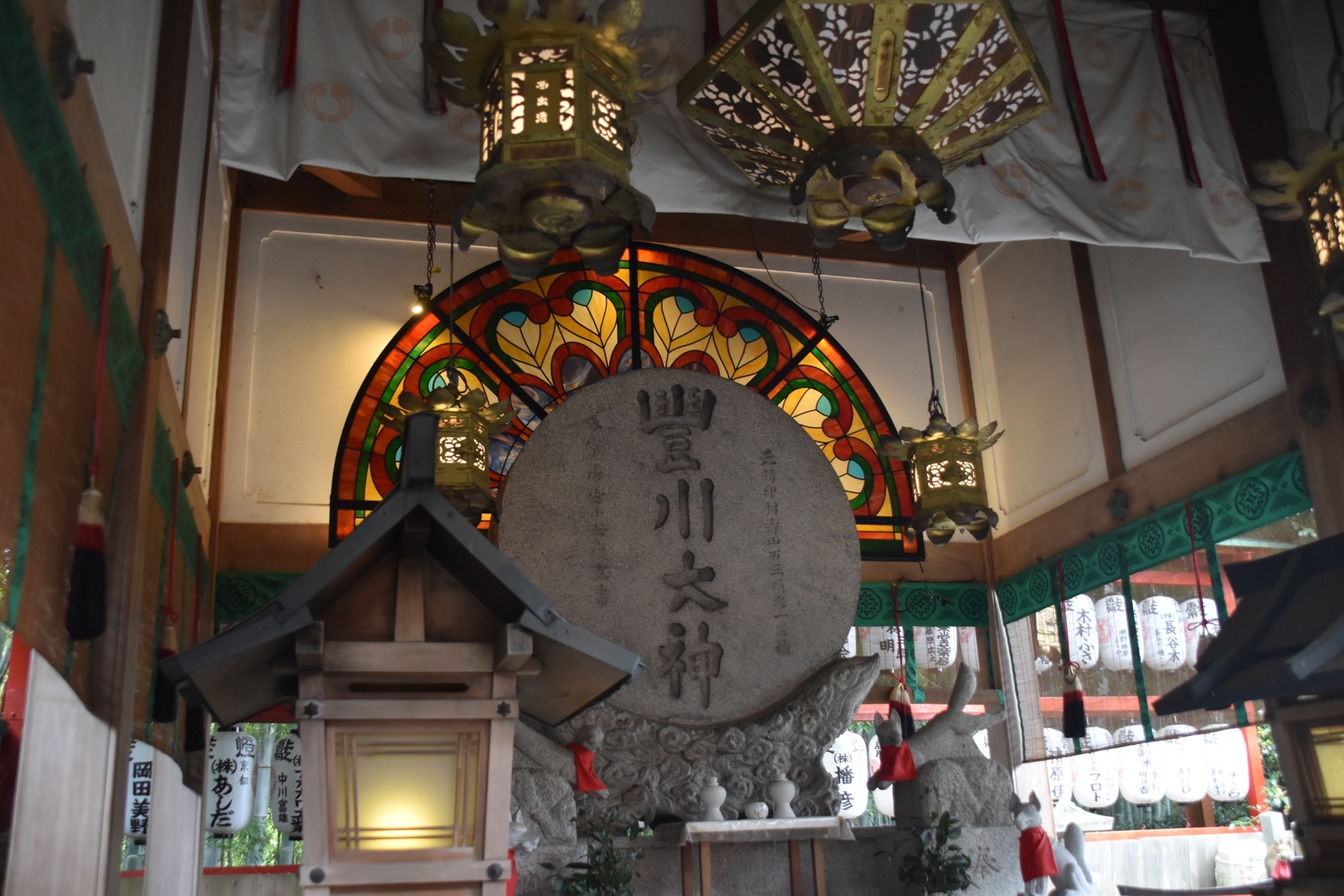
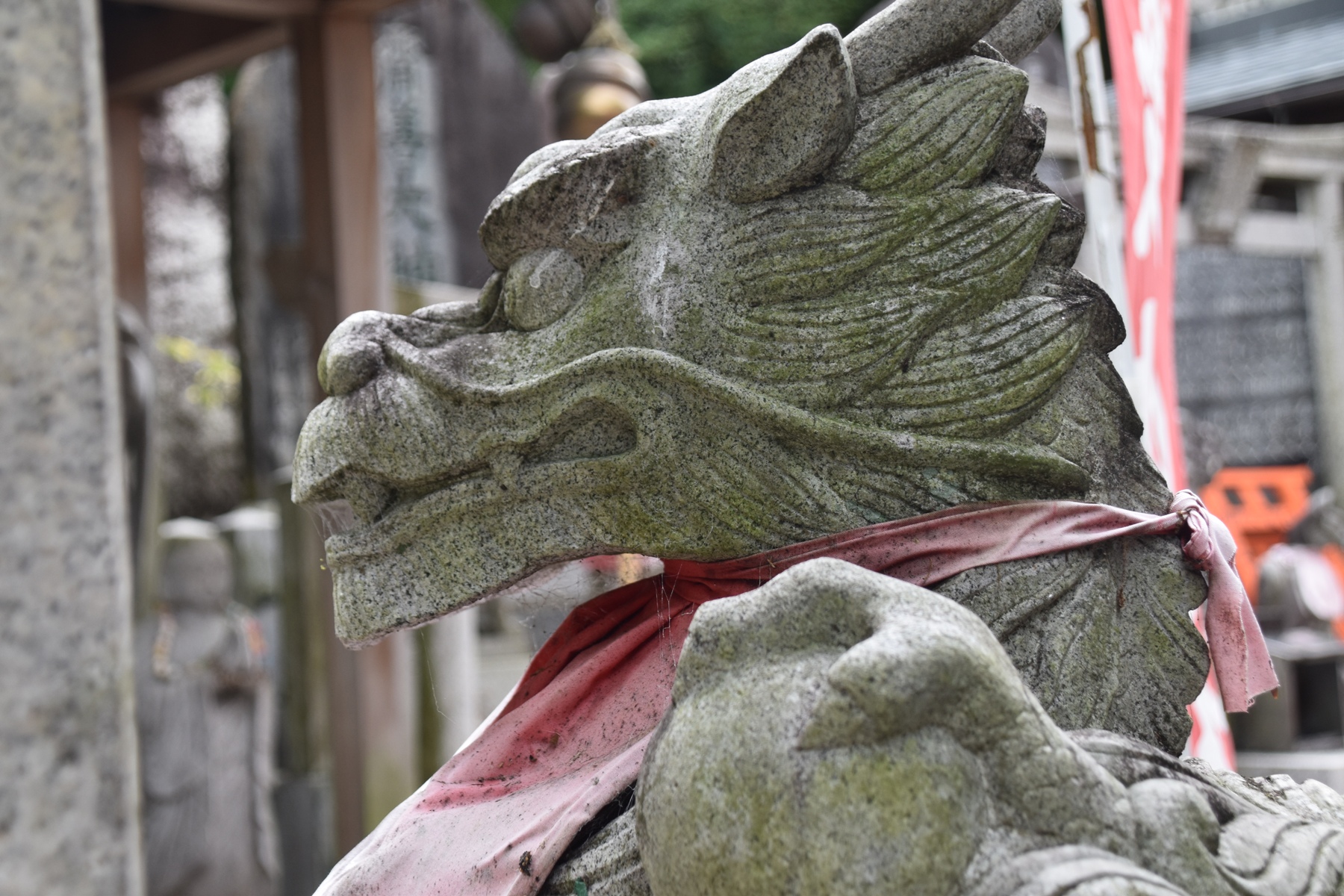
The trail formed a loop from here, and it didn’t really matter which way you went – one was longer and the other was more direct. We opted for the longer route. Within just minutes, about 90% of the crowd had evaporated, and we finally had the trail almost to ourselves. This was easily the most interesting and picturesque part of the hike, and we had a chance to slow down and look at the shrines, the stone foxes, and the mountain forest. We were surprised that the Torii gates were still lining the path – apparently there are over 10,000 of them, and more are being added as businesses donate them. There are hundreds of shrines as well, dotted all over the mountainside.
The walk was like a day’s trekking in Nepal, in micro scale; climb up for a while until the path flattens out to pass through a village, or in this case, past a shop. The shops sold sweets, drinks, and trinkets, and have been there long before the Instagram invasion began. In fact the first shrines appeared on Mt Inari in the 700s, so worshipping here has been carried out for centuries.
After several long steep flights of stairs up, we finally reached the top, at 233 metres. There are no city views, but the immediate environment is so much more interesting than looking down over another modern city. I was so glad we’d ignored the bloggers who recommended skipping the summit loop; we would have missed a unique experience.




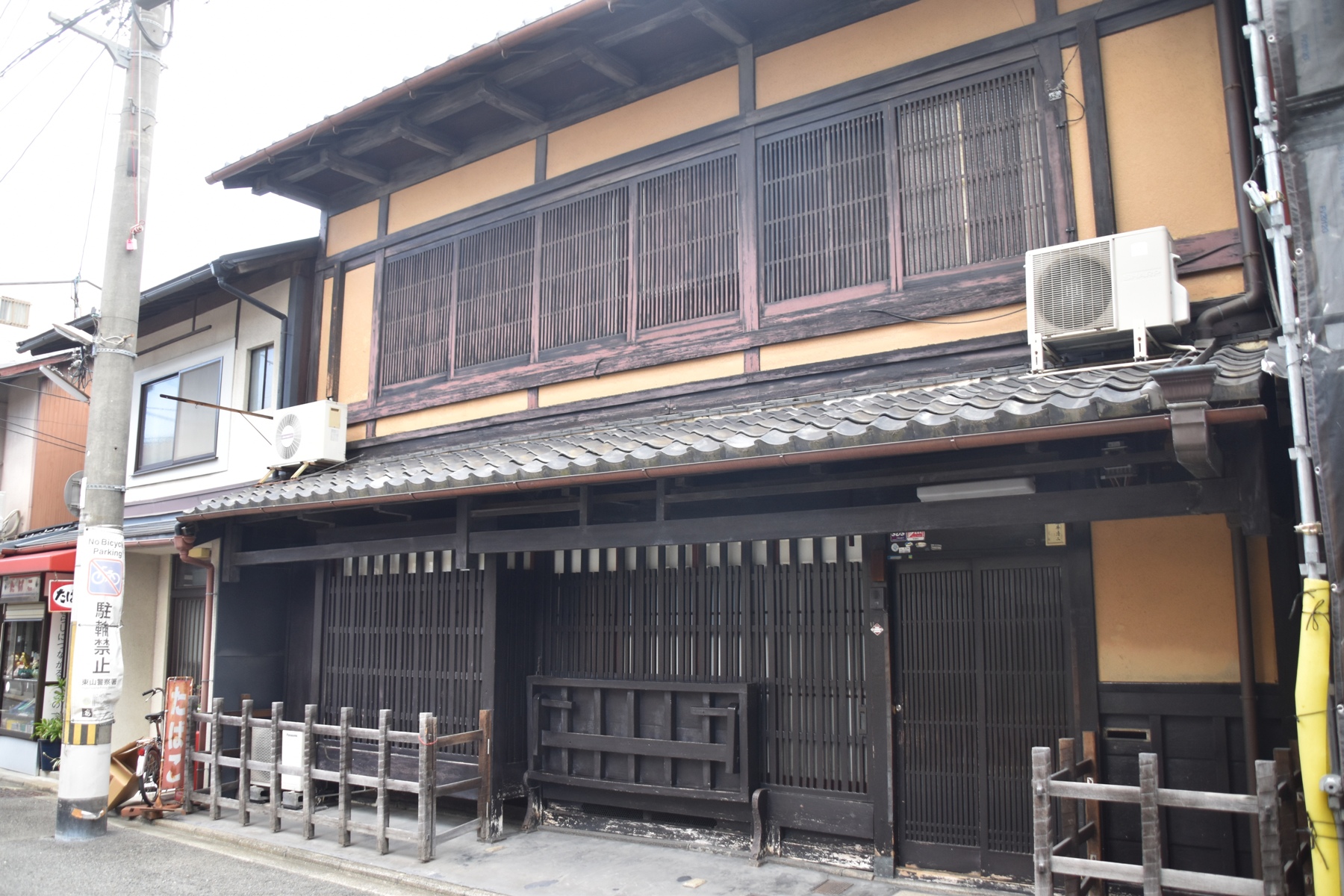
From here the trail led down, and we were back at the junction quickly. When we reached the bottom, the streets led through a small cluster of houses before we emerged back near our starting point. Before boarding a local train to continue our exploration of Kyoto, we visited a gluten free bakery called Oubon, which had an extensive selection of GF cakes to choose from. Ian made his selection after some debate, and packed them carefully away for later.
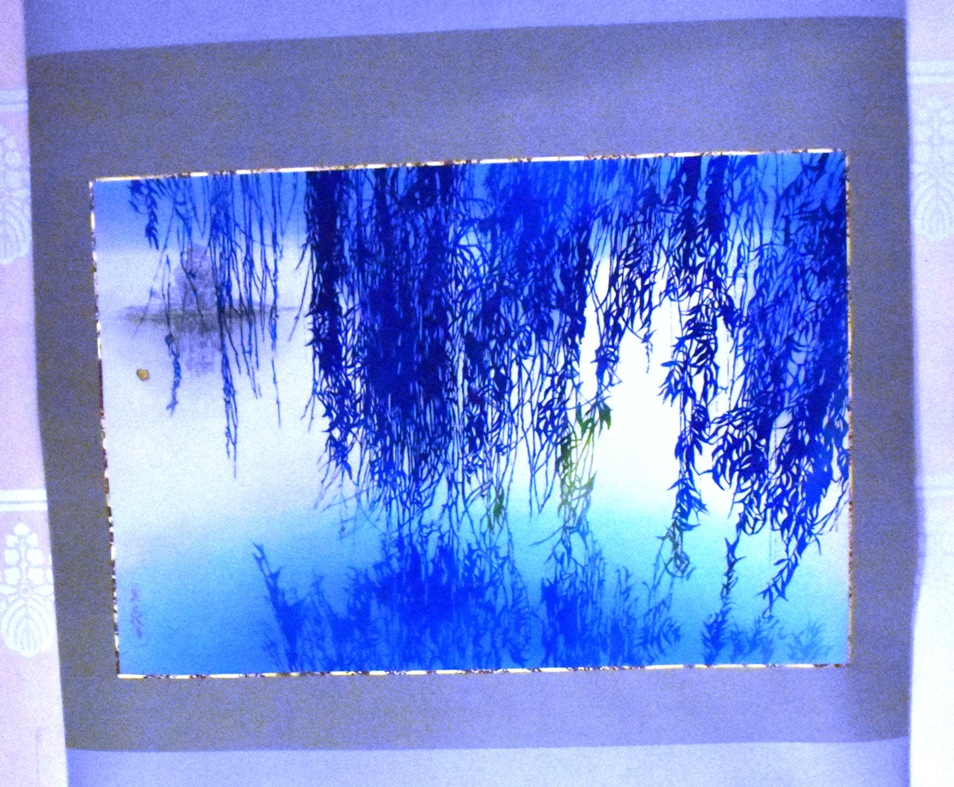
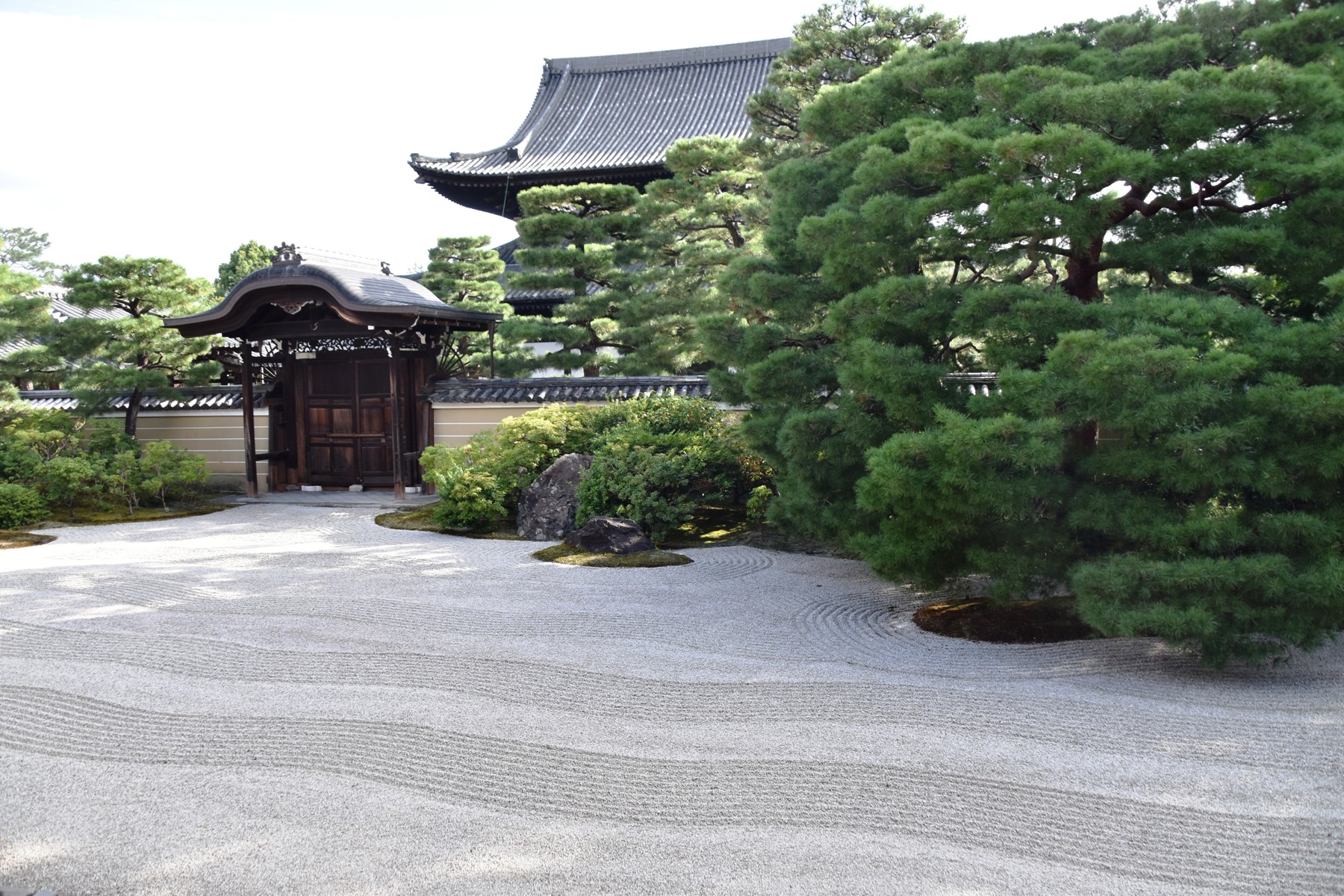
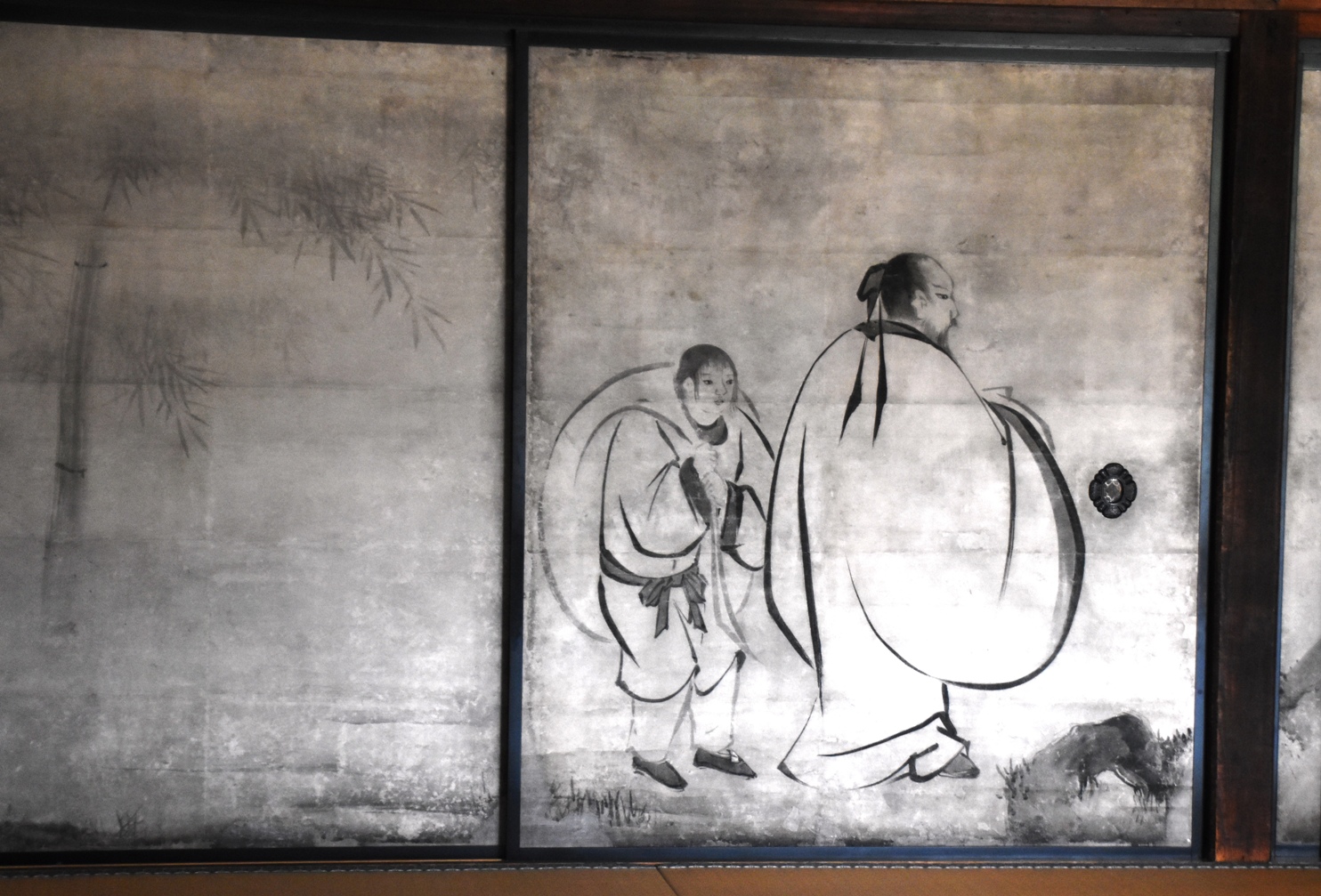
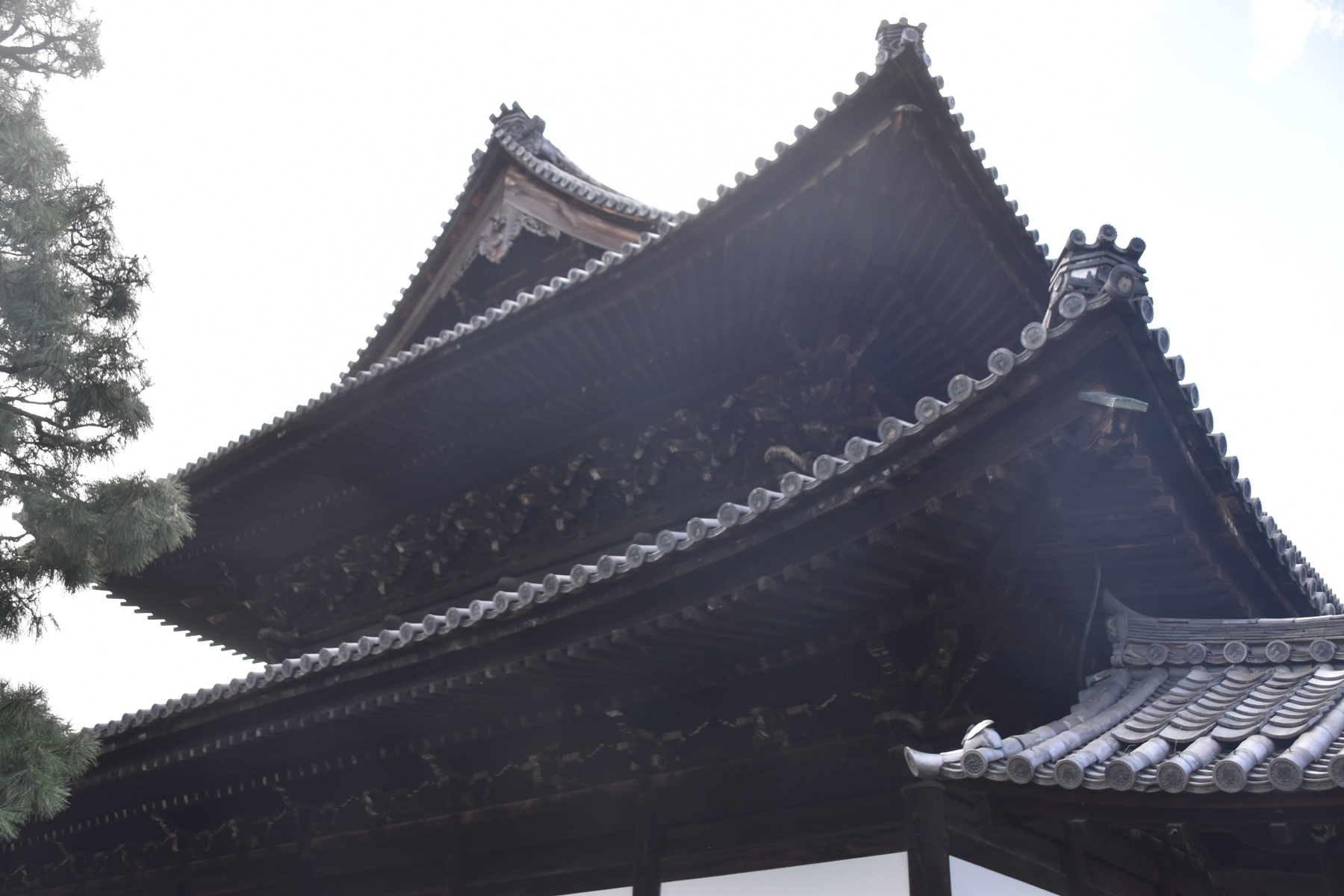
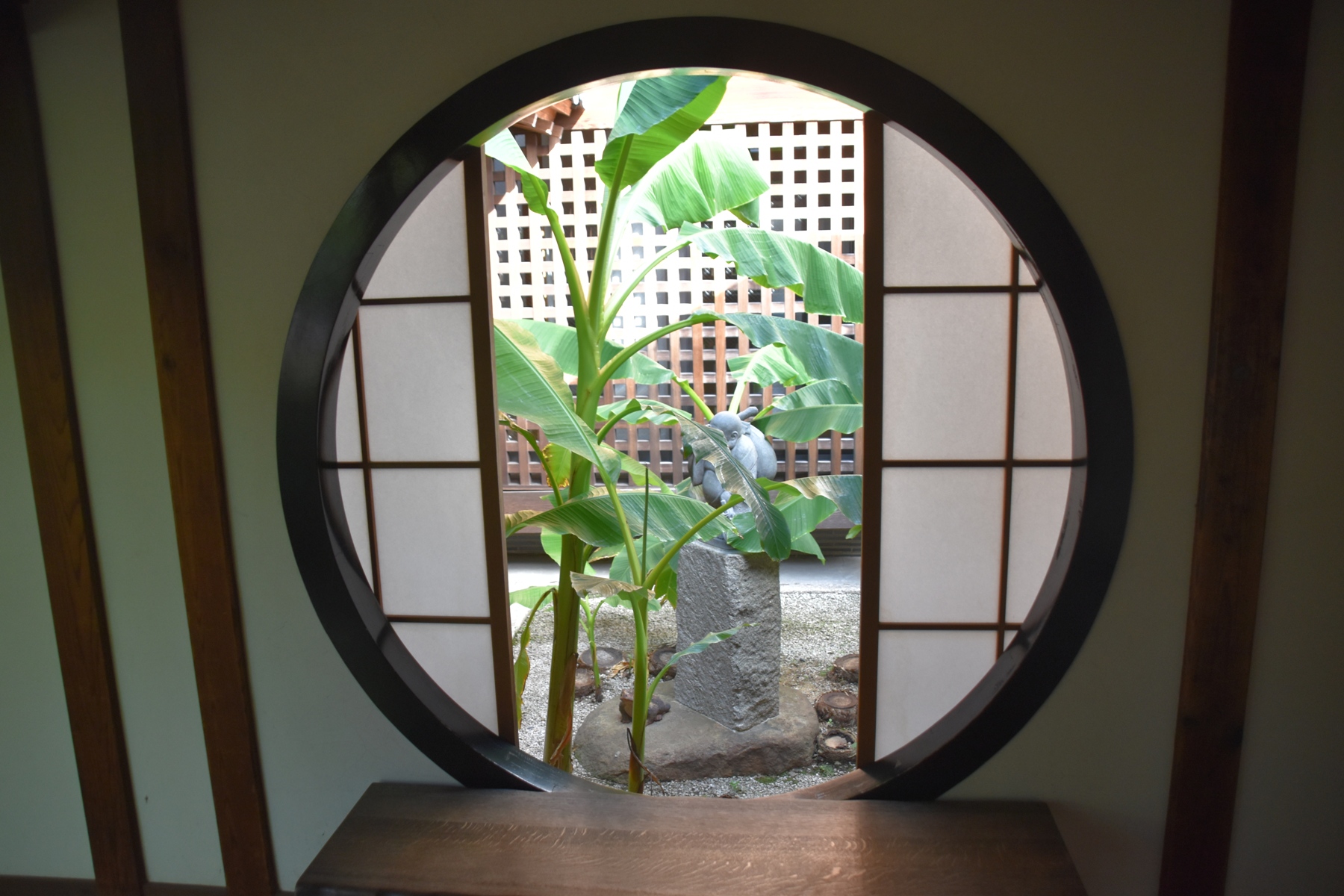
After a brief lunch stop, it was time to see some of the temples for which Kyoto is famous. There are so many to choose from, but with limited time, we picked two, in the historic Higashiyama district. First was Kennin-ji Temple, the oldest Zen temple in Kyoto. Besides the beautiful gardens, this temple features a series of large tatami-floored rooms, around a central courtyard. The rooms had softly painted panels depicting landscapes and characters. Looking through the windows edged with shutters, onto the central garden, was like looking at a theatre screen. In the Zen garden, not a pebble was out of place.
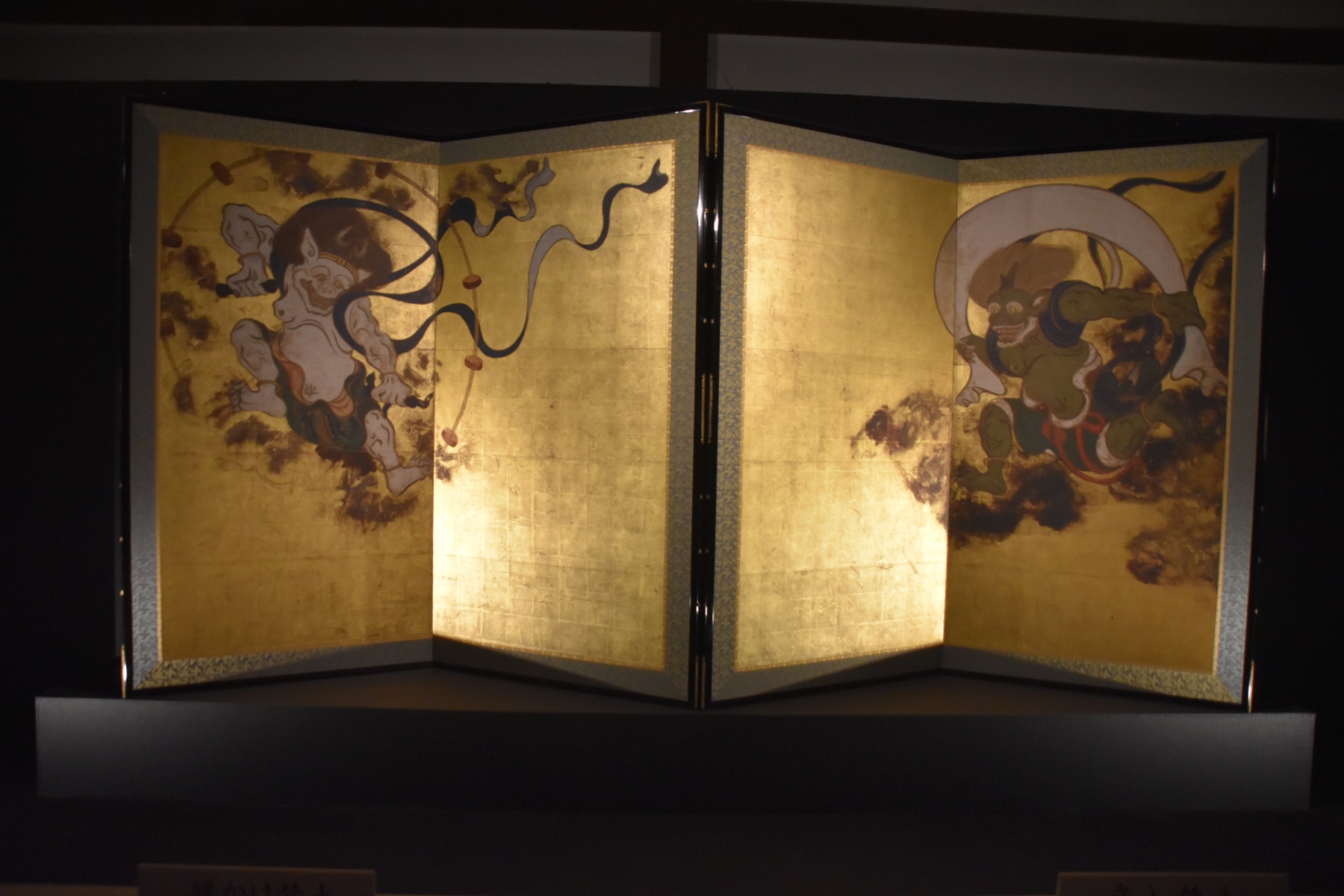
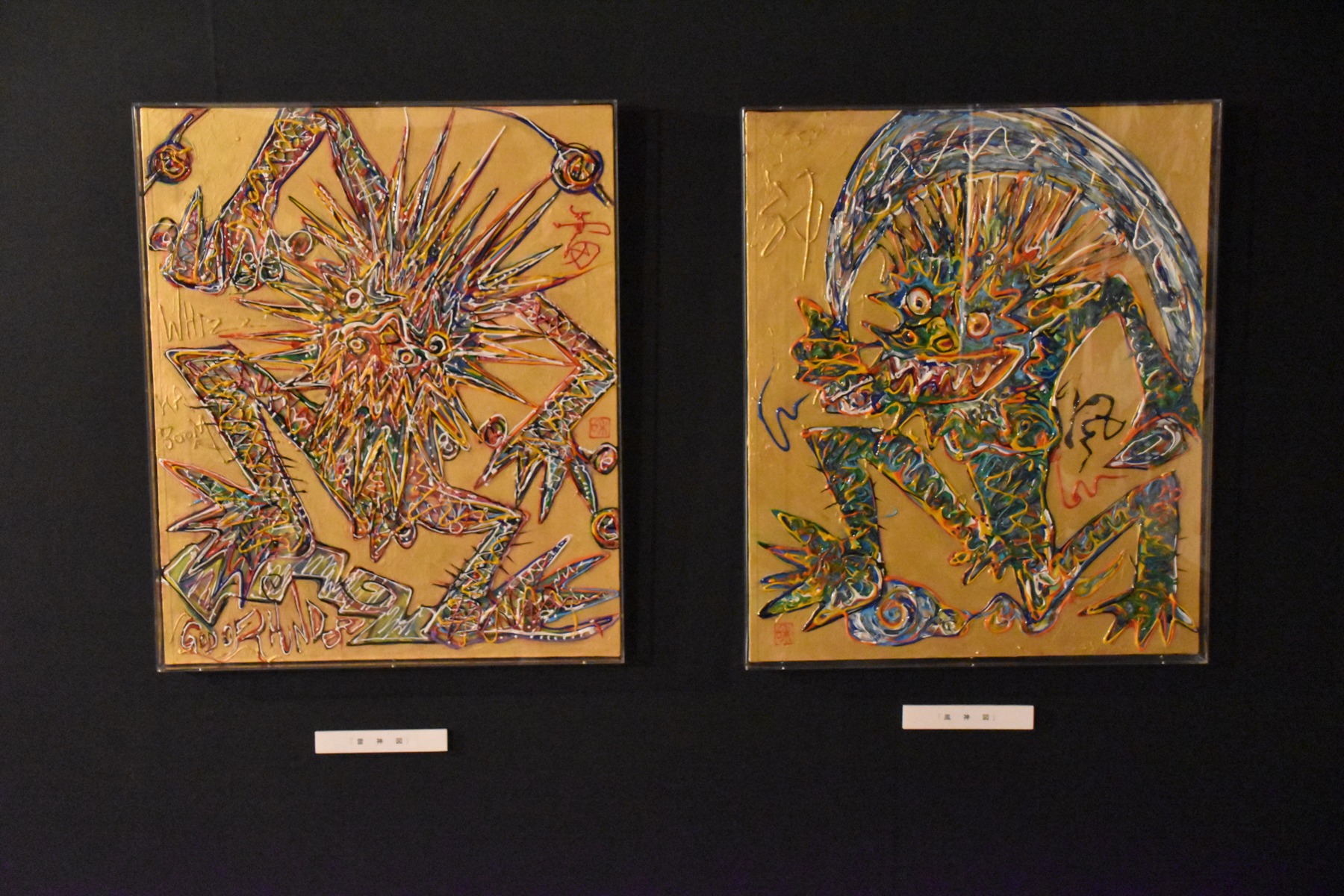
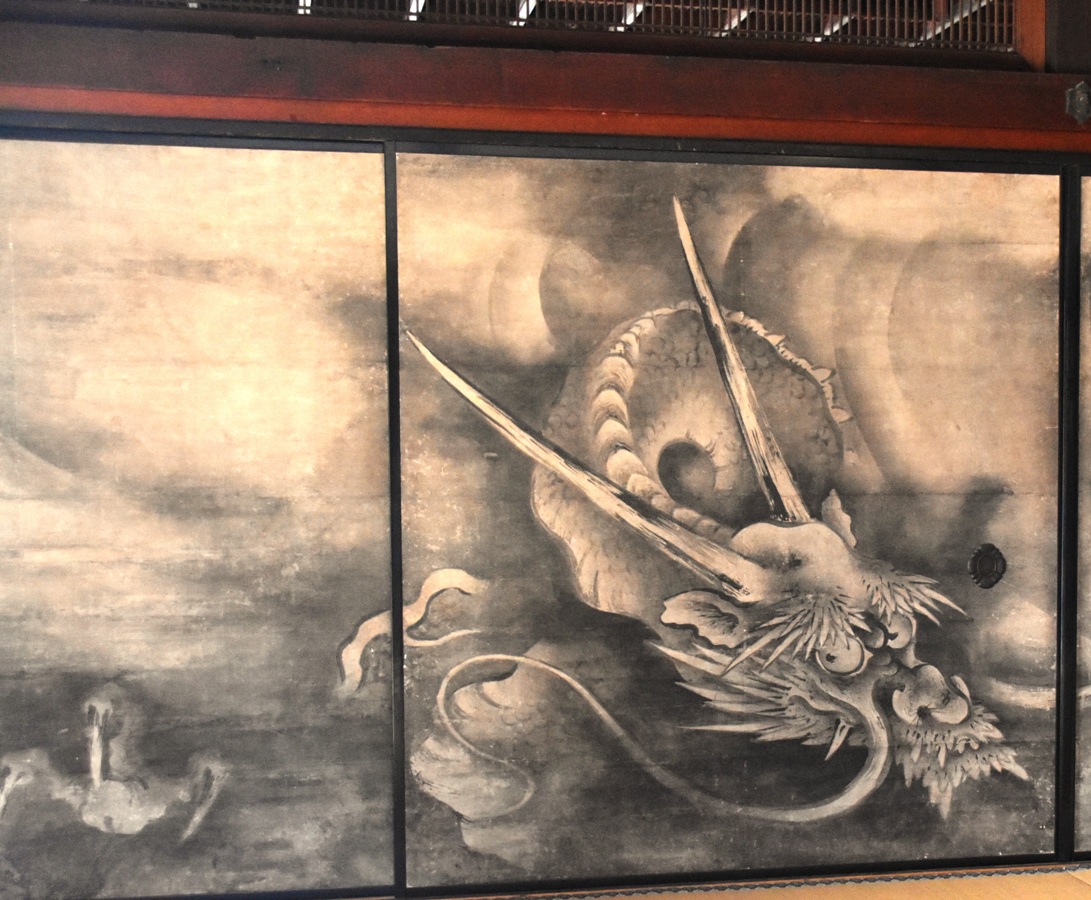
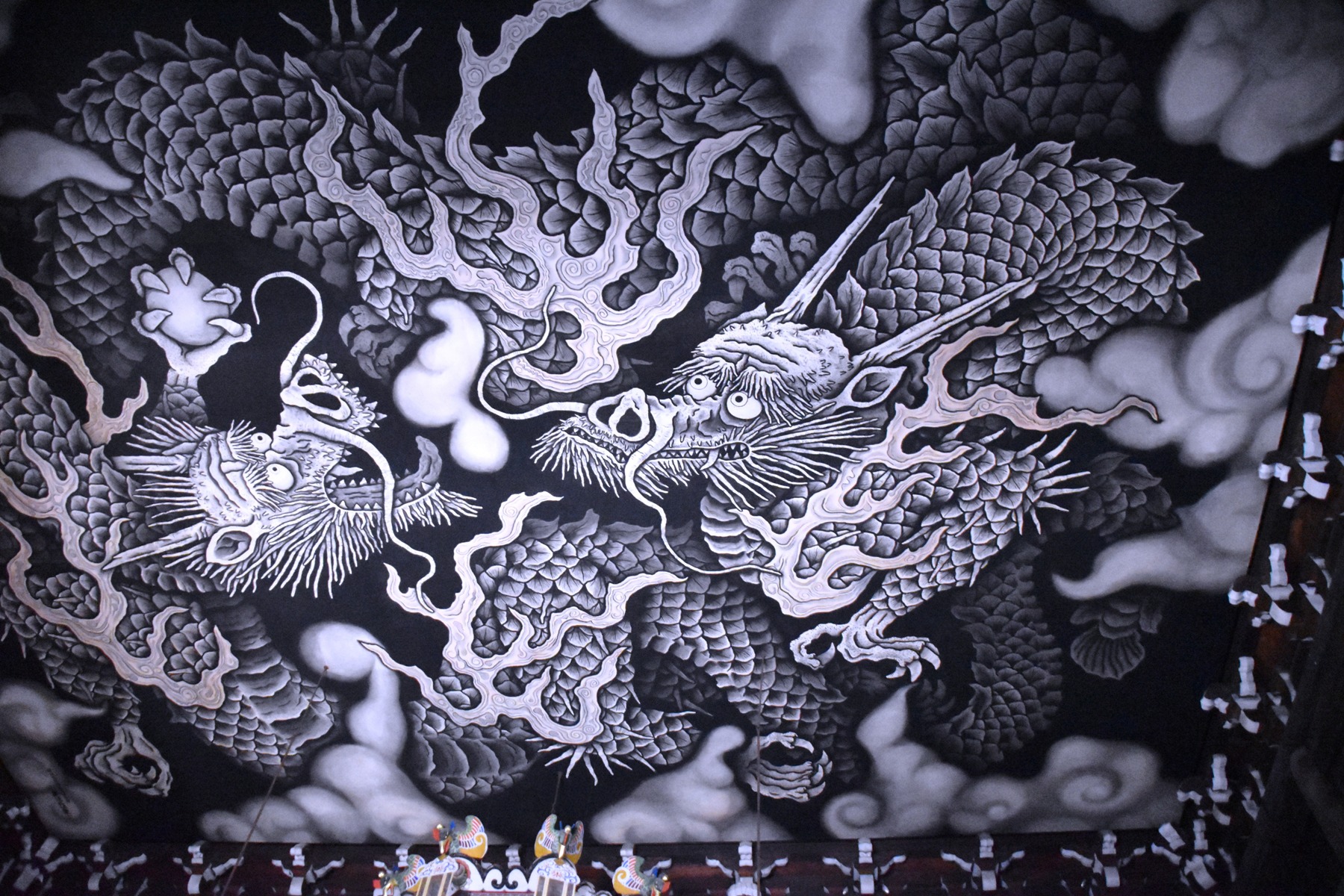
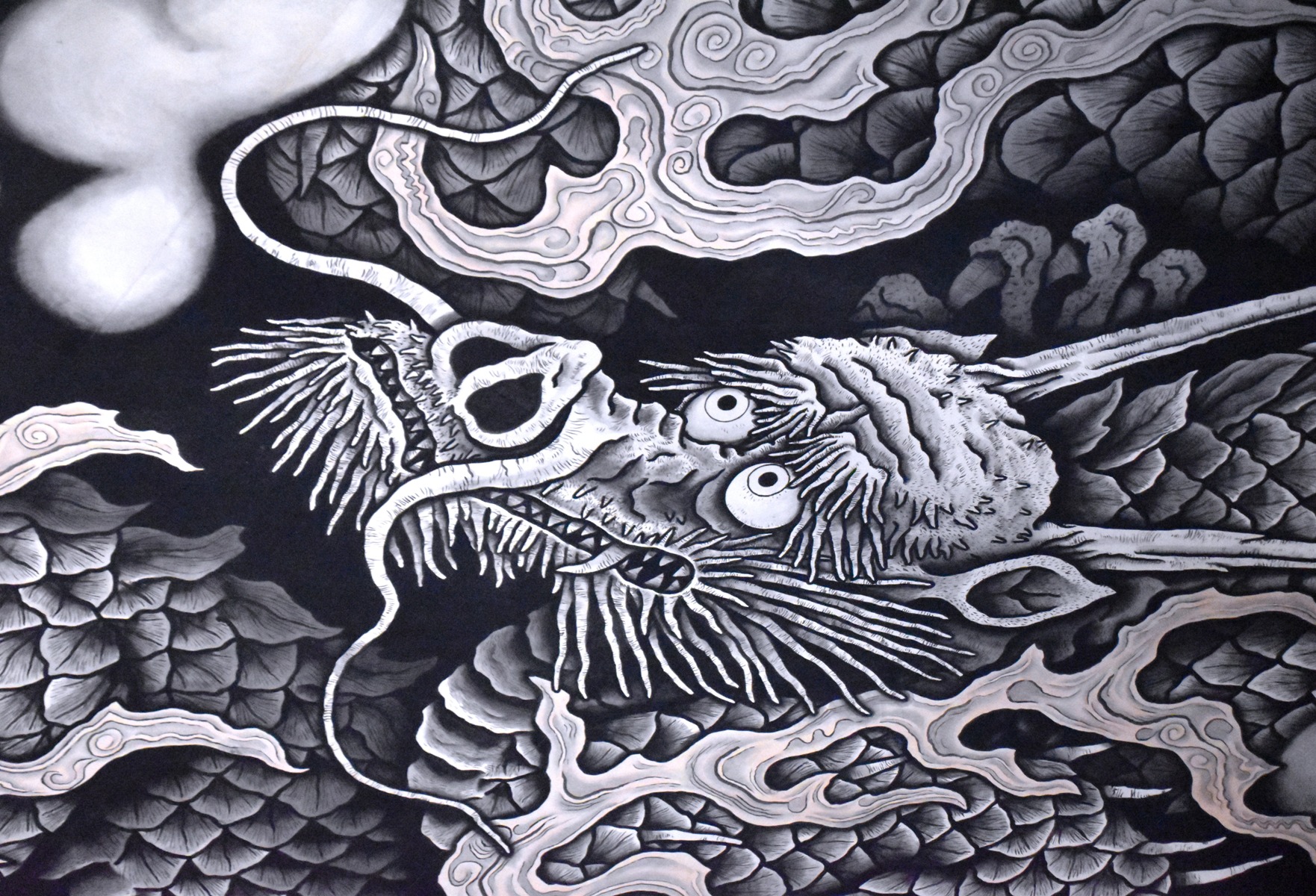
We’d been walking around the timber floors of the connecting corridors in our socks; to enter the Main Hall, we had to don shiny red leather slippers. They were very awkward to walk in, so we adopted the Slipper Shuffle. The Main Hall has a dramatic painting on the ceiling, “Twin Dragons”. Installed in 2002, it was drawn with fine quality ink on traditional Japanese paper. It was created in a school gymnasium, and took two years to complete. Other striking artworks were the Wind and Thunder Gods on their golden panels, and the Cloud Dragon, in subtle monochrome. This was my favourite temple so far for the trip.
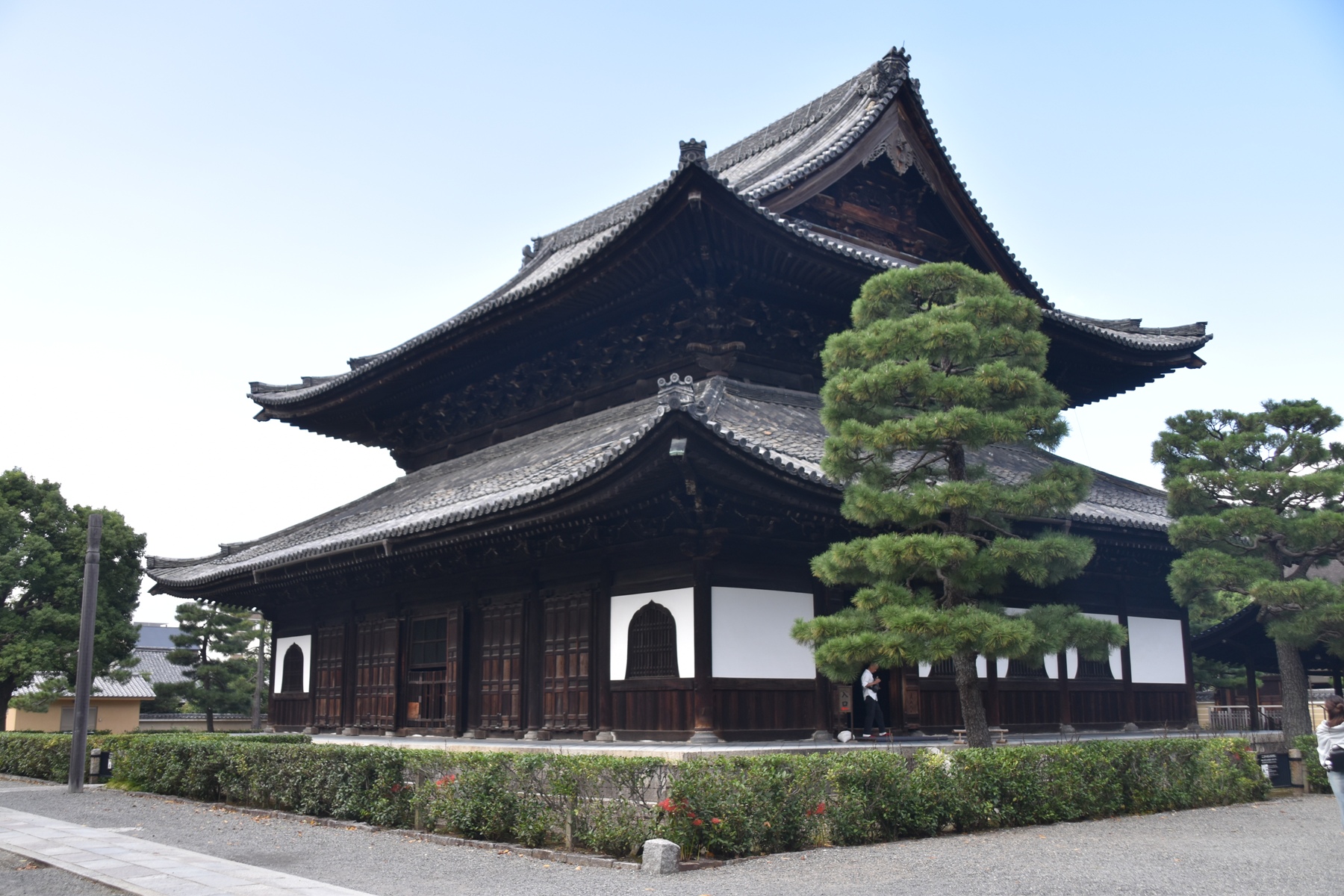
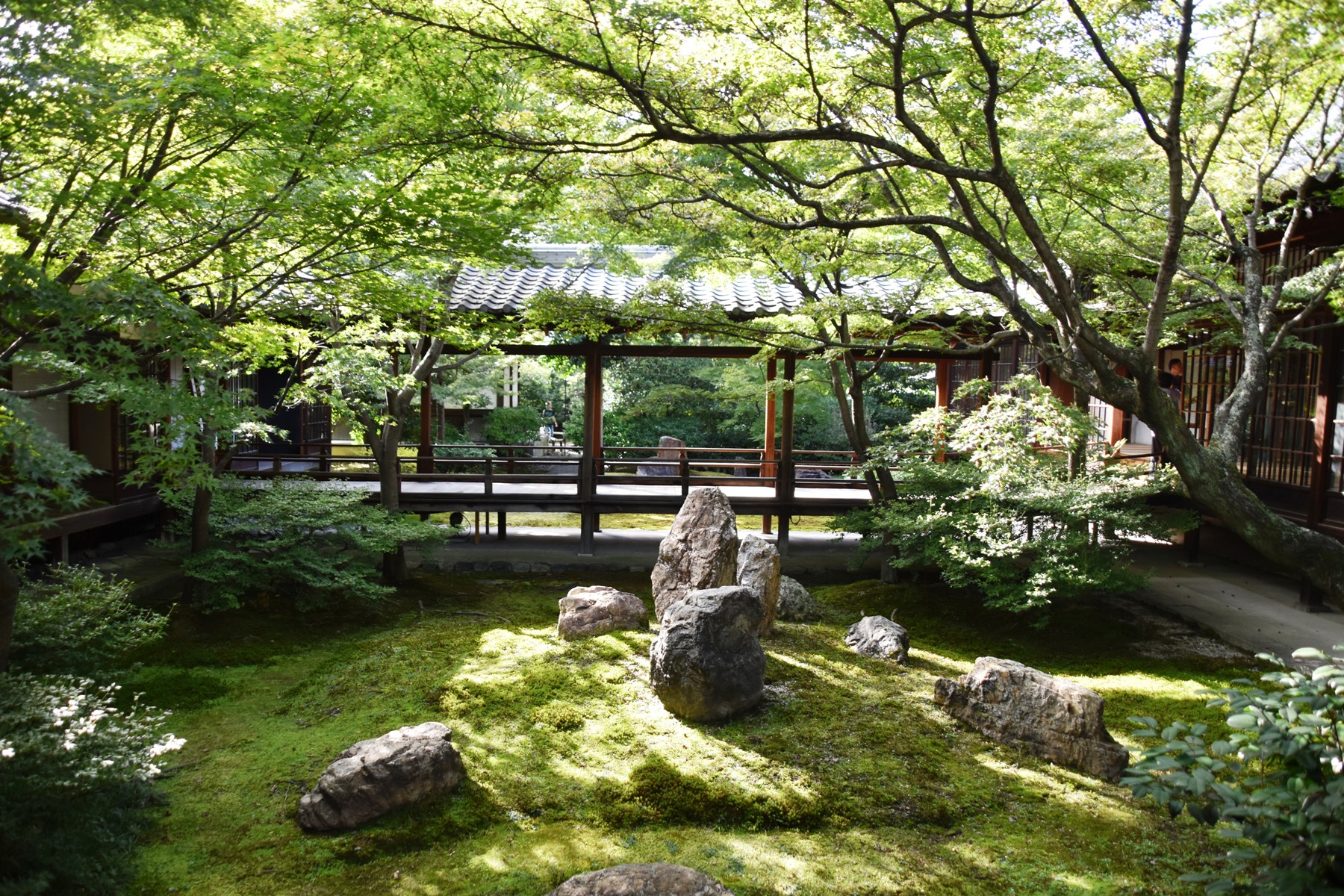
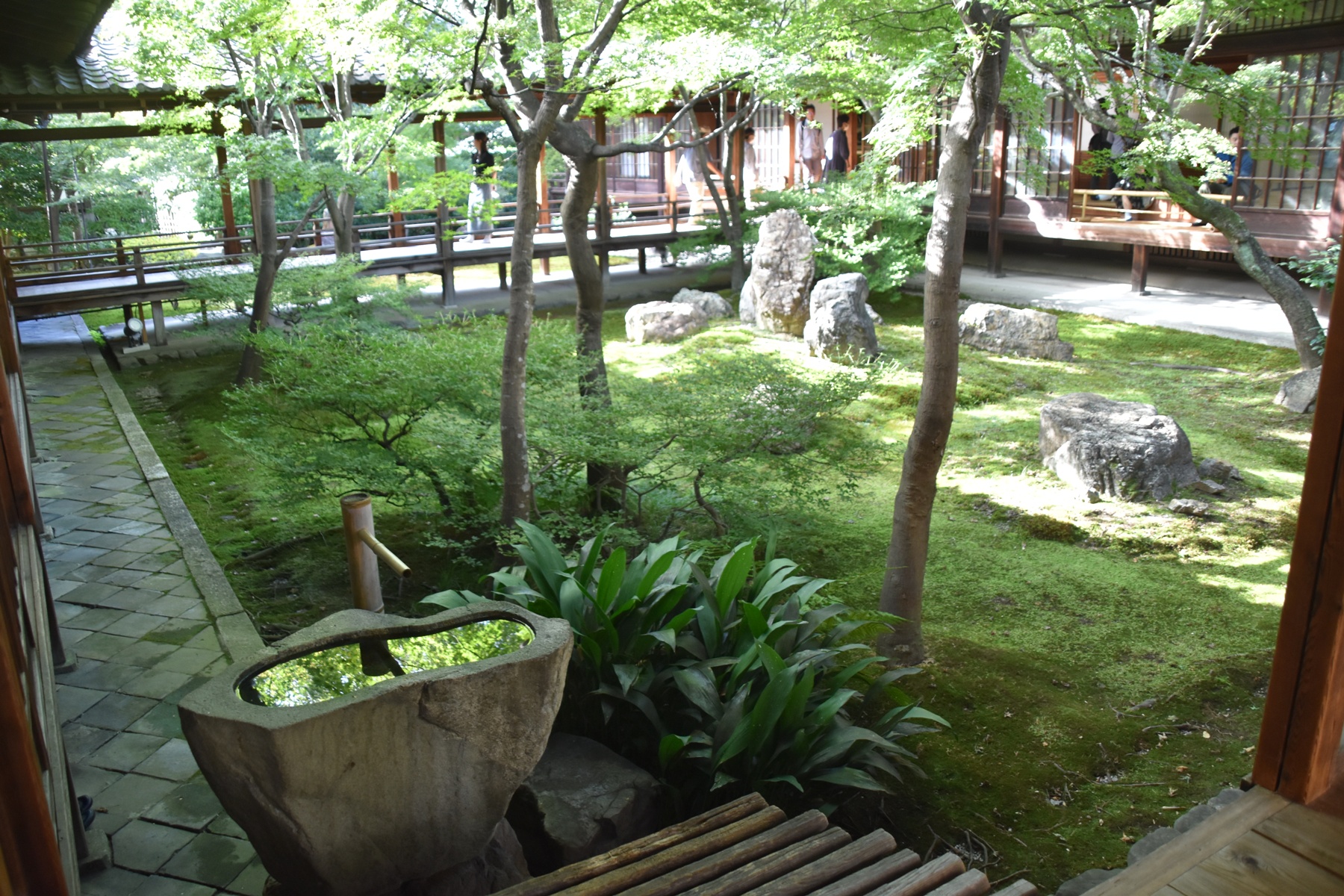
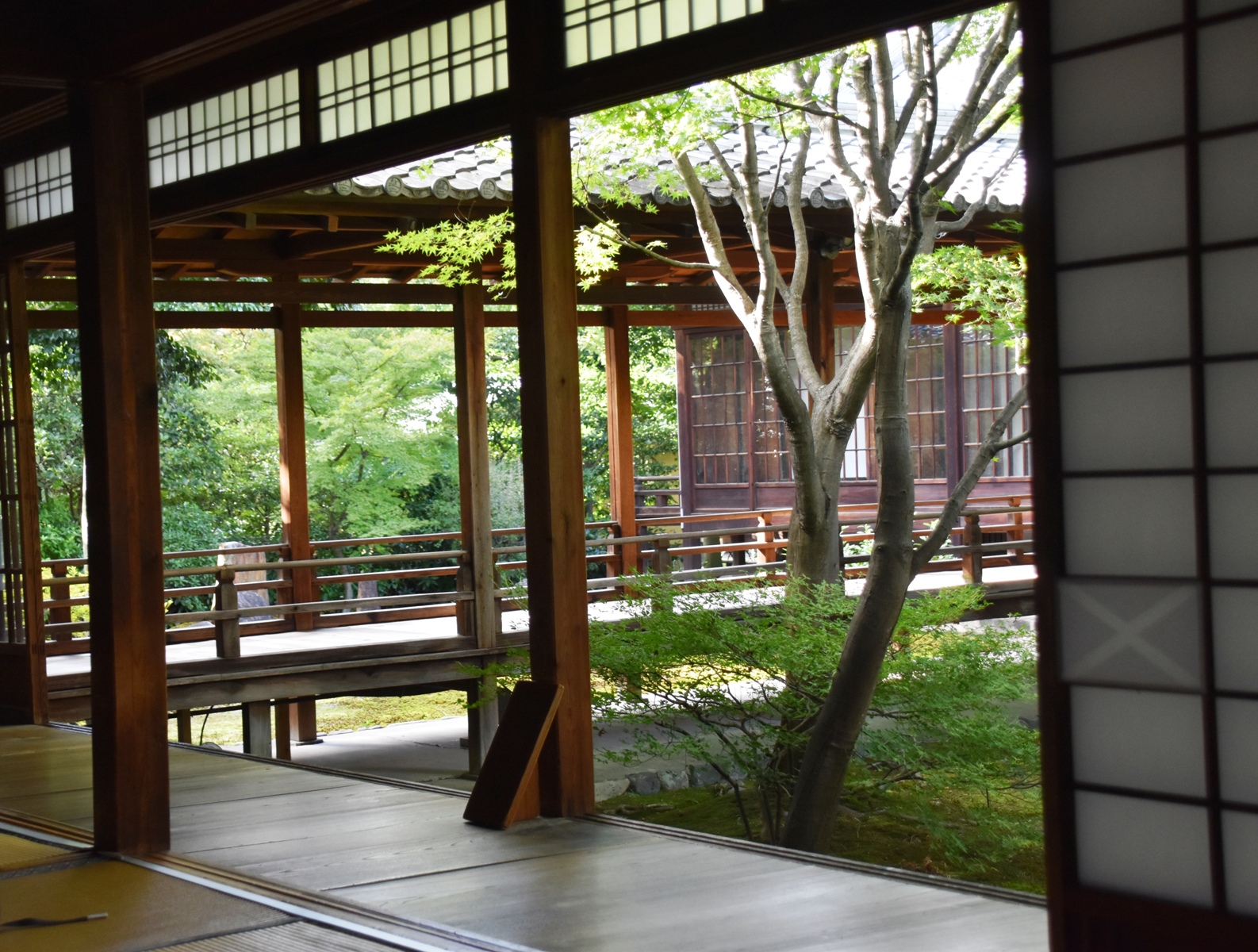
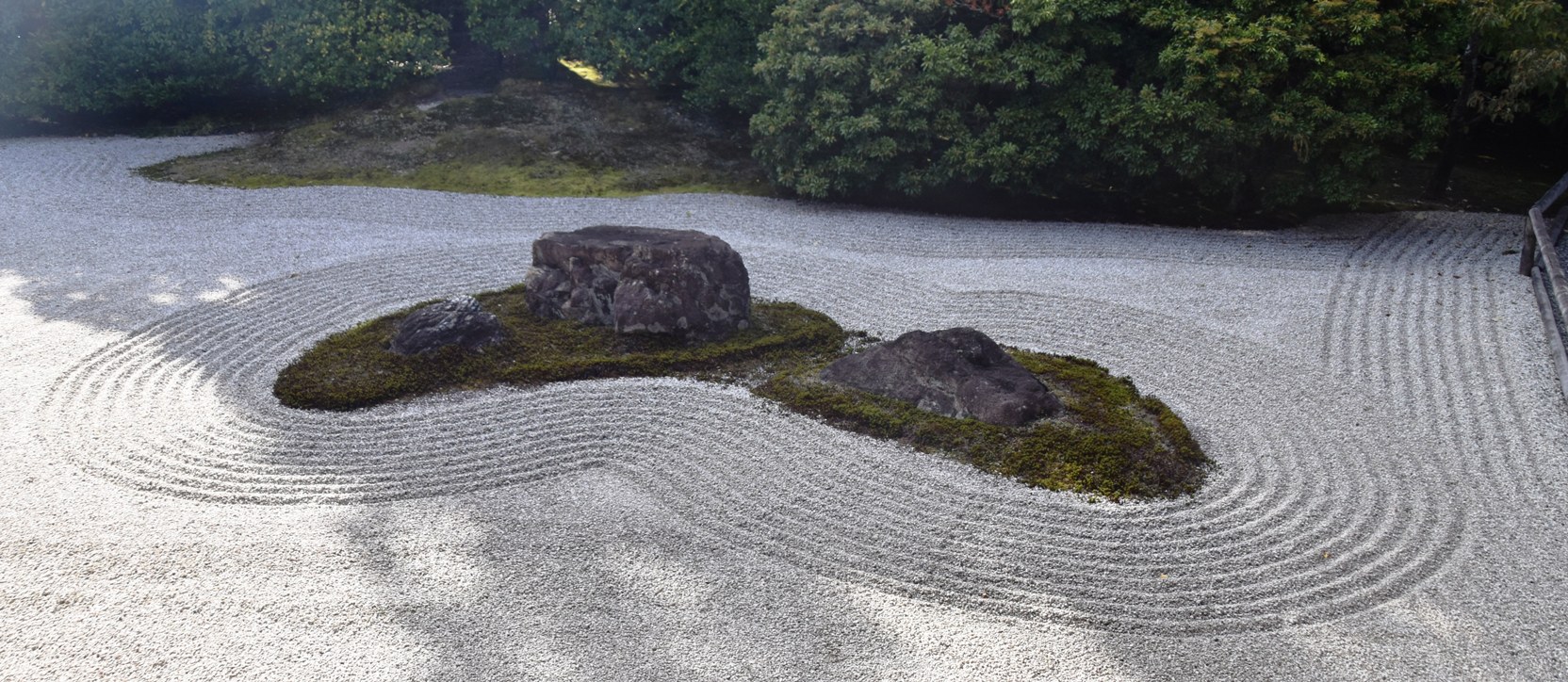


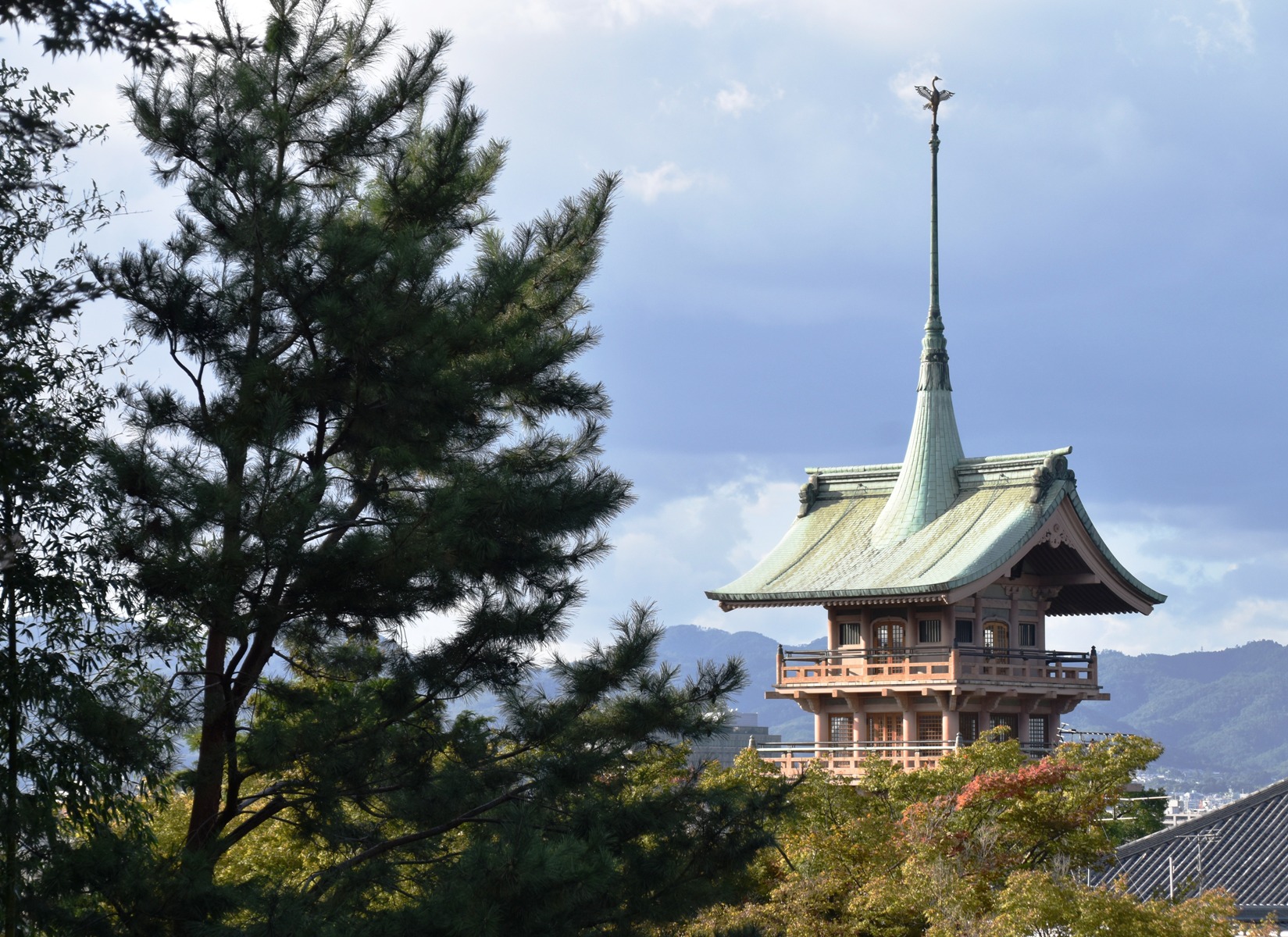
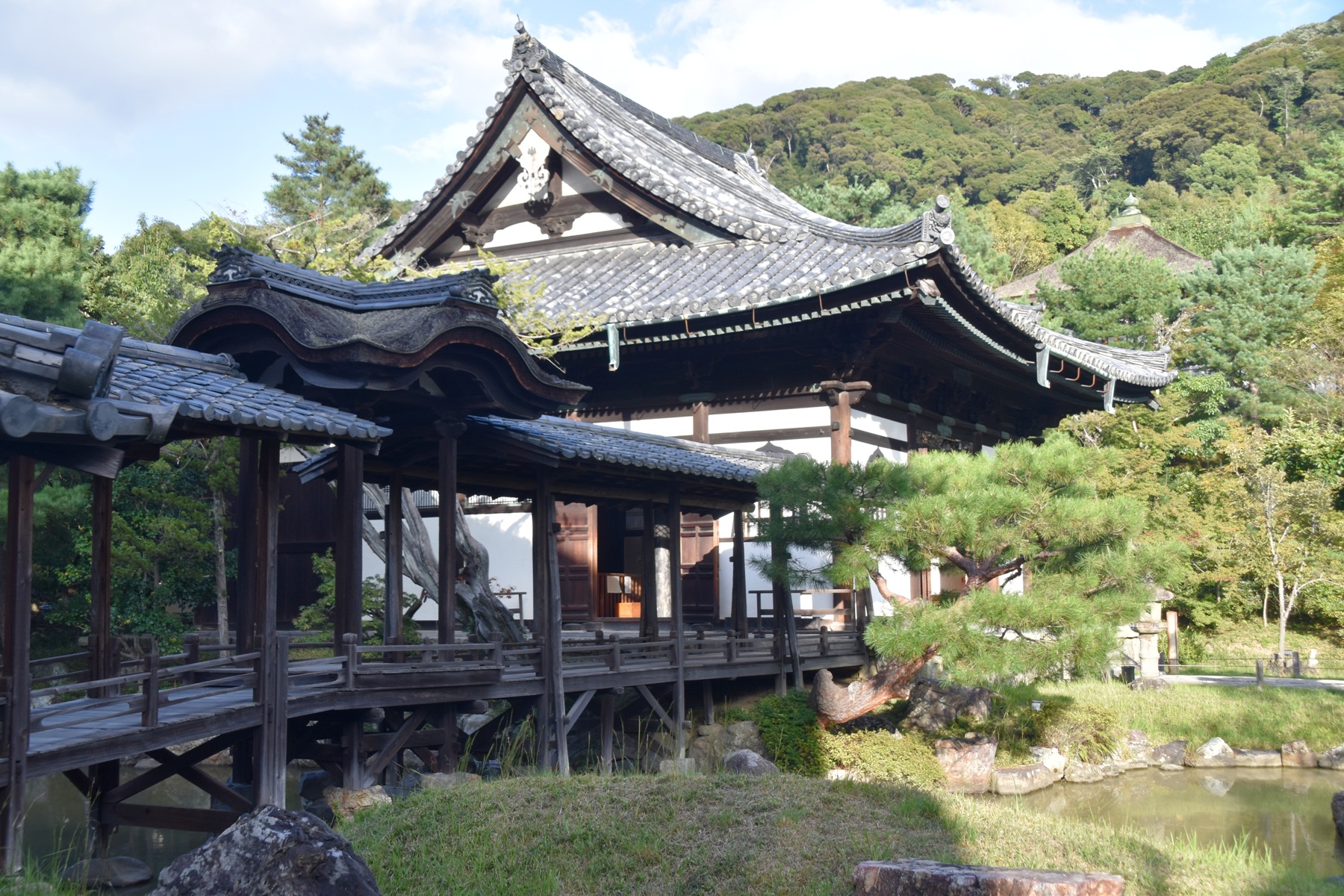
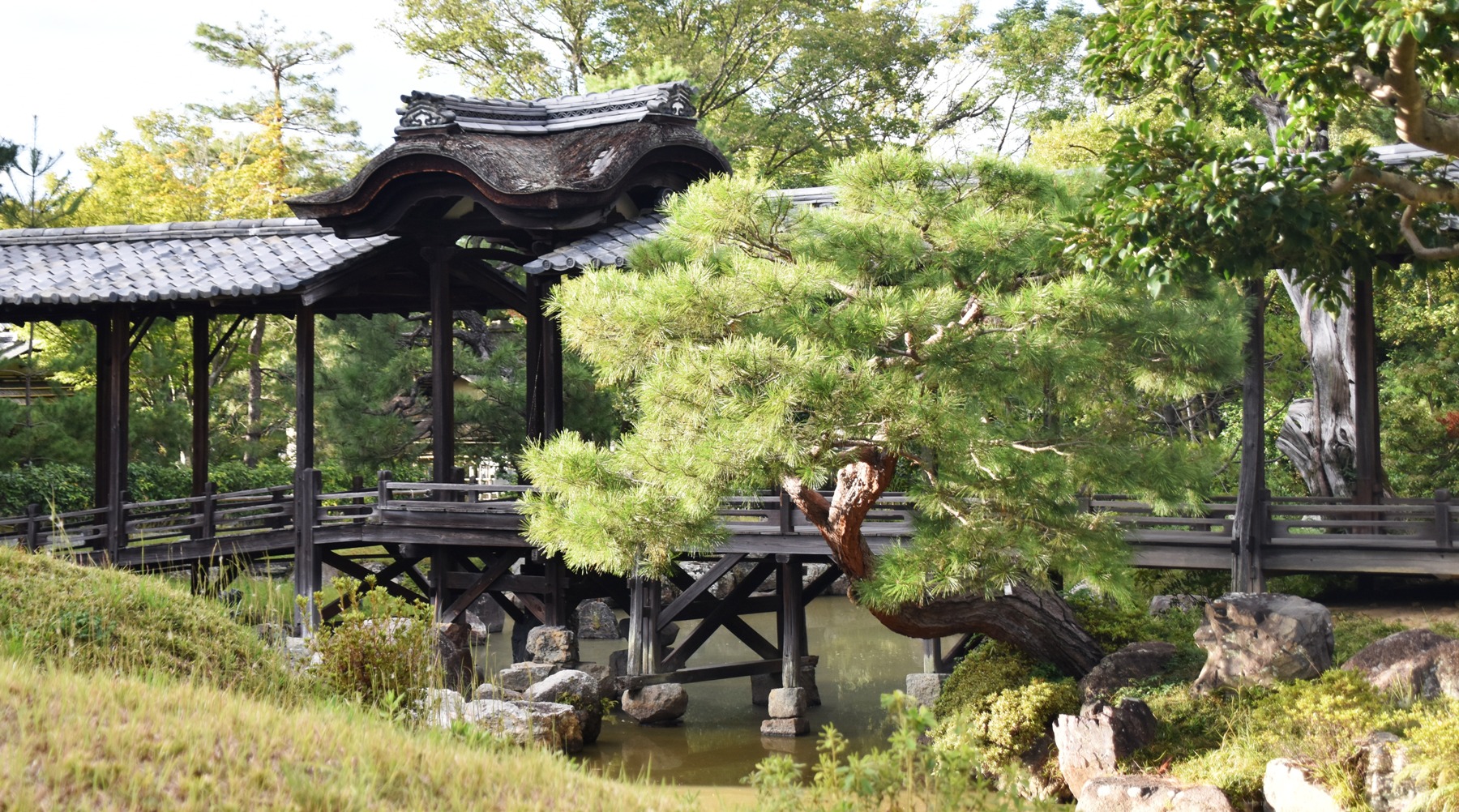
Our second temple was Kodai-ji, in the foothills of eastern Kyoto. It was established in 1605. Some of its original buildings have been destroyed by fire, but some remain. There is a large restoration project underway, and we could see craftsmen working on timber beams; the timeframe is two years. We followed a trail to see the buildings and gardens. It was lovely, but we preferred Kennin-ji.

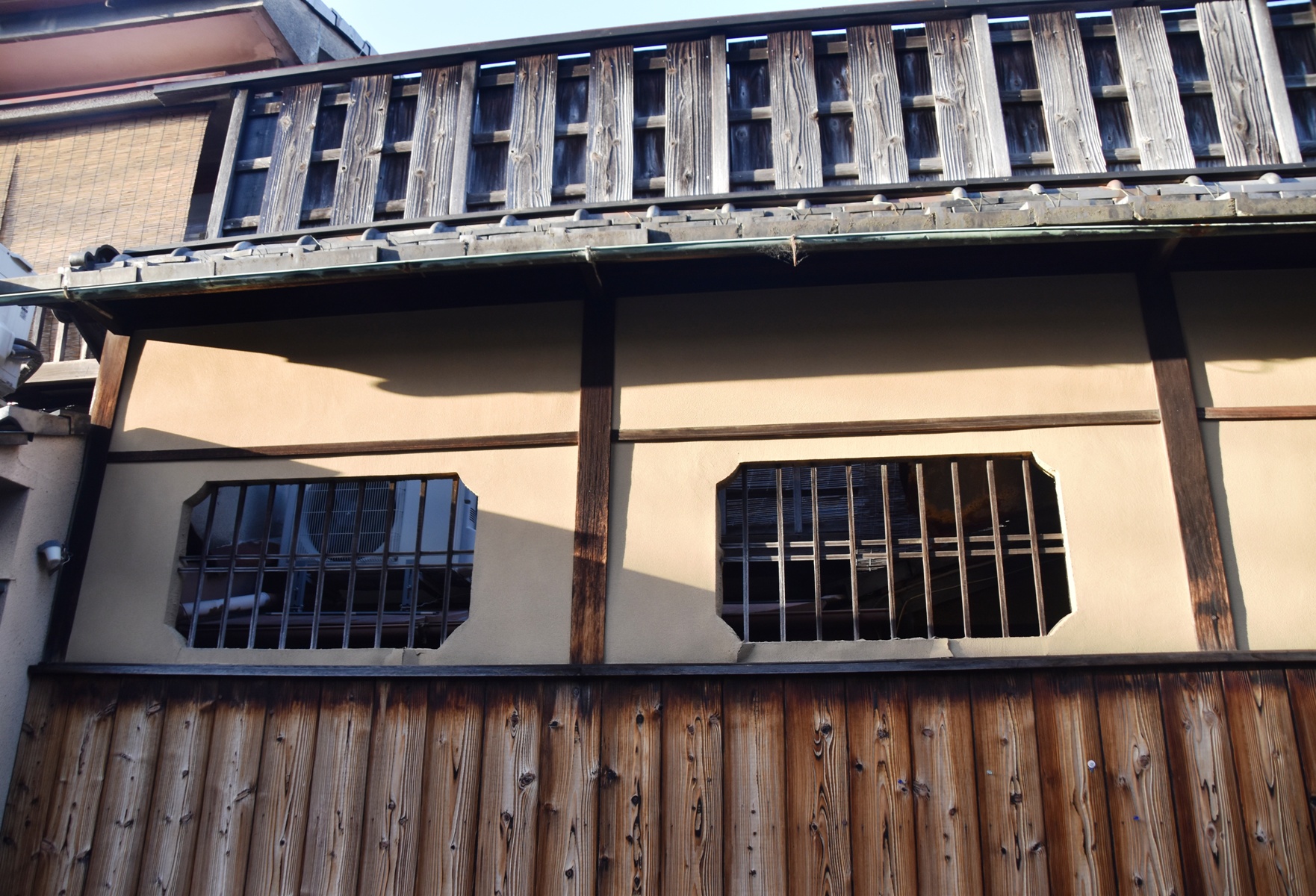
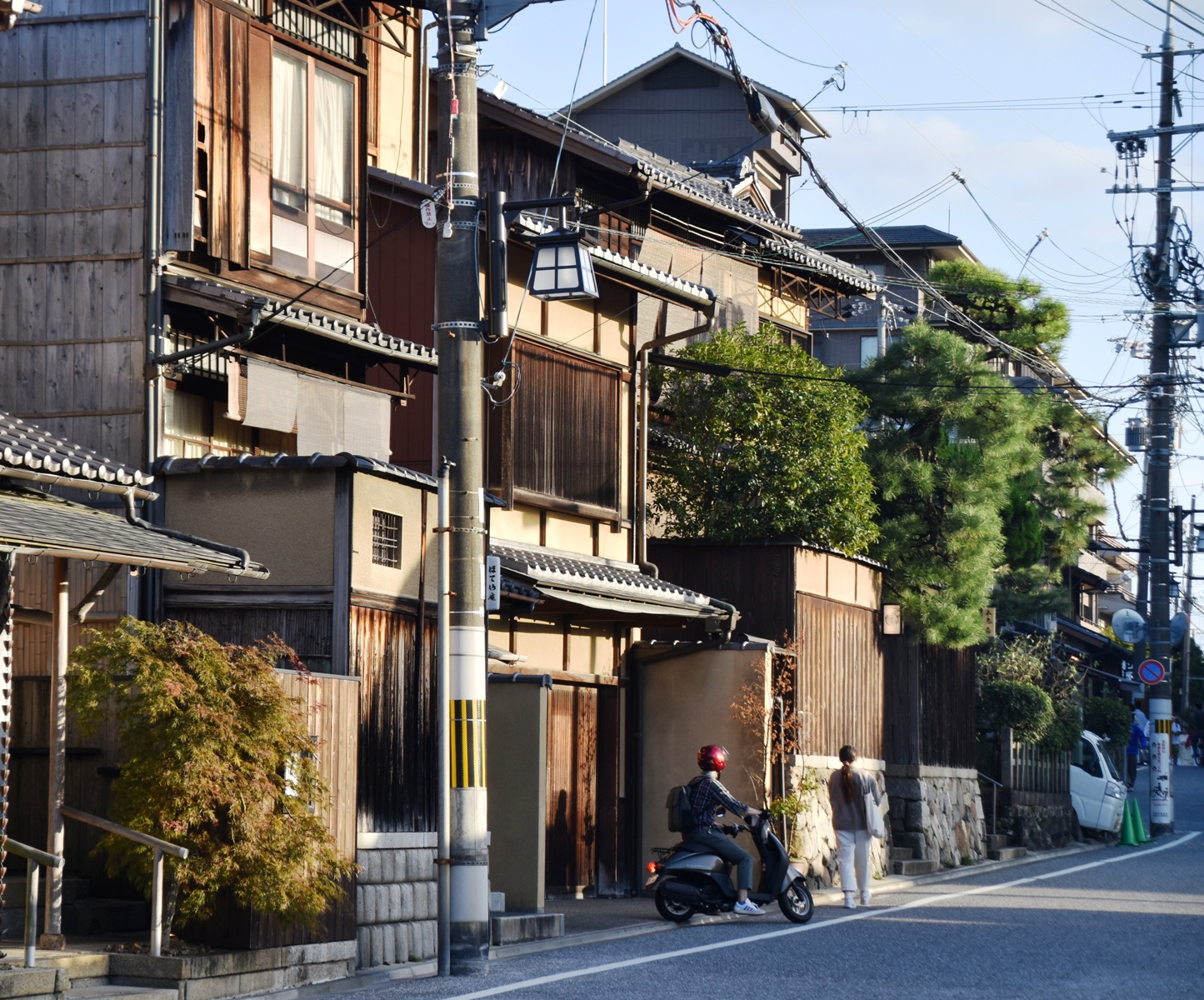
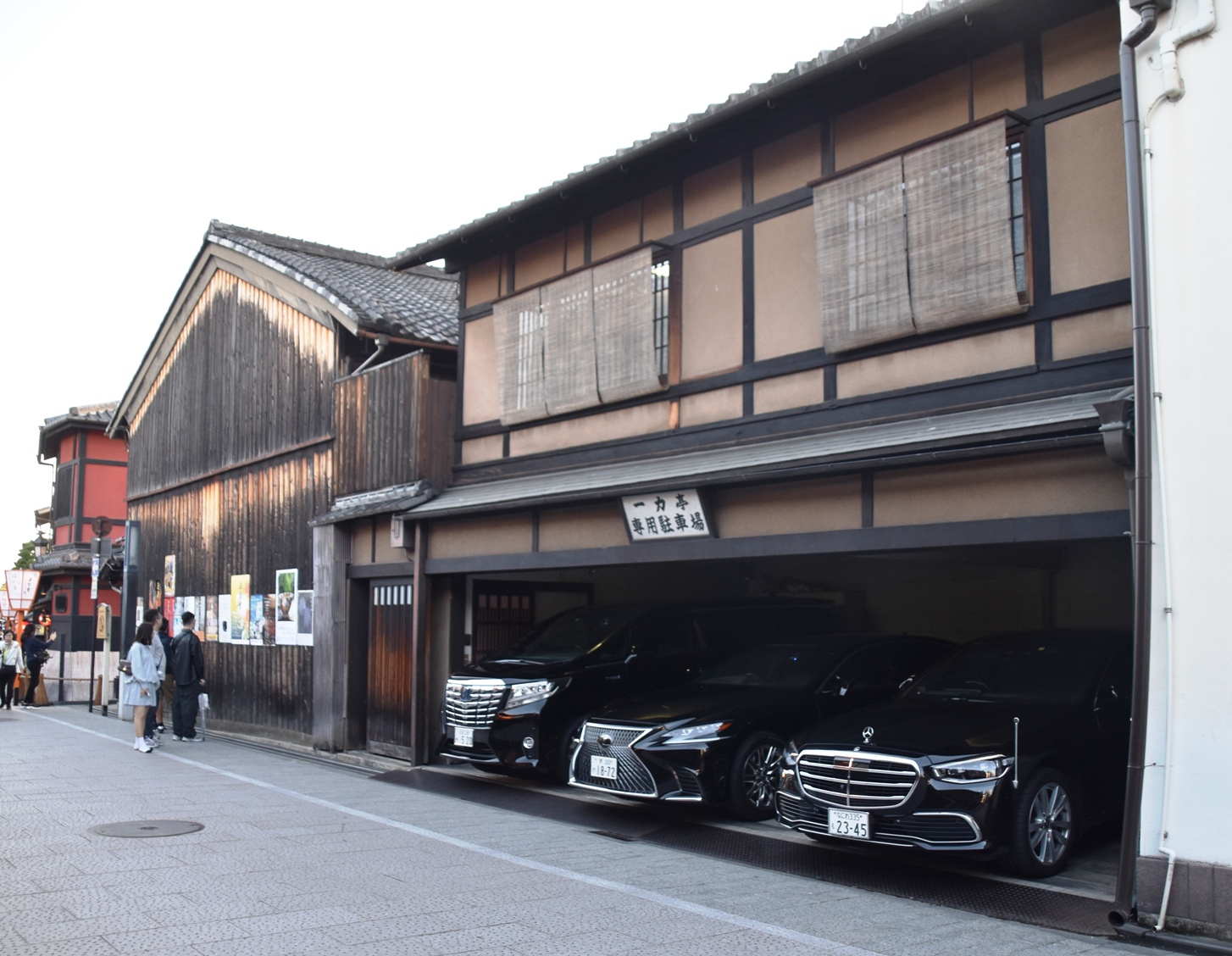

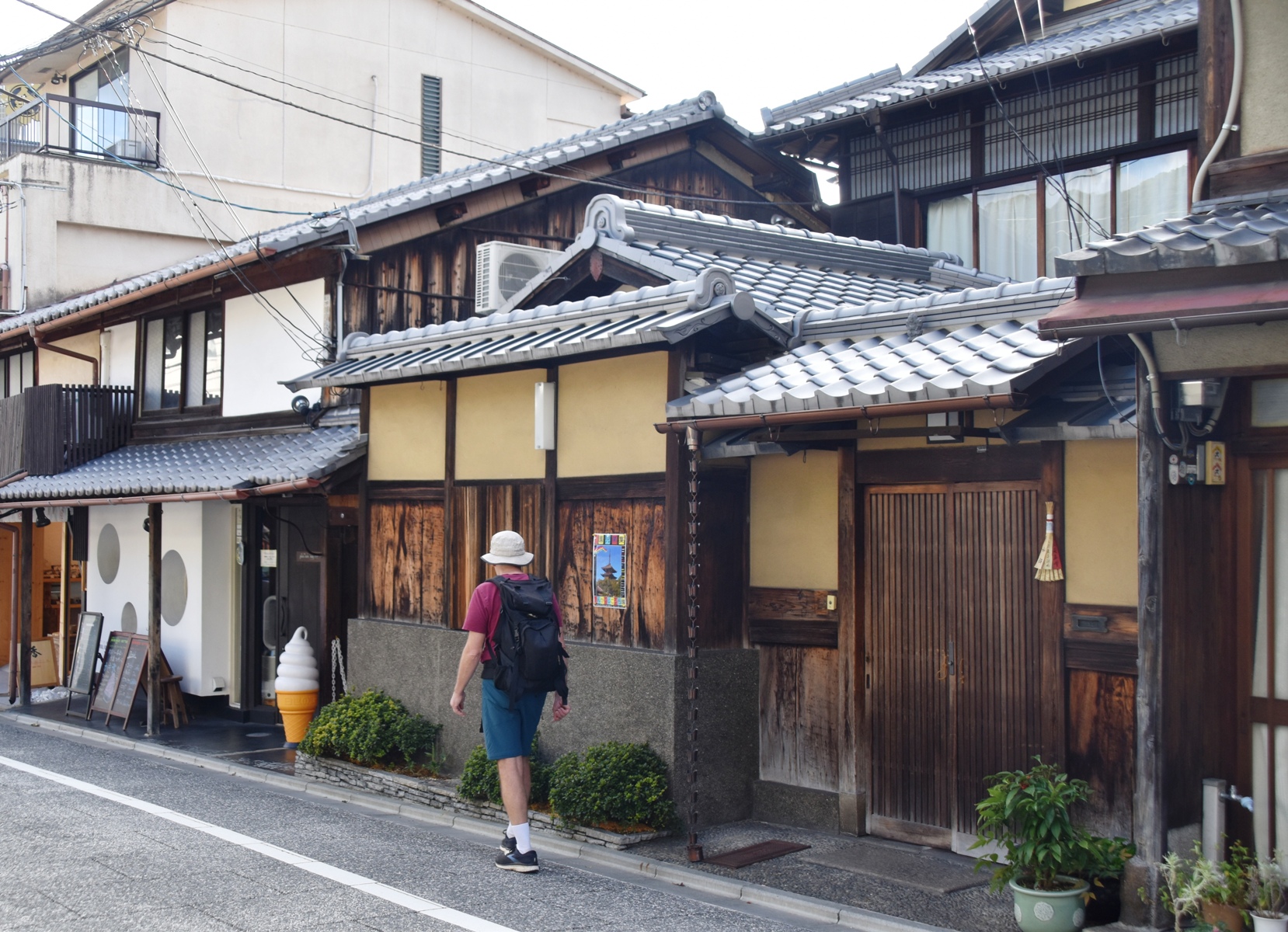
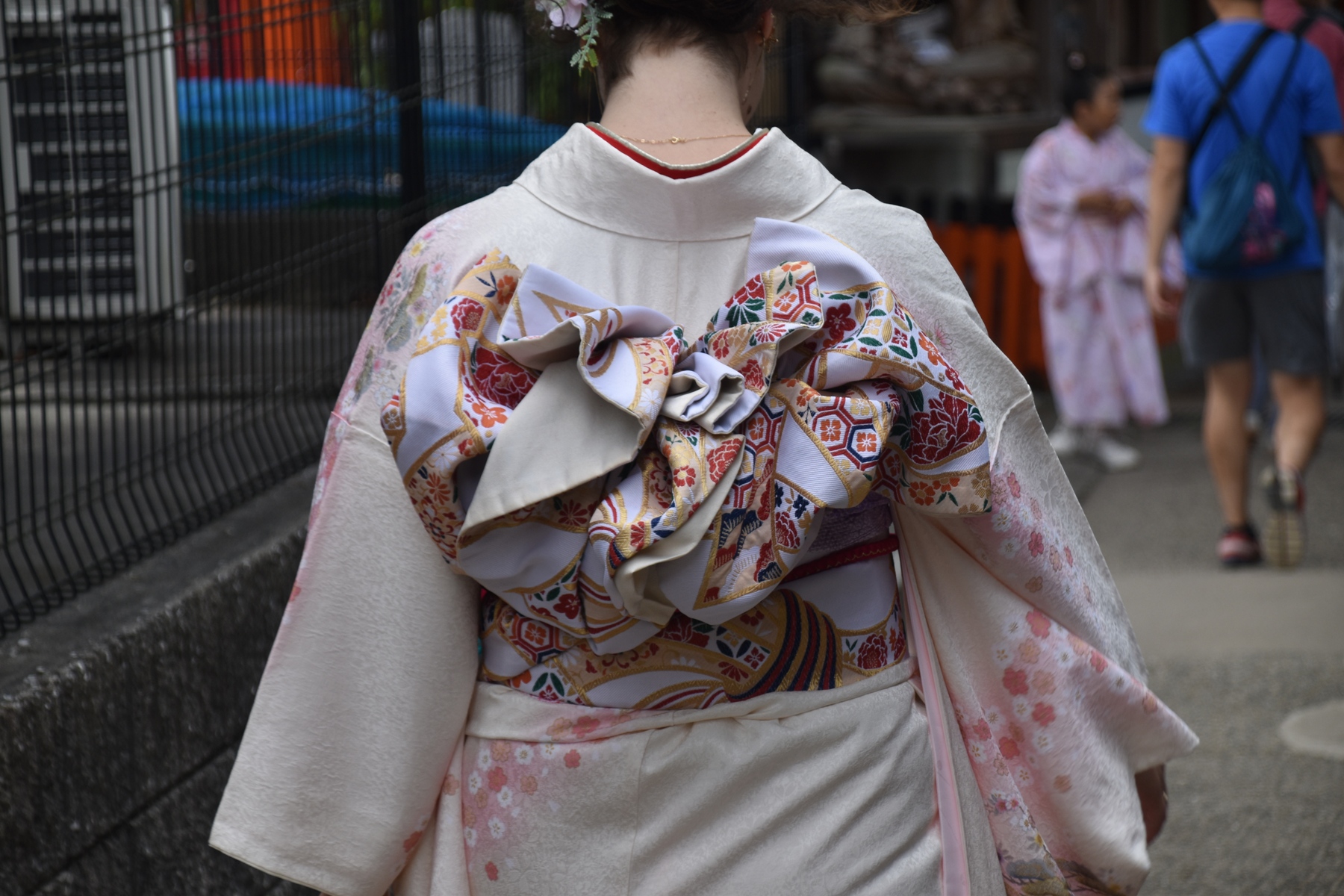
By now it was late afternoon, and we headed back downhill through Gion. This is supposed to the the traditional district of Kyoto, but these days it’s awash with kimono-clad tourists, restaurants, and taxis plying the narrow streets looking for a fare, and creating chaos amongst the strolling pedestrians. Many of the buildings have been renovated and it’s hard to tell what, if anything, is authentic. We did see some tiny shops, some selling what looked like second hand glassware and pottery. There are any number of tiny side streets to wander down, where photos are forbidden. We caught a quick glimpse of a geisha in full makeup.
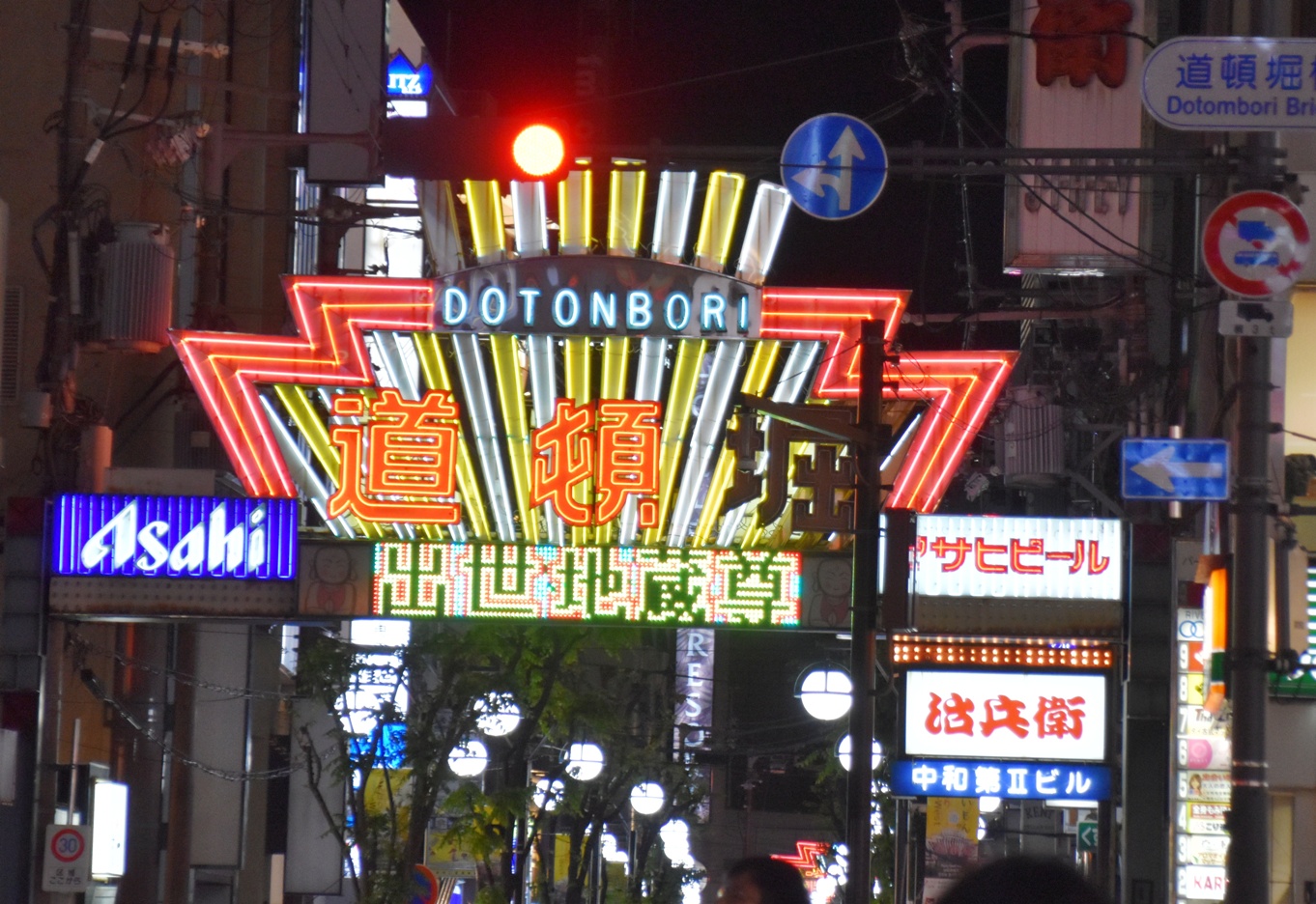
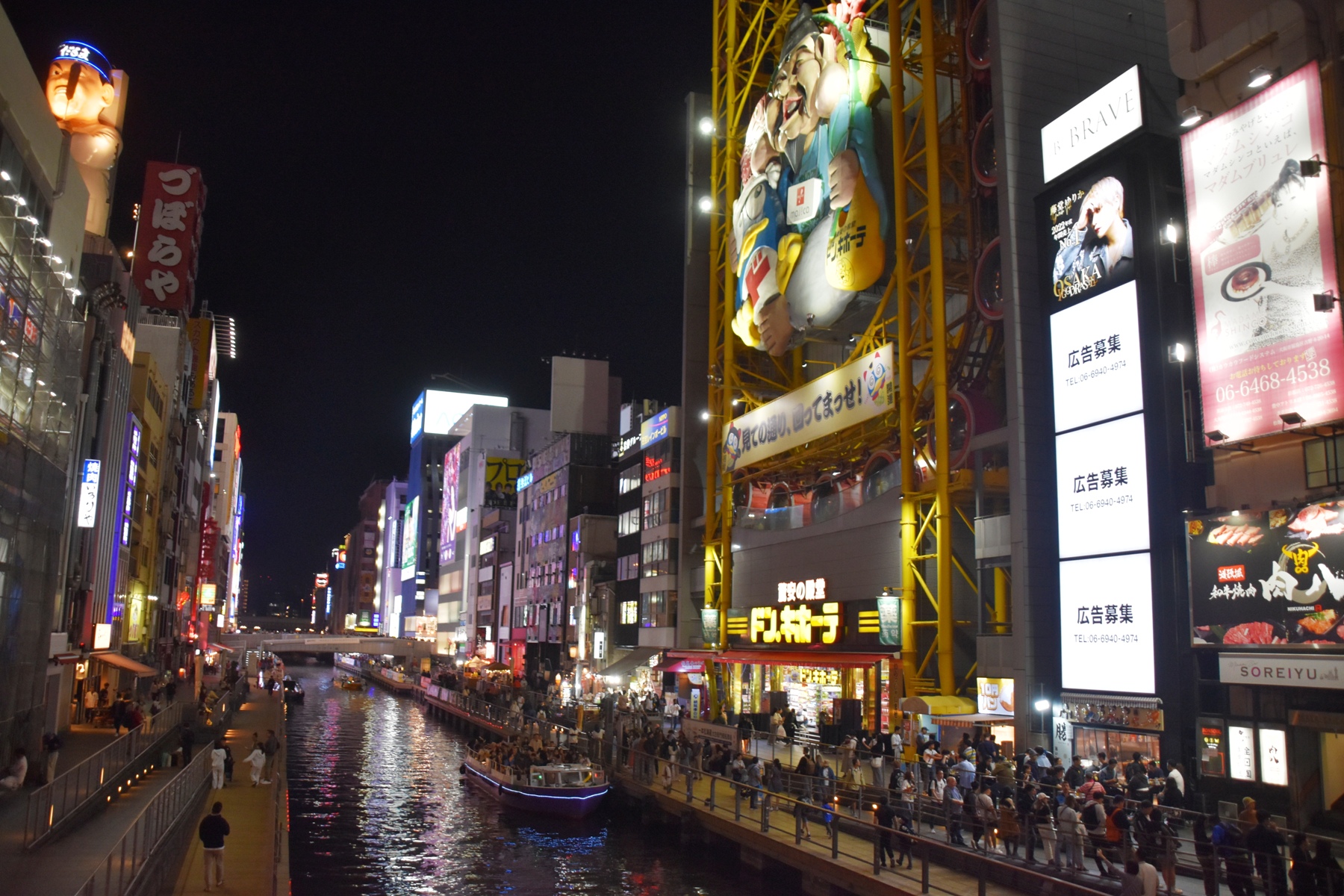
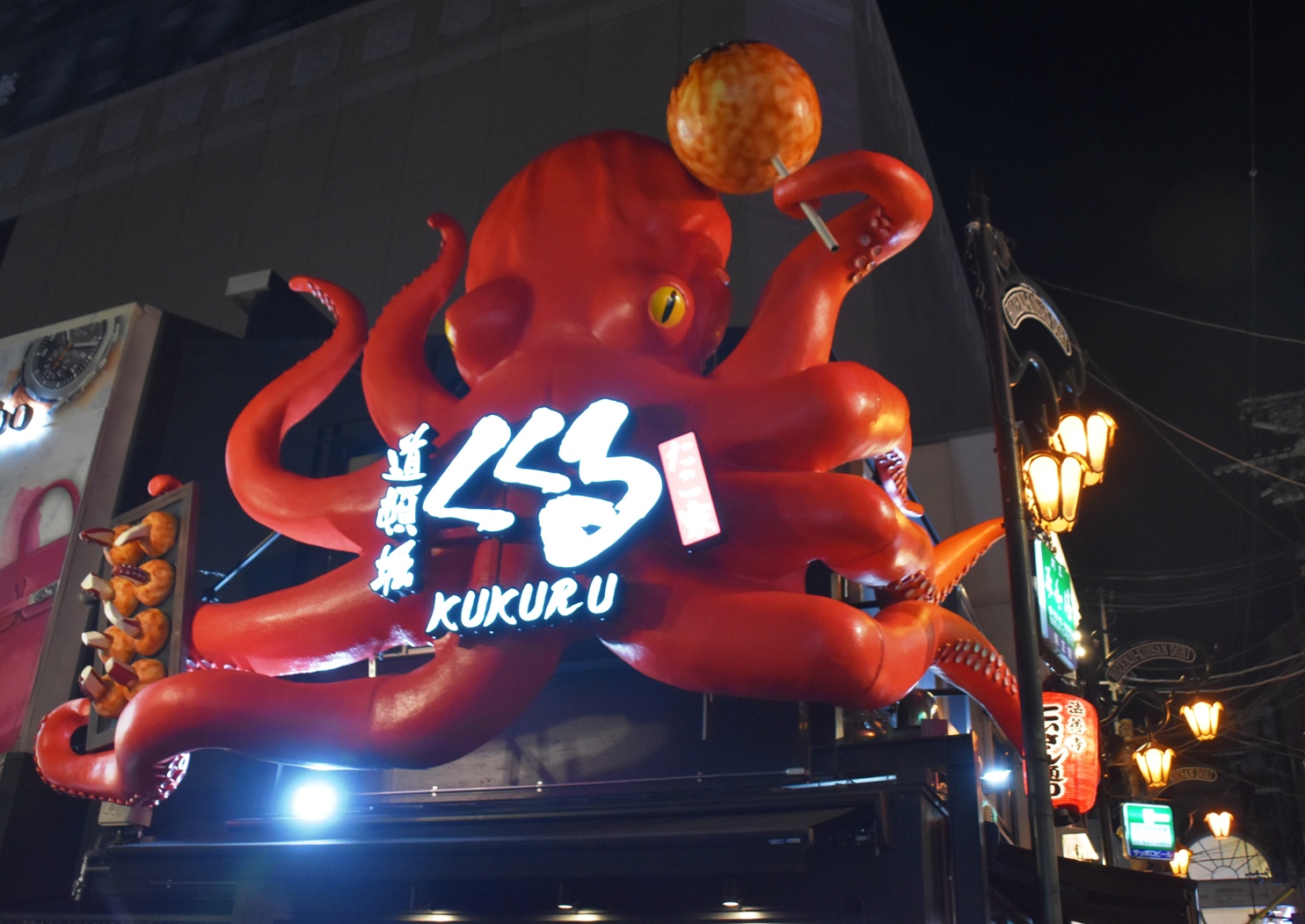
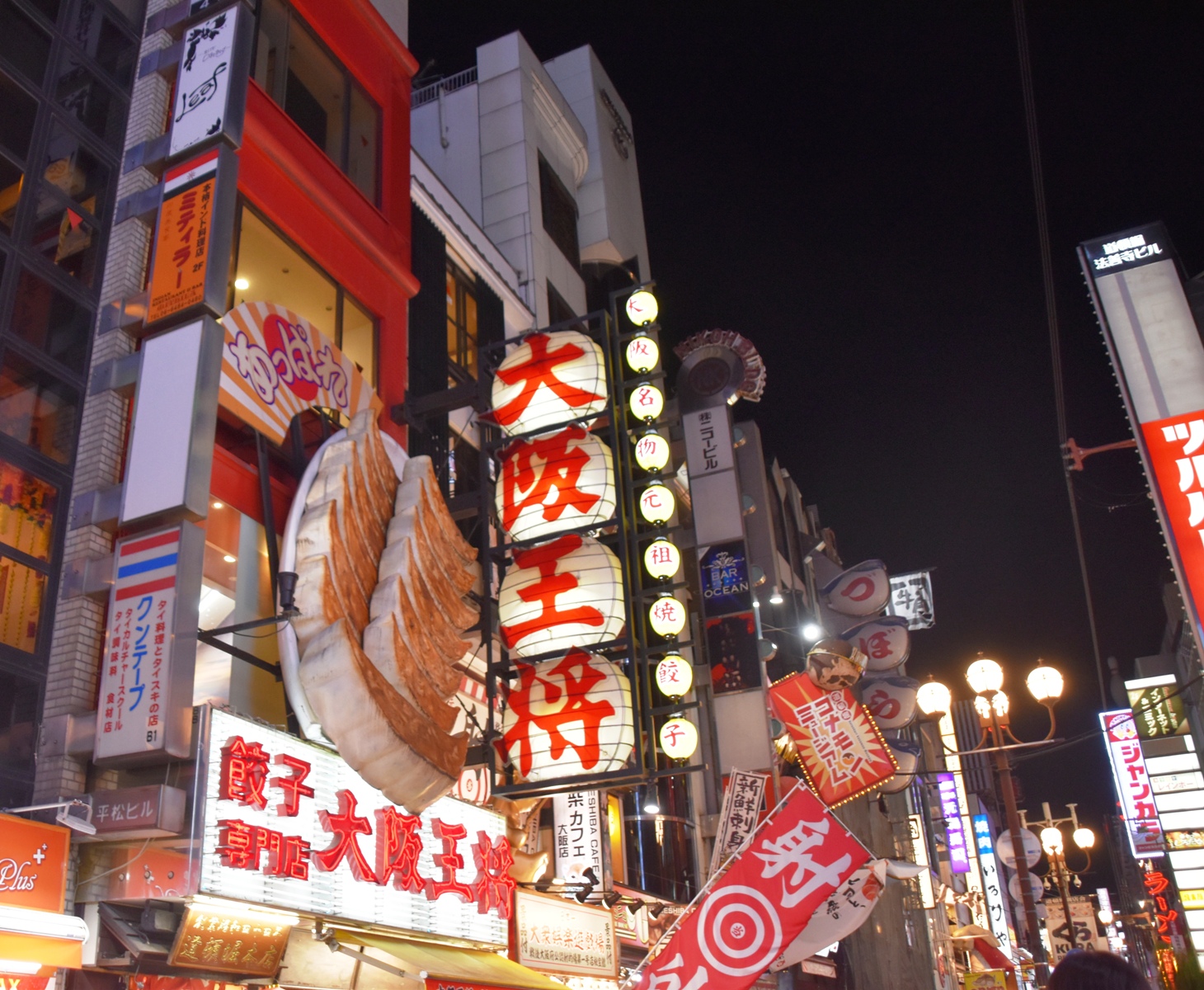
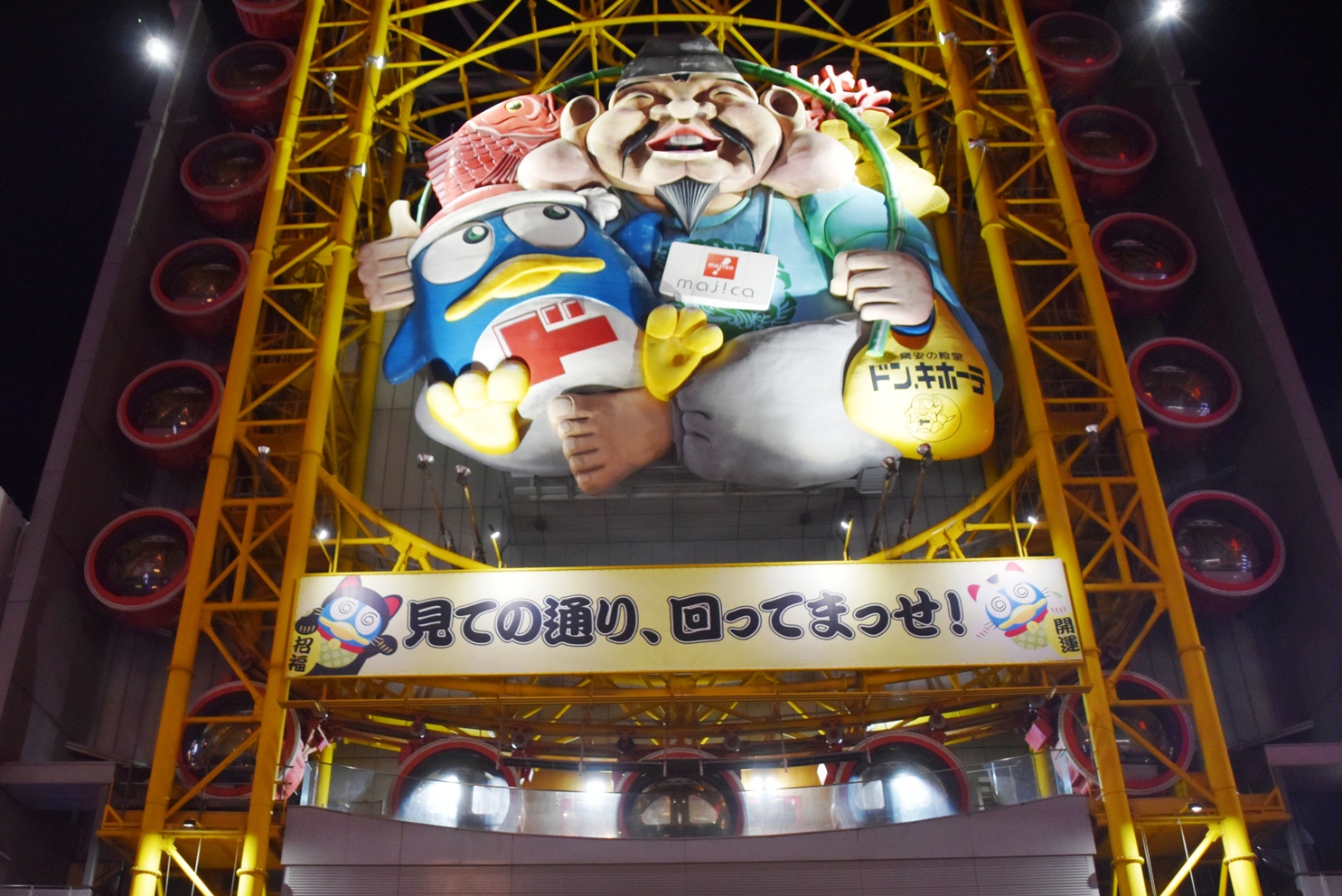
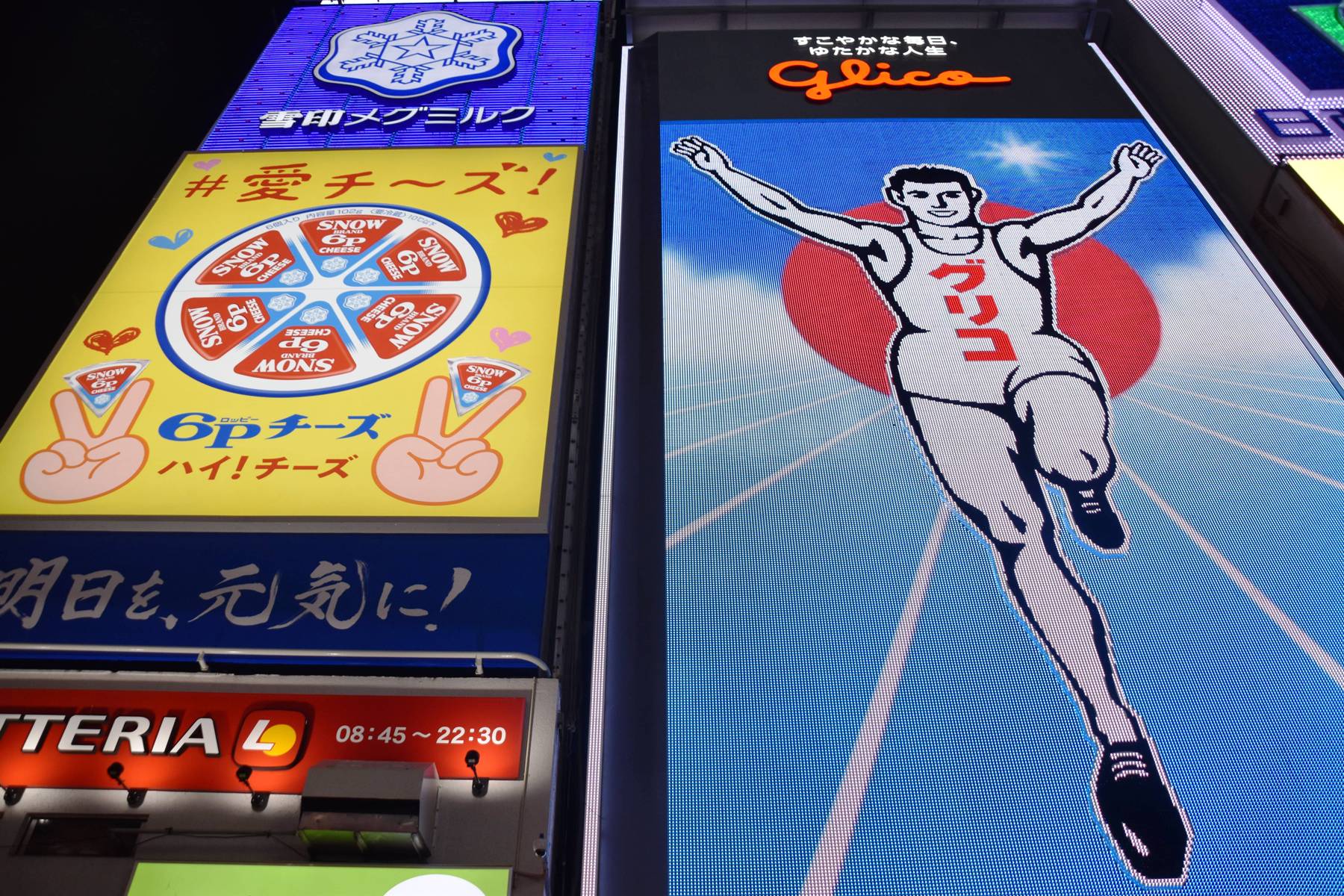
We caught another four trains to get home to Osaka, taking advantage of an earlier return to head to Dotonbori, the neon light district a few blocks south of us. It was packed with tourists looking at the brightly flashing lights and hunting down a meal from one of the hundreds of competing restaurants that line the canal. Everyone was out for a good time, but at 7pm, it was all very wholesome – no alcohol (yet). As for us, we returned for our home cooked leftovers – and in Ian’s case, his cream-filled cake. Note: Debbie’s new favourite Japanese food is the chocolate cream puff from Lawsons. Sensational.



 dipidydoo