We watched Alotau disappear as the sun started setting. Once out of Milne Bay we made a hard left turn, to continue north to our second port of call. We’d learned that Papua New Guinea has thousands of islands – there are 600 in Milne Bay alone – and they are home to a fair number of the 9 million people that live in PNG.
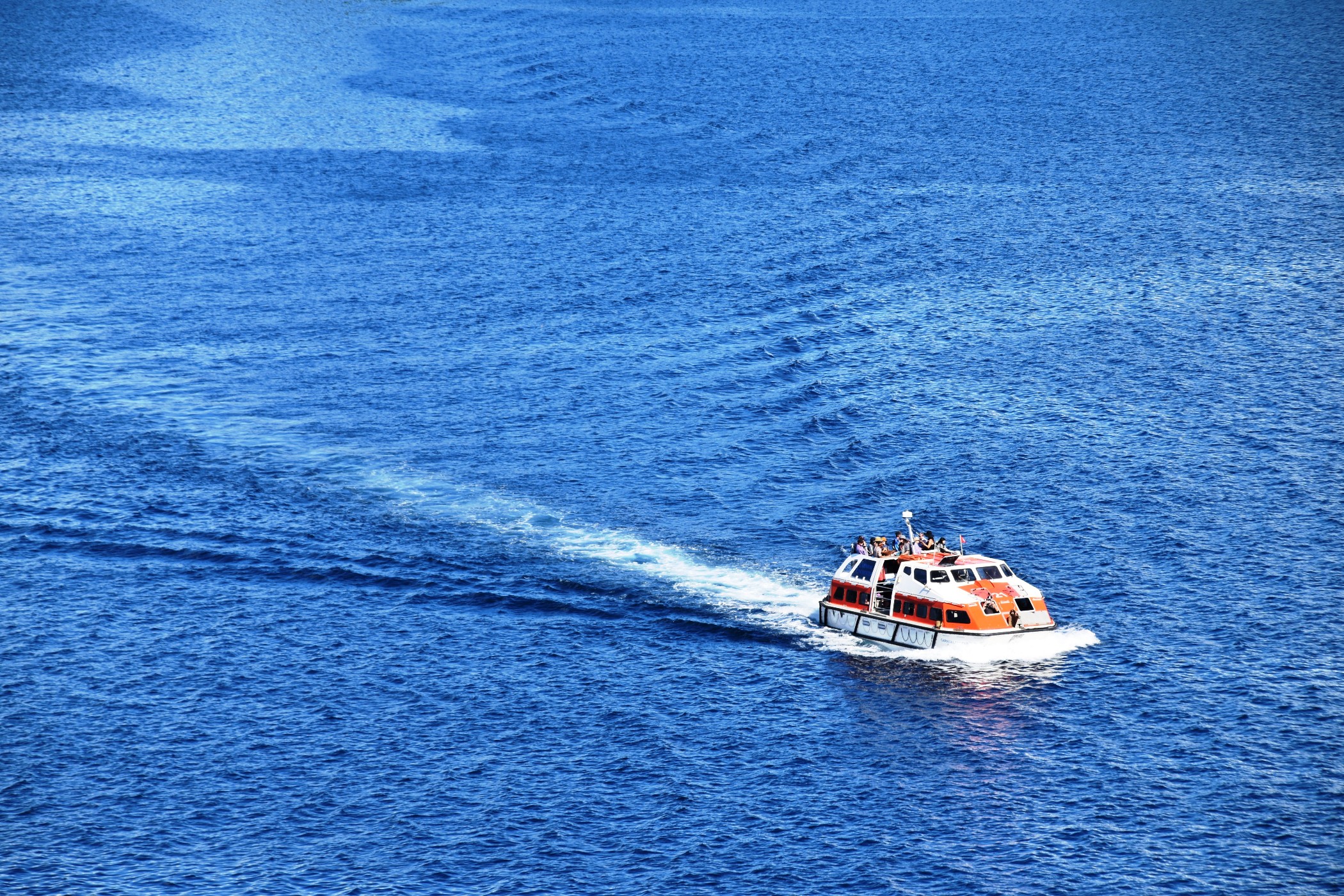
Kiriwina Island is the largest of the Trobriand group. We dropped anchor around sunrise, and the tender boats soon began shuttling passengers across.
Before we set off to the island, we had business to attend to. We wanted a second medal to go with our first trivia prize. Today’s theme was the 70s, and we figured we had a good shot at it. We also figured that we could board a late morning tender at leisure, spend a couple of hours on Kiriwina, and return for a late lunch.
We managed to outscore the rest of the room, by knowing that Gene Cernan was the last man to walk on the moon (as per his autobiography, “Last Man on the Moon”). So we have a nice matching pair of medallions. Our cabin steward had made us a towel elephant, so all was right with the world.
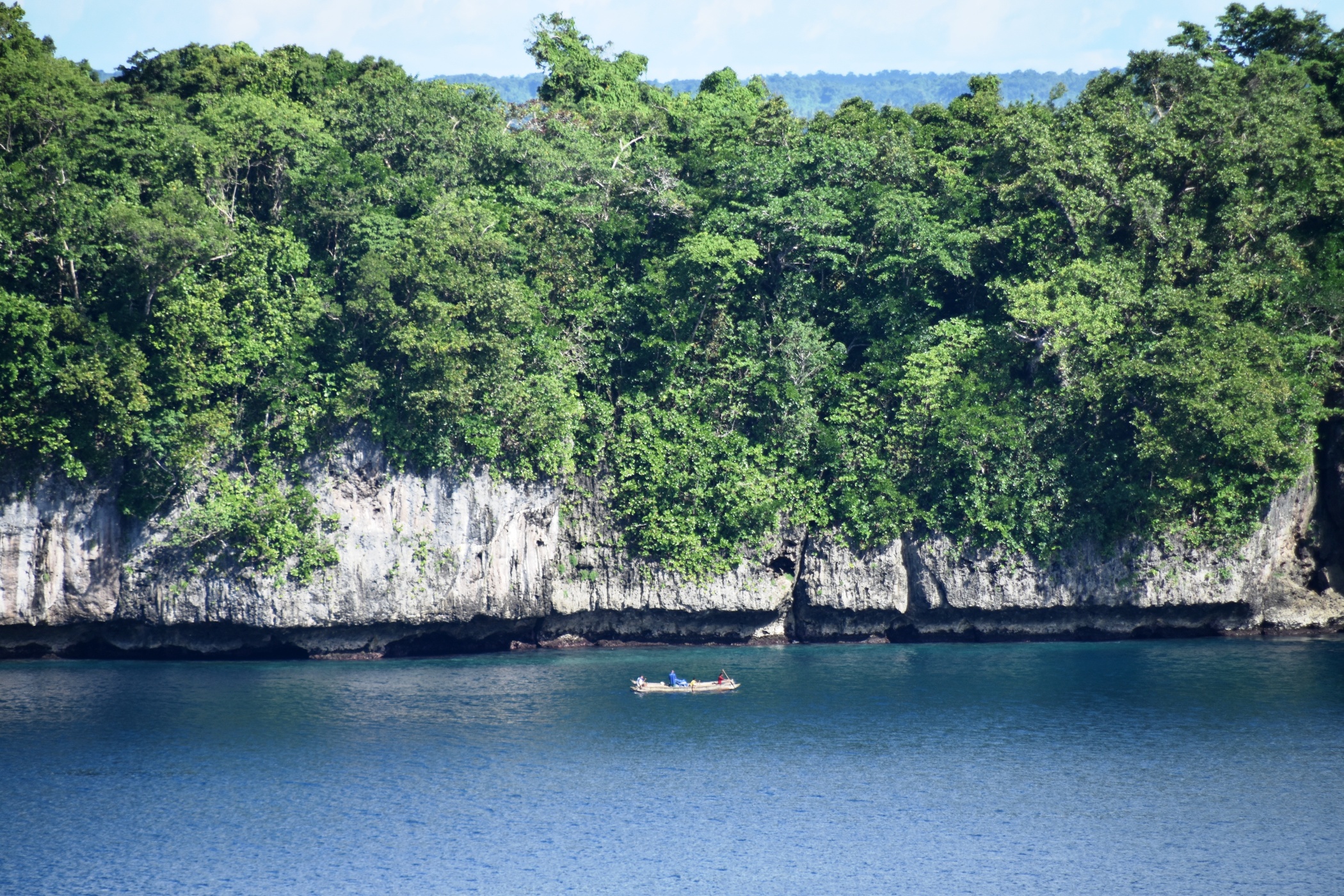
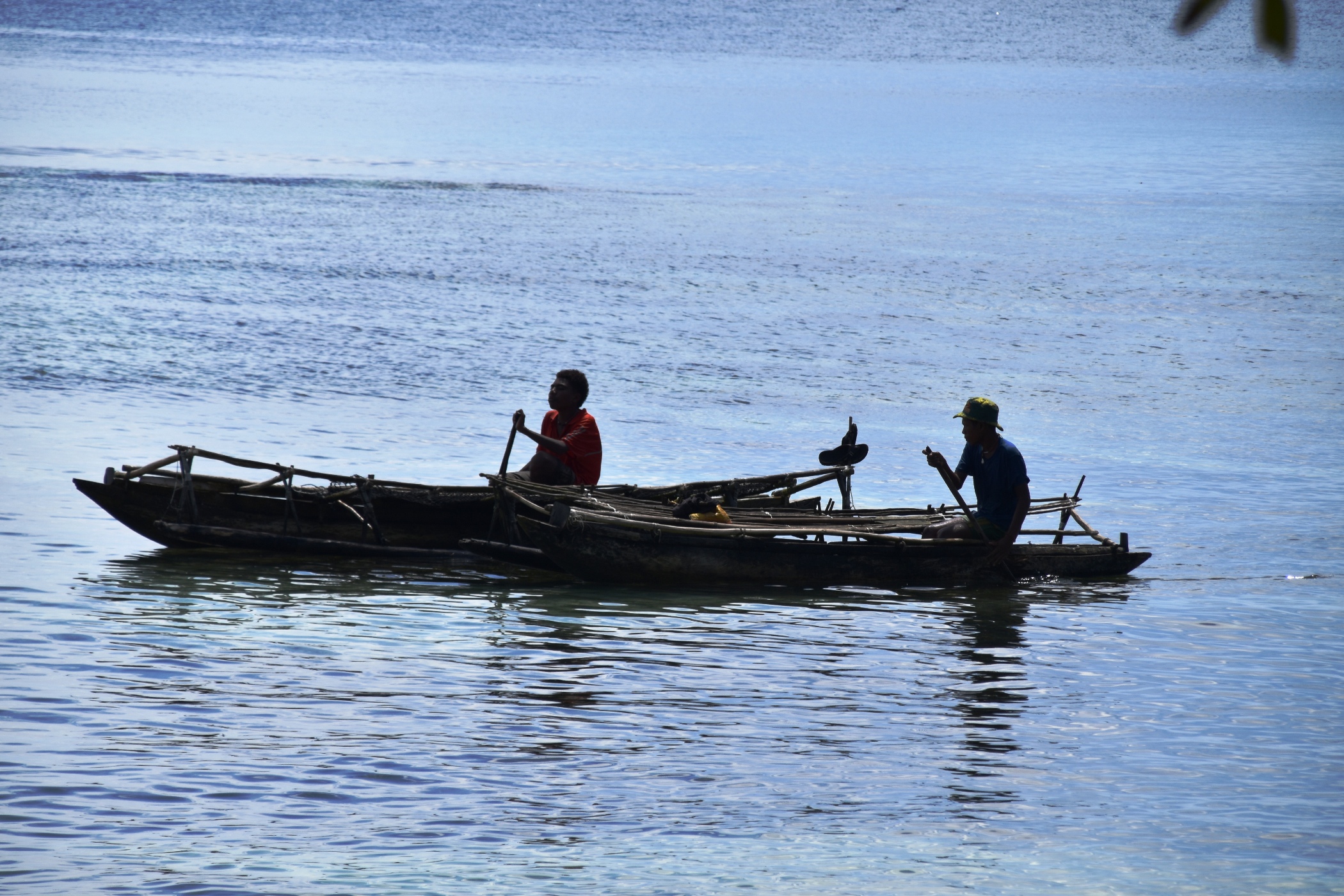
Kiriwina Island looked idyllic from the ship. You can see across the deep blue water to the jetty, with long stretches of tree-fringed beach either side of it. To the south there are cliffs and secret coves. Traditional canoes are paddled along the shoreline by island fishermen.

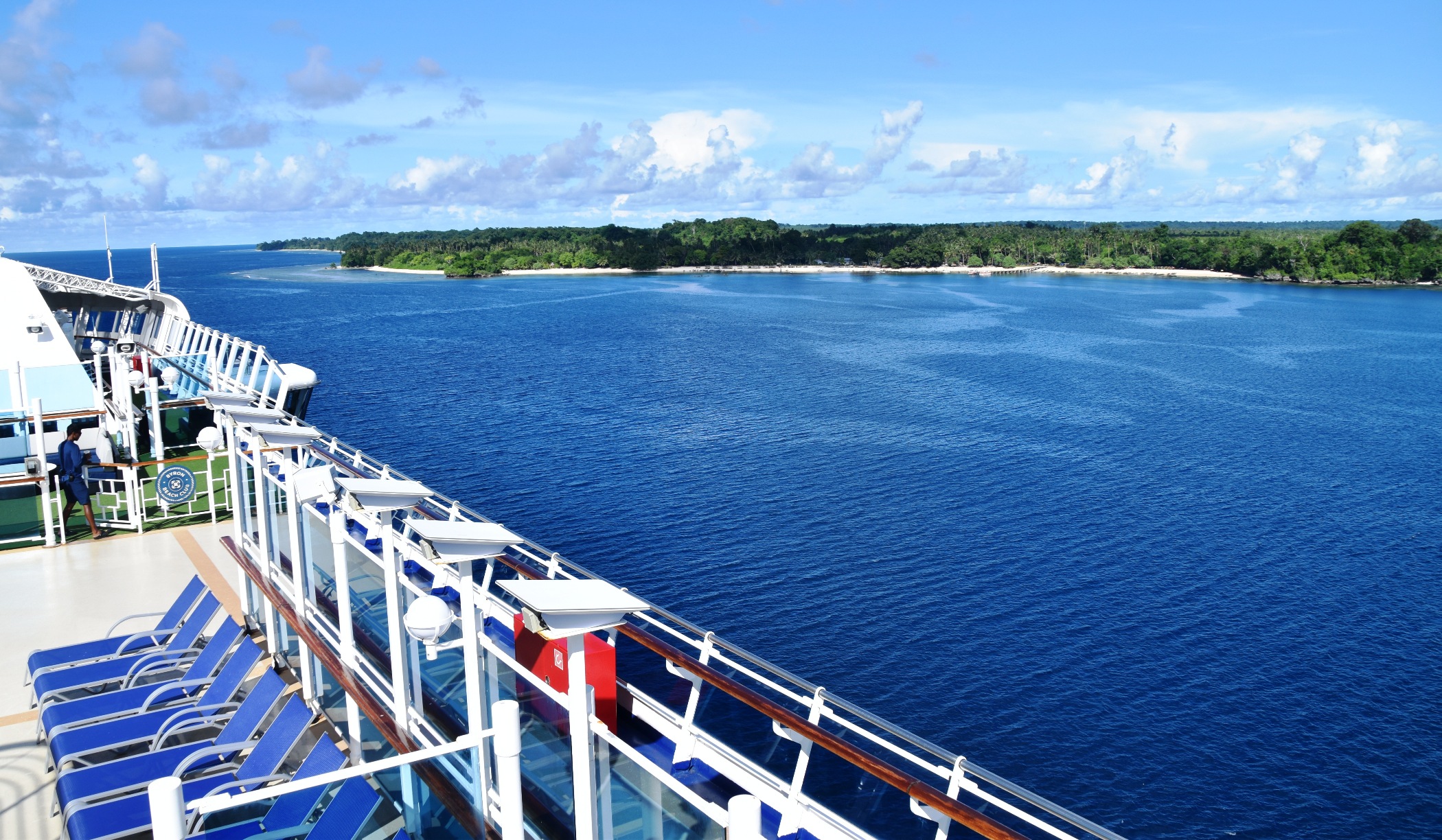
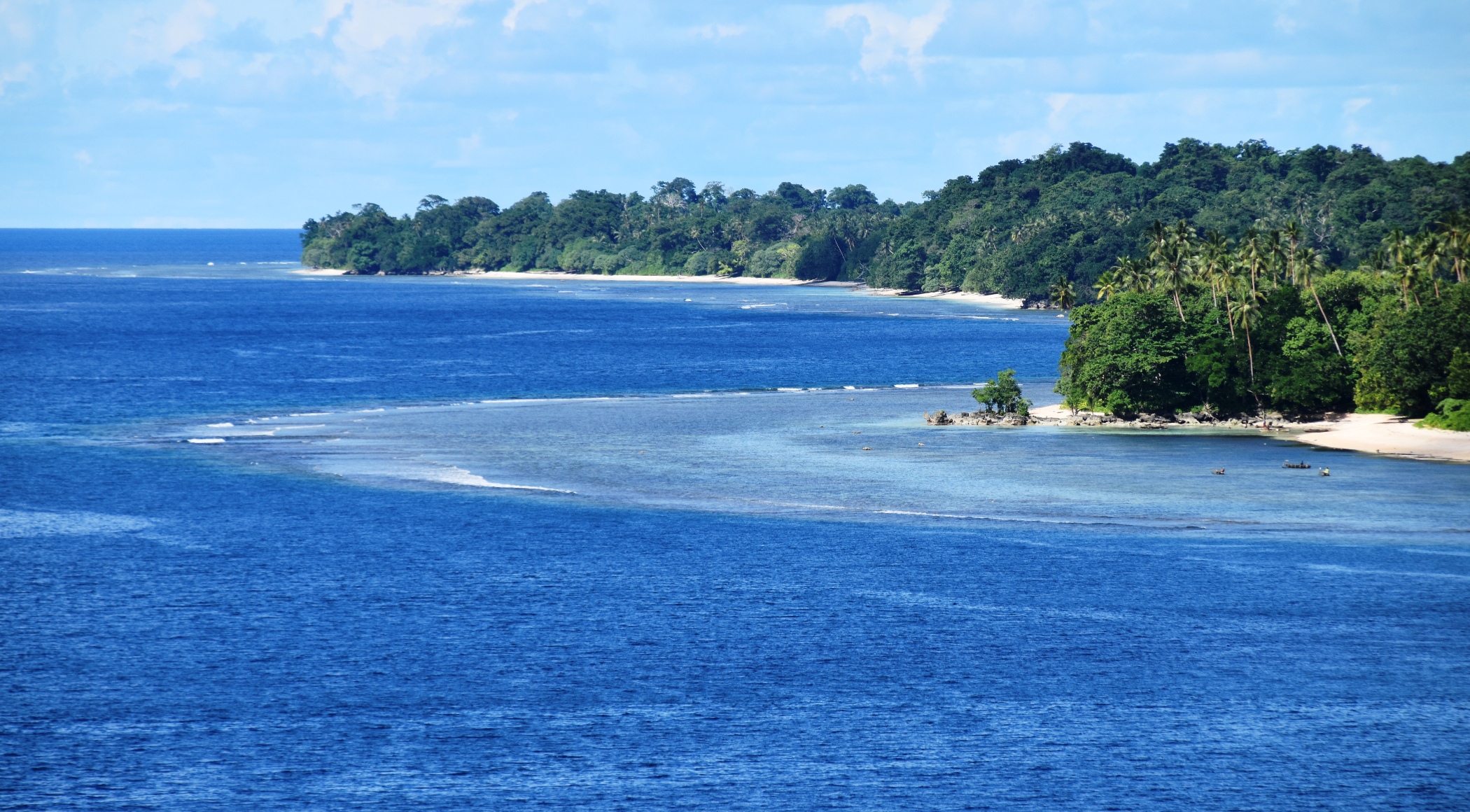
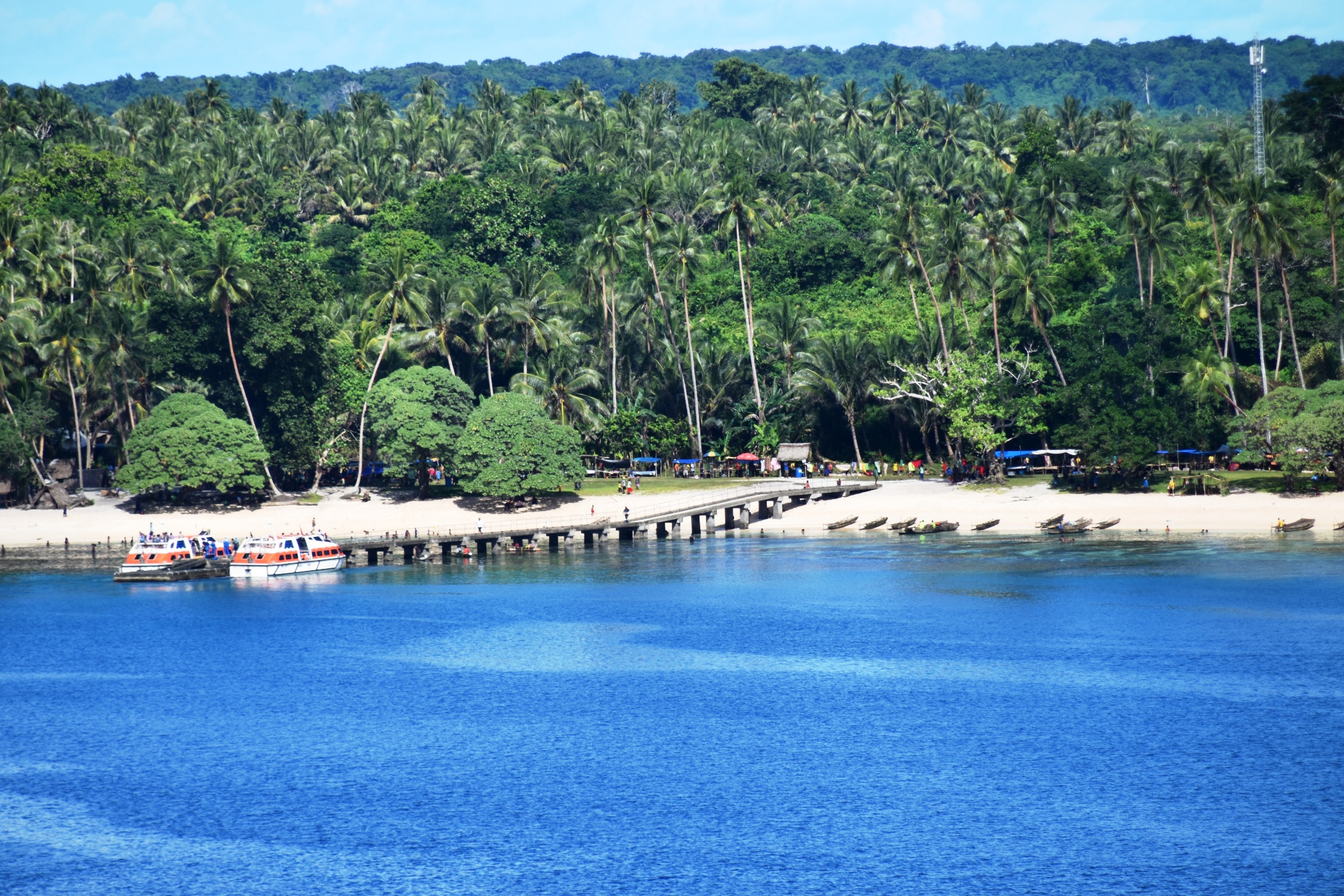
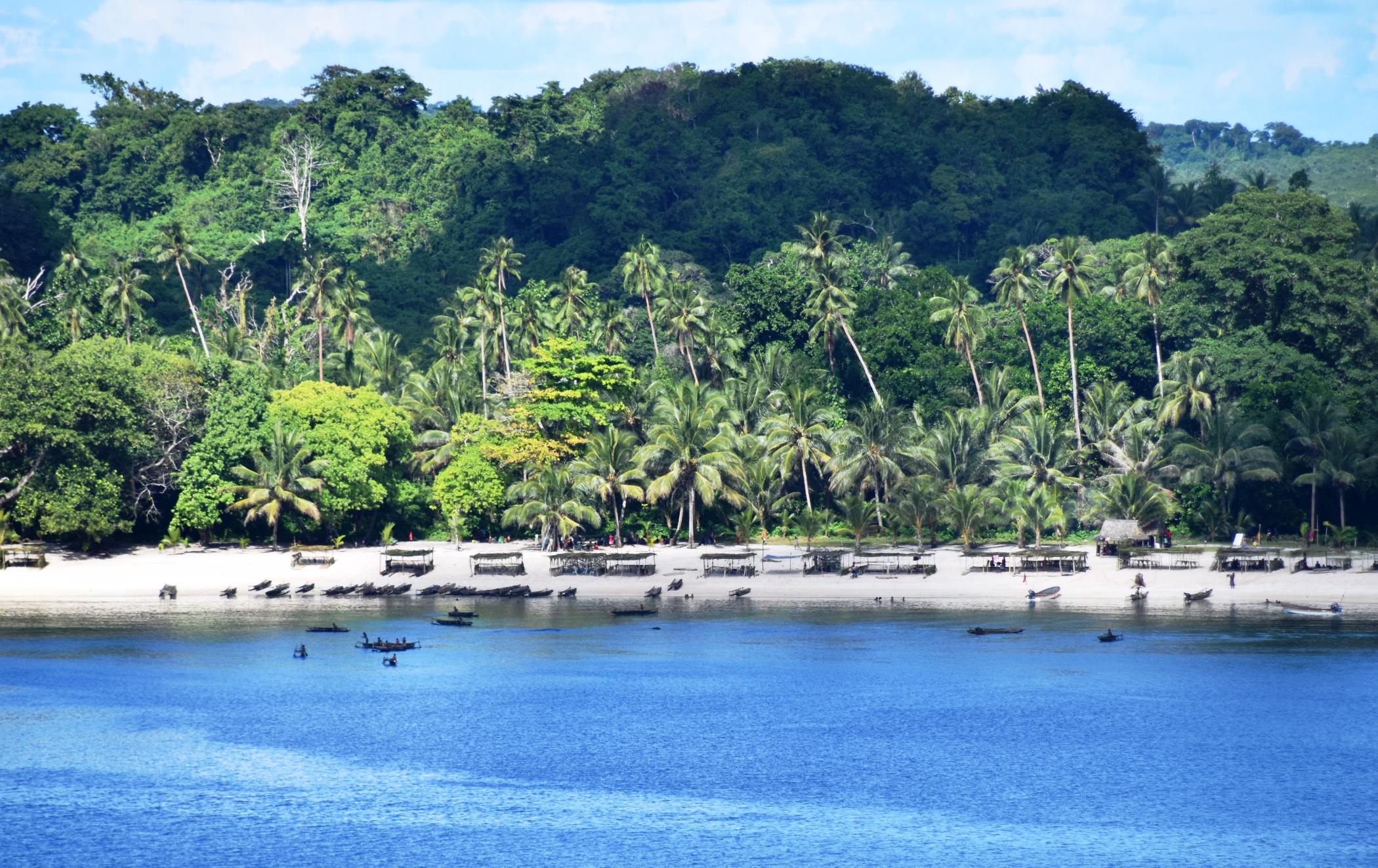
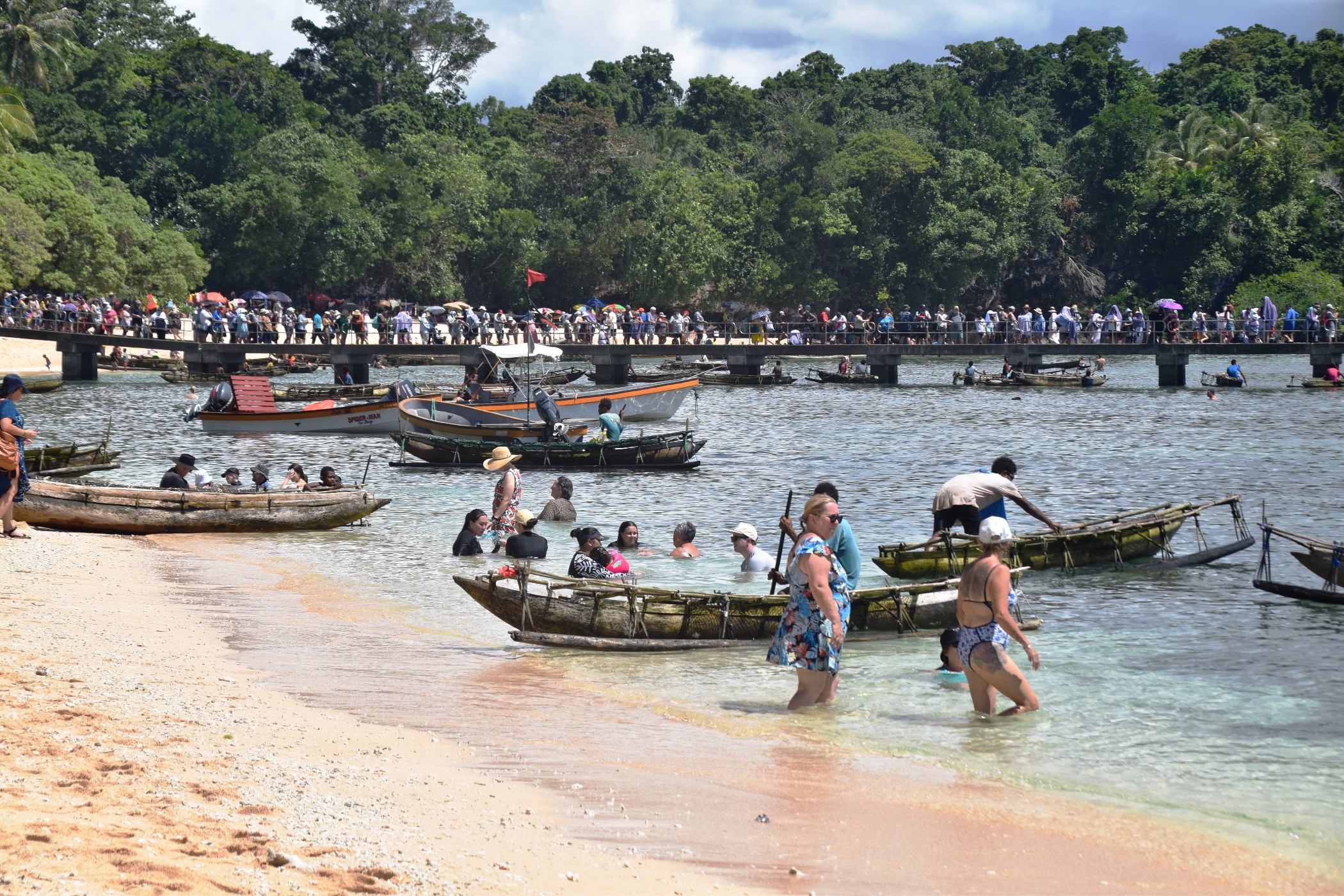
We packed bathers, beach towels, sunhats and thongs, as there is very little to do there other than swim, snorkel, or take a canoe ride. Then we discovered that half the ship had the same idea as us – the queue for tenders snaked all the way up the Deck 4 stairs and across the Deck 5 piazza. Forty minutes or so later, we were finally stepping onto the jetty, where picturesque scenes awaited us. Tiny iridescent fish darted about in the water below. There was a very long line of people waiting to go back to the ship, as by now it was lunch time.
Whenever a cruise ship calls (about once a month), most of the islanders head to the beach and set up shop, hoping to sell their wares to the passengers. It is supposed to be all locally made, but the sheer volume of items, all “ten dollar”, suggests that is no longer the case.
The jetty and the beach are lined with dozens of outrigger canoes, and smiling kids getting a day off school, offering to take you for a canoe ride. More often than not, they will also try to sell you carved turtles or small boats, or they will just ask for kina (the local currency, which we didn’t have any of). We said hello and waved to them, but just politely responded “no thanks” to any requests. Ian was asked to sell his water bottle, and to trade his runners for a wood carving.
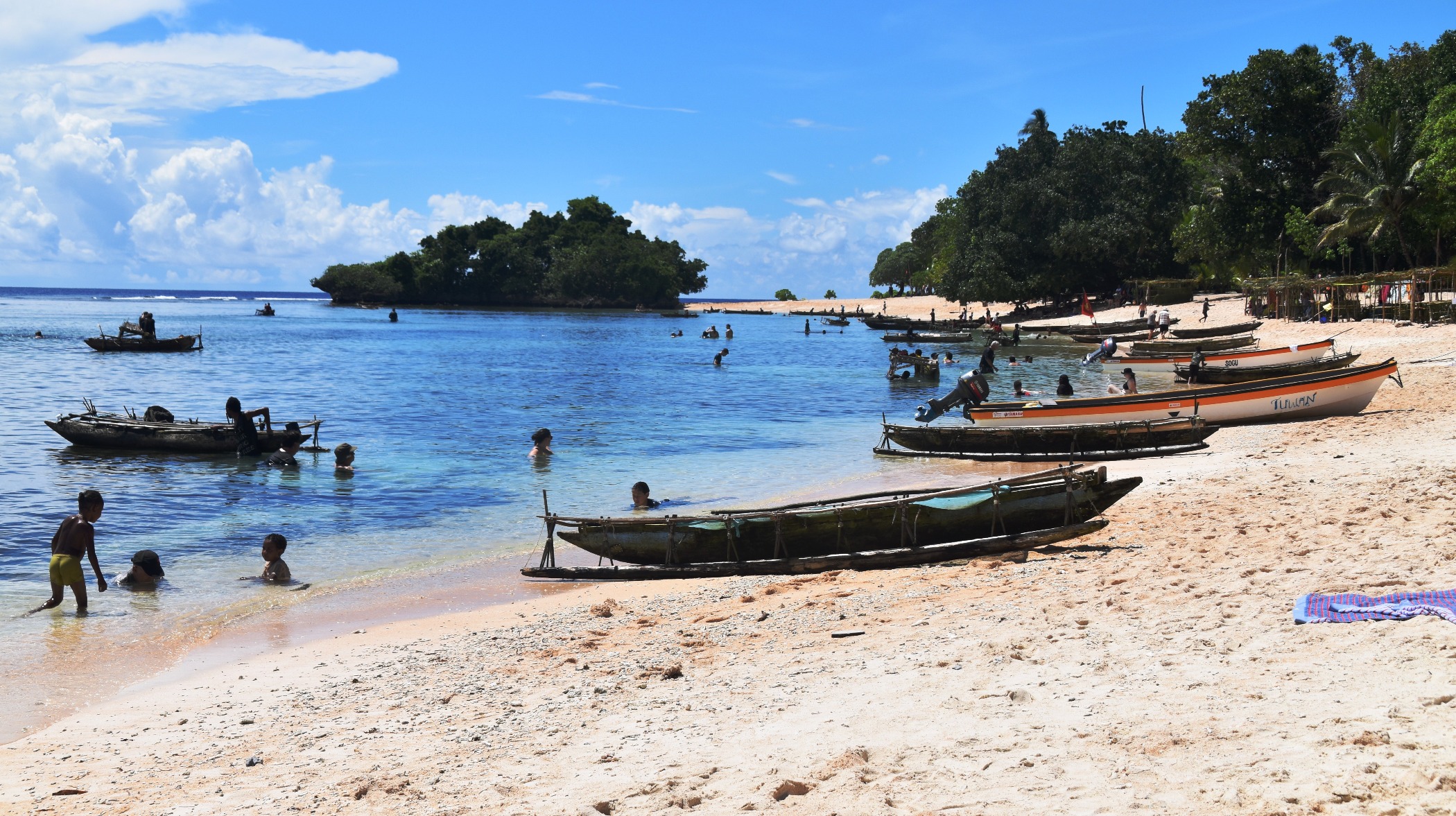
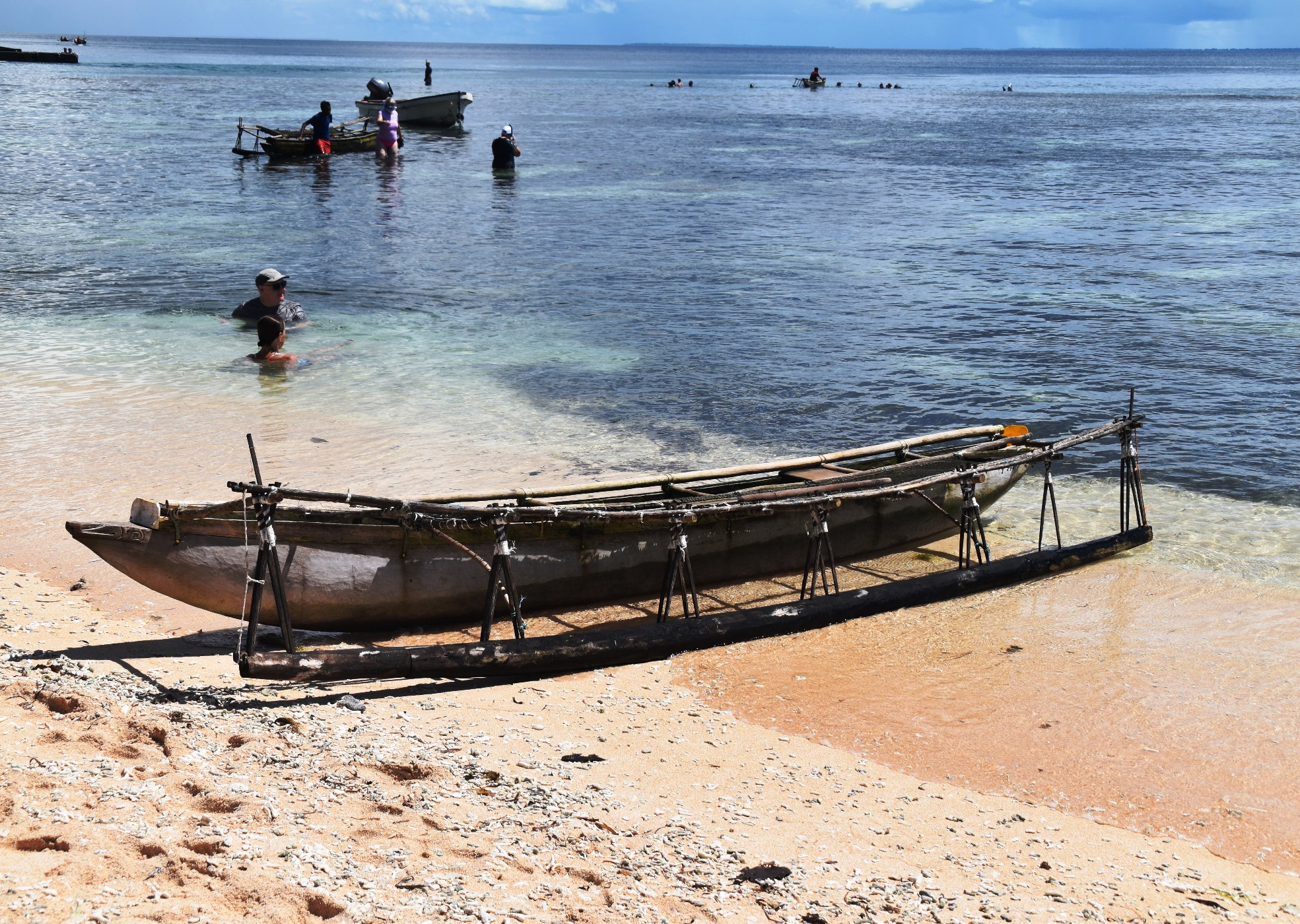

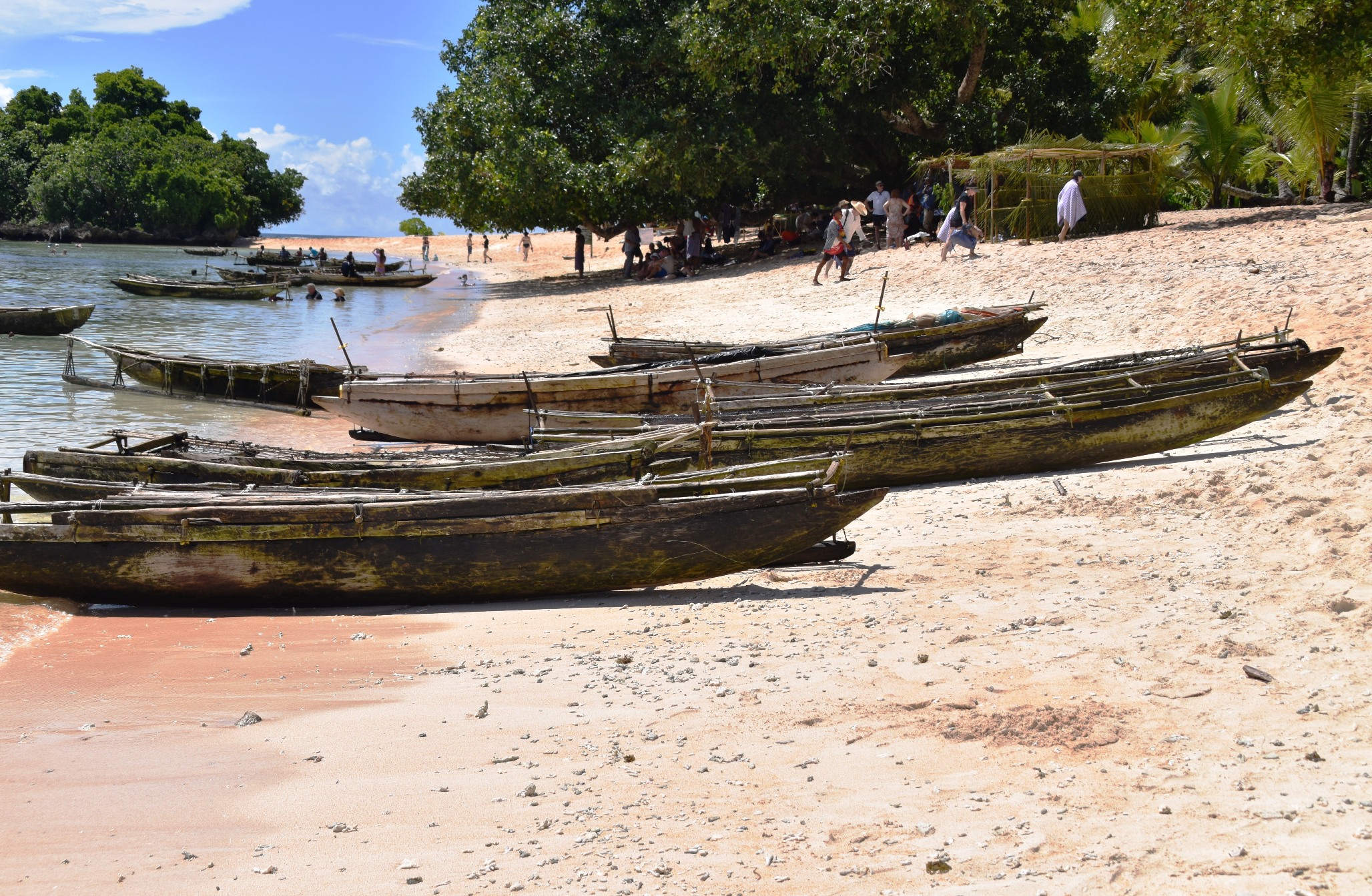

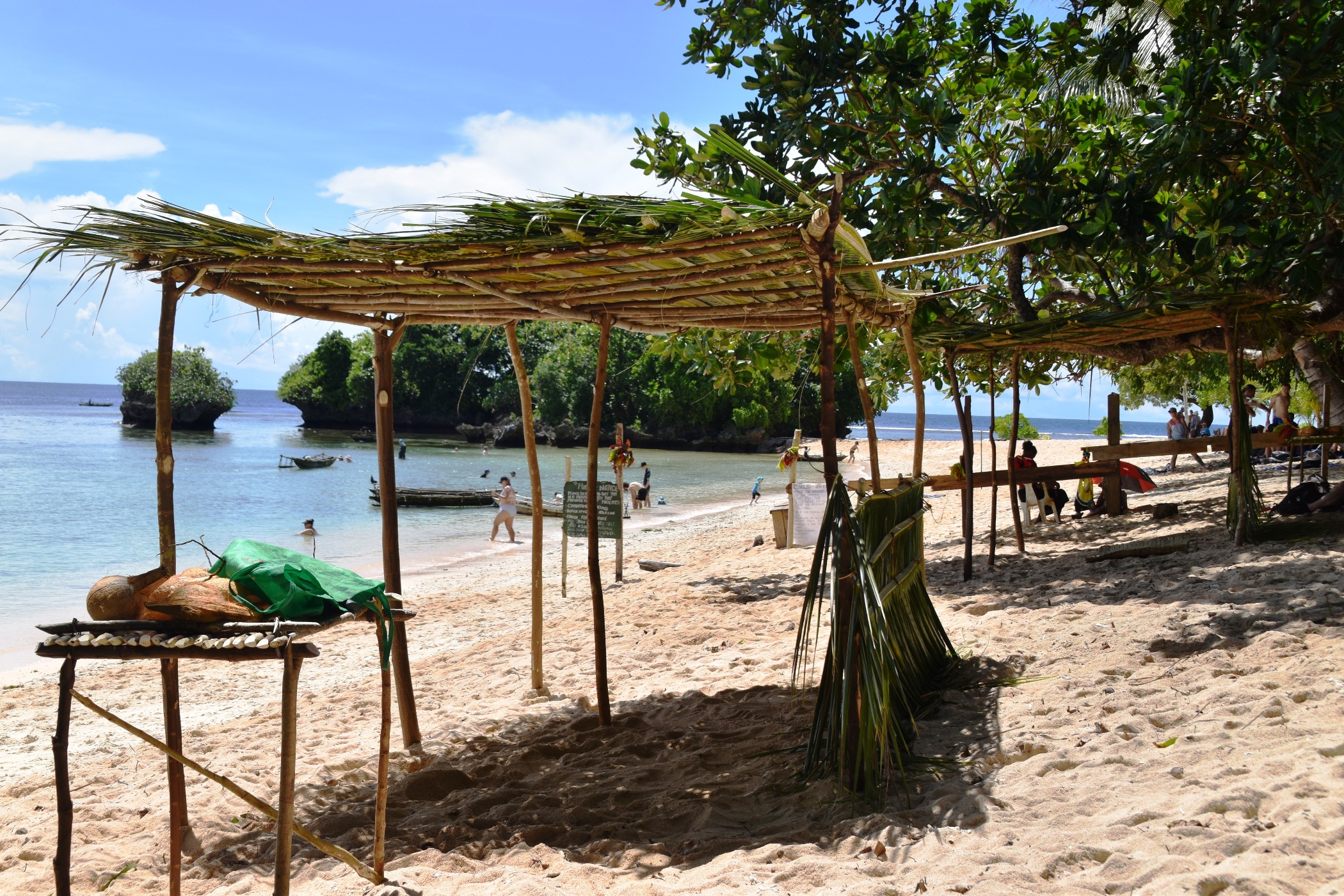
Once leaving the jetty, we tried to walk along the beach and paddle in the sea, but the sand was so soft that you sank up past your ankles. The water was like a warm bath. It was very difficult to make progress. We made it as far as the hand made sign that said “private beach”, asking for an entry fee to go any further. Instead we retreated to the shade of an enormous tree, where we perched on a log and took it in turns to swim.
In the water, I struck up a conversation with 10 year old Timothy, one of the entrepreneurial young canoe operators. We swapped names, and told each other about our families – he is one of five kids. I told him I used to work in a library, and he said he loves books, and he wants to read as much as possible to learn more English. His English was already excellent, and he grinned when I told him as much. It did strike me that here I was floating about in the Solomon Sea, talking to a 10 year old Papua New Guinean boy with a canoe and comparing our vastly different lifestyles – not your everyday experience!

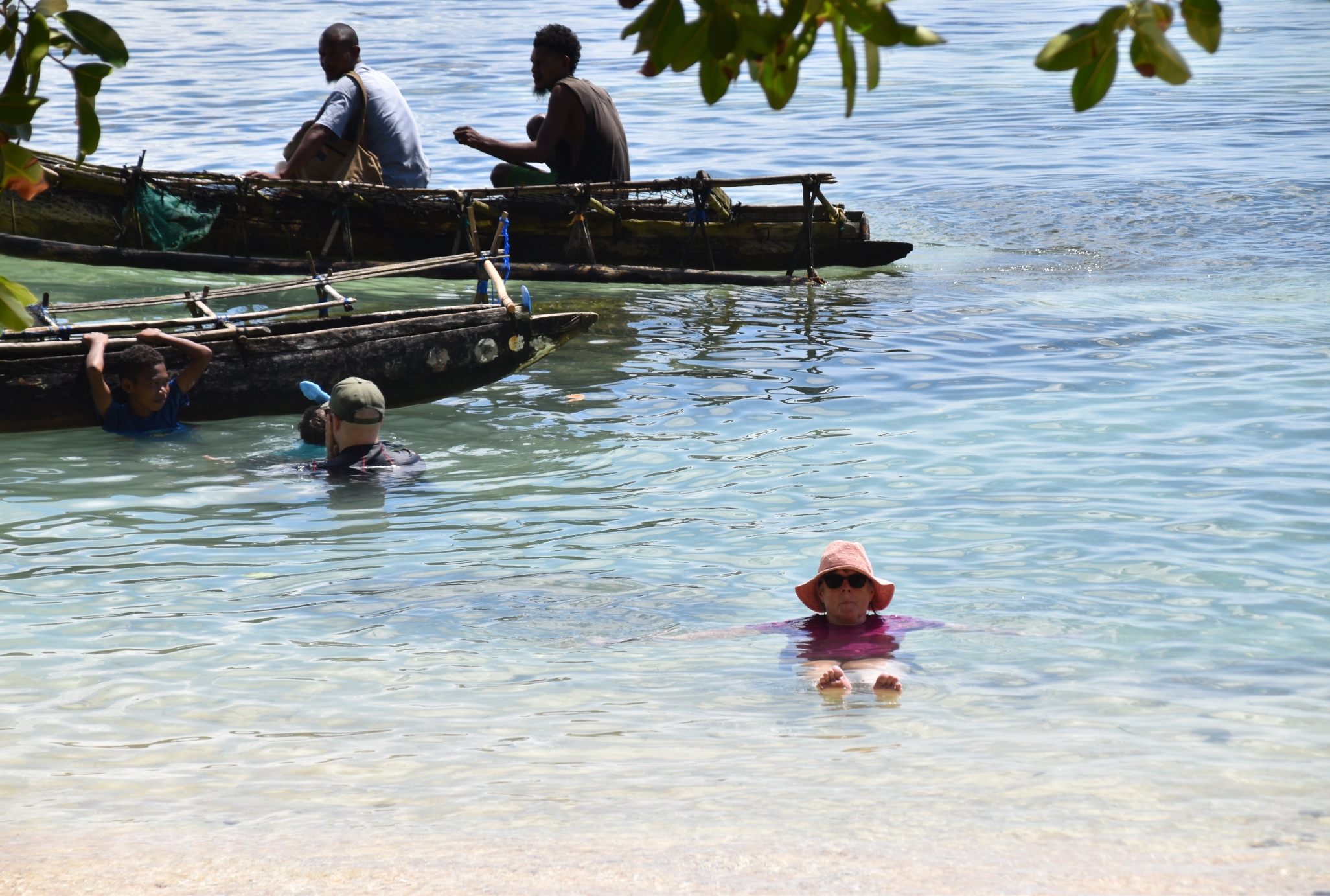
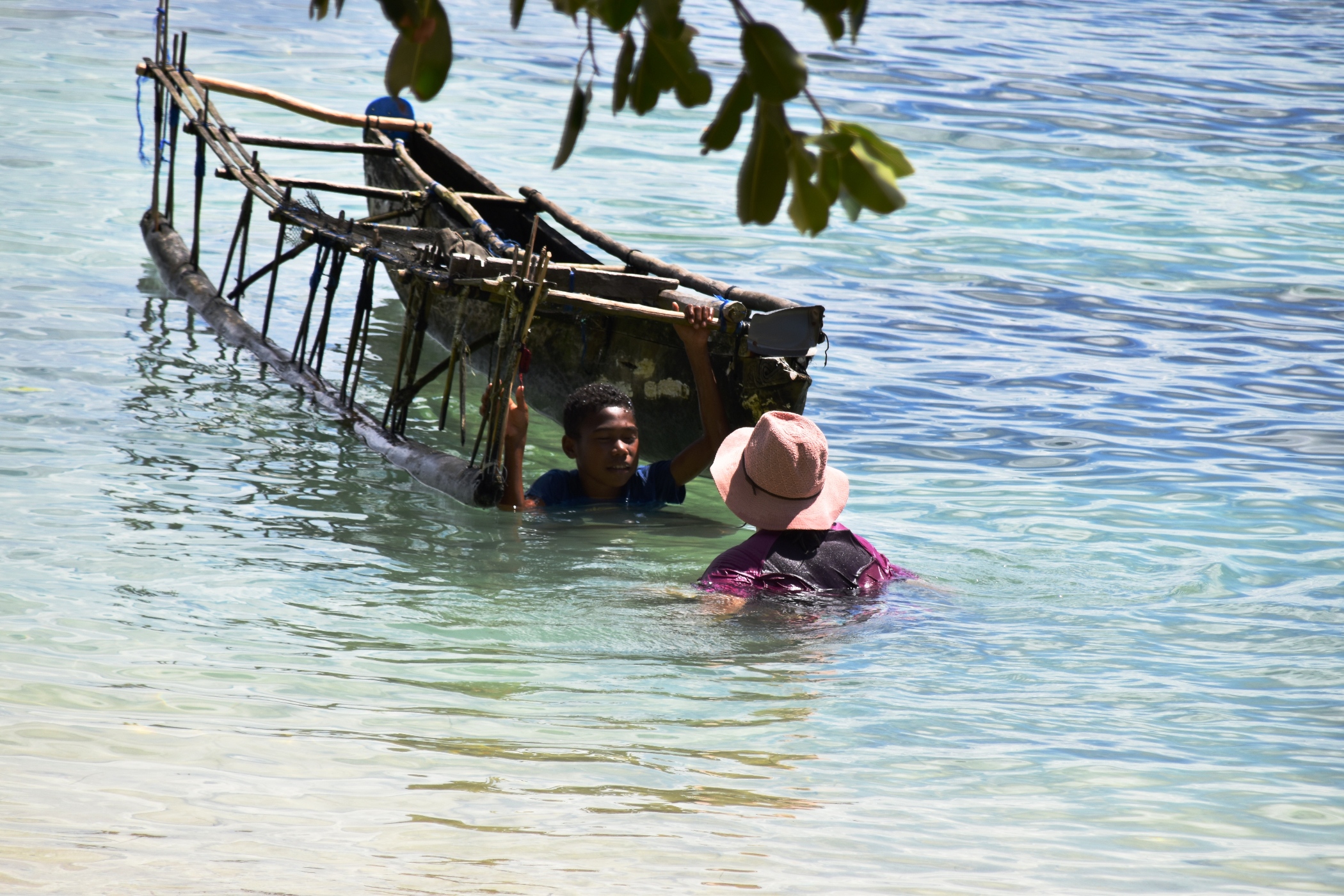
We found that although the kids were busy asking people for money, they were happy to chat, and I’m sure they would rather be playing or swimming instead of having to pester tourists. There are much better ways to help them, rather than giving them a few dollars here and there. It’s a dilemma that putting several thousand wealthy people onto a small beach has created a completely artificial situation, with no opportunity to experience or interact with the Kiriwina Islanders in a meaningful or authentic way. We’re changing their lives and bringing them some obviously much-needed income, and they will tell you that our presence is a benefit to them, but I’m not so sure.
We didn’t stay too long – once we’d had our swims, we knew we couldn’t really explore further as it was too hot and hard to walk anywhere. So we just joined the line to go back to the ship, and brush the sand off our feet.
Today marks the half way point of the trip, which can only mean one thing – laundry time!
Postscript: this post was written a day ago. Today we have internet so I can post it. We’ve just returned from a wonderful, full day tour of Rabaul. It was a truly memorable day for many reasons – all good ones, including an unexpected special moment for Ian – but I won’t be able to post again until we return to Australia in a few days. One more port and a couple of sea days to go …
 dipidydoo