My usual daily step target is 4000. I’ve upped it temporarily to 6000, in anticipation of extra walking while we’re away. I’ve been hitting this pretty easily, clocking up 10-12000 most days, just with the occasional longer walk and incidental sightseeing. But today I hit a new high, surpassing 16,000 steps. How …
An investigative walk around Dunning
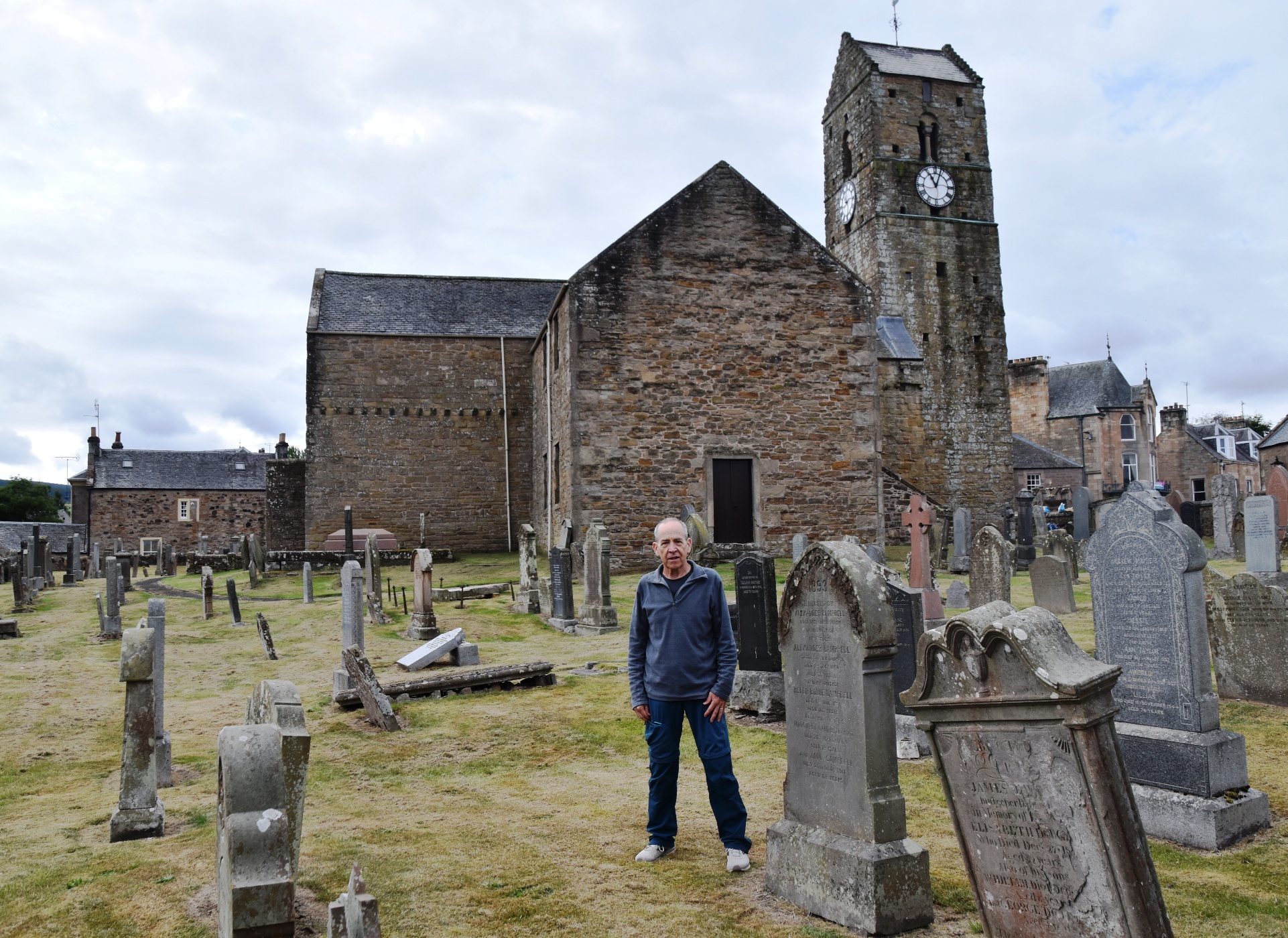
Dunning Village, south of Perth, was the home of Ian’s Campbell ancestors on his maternal side. In the 1841 census there were 18 Campbells in the village, but Ian’s direct ancestors left Scotland around that time, and sailed to Australia, where they settled in and around Mudgee. Dunning has been a settlement since at least 700AD; the word Dun means Fort.
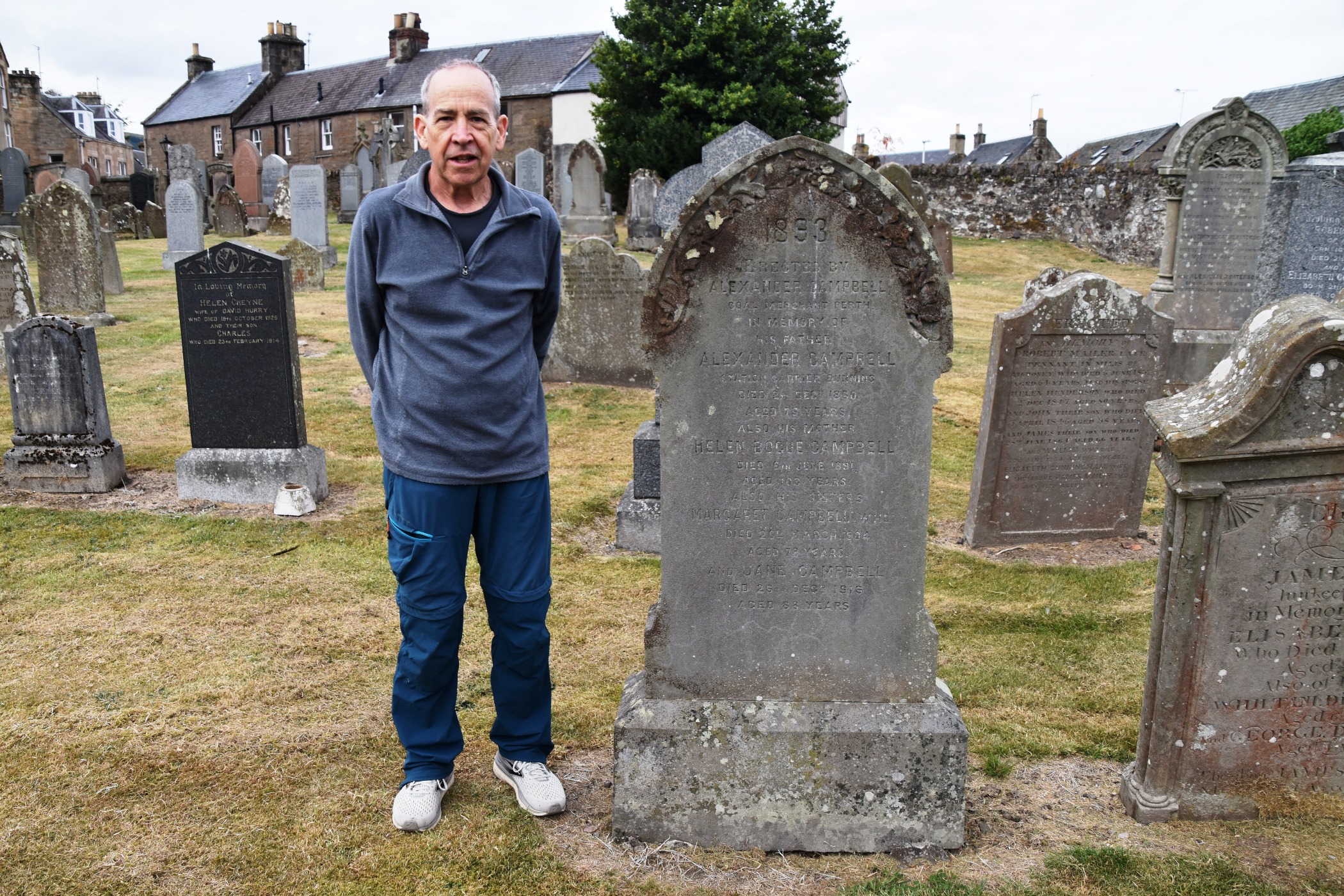
The graveyard of St Serf’s Church had many gravestones, but the ones that were old enough were almost all illegible. After a persistent search, Ian found the grave of Helen Bogue Campbell, along with several other members of the Campbell family that remained in Dunning. They had good genes – Helen lived to be over 100, and the other family members who share the grave lived to 88, 75, and 72 – all very impressive in those times.
Dunning is a pleasant, neat and tidy village, with lots of kids playing in the schoolyard. There is almost nothing there now that would suggest what it looked like in the early 1800s, when it was populated almost entirely by weavers and farm labourers. We don’t know why the Campbells decided to go to Australia; it was well before the gold rush. The mystery remains unsolved, but at least we’ve seen where they came from.
A lunchtime stroll in the woods
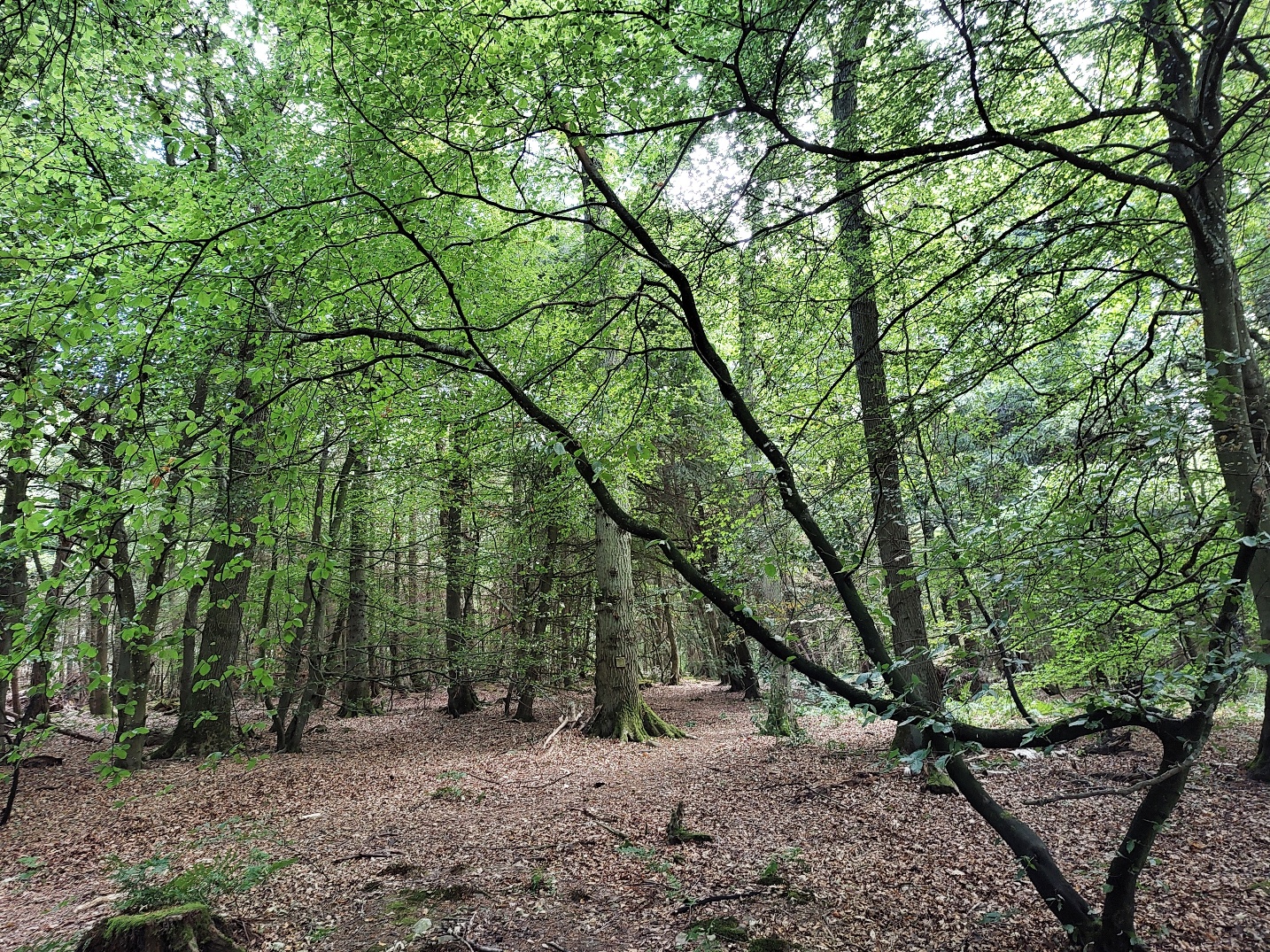
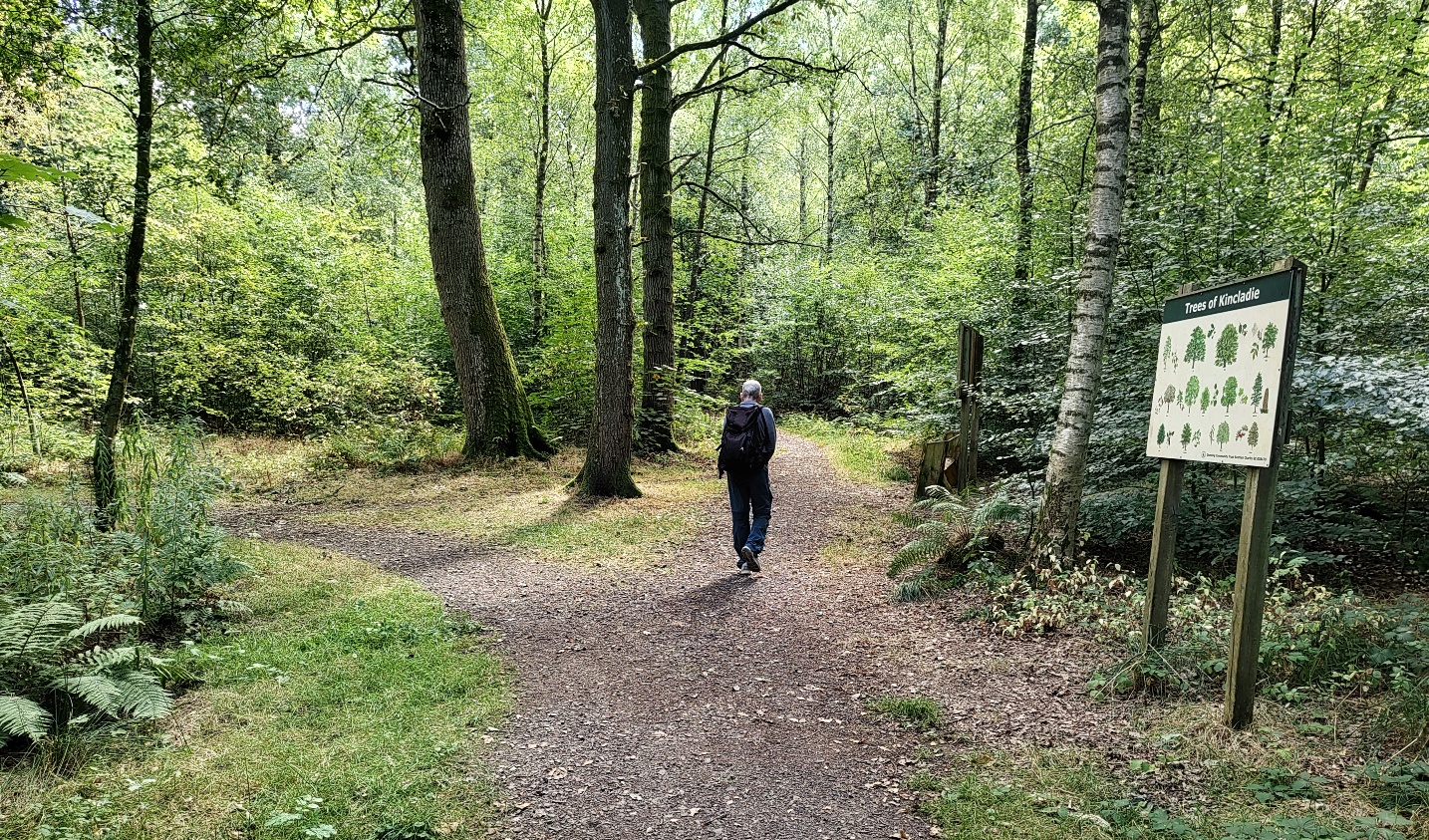
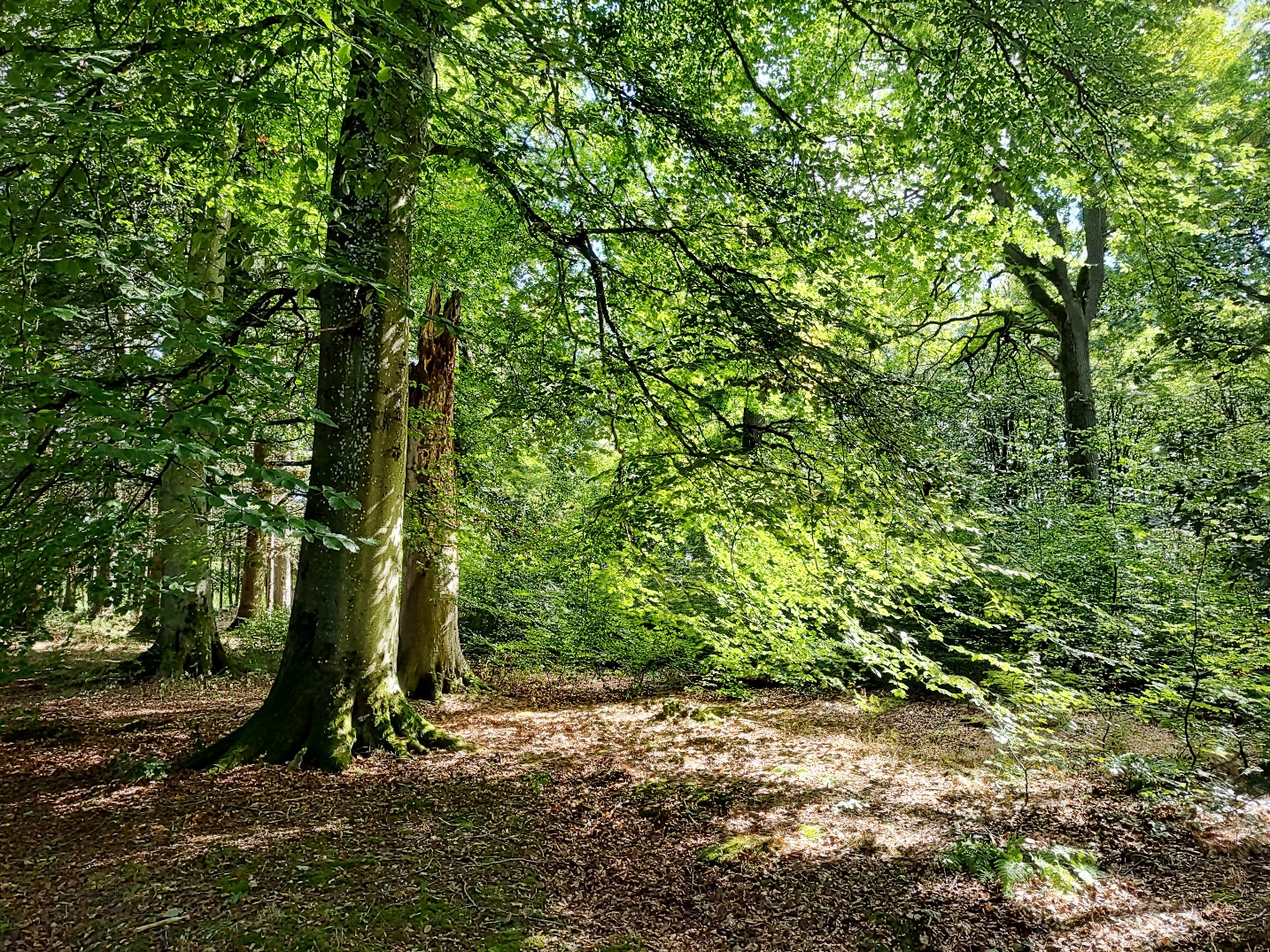
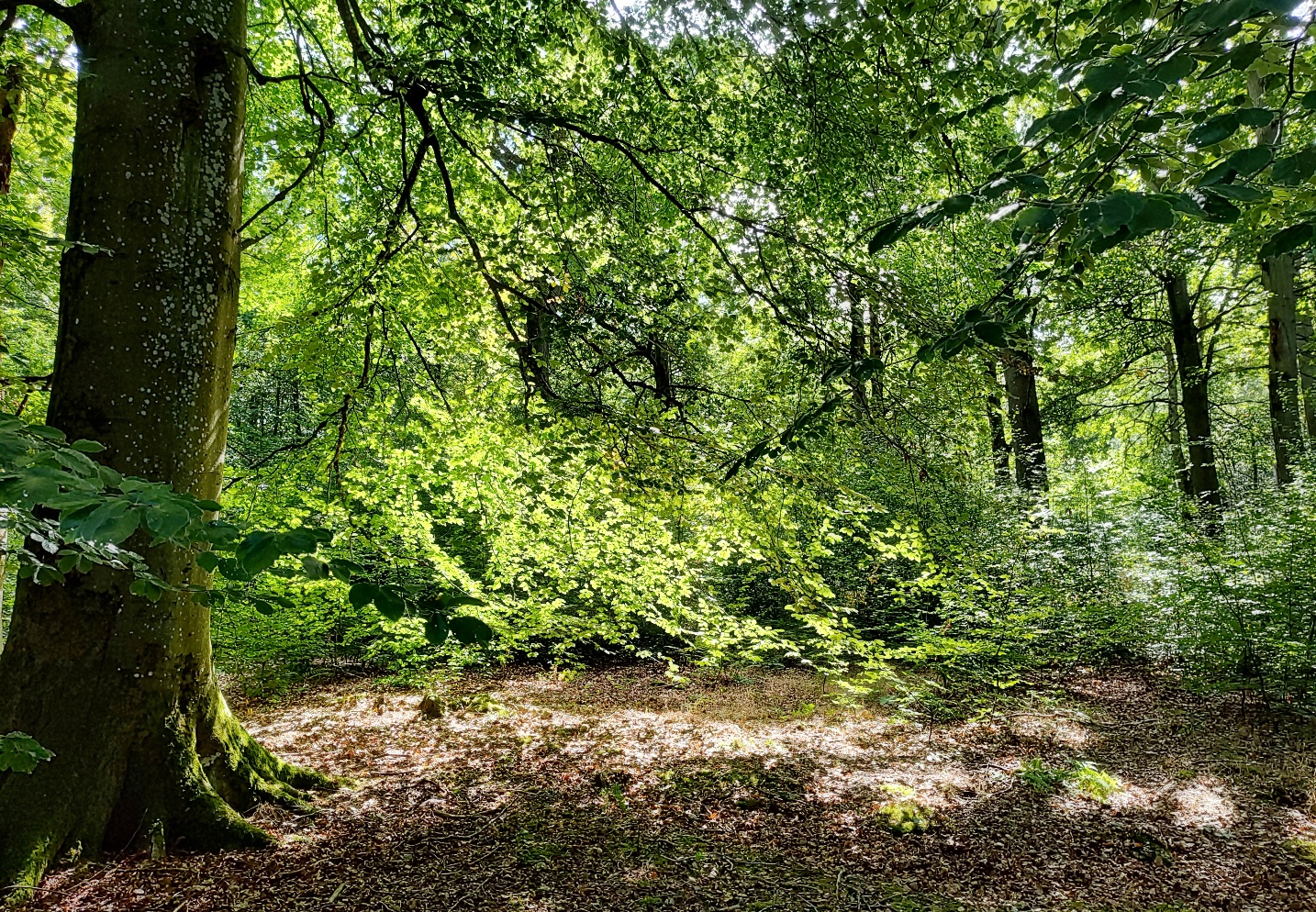
In search of a picnic spot, we chanced upon nearby Kincladie Wood, a remnant ancient woodland which has not been cleared since at least 1750. A dyke at one end indicates a Roman encampment, and three witches and a wizard were burned here. Today it was peaceful, with only the odd dog walker and a few squirrels.
A walk in the park in search of legends
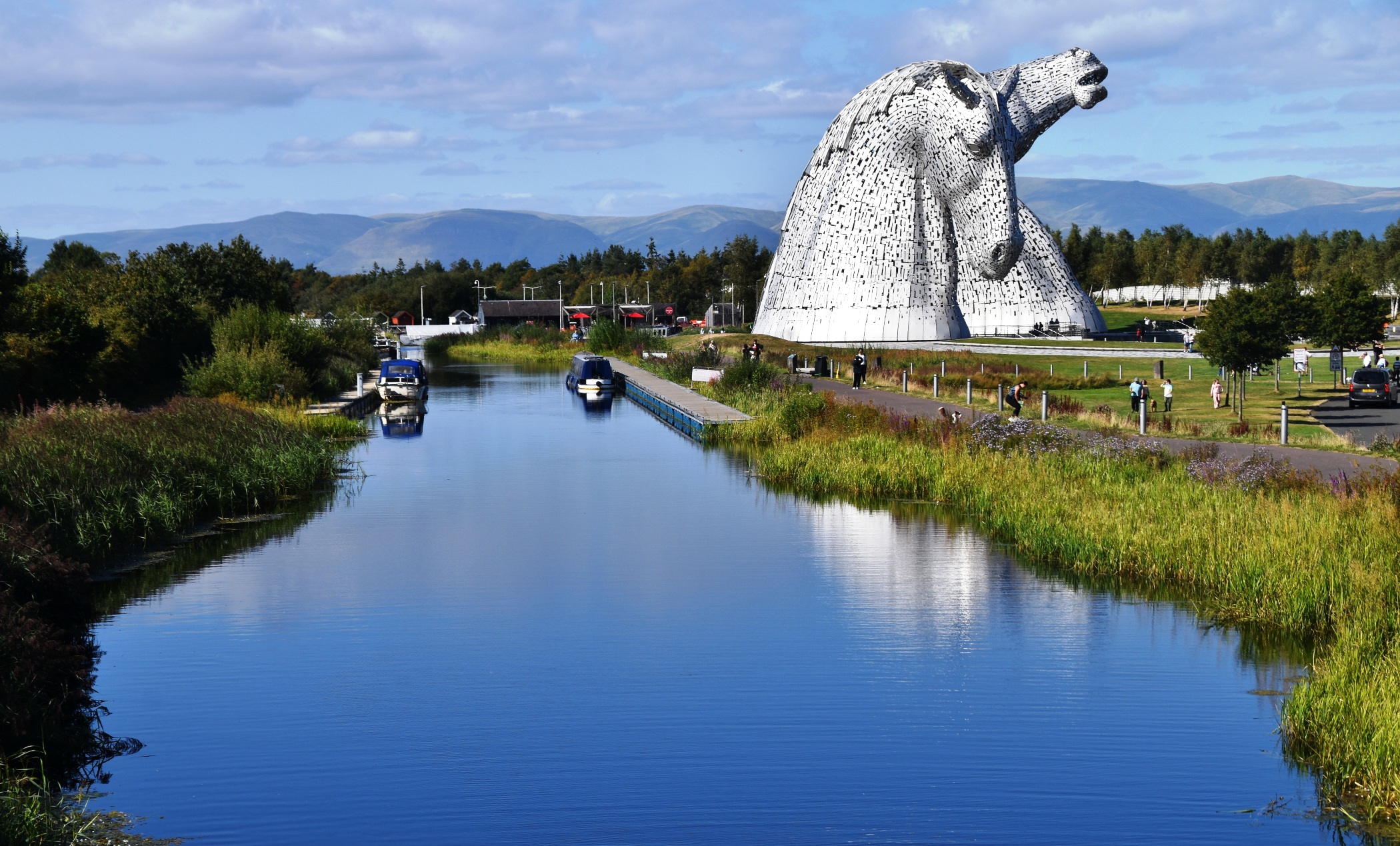
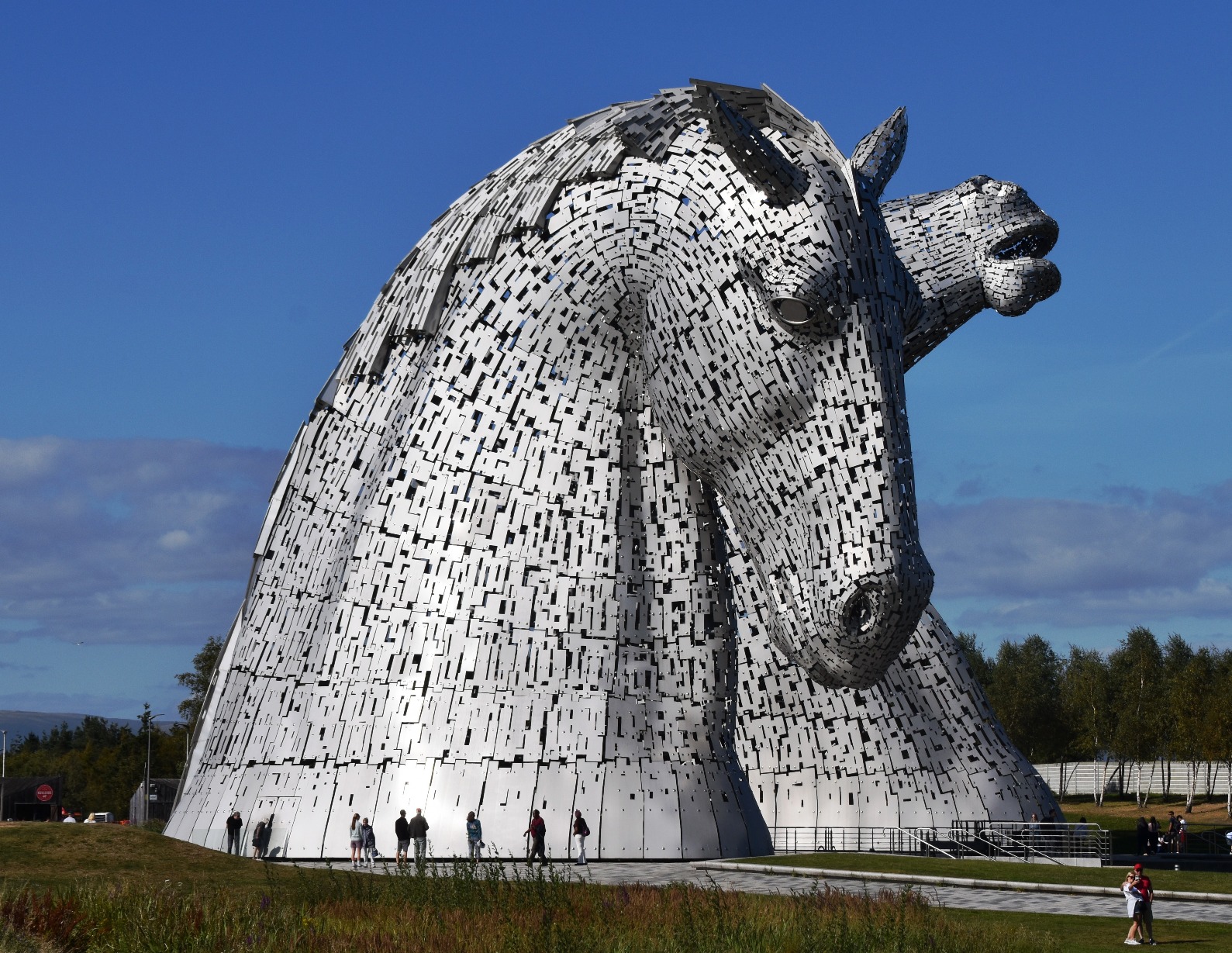
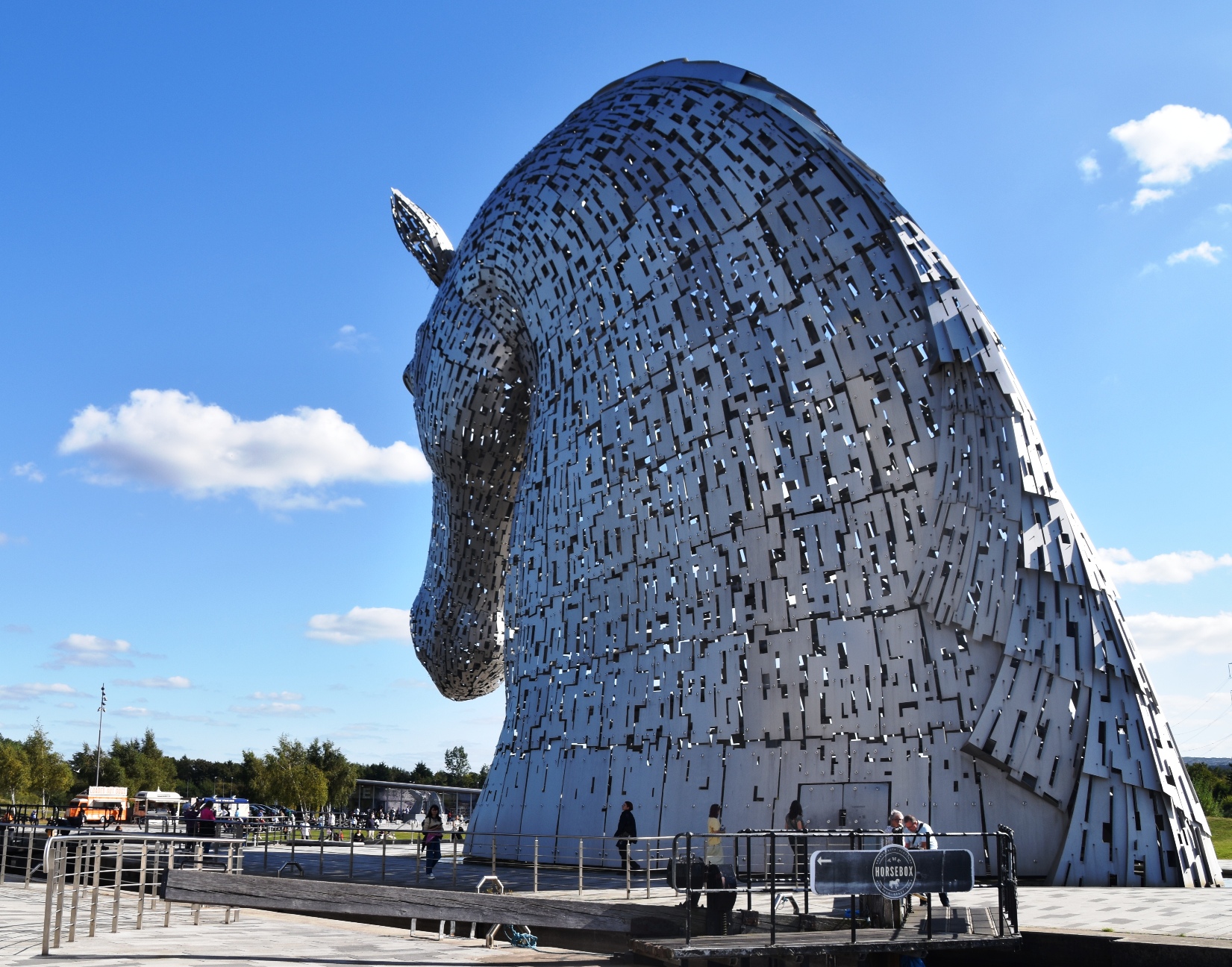
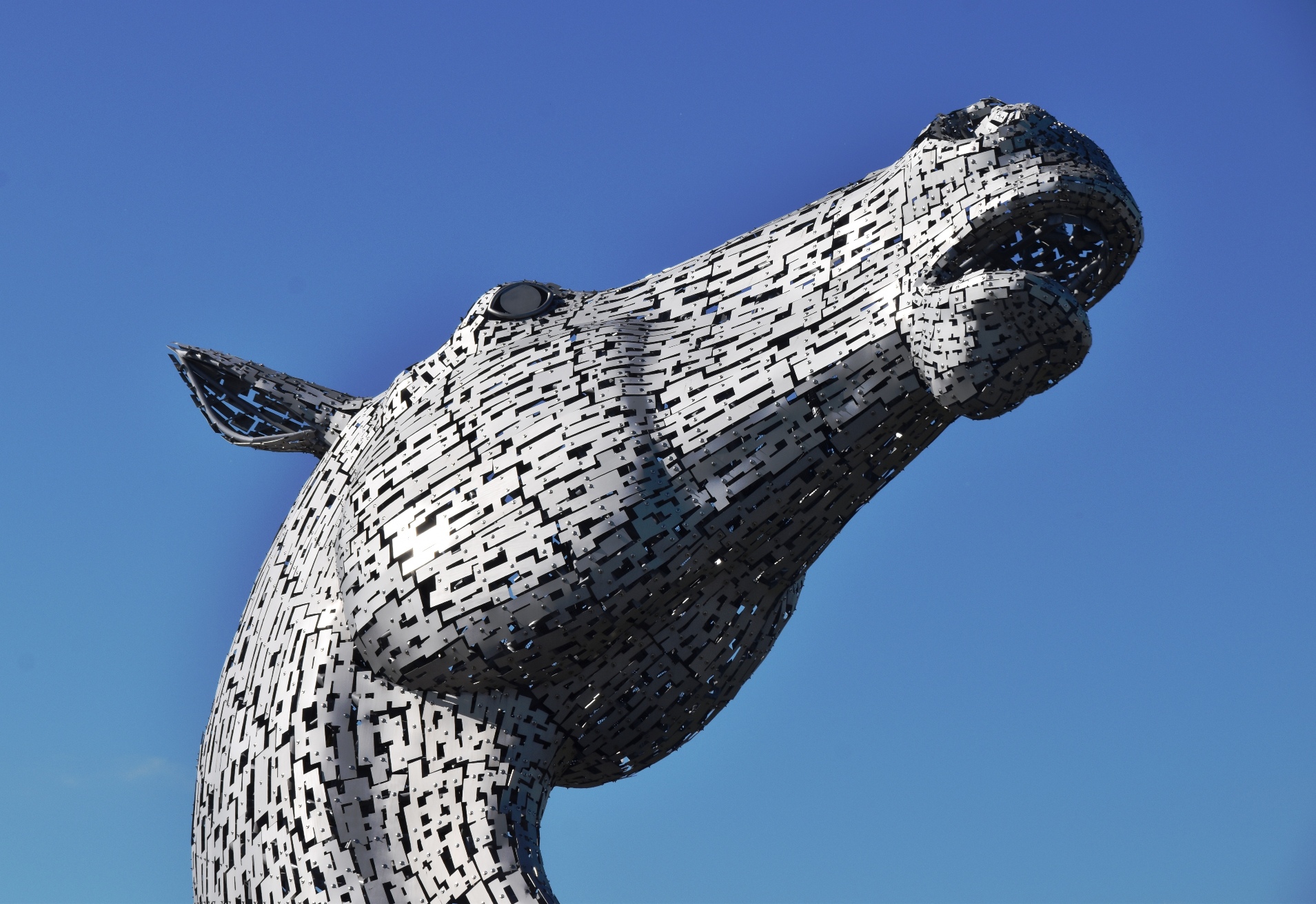
After what seemed an endless and needlessly circuitous drive to Falkirk, we parked at the stadium, and set off through Helix Park. This green space, bisected by the Falkirk Canal, has revitalised this industrial area, bringing tourists from all over to see the famous Kelpies sculptures. Thes two enormous steel horses’ heads rise up from beside the canal, representing the water horses of celtic myth. I’m sure there are plenty of mind boggling statistics about their construction, but I just enjoyed looking at them. Helix Park also has canalboats and locks, wetlands with white swans, and a lake with pedal boats. The sun was well and truly out, and it was a nice place to walk, but we had places to be.
A run with a map in Clackmannan
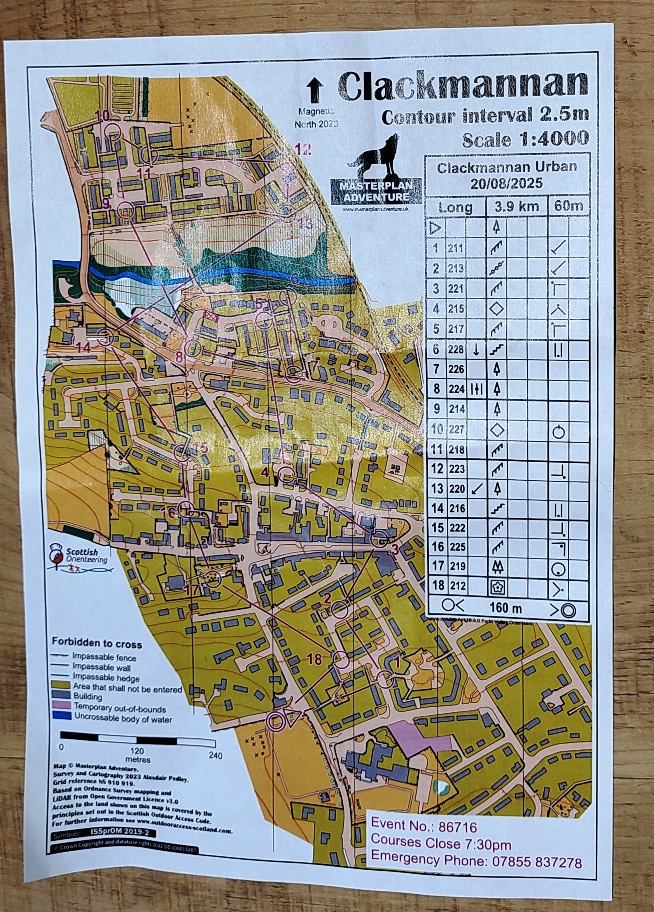
By now my step count was well and truly above target, but we weren’t done yet. We’d entered a midweek orienteering event with the Forth Valley Orienteering Club – our first time orienteering in Scotland. Unlike the dreaded Scottish 6 Days, with its hills and bogs and all things unpleasant, this was a nice run around a small town – not a nettle in sight (which may have disappointed some of the locals). Entries were about 70 – a big turnout for a local event. Ian did the Long course of 3.9km, while I tackled the Short course of 2.8 km. The club numbers some serious orienteers, and winning times on both courses wee 16 minutes. Ian took 25 minutes, and I was 37 minutes. Both of us were reminded that our fine navigation skills are somewhat rusty, as we both went down dead ends, and found ourselves on the wrong side of fences. It was well set, offering plenty of route choice legs.

And that’s how I completed more than 16,000 steps, without even trying (much).
 dipidydoo