The Albion Hotel in Iepers/Ypres was very comfortable and not overheated like most other hotels here. Pete picked us up for our third and final day of touring the Western Front, concentrating on the Ypres Salient area. It was another lovely day so we have been really lucky. First we walked to the Menin Gate where we learned more about the history of the town, and how and why the memorial was built. Next was a visit to the Cloth Hall, a vast medieval building in the town centre, which now houses the “In Flanders Fields” museum. This is a very modern museum using technology like RFID chips that enable you to register details like age, gender and country of origin, then certain displays are tailored to your demographic. There was a lot of audio visual material. It was interesting but we found it rather sombre – everything had a black background and heavy music set a somewhat depressing tone. Of course this is a large part of the story of the war, but not the complete story, and it ignores the mateship and camaraderie that was such a strong feature.
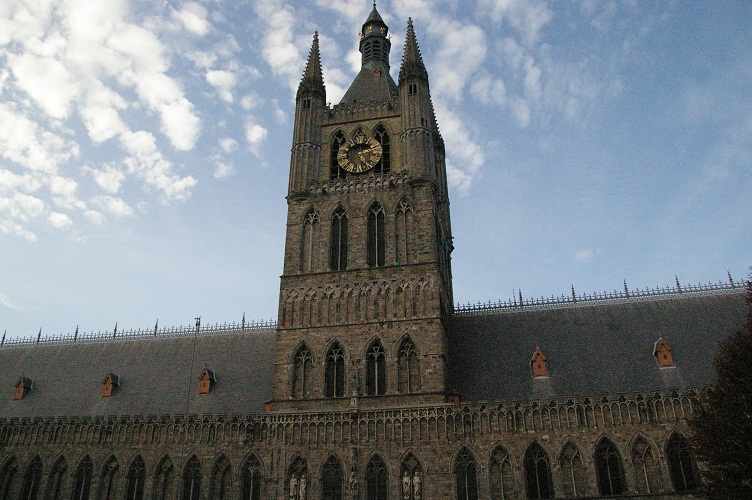
Cloth Hall, Ypres
Back in the car we were off to the infamous Hill 60, depicted in the Australian film “Beneath Hill 60”. This is one of the few places where the landscape still indicates what it looked like during the war, though of course trees and grass have grown since. Our first thought was “what a great place for technical orienteering”, lumps and bumps everywhere, like a small version of Rowdy Flat but with the remains of German bunkers. Lots of places to hide controls. Hill 60 is only a small hill but in the completely flat Flanders landscape it was very important, and it was fought over right through the war, changing hands numerous times. We saw the crater that was created when the Australians were able to detonate explosives and take the German position.

Hill 60 – great place to orienteer
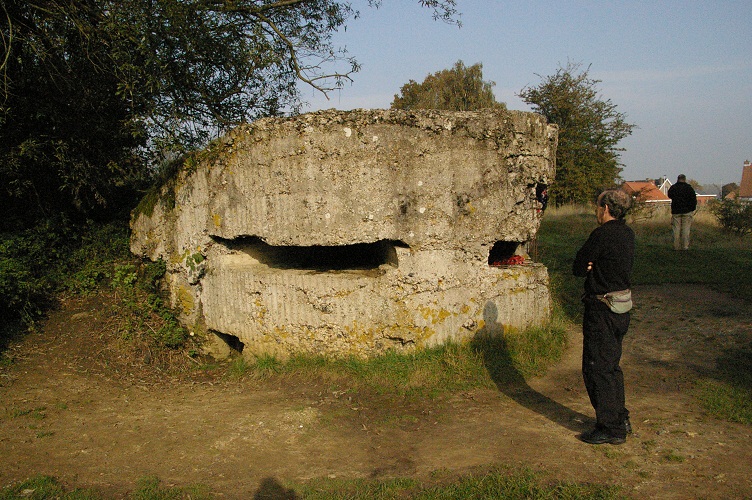
Bunker at Hill 60
Lunch was at a nearby café which had another museum, this one a total contrast. It was a traditional collector’s private museum, chock full of memorabilia and quite well put together. From there we headed to Polygon Wood, which has an Australian memorial and cemetery in a beautiful setting. We heard the sad story of Lt Colonel Scot, commander of the Australian forces here. His troops were about to decamp and he was briefing the British commander. They were standing on a hill, and Scot removed his helmet and laid it on the ground. A stray bullet fired from a considerable distance away, and not intended for the two men, hit Scot’s helmet, ricocheted up and hit him in the head. It passed through and hit the British commander as well, killing both. Scot is buried at Polygon Wood. Also buried there are 5 Australian soldiers whose bodies were discovered quite recently, two well preserved by being buried under a road. Three have been identified by DNA testing. One of them had been carefully wrapped in a cape and buried by his brother.
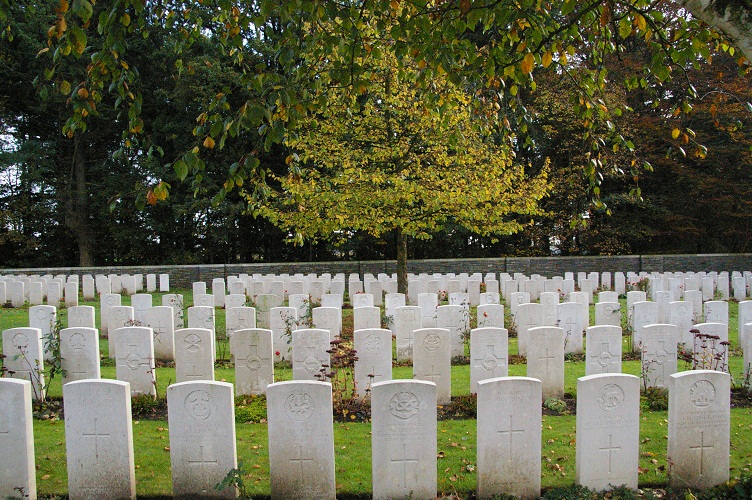
Polygon Wood cemetery
Our final stop was at Tyne Cot, home to the largest Commonwealth War Graves cemetery in the world and resting place of a number of Victoria Cross recipients. Gardeners were hard at work taking up damaged turf which will be relaid after winter, and stone masons were re-etching worn panels on the memorial wall. This holds the names of British soldiers killed since August 1917 (the names that would not fit on Menin Gate). The CWGC is the second largest employer in the area – we had no idea it was such a huge undertaking.
Our tour ended in Lille. It has certainly been a memorable three days during which both of us have learned a lot about Australia’s early history. I thought it might be sad or depressing, but it wasn’t – the cemeteries were peaceful and beautiful and everything is done so respectfully. These, and the monuments to the missing, are places for the living to visit and are very important to families and loved ones, and they also provided a crucial service for the soldiers themselves who needed to return to these places after the war. Many of them moved to the area as they could not break away from the memories of their mates.
We’re now at Lille’s Eurostar railway station waiting for our TGV train back to Paris and an overnight stay at Gare du Nord, ready for our flight to Istanbul tomorrow. Another new country awaits.
 dipidydoo
Souns as though you are learning a lot whilst on your holiday. It’s great to be reading about the history you are seeing – photos will be eagerly awaited. Love the references to potential orienteering events, we find ourselves doing the same, even here. Tina