Hadrian’s Wall. It was hard to believe we’d been in Northumberland for five days, and still hadn’t seen it. We’d seen signs a-plenty, but were yet to lay eyes on the actual Wall. That all changed today, as we drove west. There are stone walls absolutely everywhere here, but The Wall is easy to spot. It’s much wider than a farm wall, it runs east-west along the ridges, and it often has earthworks beside it.
Our starting point was Steel Rigg, where once again we had a bit of a run-in with bureaucracy. No matter how hard we tried, the ticket machine would not accept our money. So we wrote a note and left it in the car, hoping the parking people would be understanding of our plight. We slunk off feeling (not very) guilty.
Once through a wooden gate, we could see the crags of Steel Rigg and Highfield Crags, and the deep saddle of Sycamore Gap. We decided to head for Highfield Crags, where we could overlook Crag Lough. The Hadrians Wall trail was easy to find – just follow the hikers coming and going along the Whin Sill.
We were right beside the Wall here, and got a good look and feel for its size. The trail led downhill into the first saddle, then up a steep, lung-busting climb.
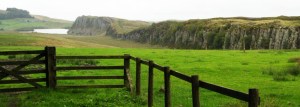
Steel Rigg and Highfield Crags
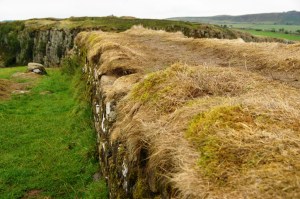
The Wall, up close
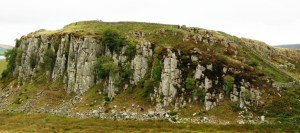
Steel Rigg
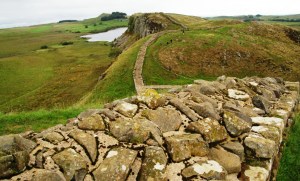
The Wall follows the ridgeline
At the bottom of the next descent was Milecastle 39. These were positioned (you guessed it) every Roman mile, or 1000 paces, along the Wall. See, they were using the metric system already. Another uphill, then a flatter section before we plunged down a steep stone staircase and into Sycamore Gap. The lone tree here is famous, and the scenery dramatic as the wall clings to the contour line in a deep “U”. We paused for a rest and lots of photos.
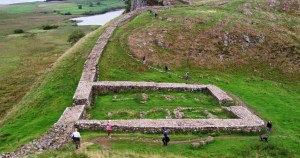
Milecastle 39
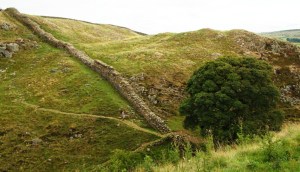
Looking down on Sycamore Gap
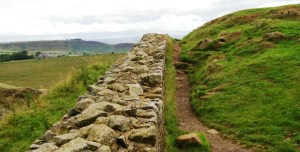
Trail beside the Wall
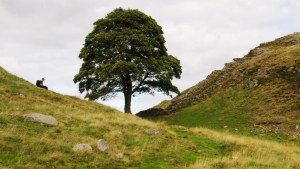
Sycamore Gap
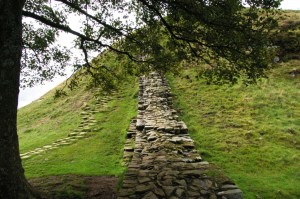
Sycamore Gap, looking back where we’ve come
Pressing on, we climbed more easily up to the top of Highfield Crags. Now we were on a clifftop path, overlooking the lake far below where two white swans were preening. We could see miles and miles of countryside; the views were breathtaking. Lunch was had while soaking up the 360 degree panorama from our rocky vantage point.
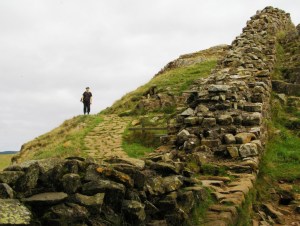
Ian heading up to Highfield Crags
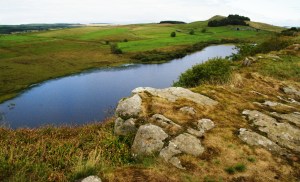
Lunch with a view over Crag Lough
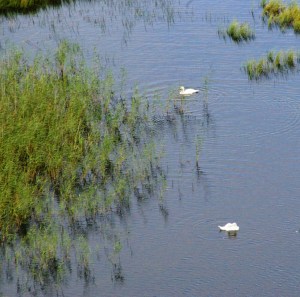
Serene swans
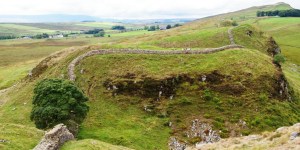
Sweeping panorama
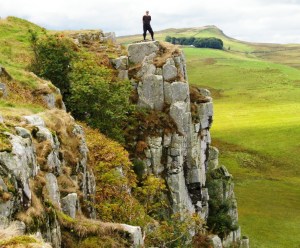
Boy on a rock
While other hikers pressed on, it was time for us to retrace our steps. At Sycamore Gap, we split up; I took the low road while Ian took the high road (the way we’d come; my path contoured around the hills and avoided the steep ups and downs, which was much kinder on my ankle). We met back at Steel Rigg, where the car was waiting without any indication that the parking people had pounced. We’d walked for two hours – a hour longer than planned; but it was wonderful.
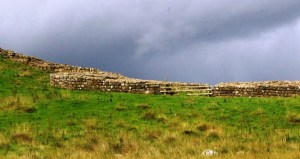
Storm approaching
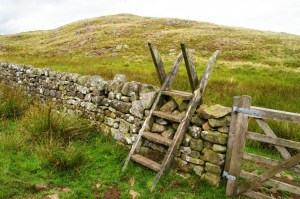
Stile
We rounded out the afternoon with a visit to nearby Vindolanda, another Roman fort, and site of a live archaeological dig. The whole site is overlooked by heather-clad hillsides. It is much bigger than Corbridge, and has a distinctly laid out fort inside a relatively high wall, and a separate village outside the wall.
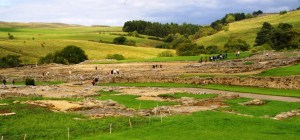
Vindolanda Roman Fort
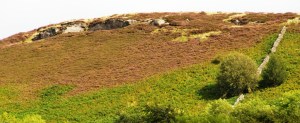
Heathery hillside
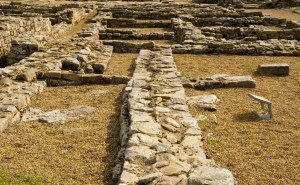
Fort foundations
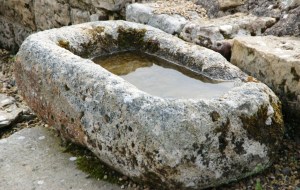
Trough
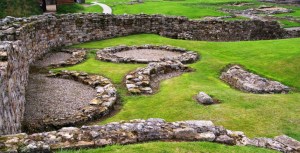
Inside the fort walls
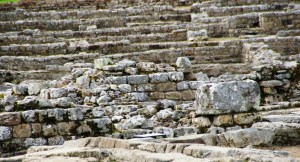
Stone
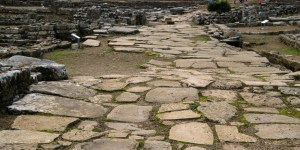
Unmistakeably a Roman road
Every summer, keen archaeologists spend their days getting their hands dirty, sifting through mud and dirt hoping to find fragments of treasure.
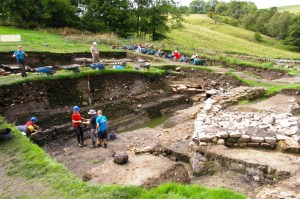
Big messy hole in the ground

Treasure hunting
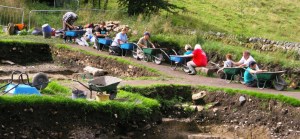
A lineup of barrows
Vindolanda is unusual because many of the artefacts have been preserved anaerobically, therefore not subject to damage. The site has turned up many leather and fabric items such as shoes, that are never seen elsewhere. Last year, a hoard of swords and cavalry equipment was unearthed, some still gleaming as if new. These can be seen in the museum, at the very bottom of the hill. The most treasured find are the writing tablets – small pieces of wood with hieroglyphics inked onto them. These have provided an invaluable record of Roman life at Vindolanda, and are one of the most significant items at the British Museum. We were able to see a sample of about half a dozen.
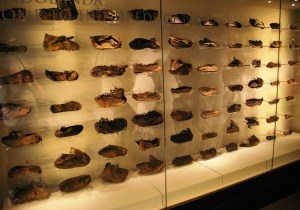
A wall of shoes
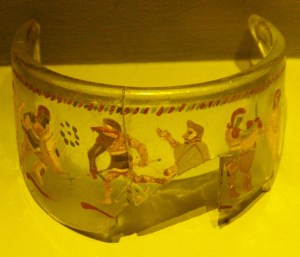
Glass bracelet

Dug up last year

Buried for nearly 2000 years, almost new

Exquisite little bronze horse, probably used as a standard
Hadrian’s Wall represents the northernmost frontier of the Roman Empire, and it must have seemed a very, very long way from Rome. Especially in winter. Nice to visit on a mild summer’s day like today, but it must have been a very tough life for those soldiers and their families.
 dipidydoo
Any sign of Tony & the Time Team crew?
We did start to feel like we were in an episode of TT