Riga left me with slightly mixed feelings. It is definitely a city in transition, with two distinct parts at opposite ends of the scale, and multiple facets in between.
I got up early this morning. I wanted to see the famous Art Nouveau district. Ian was less interested, so I left him on board. Just as I reached the gangway, a downpour hit. Sigh … out with the rain jacket. I think my Hurtigruten jacket has had more use on this cruise than it did in Antarctica. I wrapped Captain K in a plastic bag (he looks undignified with wet fur) and set off.
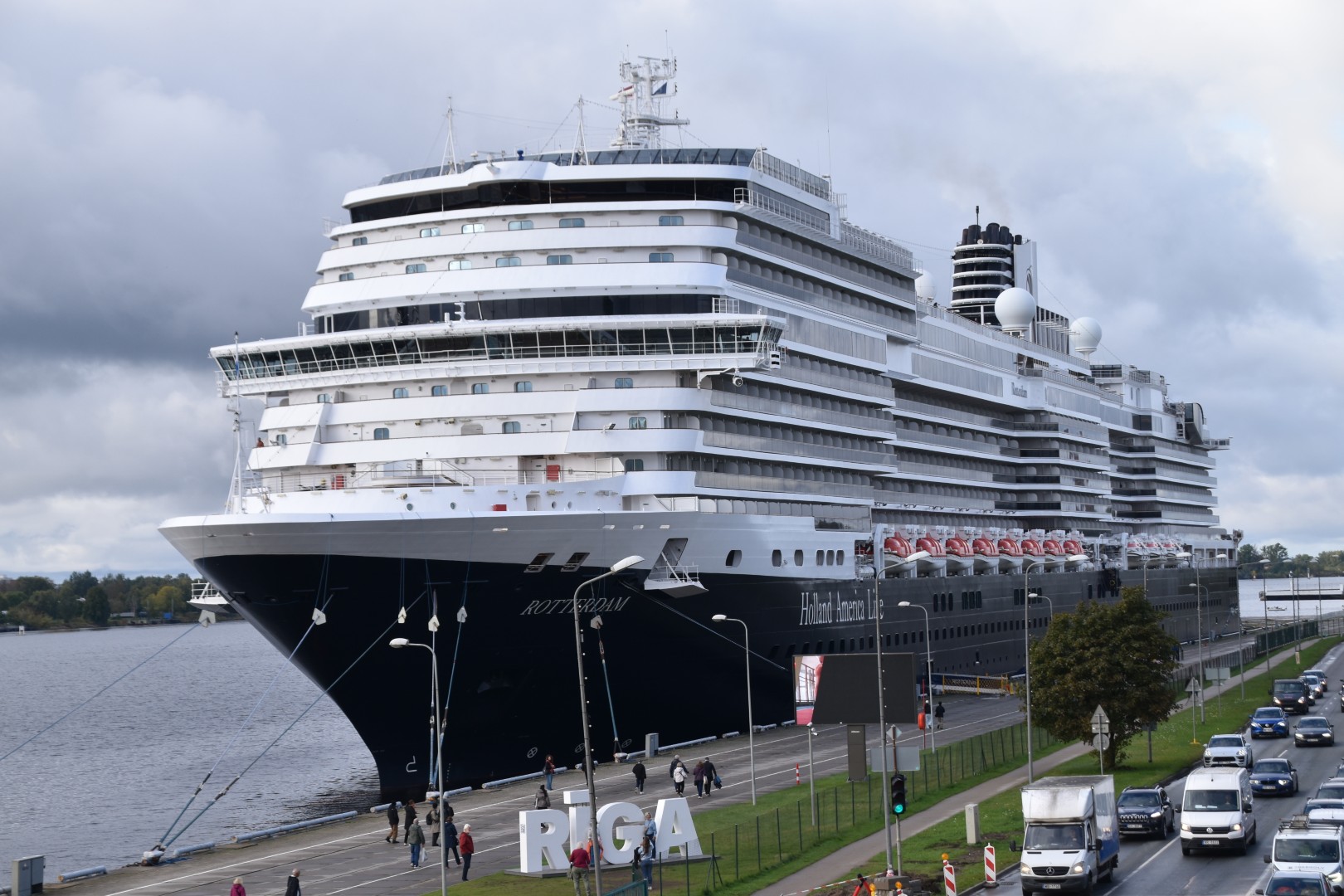
The first thing I noticed was that getting out of the port was not a simple task. Cruise ships dock in the river, close to the town, and you would expect a pleasant walk along a promenade. No such luck – immediately adjacent to the river is an 8 lane highway, with no pedestrian crossings in sight. Eventually I found one about a kilometre to the north. My relationship with Riga was not off to a good start. Once away from the highway, there were slippery tram tracks and large wet cobblestones to deal with. If I never see another cobblestone, I’ll be happy. Their charm wore off a long time ago.
Things improved when I reached the park, then I found Albert and Elizabeth Streets, the heart of the Art Nouveau area. I gazed in a happy stupor at the glorious buildings. The decorative style here was different to Antwerp, which is more about flowers and leaves. In Riga, it’s all about faces (and bodies), Egyptian motifs, and animals. And a rather scary silver man.
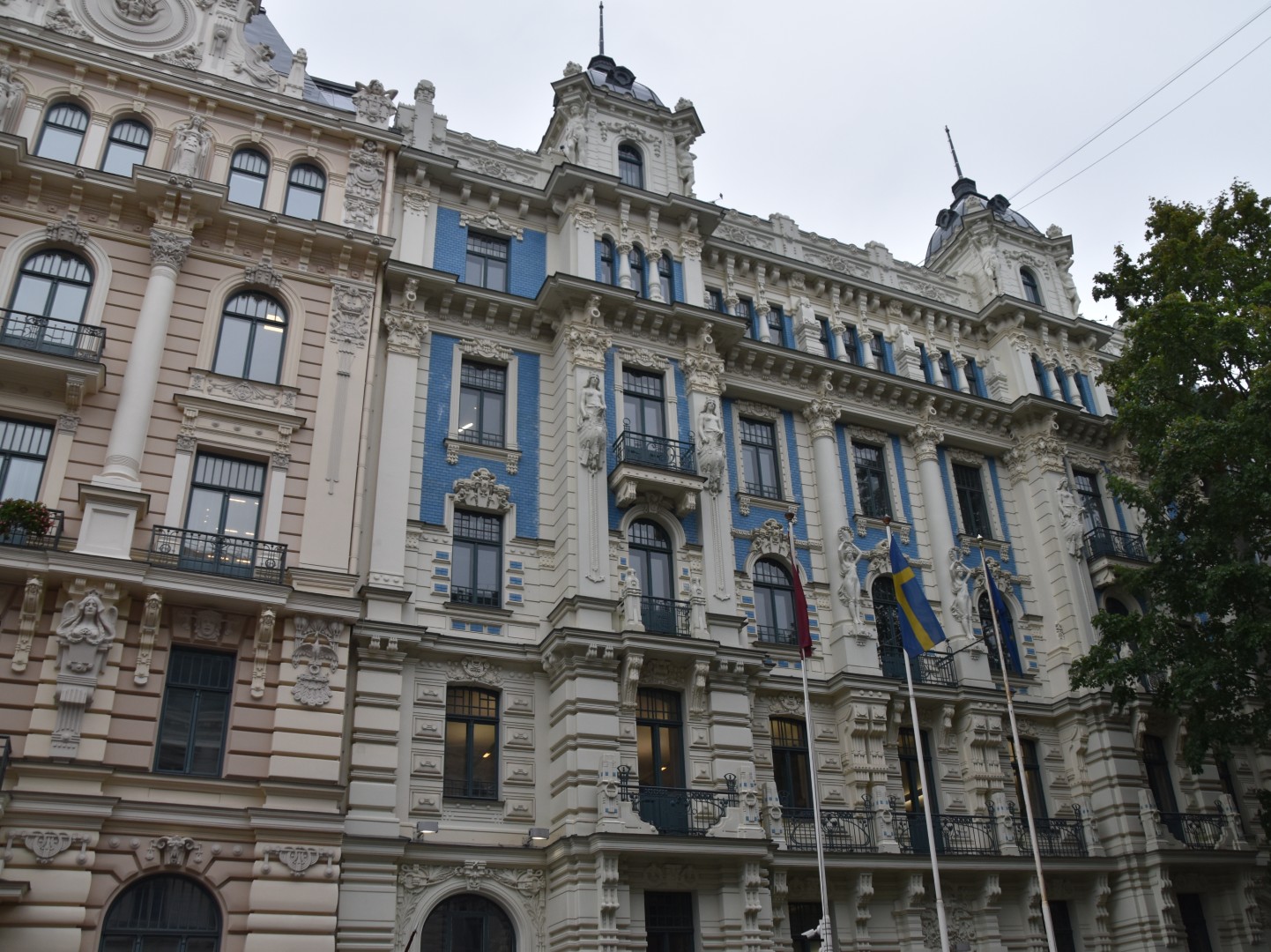
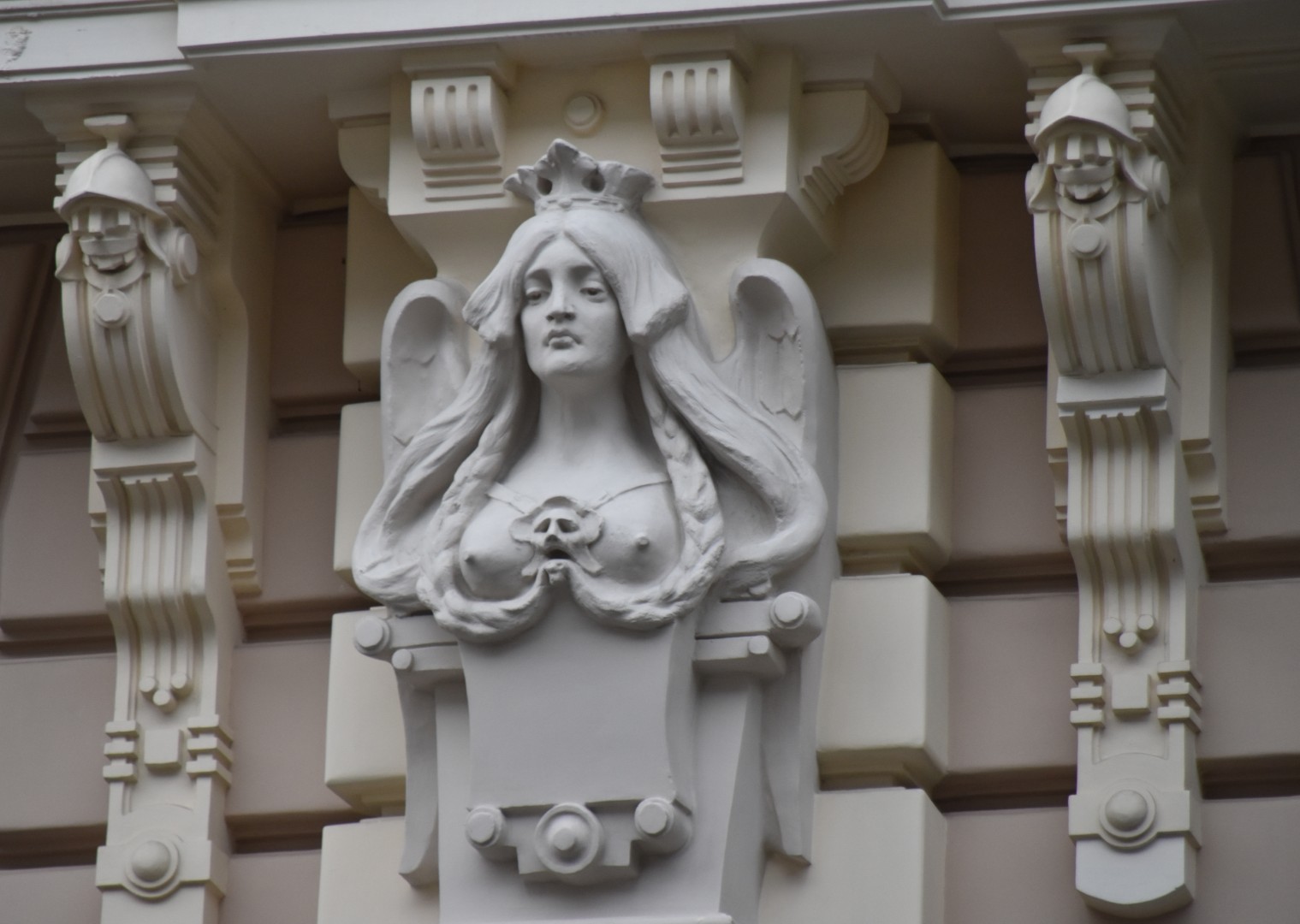
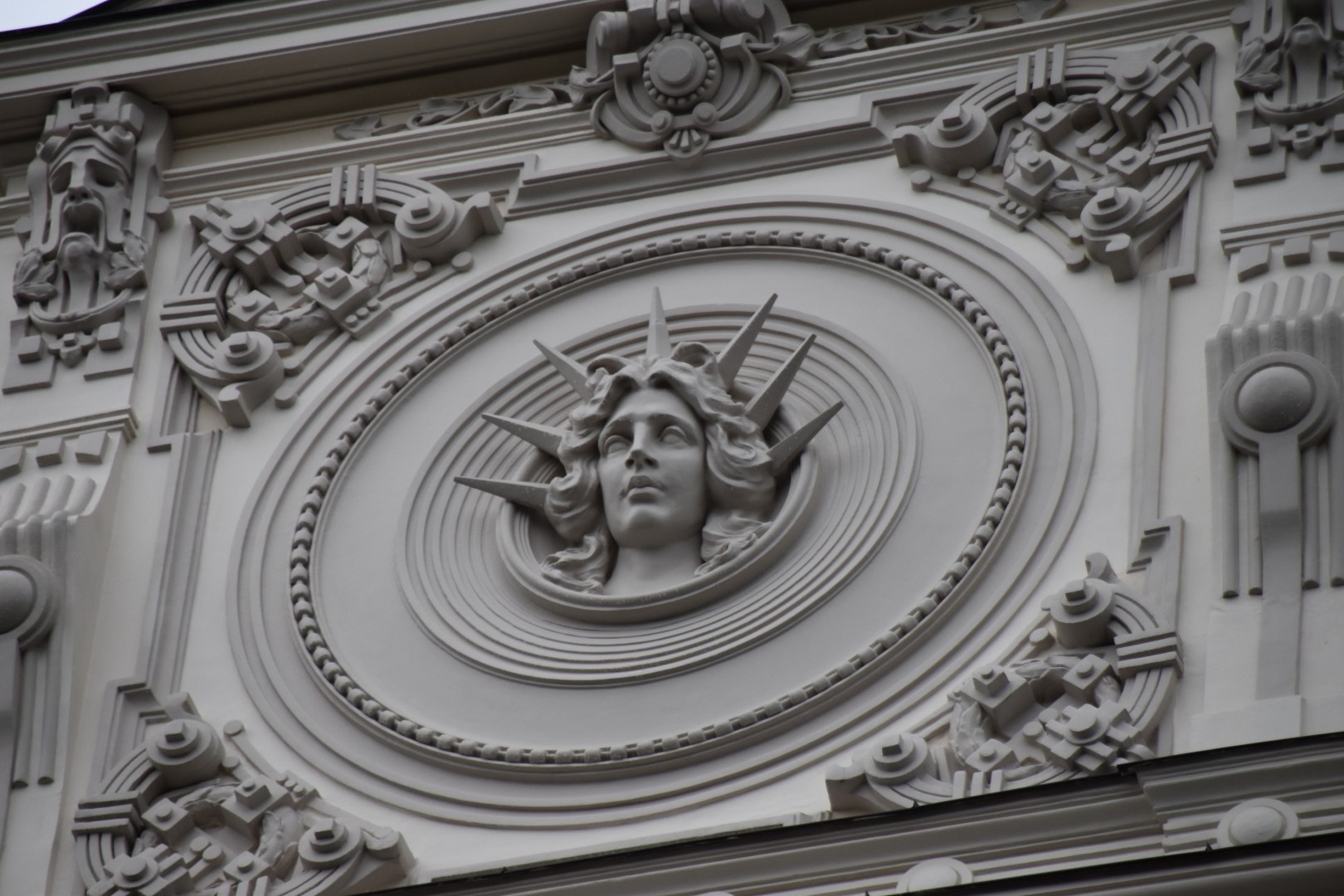
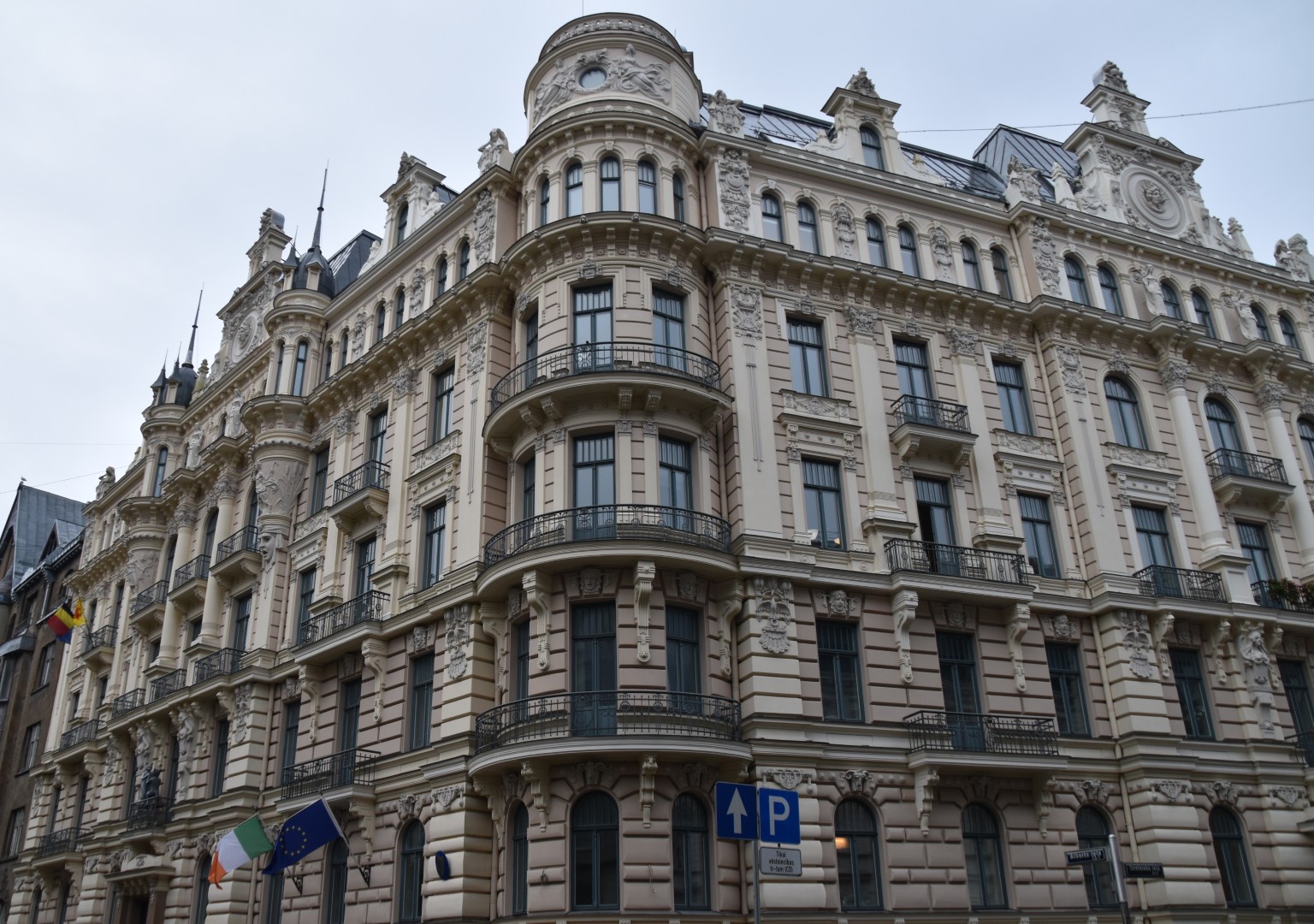
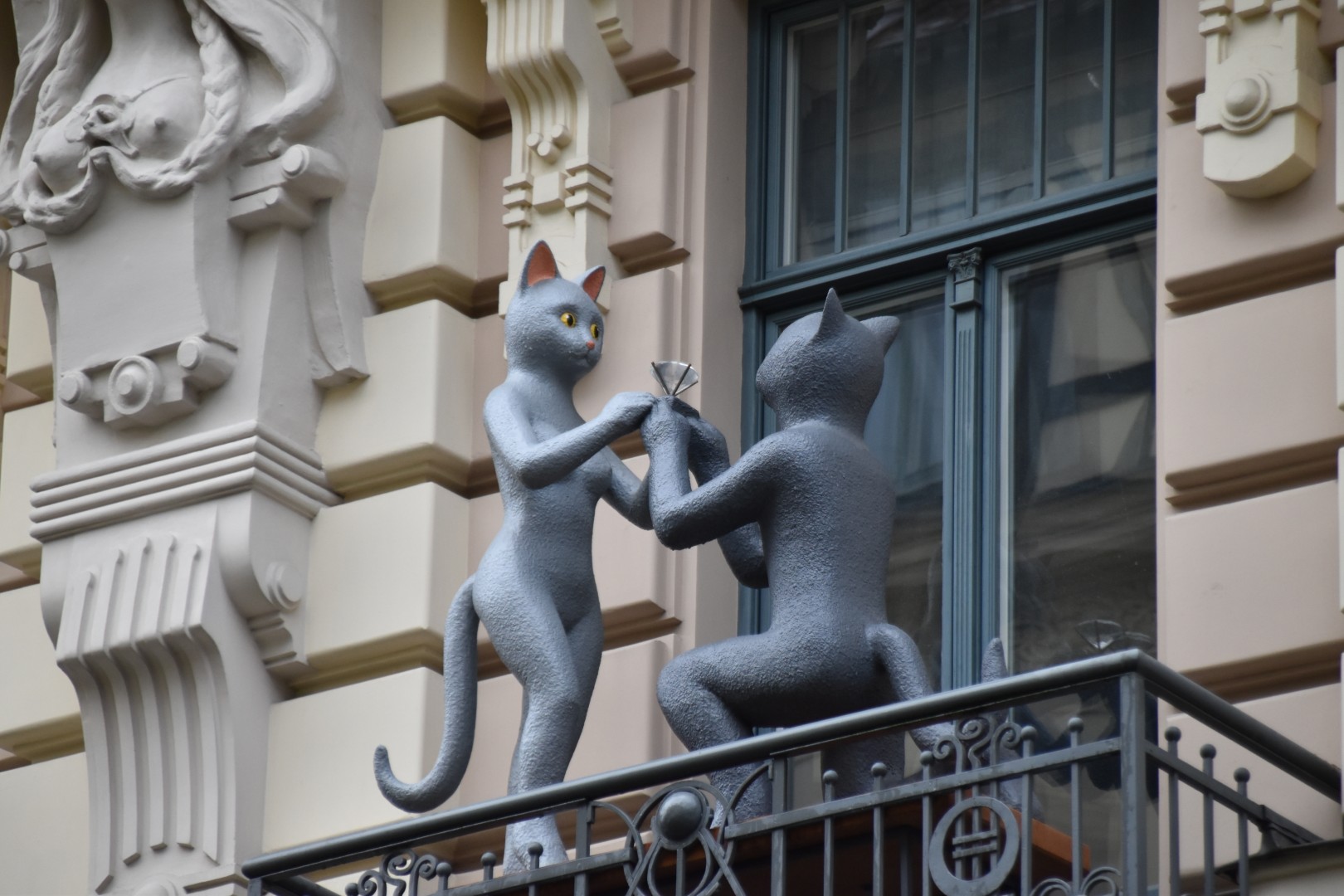
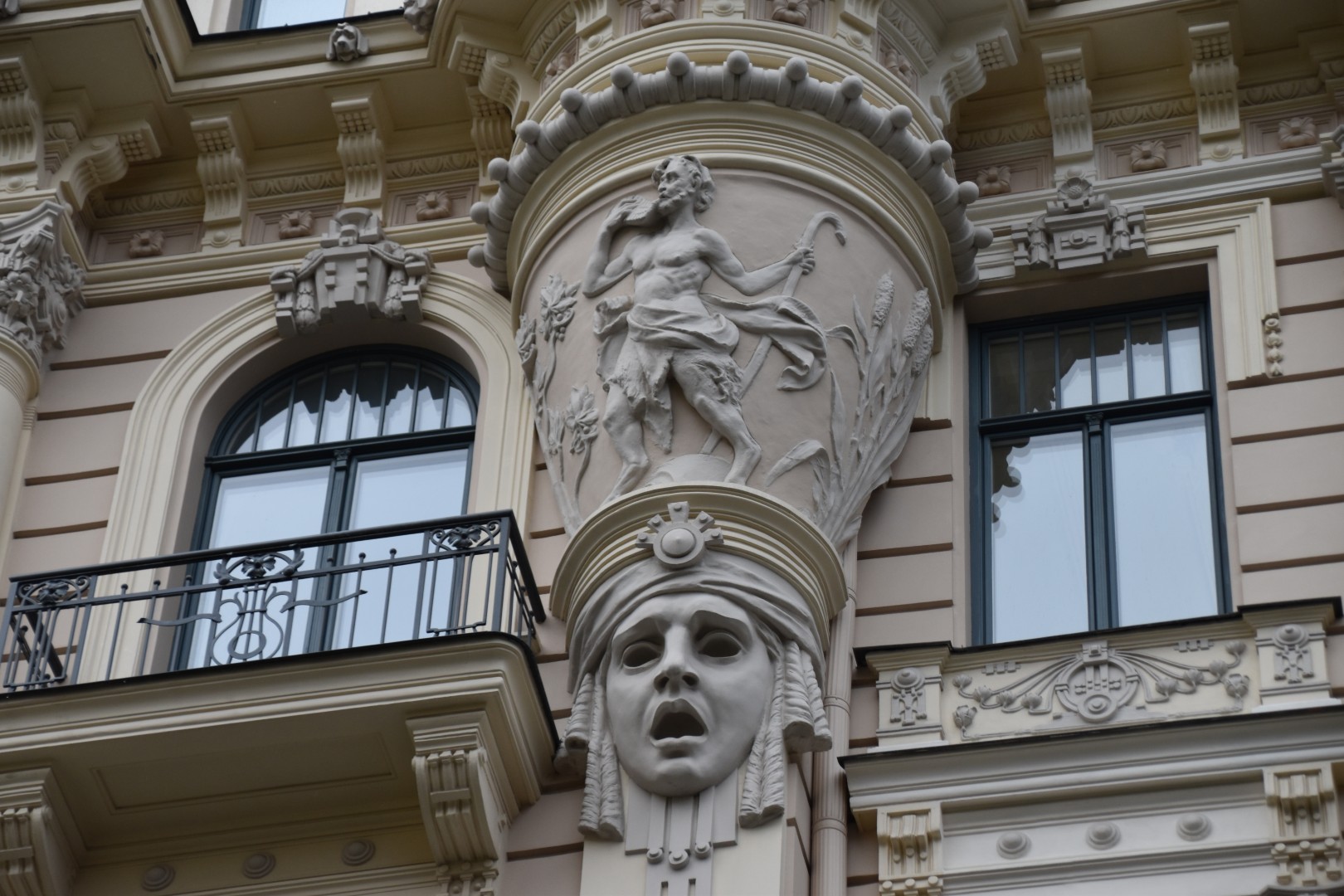
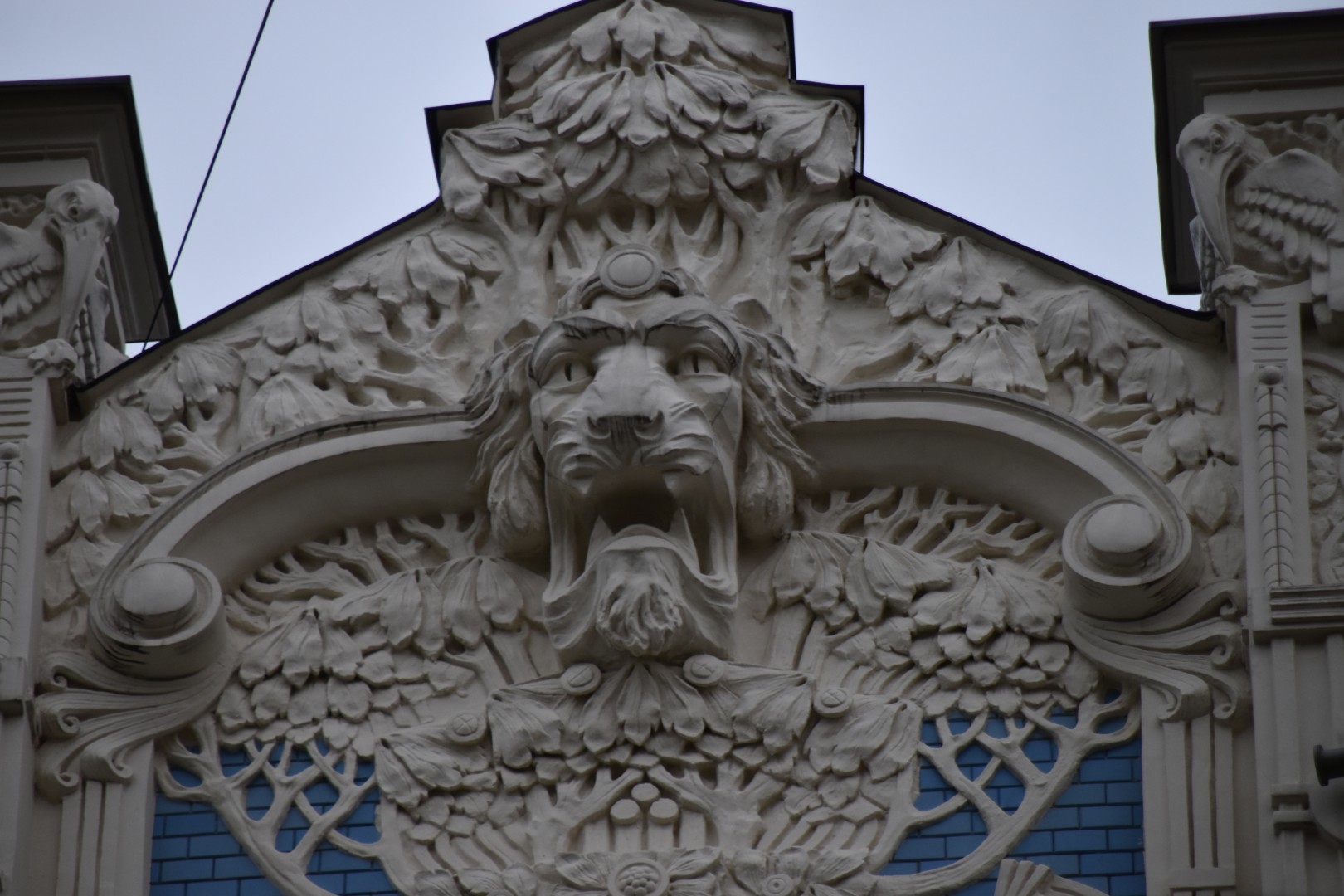
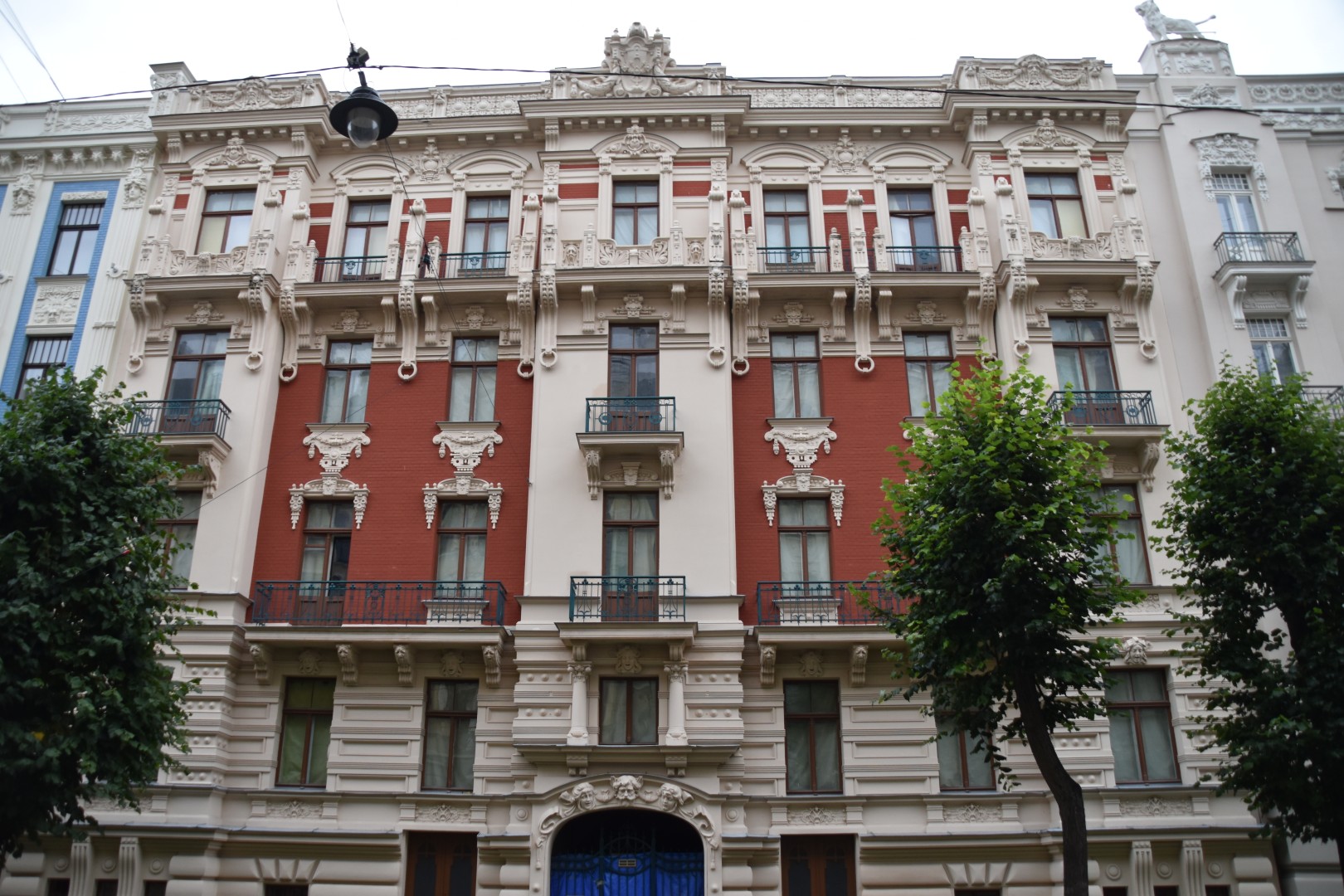
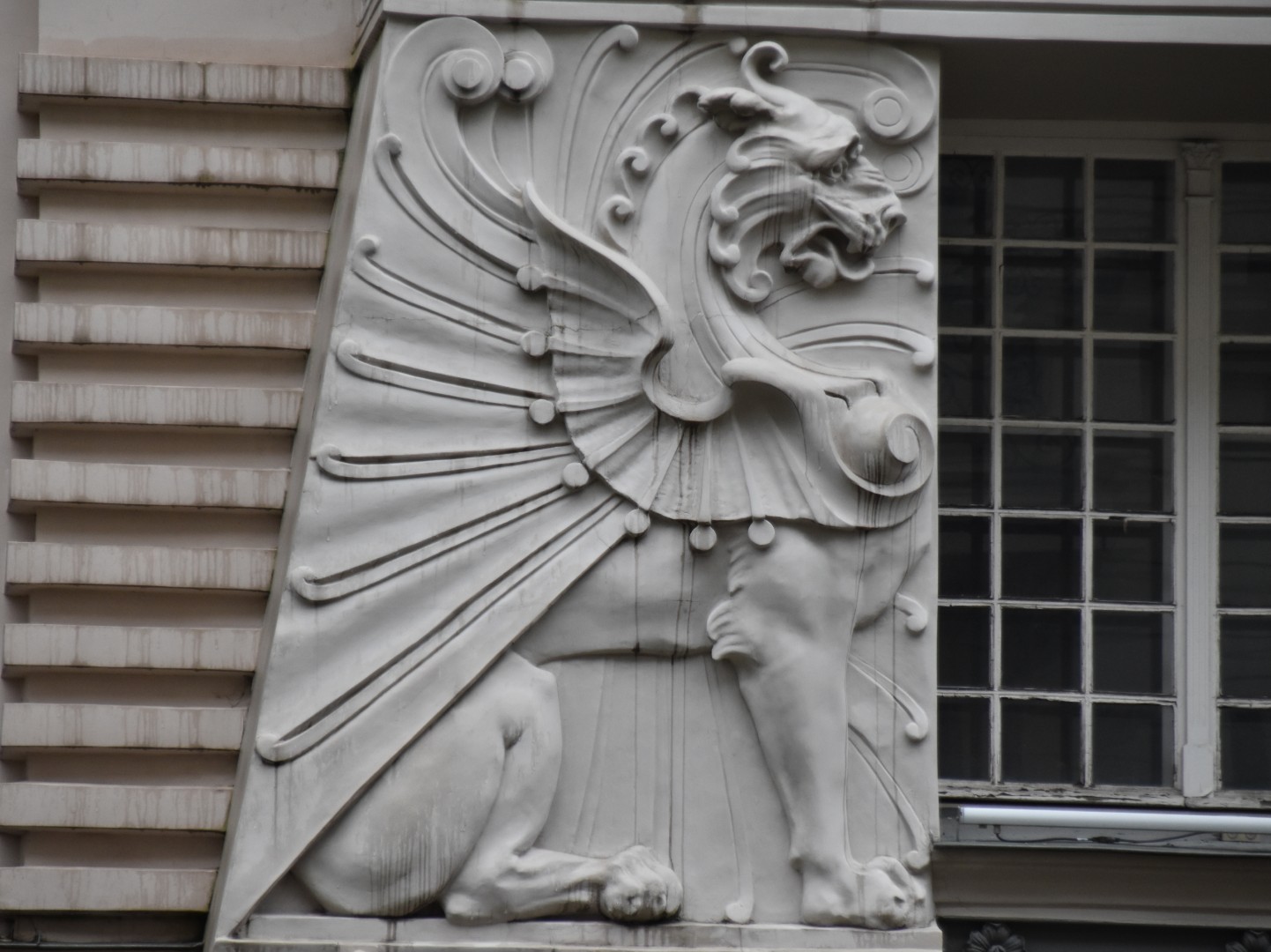
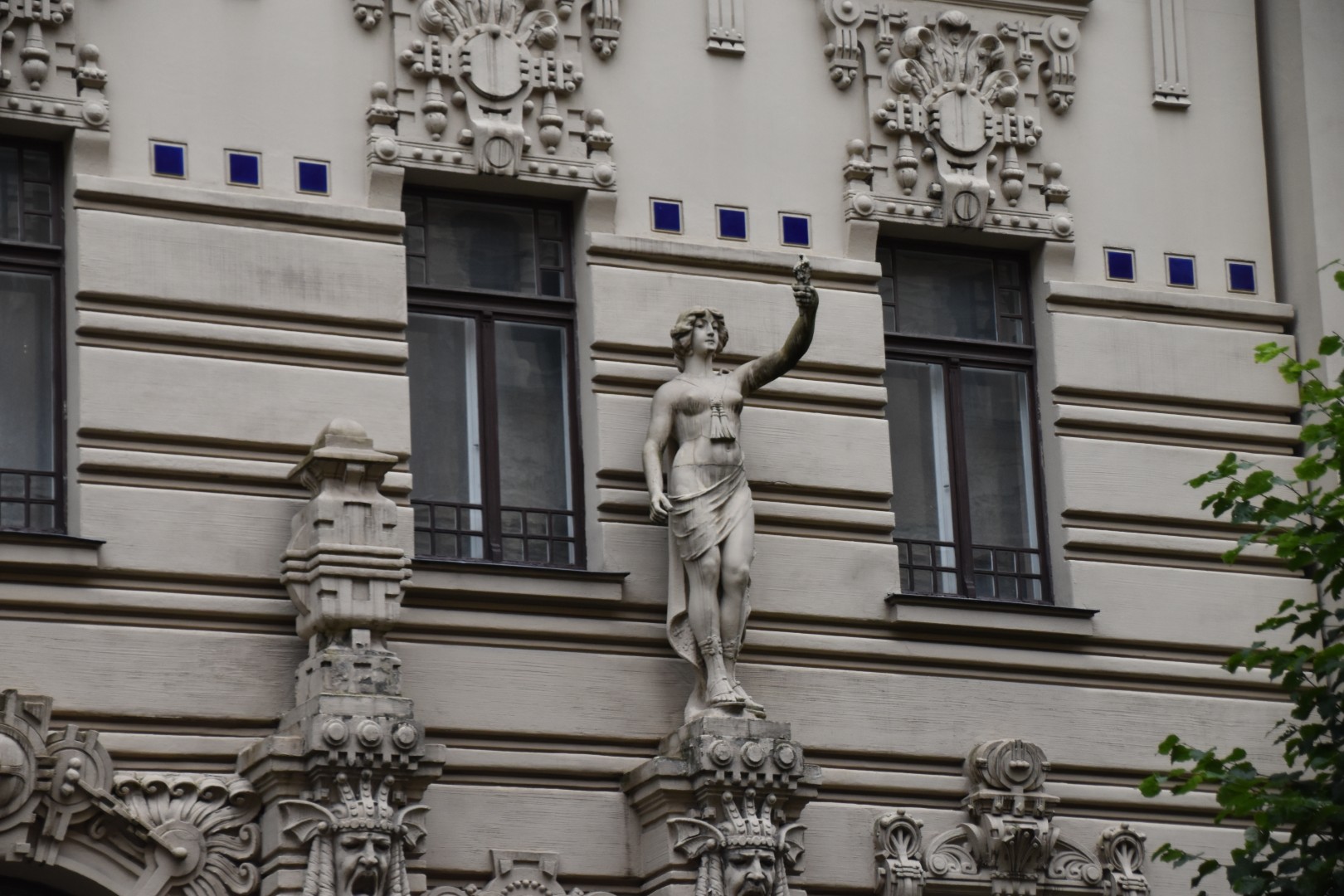
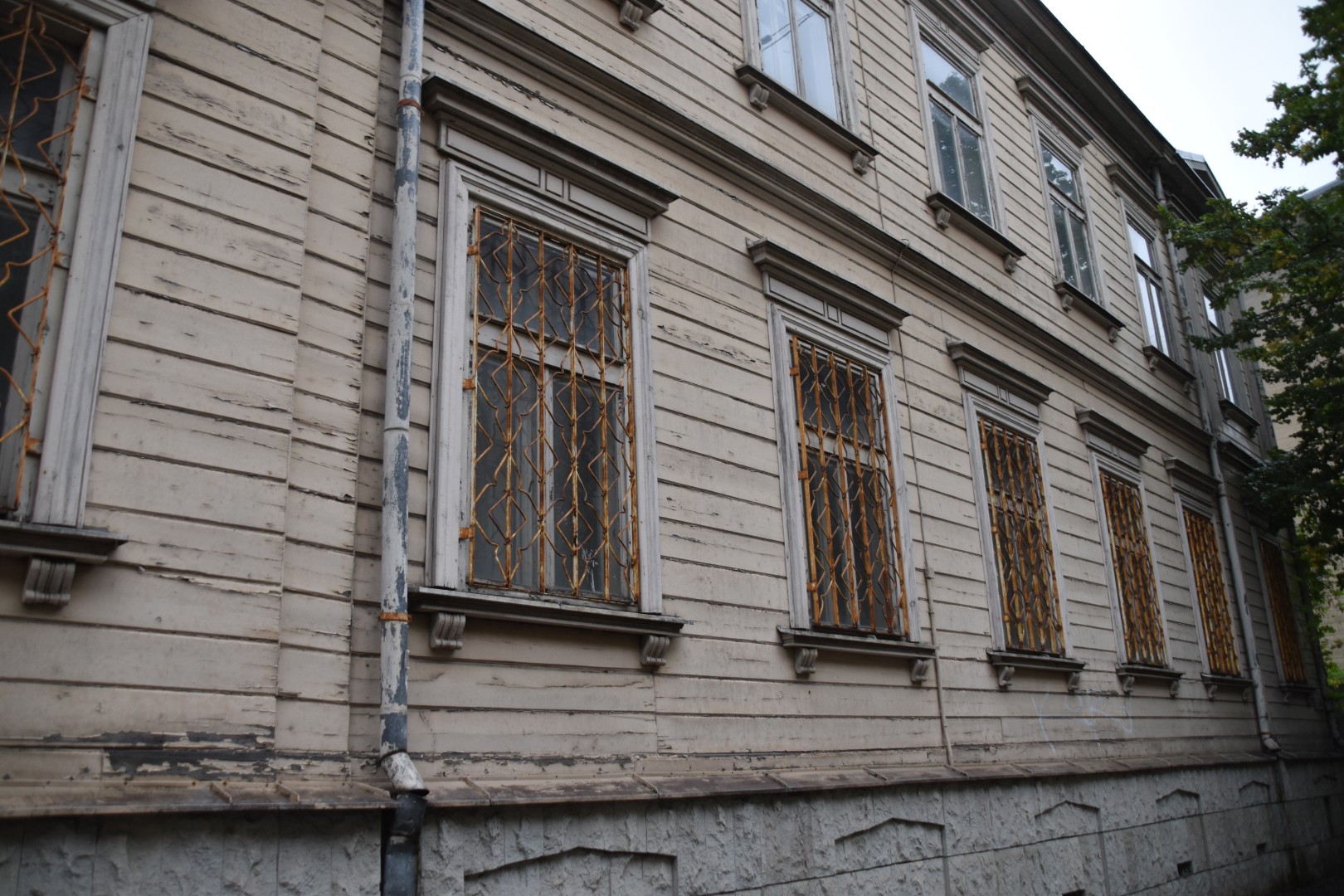
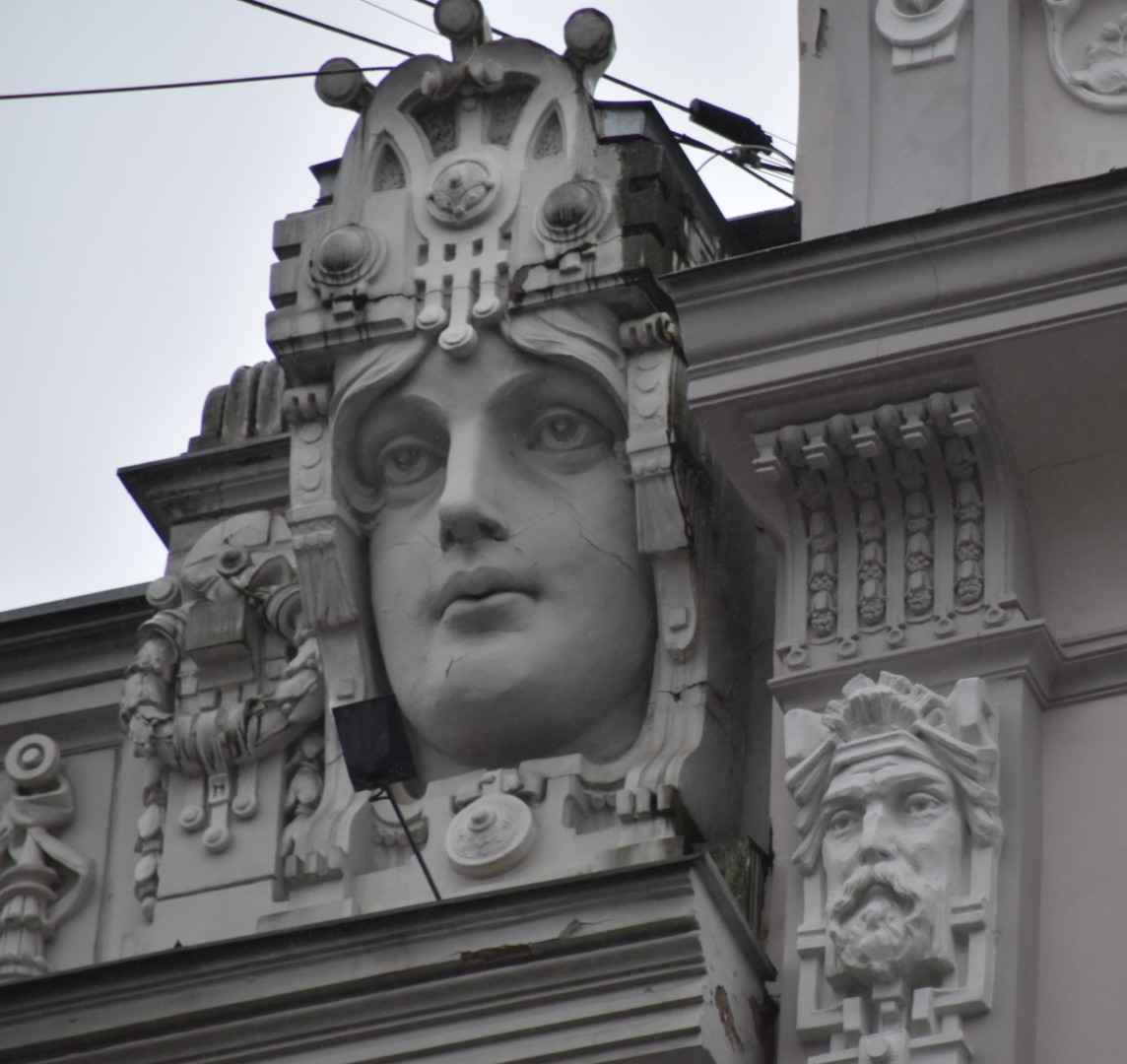
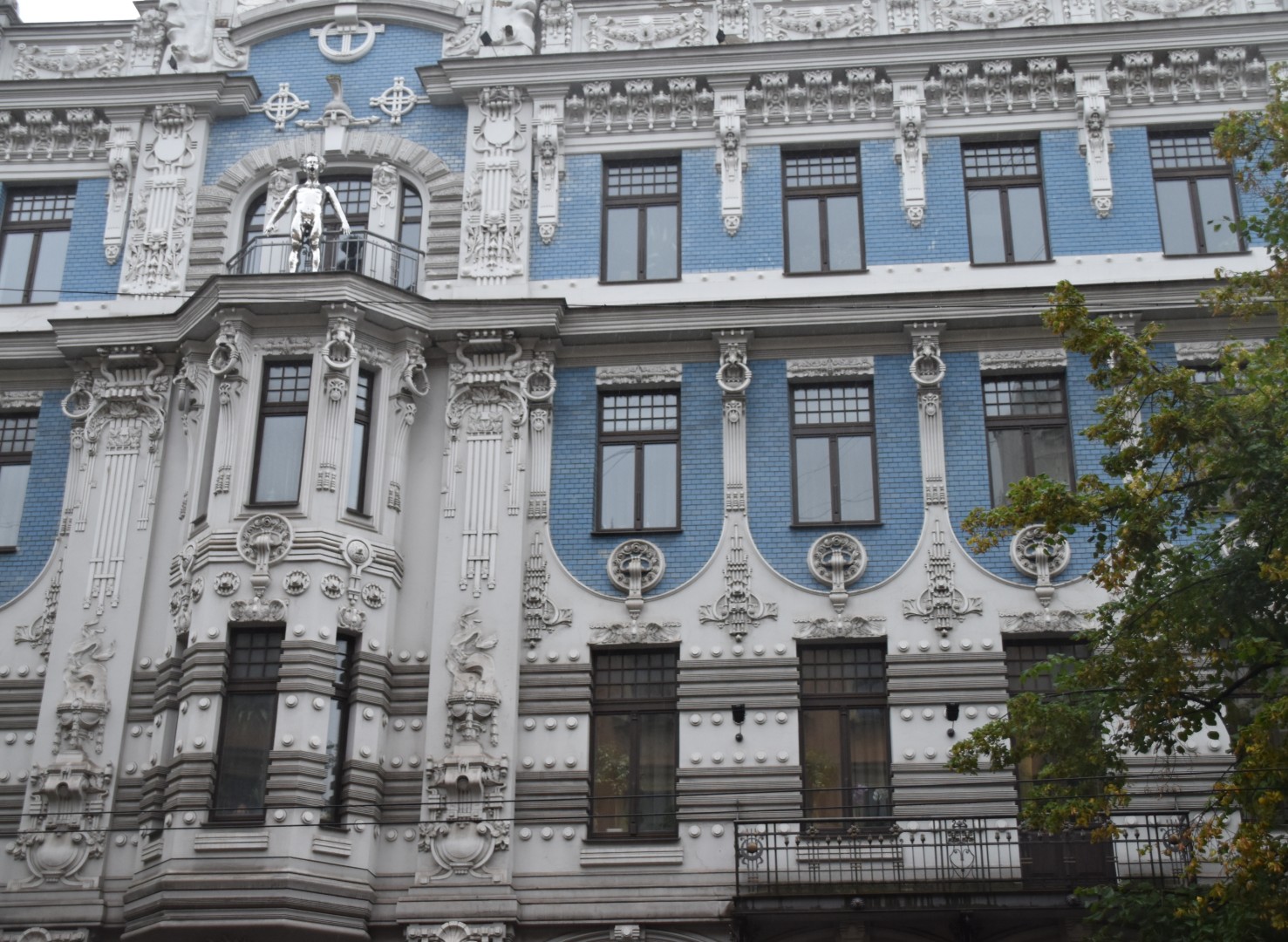
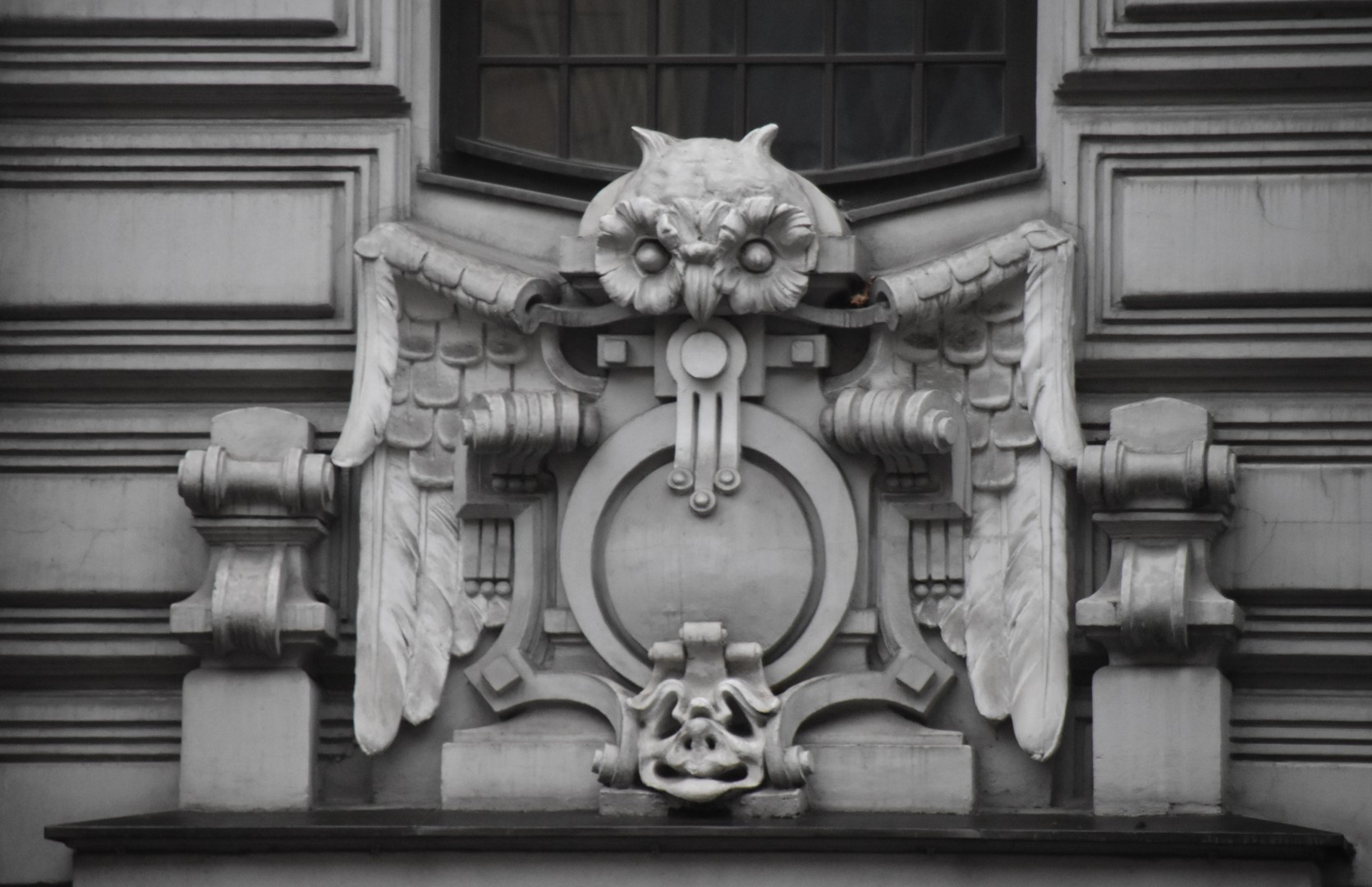
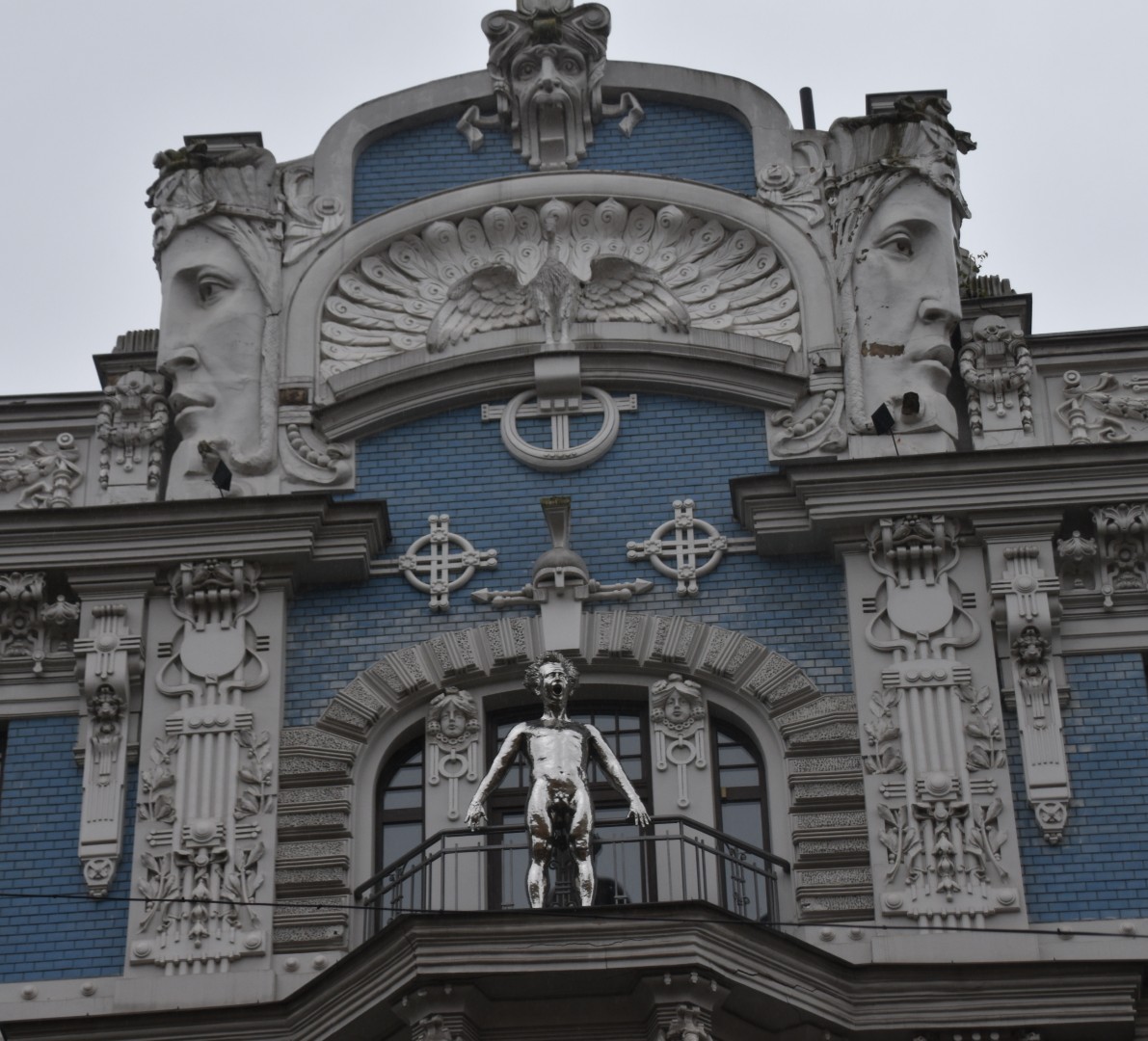
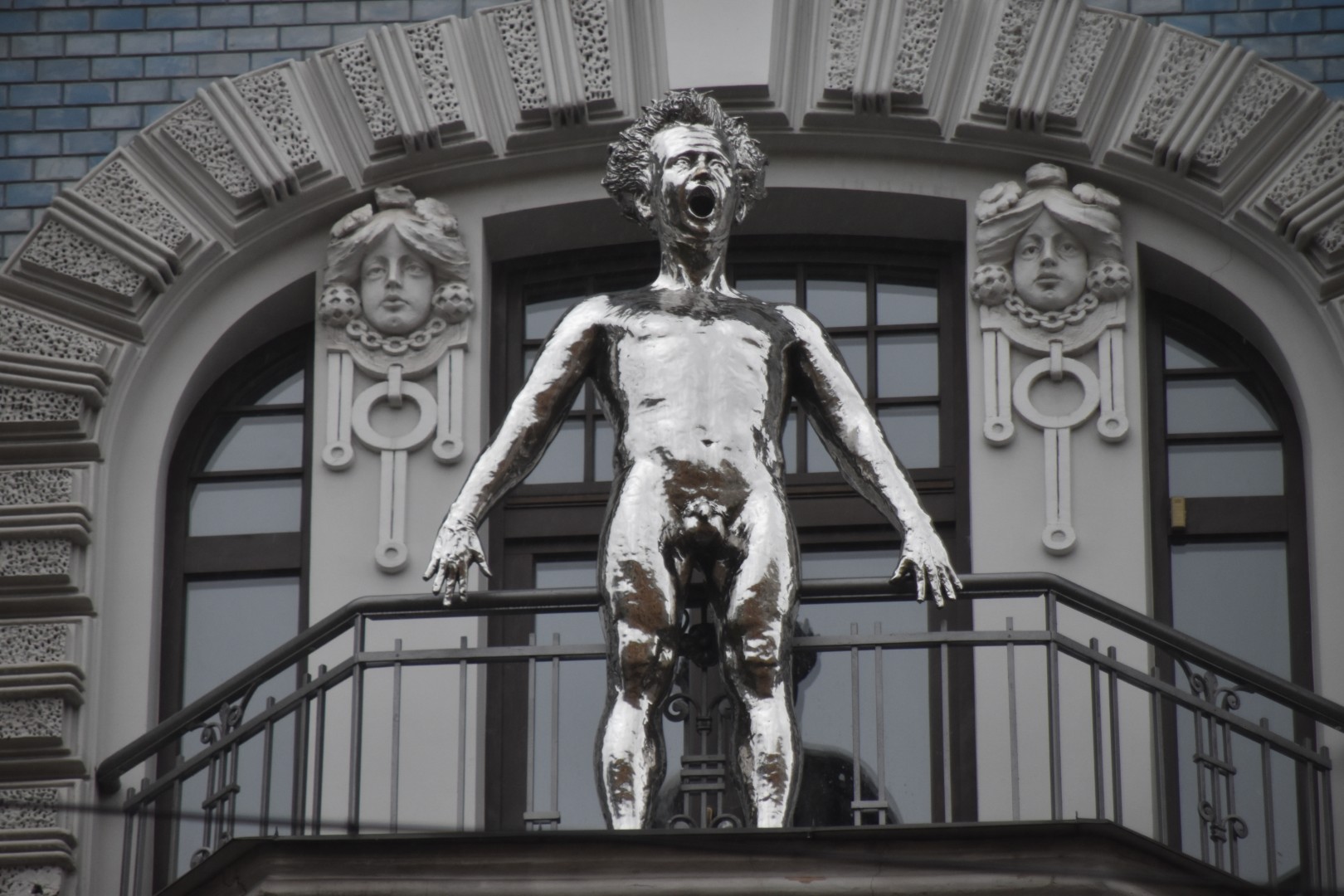
Unlike Antwerp, where the Art Nouveau is confined to a small and distinct area, in Riga it overflows, mingling with upmarket shops, and even with a few remaining traditional wooden houses. This the Embassy district. It also seems to have more than its fair share of wine shops and hair salons. Just saying …
Ian found me and graciously put up with my random wanderings for a while, as we got wetter and wetter. We had a walking tour at 12 noon, and were hoping to find somewhere dry to eat our morning muffins beforhand. The search for shelter was fruitless – how can a city where it rains and snows a lot, have nowhere for people to get out of the weather? Finally we took refuge in McDonalds, sitting at a small corner table and hoping the staff wouldn’t notice that we hadn’t ordered anything.
It was time to head to our meeting point in the Old Town. This turned out to be a complete maze, our only clues being the differently shaped spires of the churches peeking over the rooftops. The one we needed was the pointy one, not the round one. I have not come across an Old Town which hides itself so well.
We managed to find our guide, Ricard, and our group. This was an “alternative” walking tour, covering 20th century history. As in so much of Europe, this was a very tragic time for the people of Latvia. It was occupied by the Russians, then the Nazis, then the Russians again, before finally gaining independence in 1991. It was also the story of Ilze’s family, so was particularly meaningful for us.
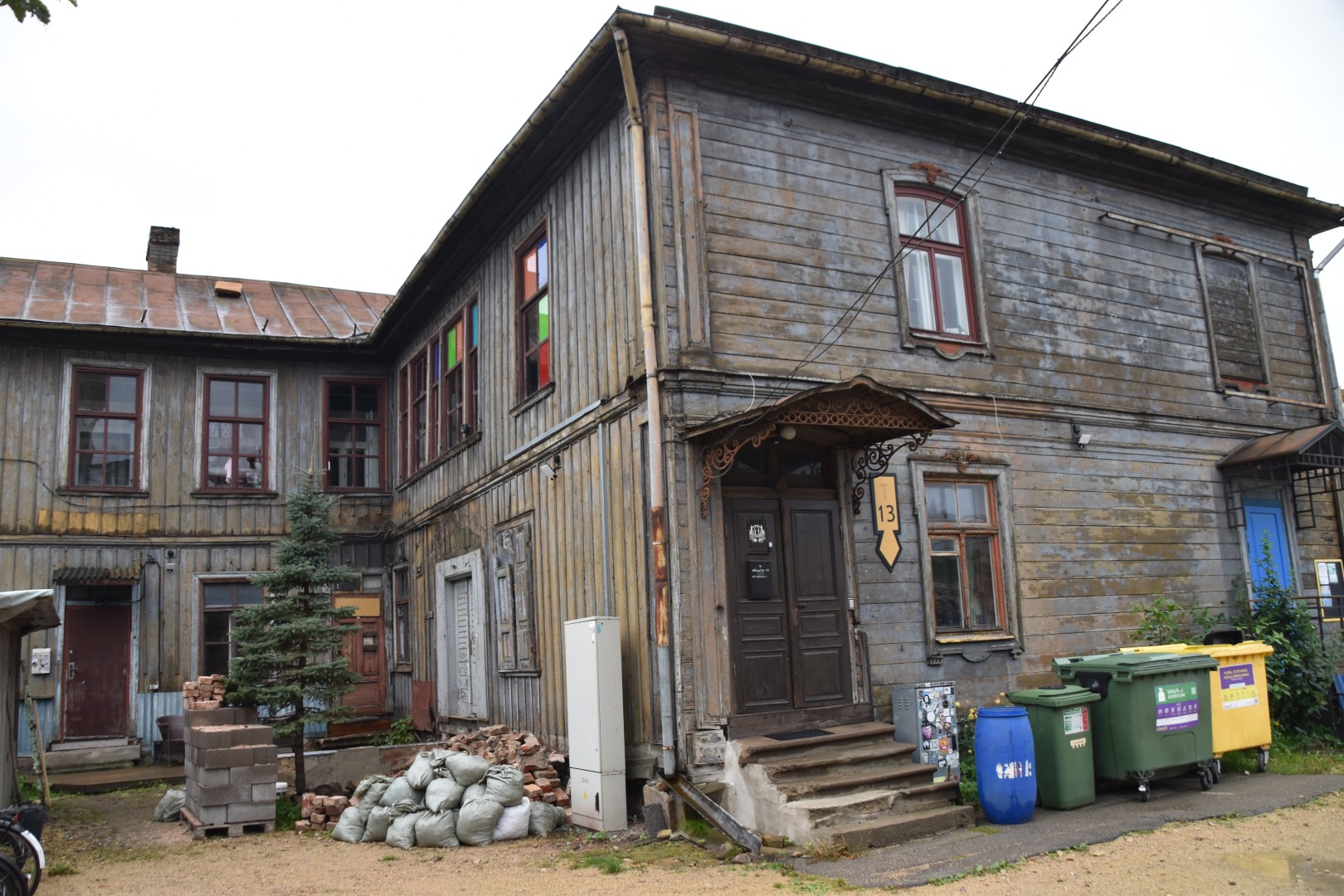
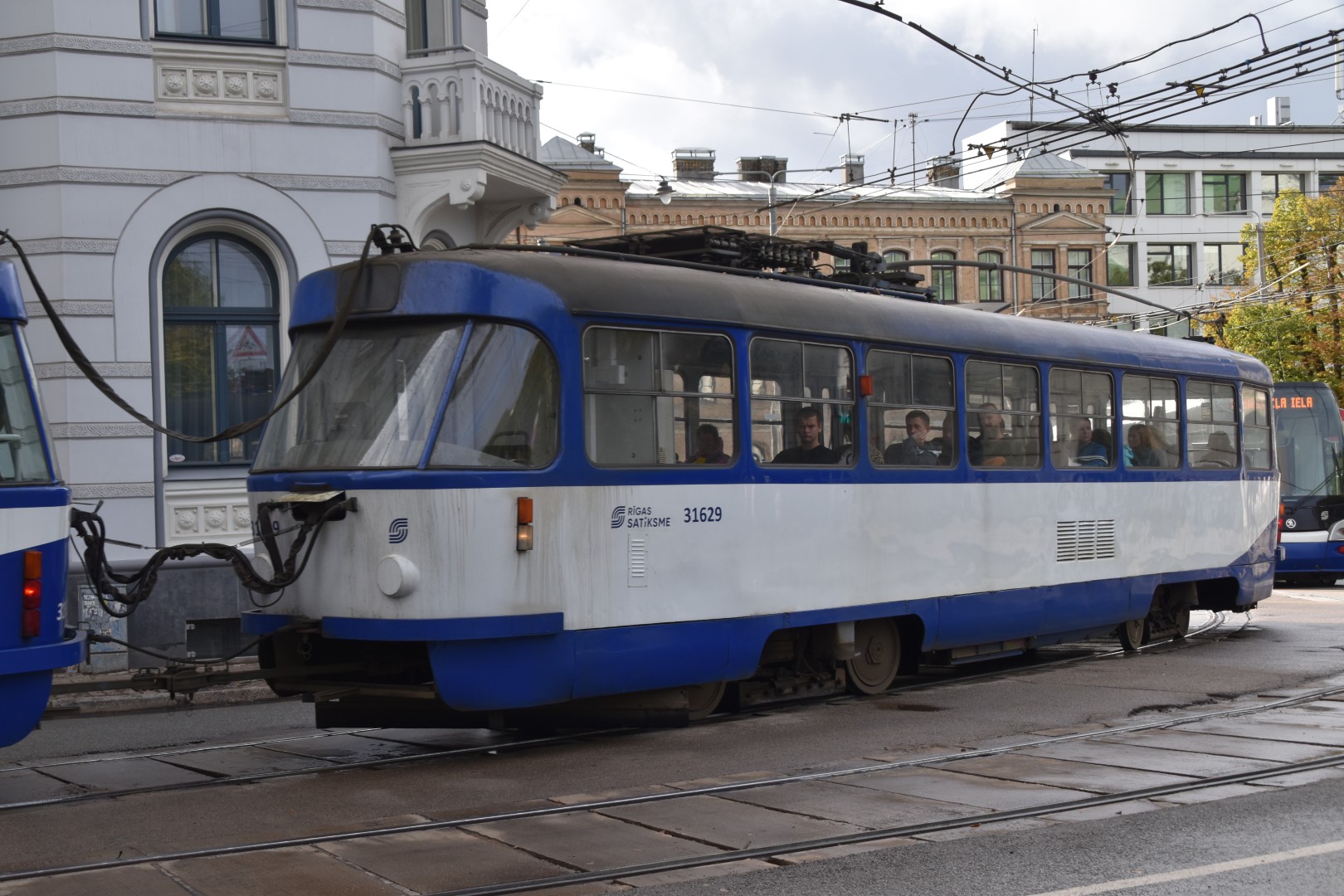
Our guide took us to places that tourists don’t venture to, and told us about the marginalised communities that existed, and still do, in Riga. He explained about the economic transition that Latvia is going through, and about the stark contrast between the wealth of the Art Nouveau district, the ongoing gentrification of the warehouse district, where many startups have established themselves, and the areas south of the Central Market. We saw an example in Lastadija, which is very poor, but spaces have been established for arts hubs, conservation projects, and community gardens. If you take Tram 7, you can see all of this in a single ride.
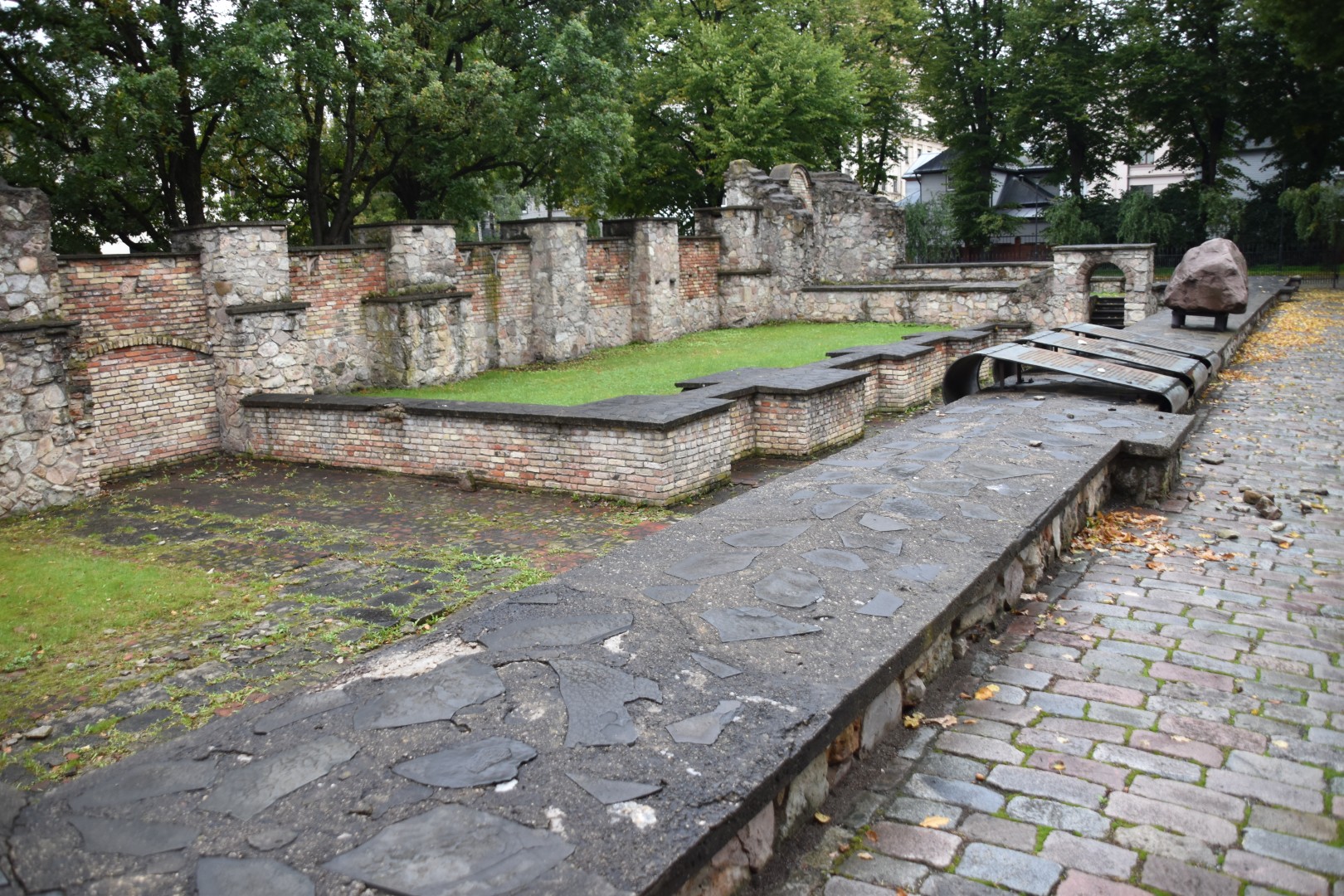
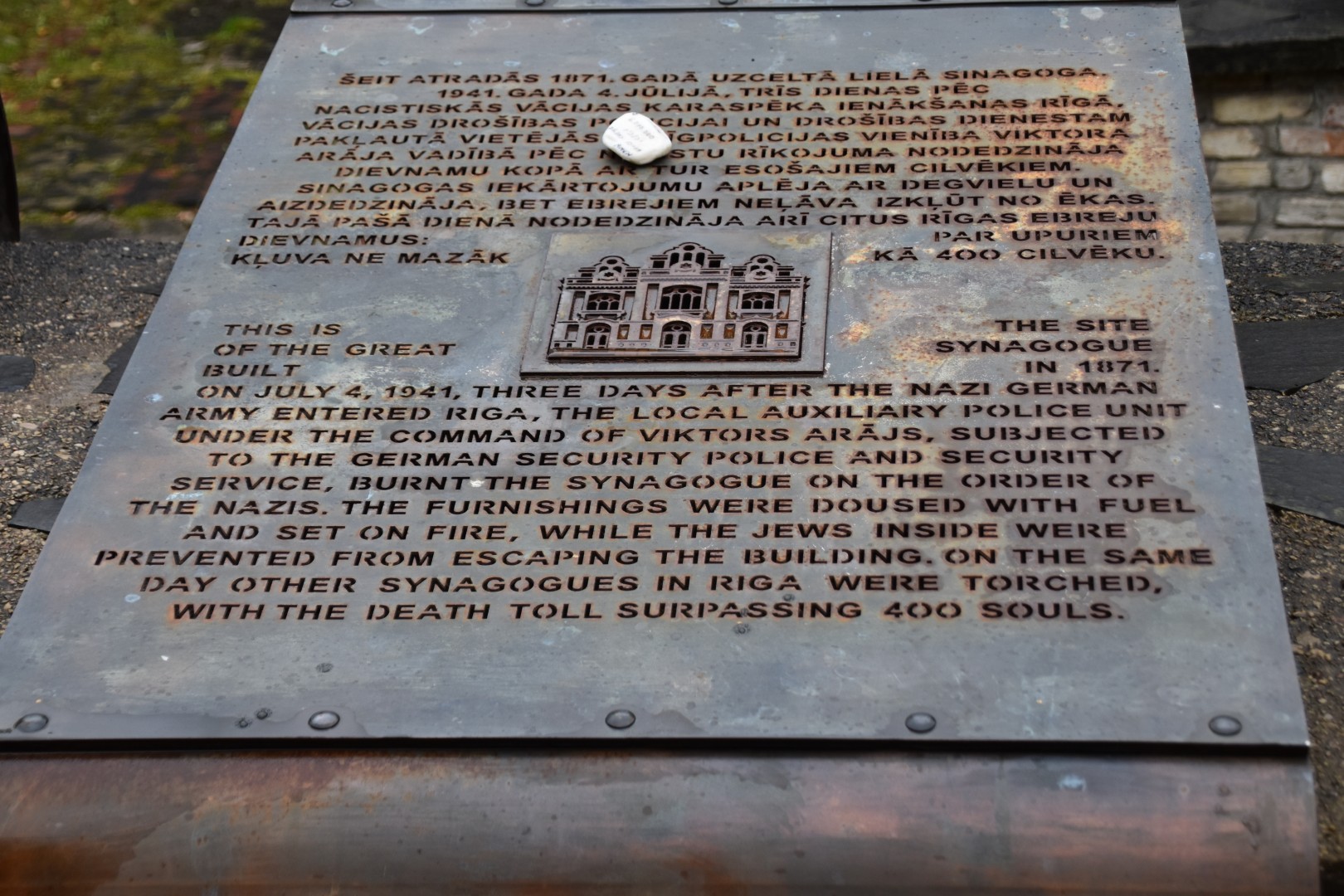
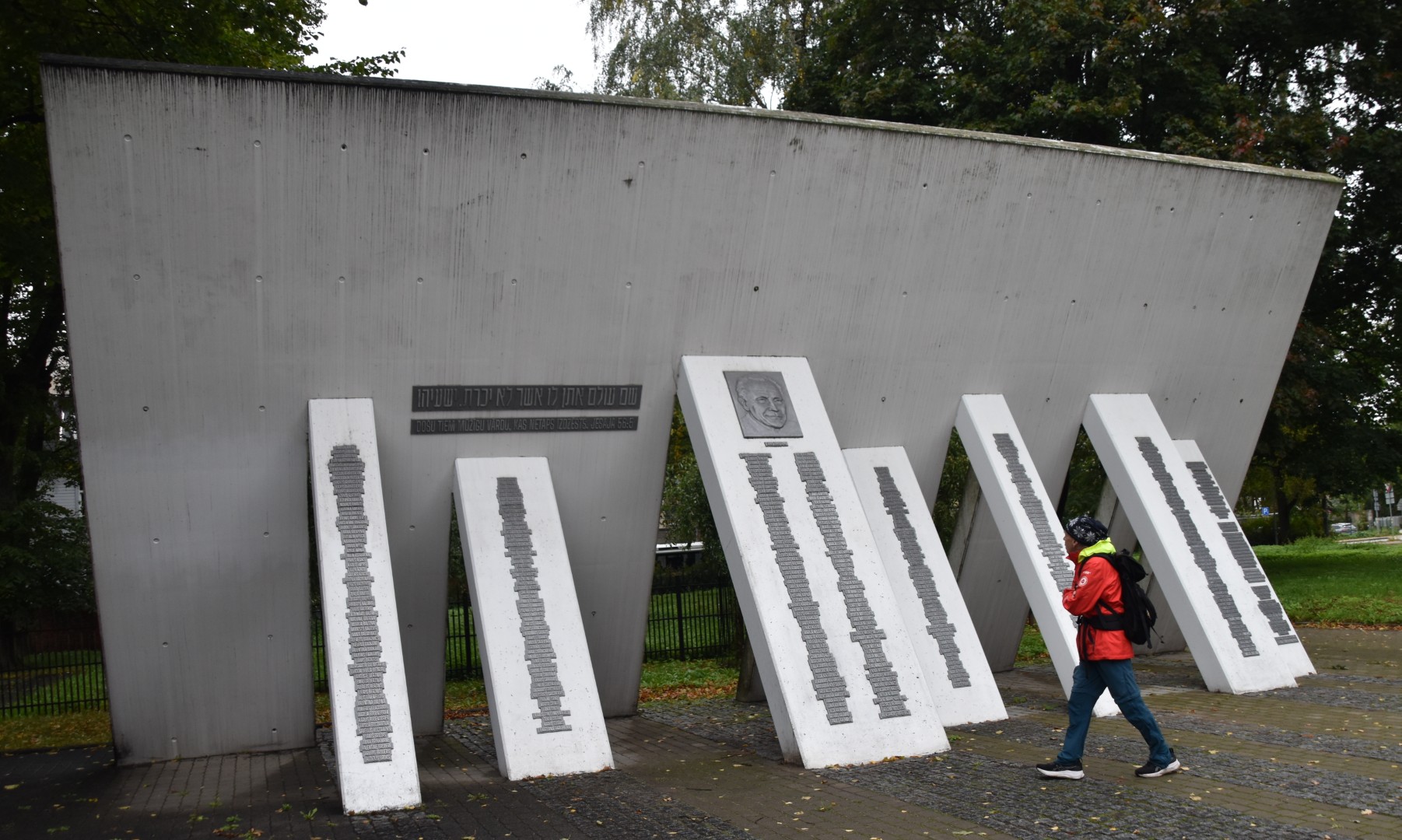
The saddest part was the former ghetto, which the Nazis forced Latvia’s Jewish community into. We saw a memorial on the site of a synagogue, where the doors were locked and the building, and everyone inside, was burned to the ground. Thousands of Jews were rounded up, marched into the forest outside Riga, and executed. Very few Jews survived the Nazi occupation.
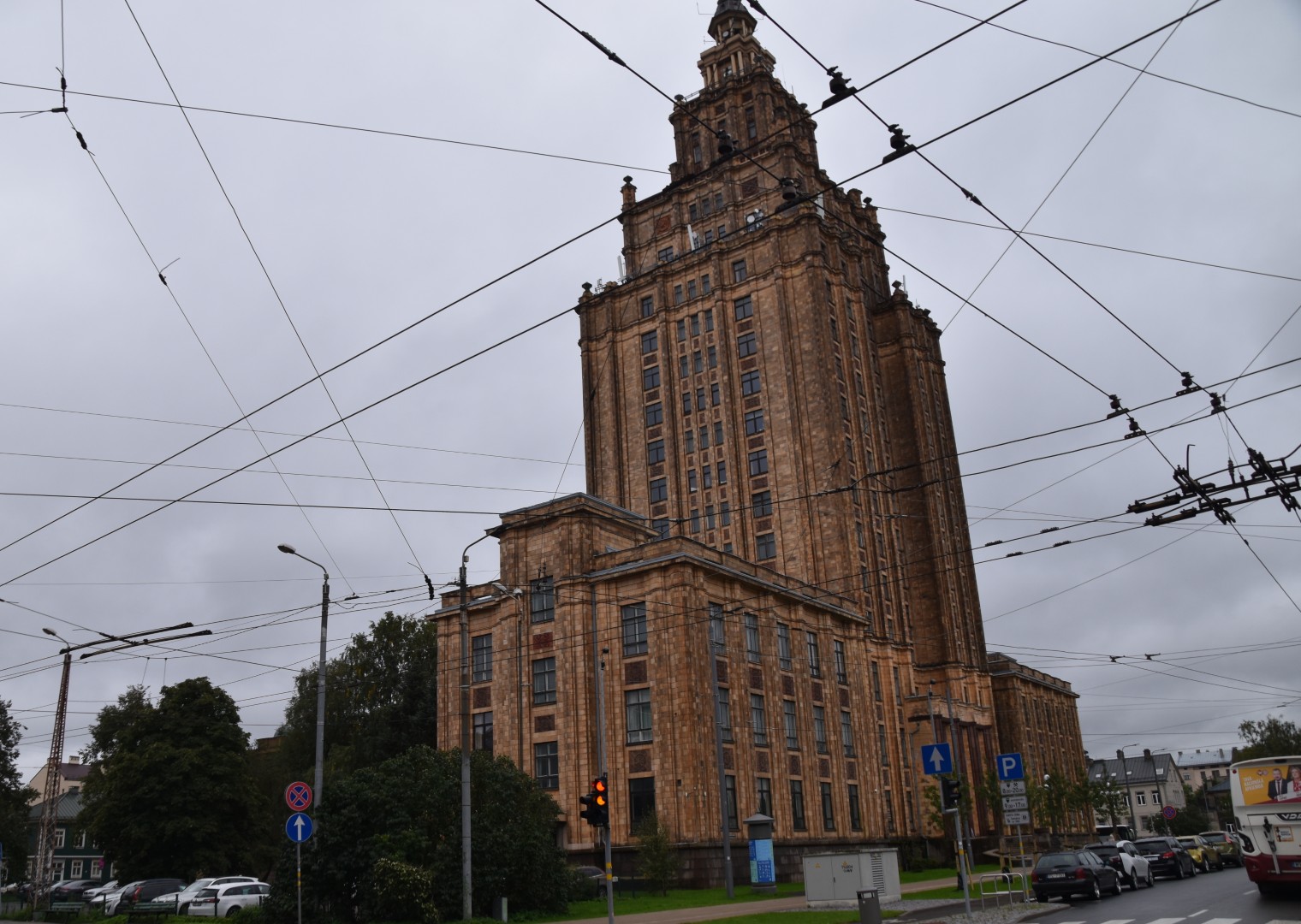
We visited the brutalist brick tower which dominates the skyline of southern Riga. Today it is officially the Academy of Science, but everyone calls it the Soviet Tower. It was Stalin’s brainchild. He wanted to tear down St Peter’s Church in the Old Town and build this self-aggrandising monument in its place; engineers pointed out that Riga is largely on a swamp, and his grand plan would have sunk into the mire. We heard about the Latvian families who were forced off their farms, as the Russians enforced their system of collective farming. Not only did this displace so many Latvians, leaving them homeless, but the income produced mostly went back to St Petersburg.
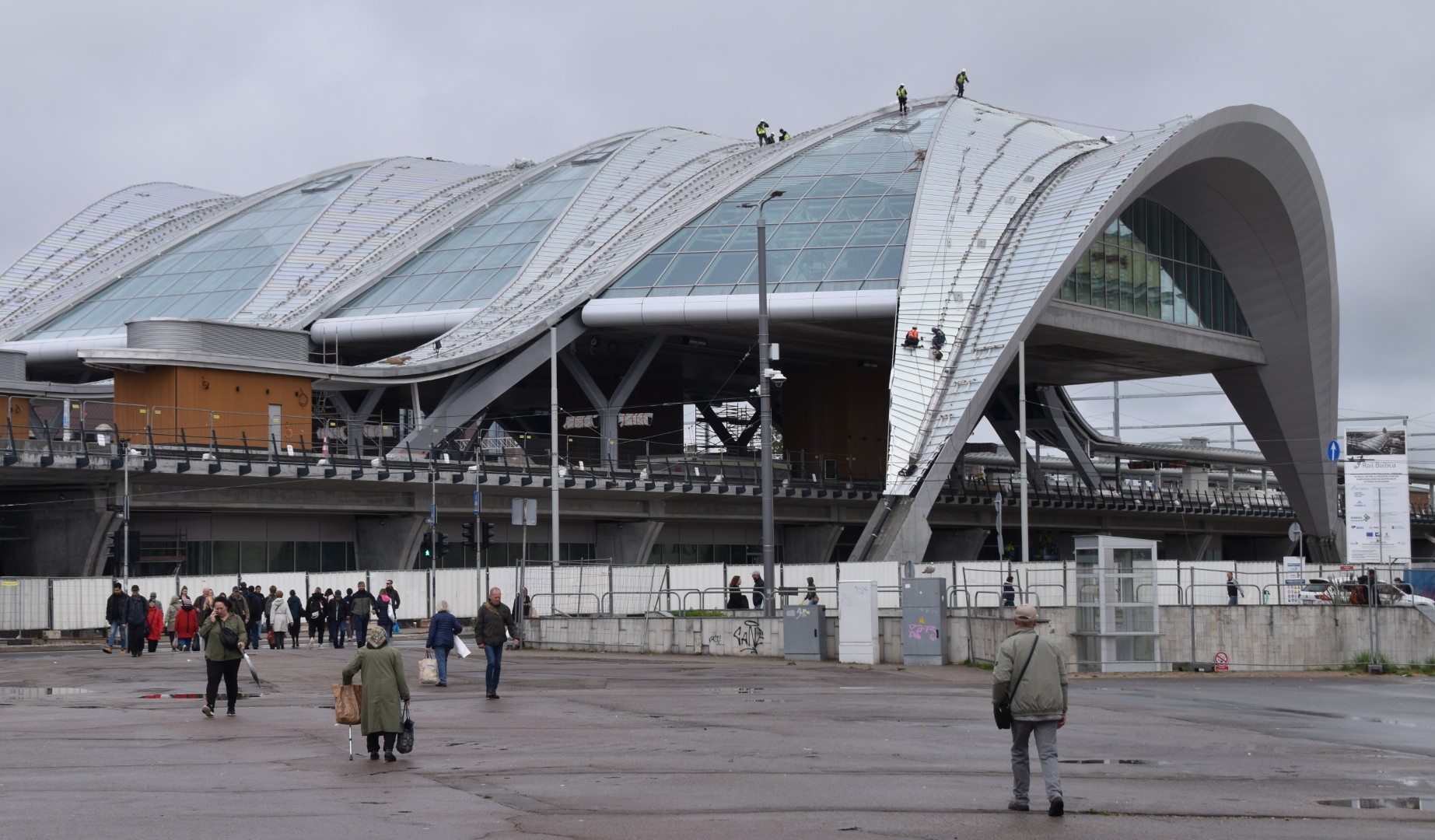
The swampiness explains why Riga has no underground rail system. It has cute trolleybuses and some modern trams. It also has a brand new international railway station – but there are no tracks yet, so the multi-billion dollar building is unusable for the time being. Eventually, the Baltica Rail project will link Helsinki with Poland via Tallin, Riga and Vilnius, thus bypassing Kaliningrad and connecting the Baltic states with central Europe – but the project is years overdue and billions of dollars over budget, so don’t go booking tickets just yet.
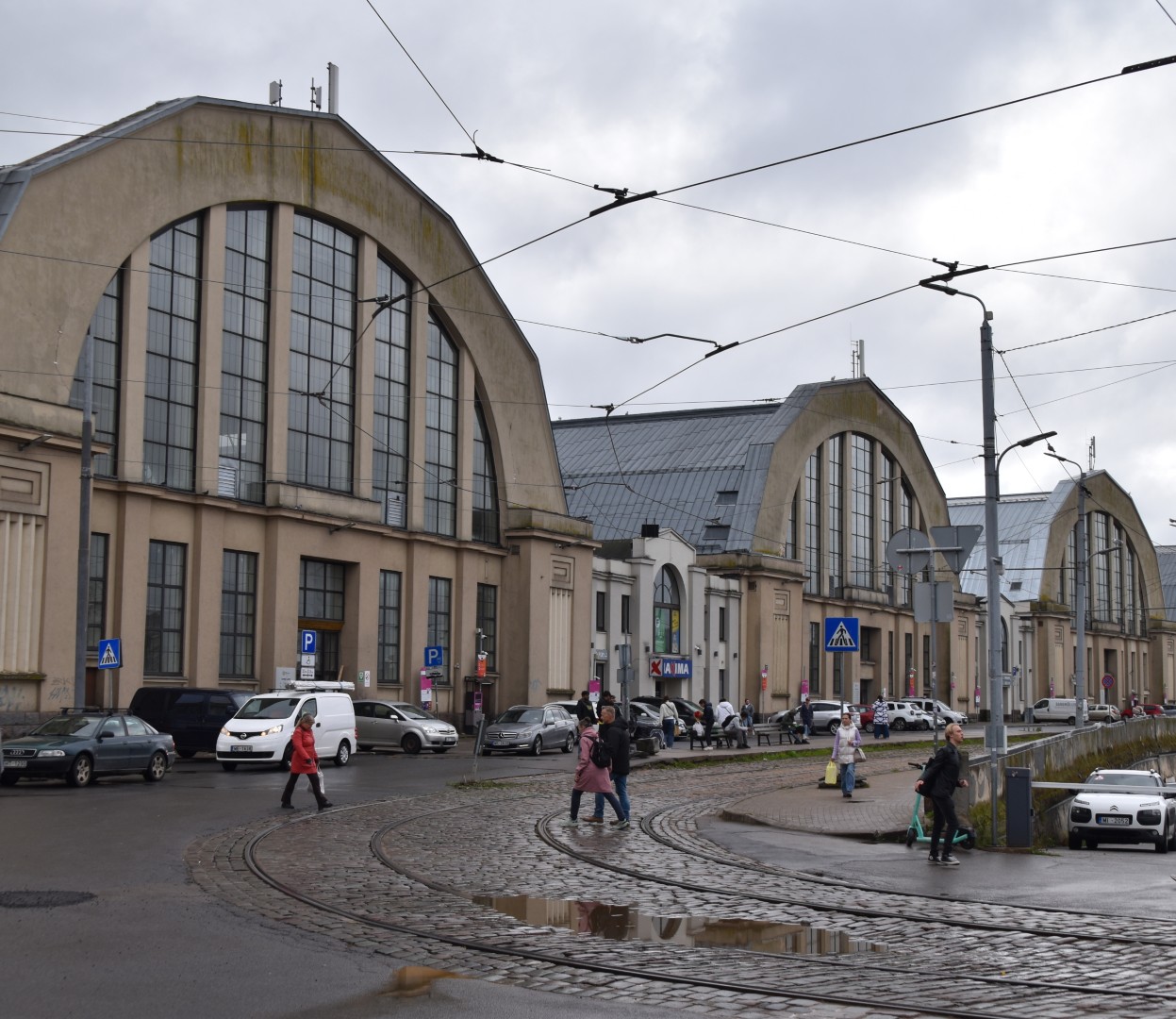
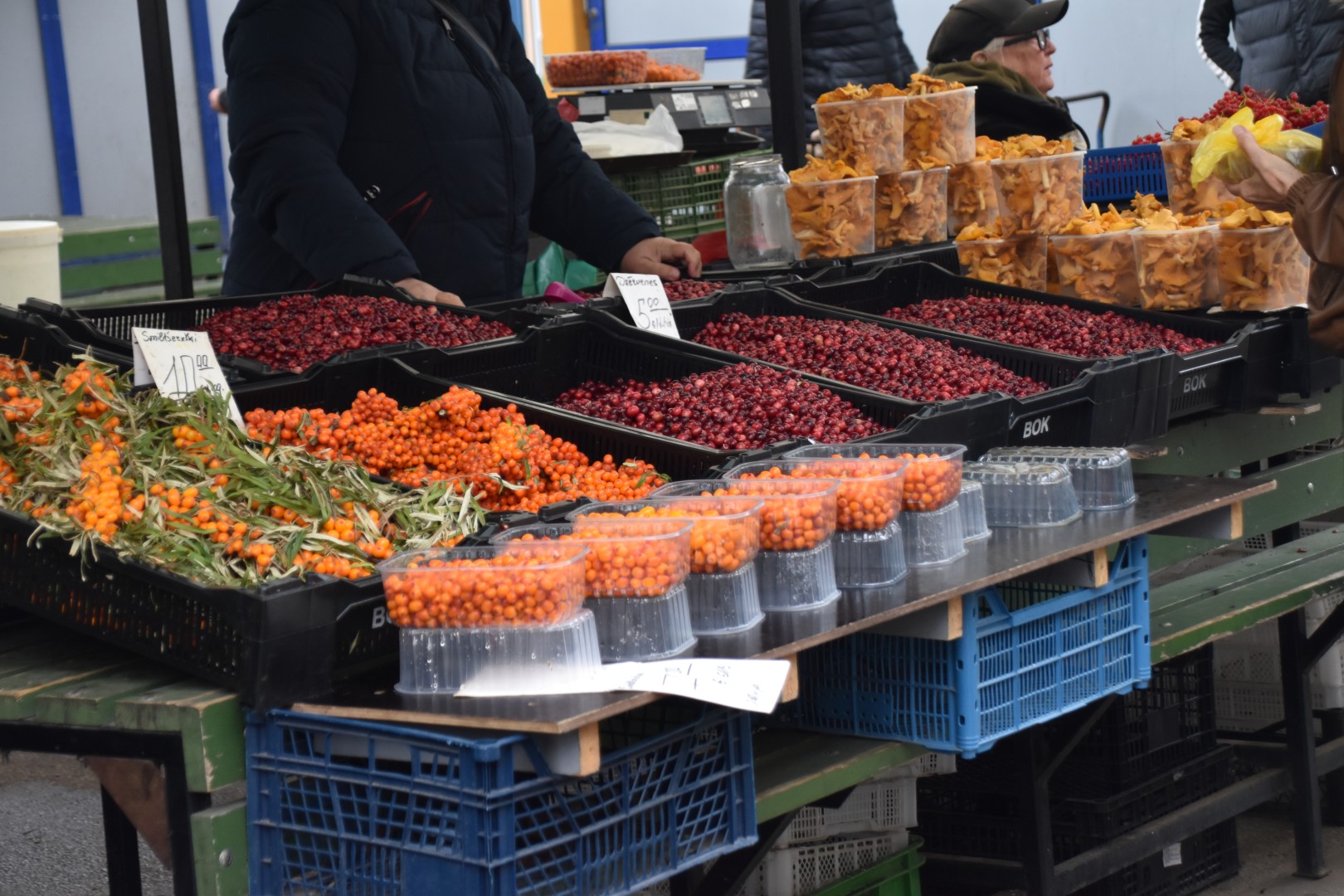
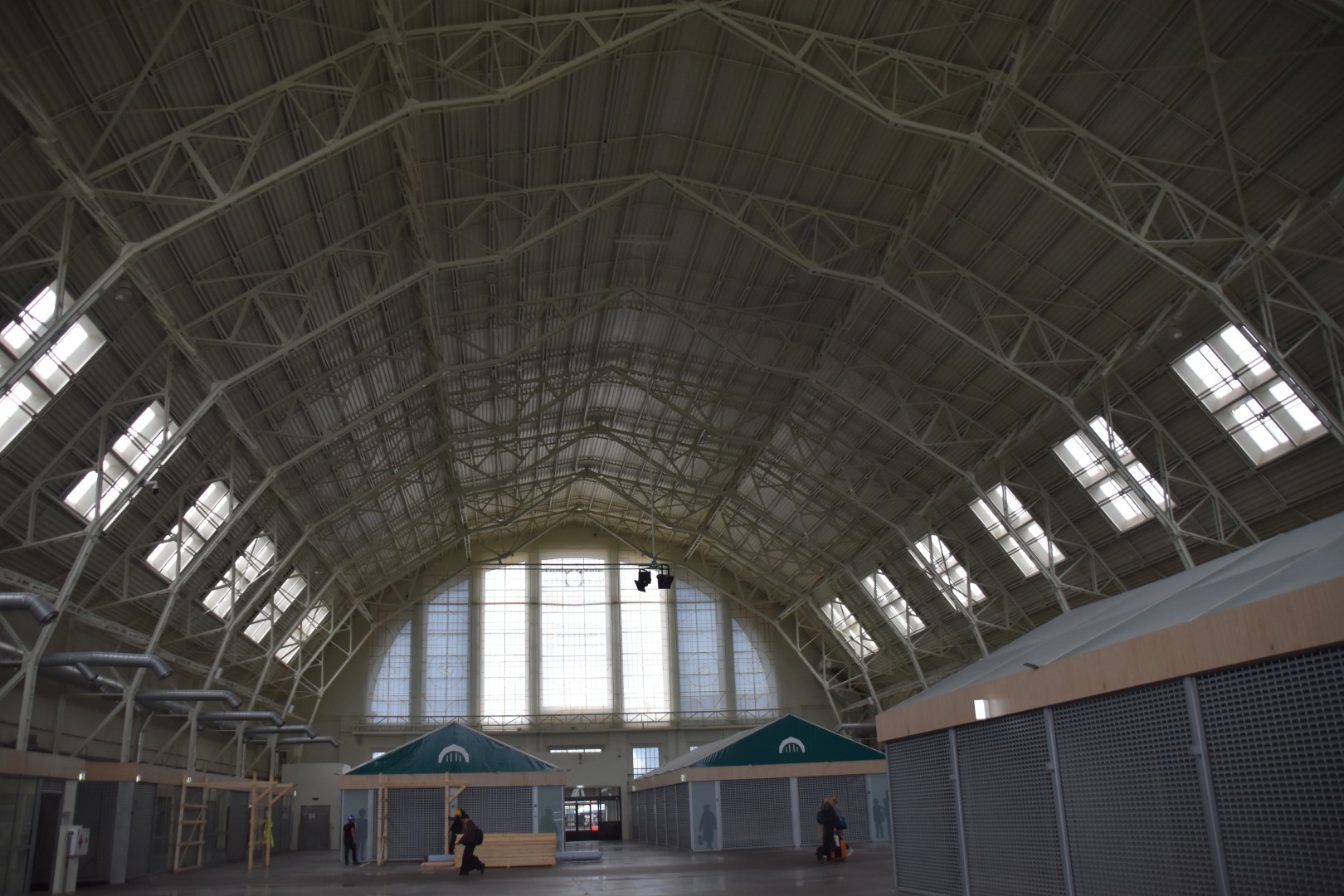
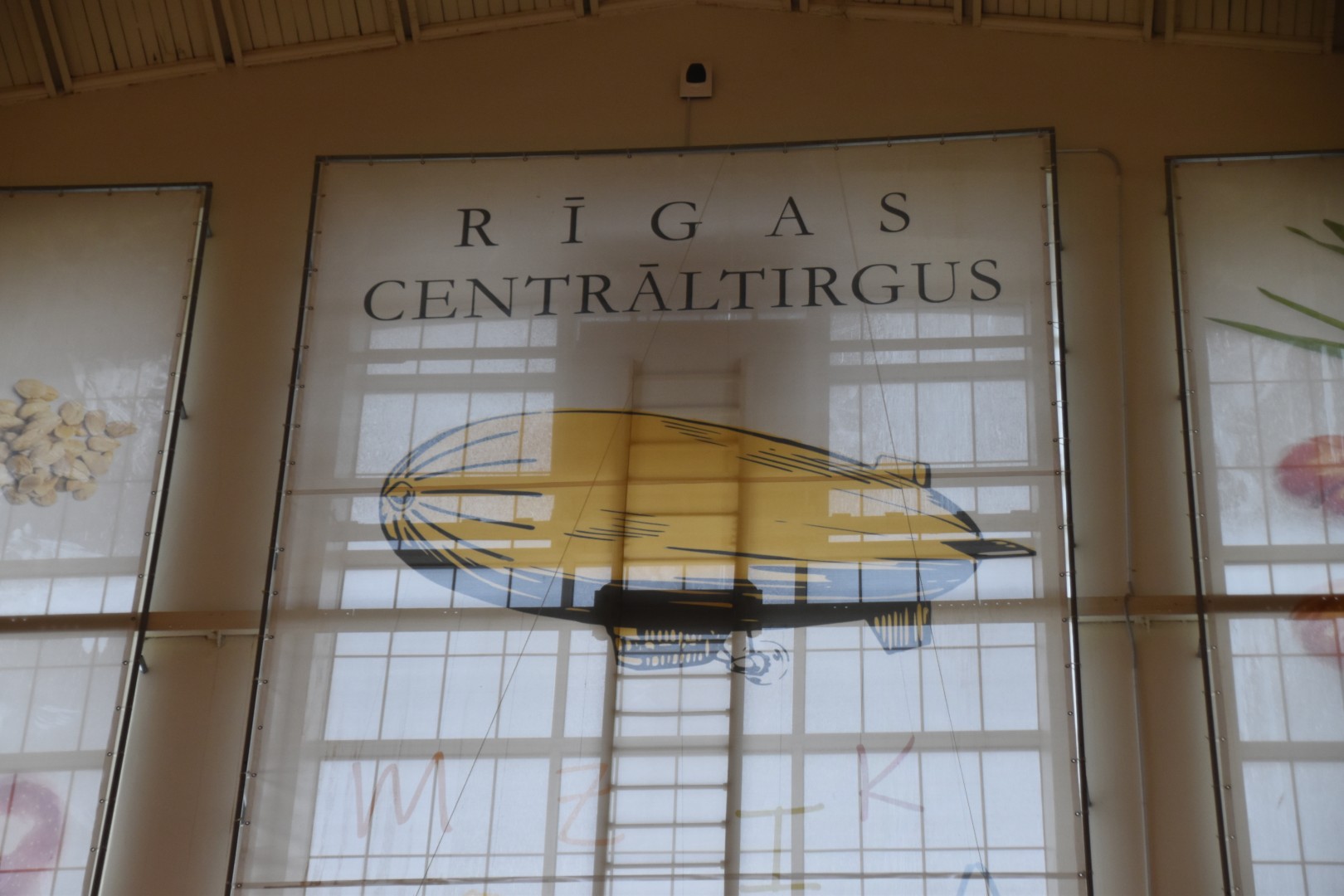
Our final stop on the walk was the Central Market. This is housed in five enormous pavilions which were once hangars for German zeppelins. Most Rigans do their everyday shopping here; there are lots of outdoor stalls as well as those inside. Like markets everywhere, it is noisy, colourful, and full of enticing smells.
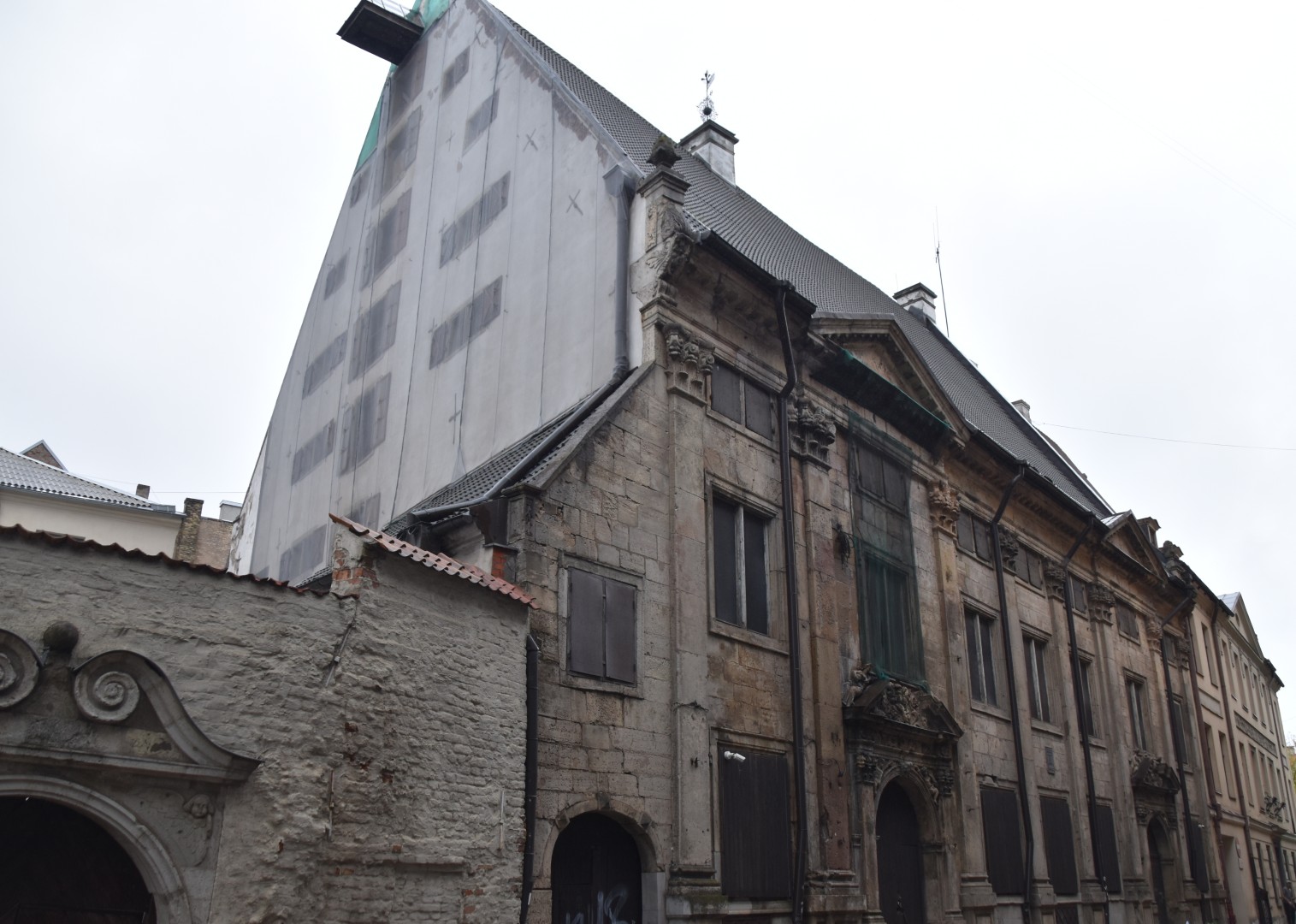
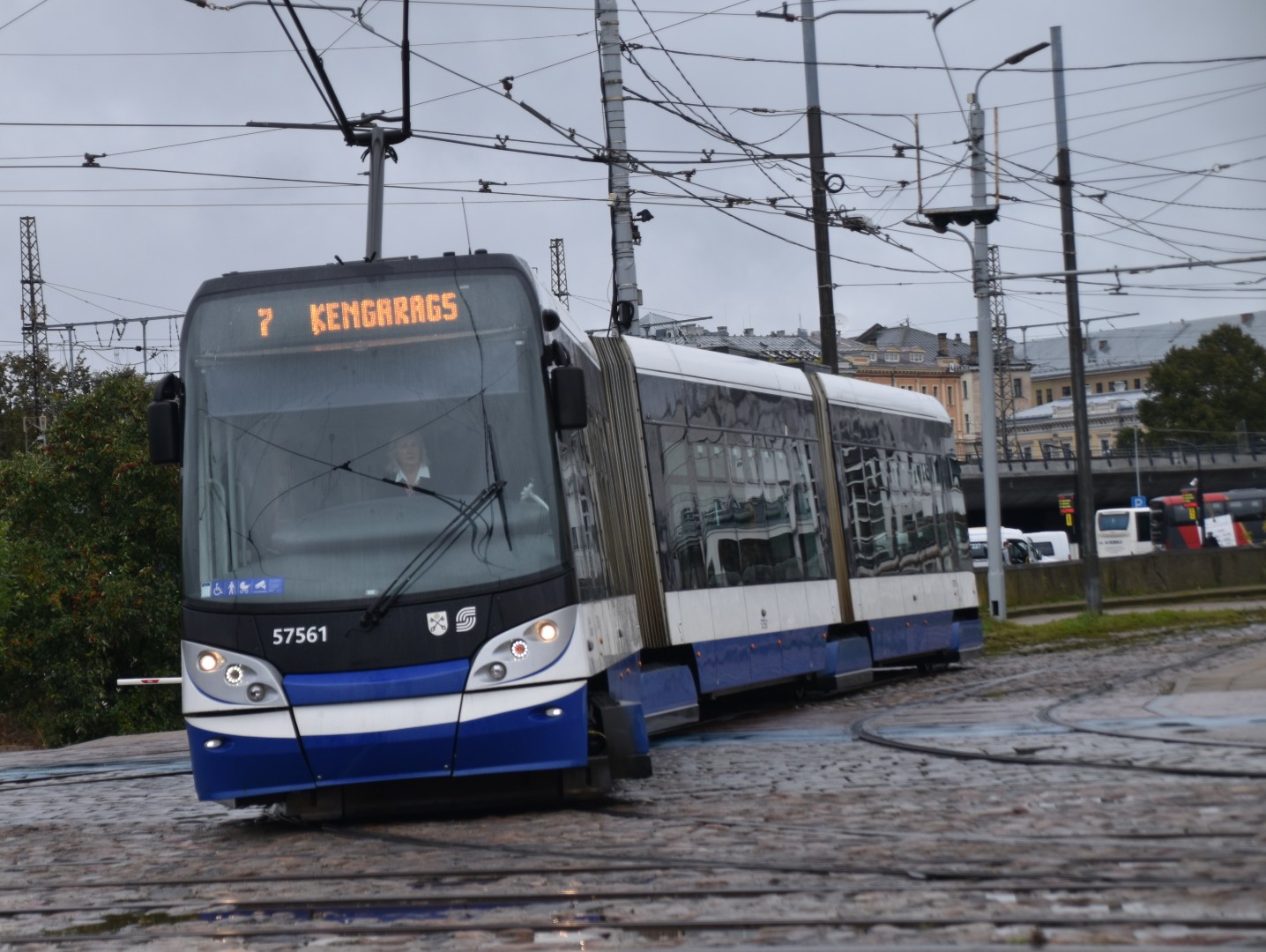
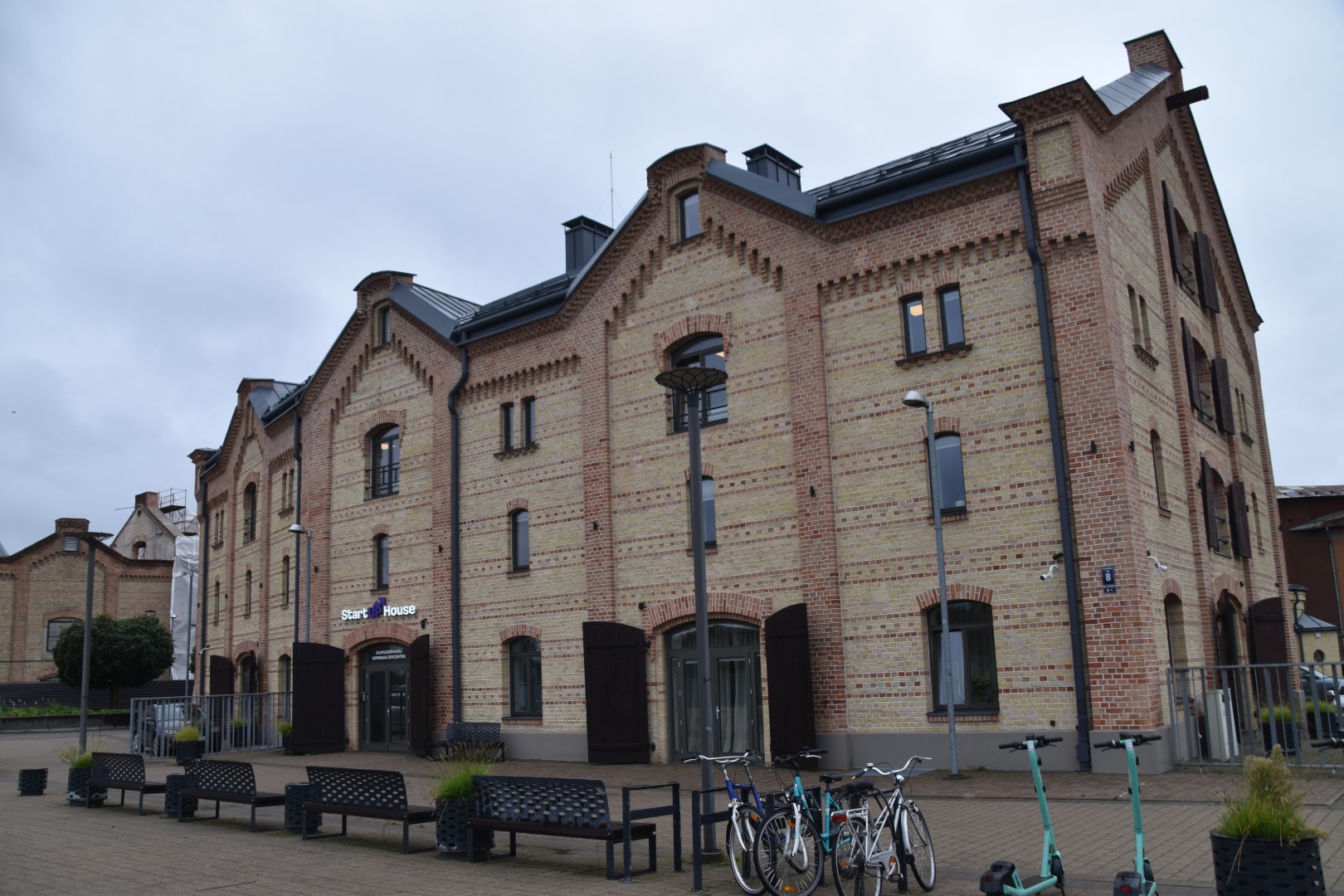
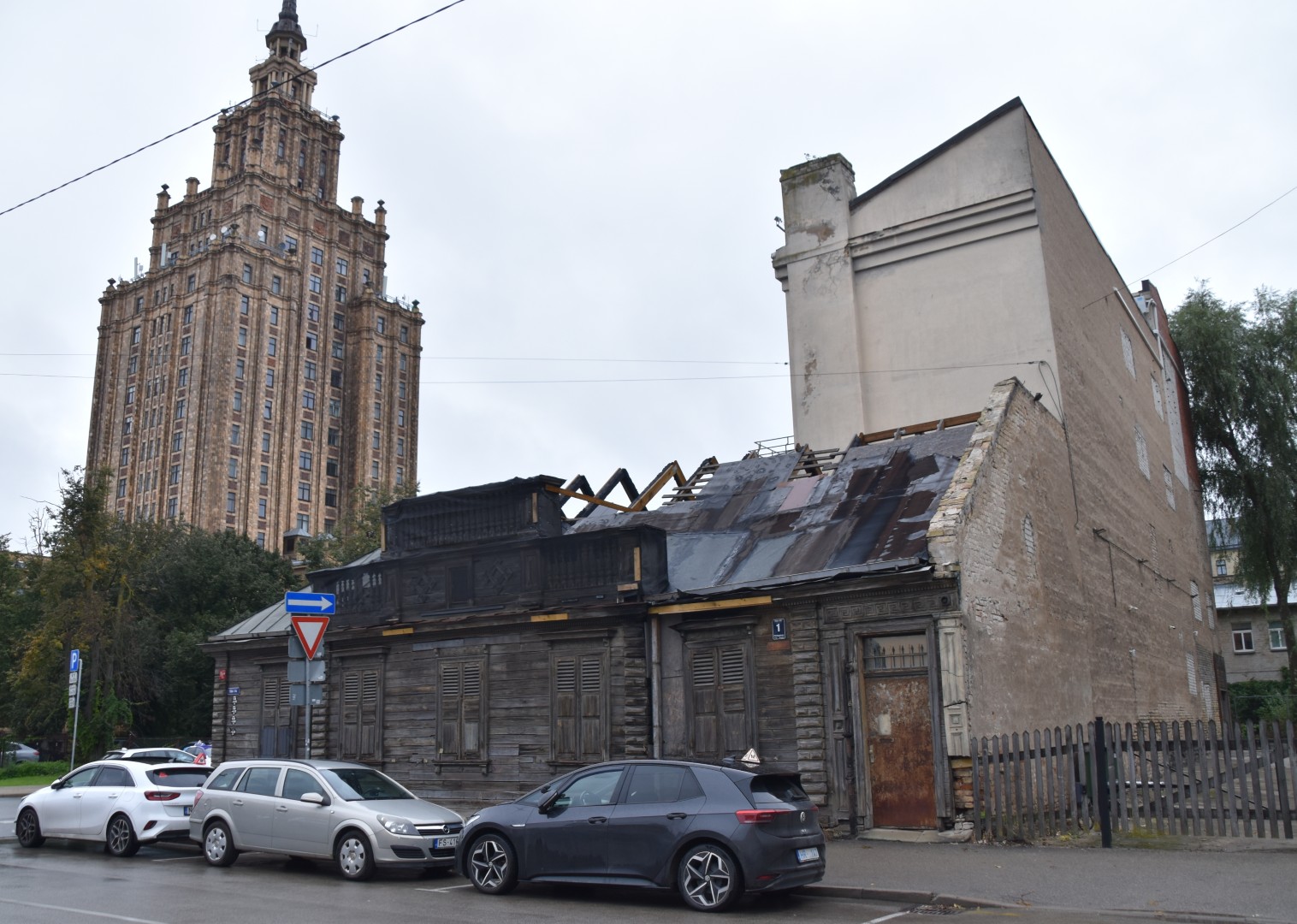
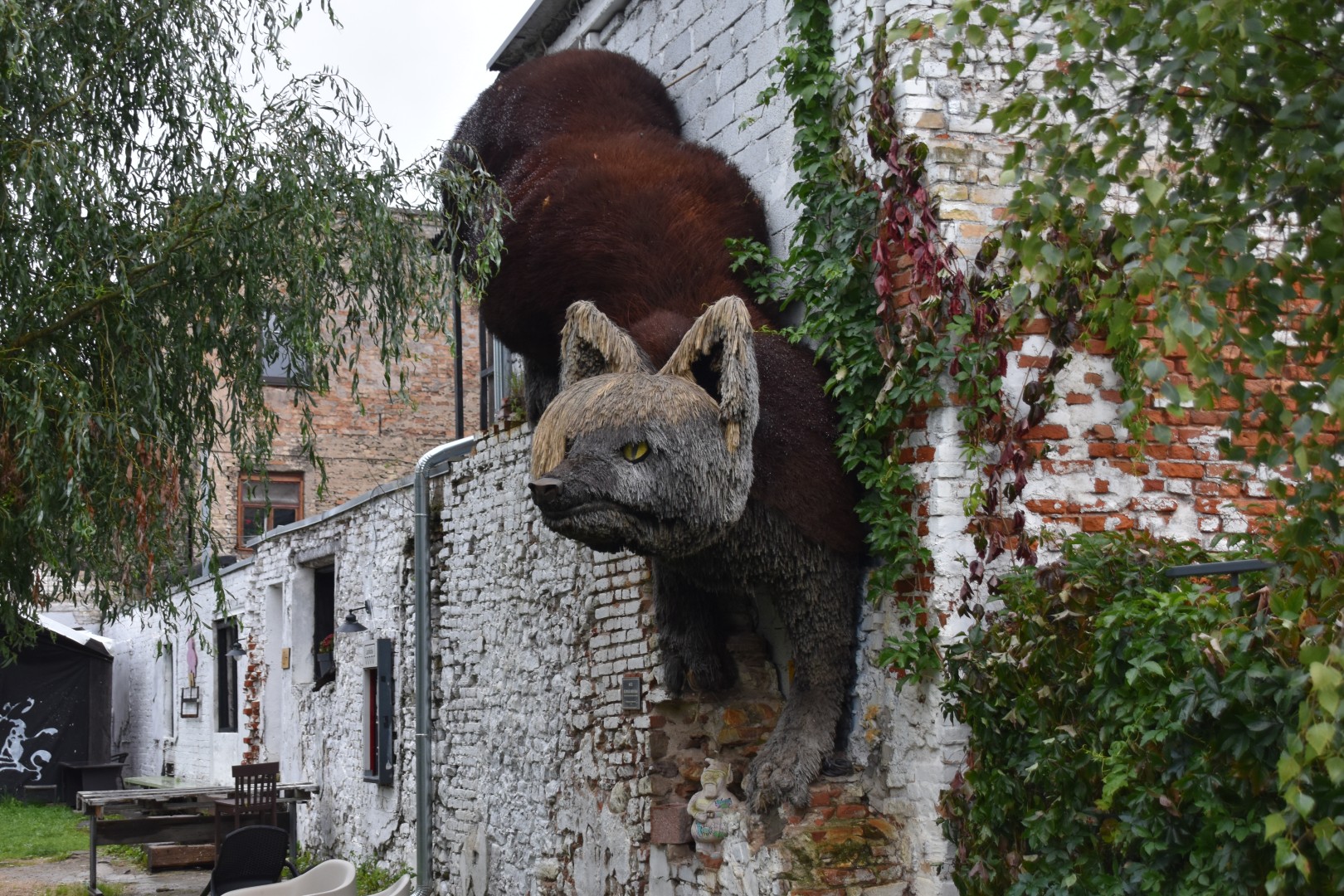
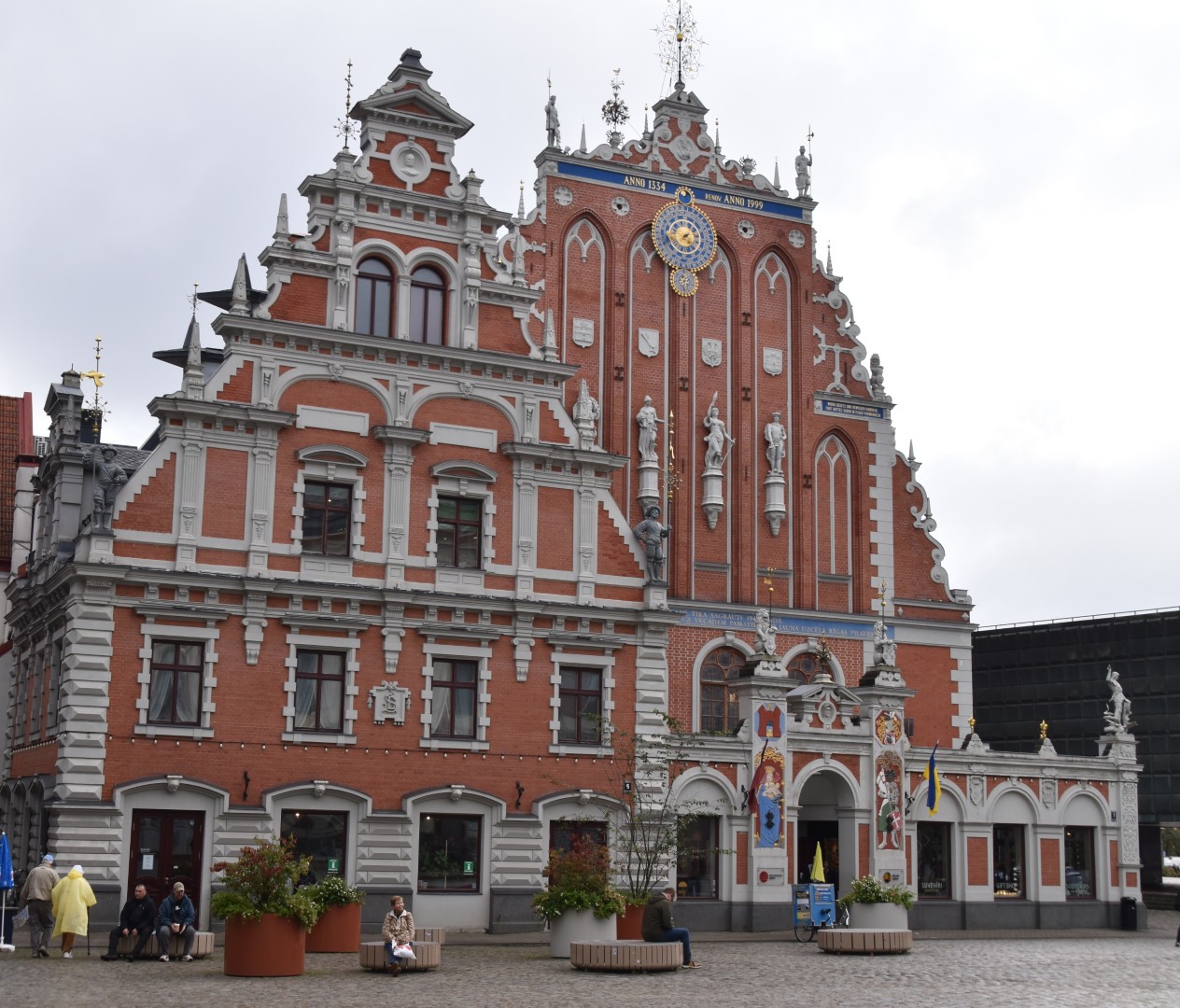
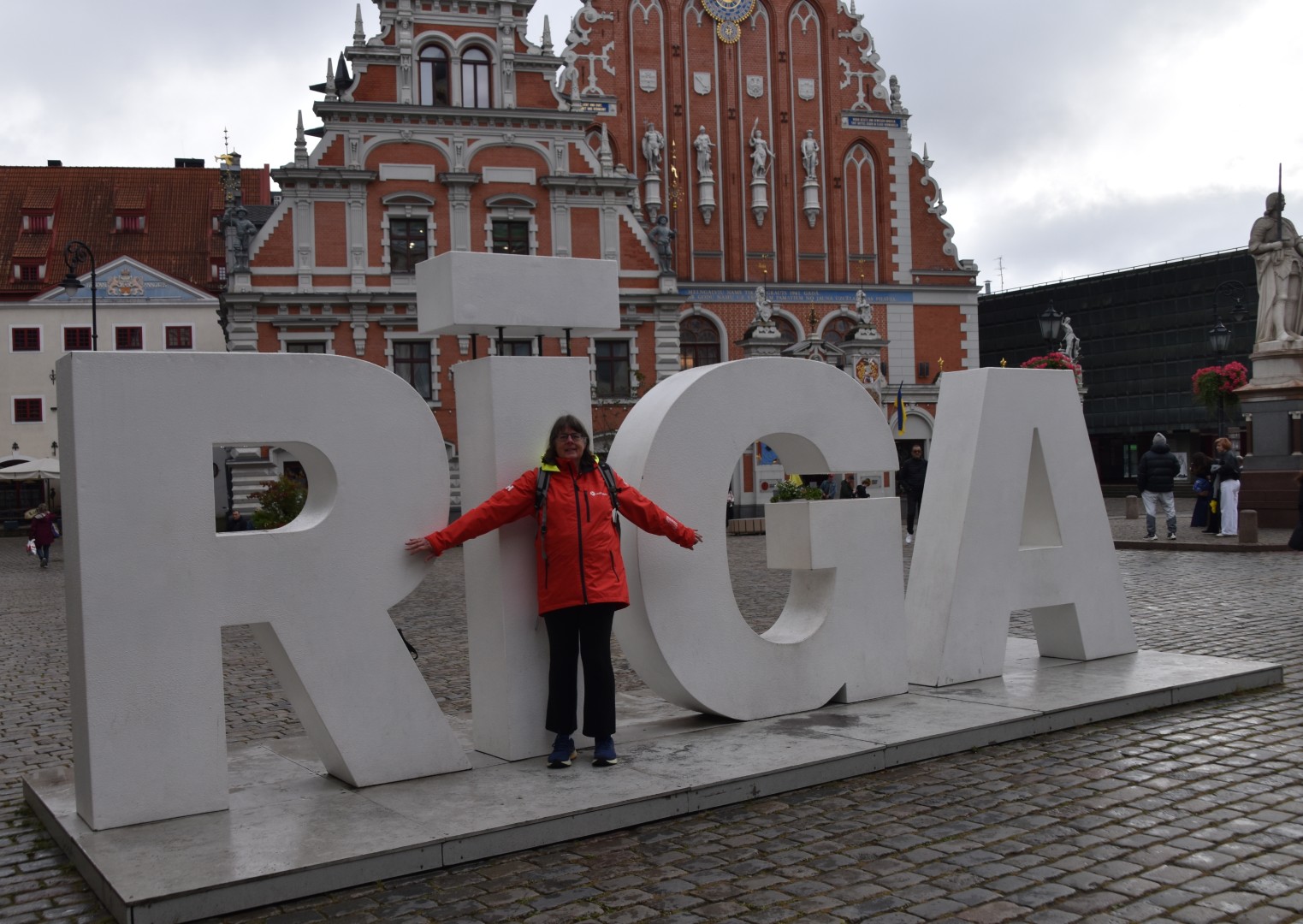
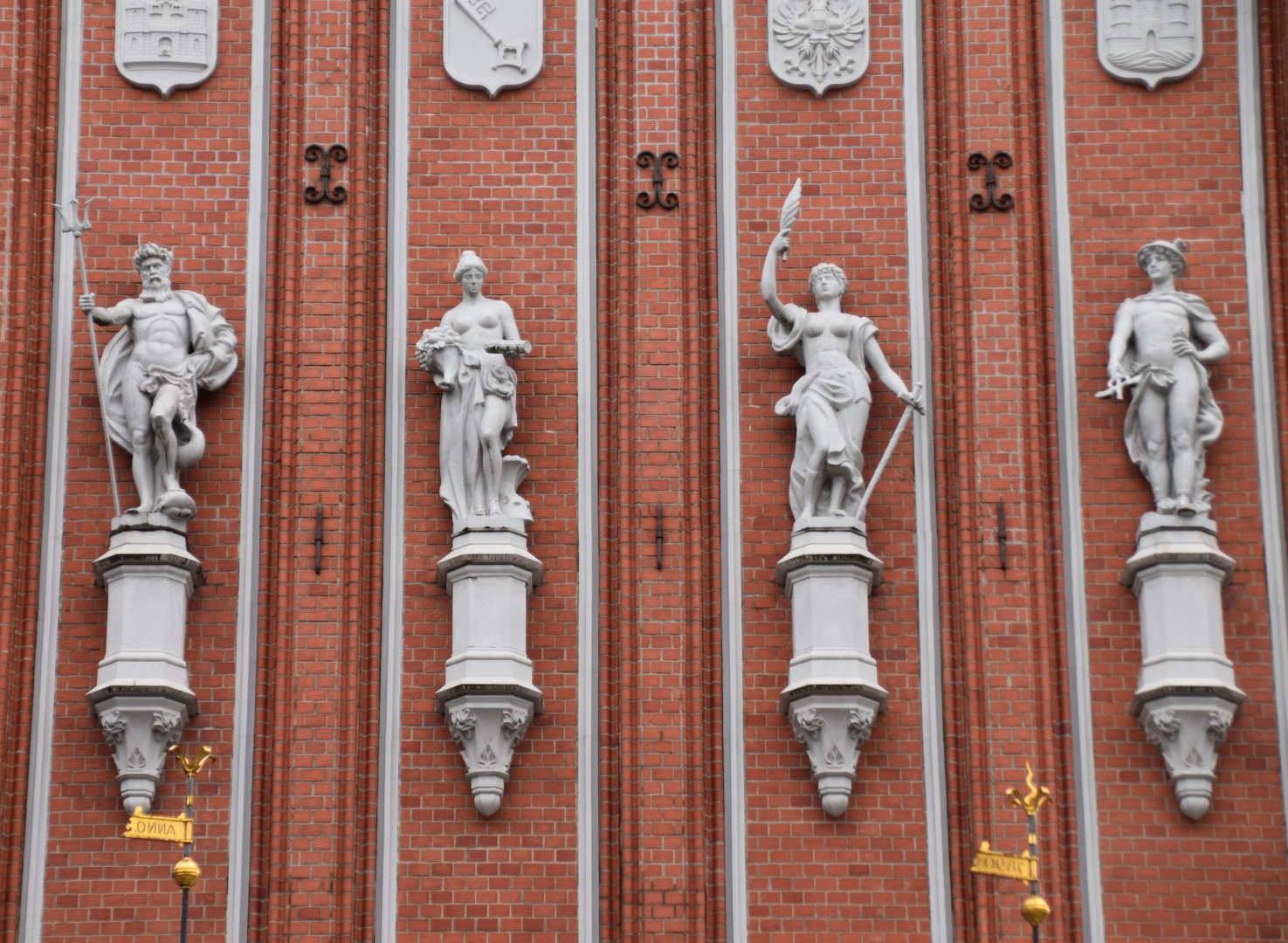
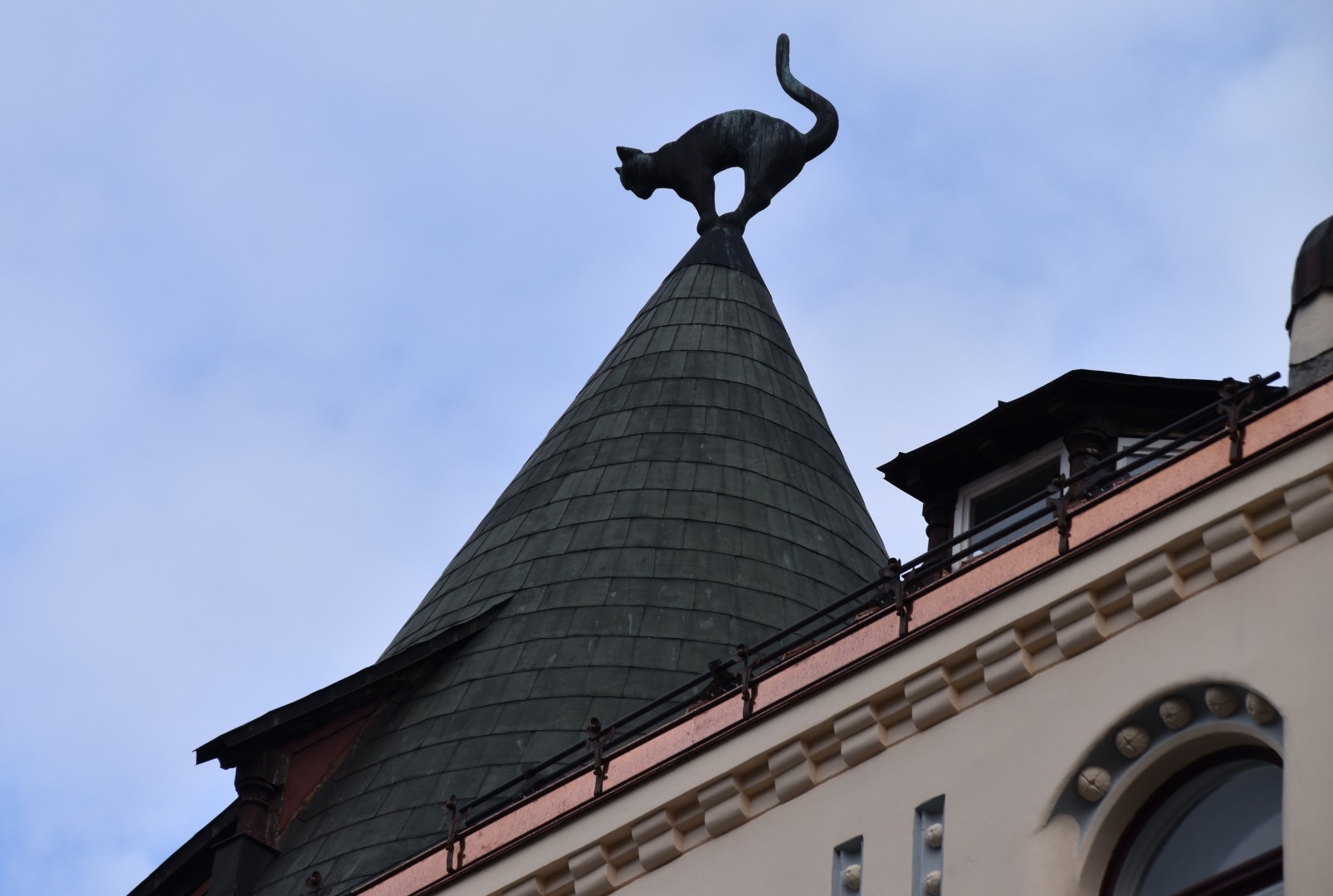
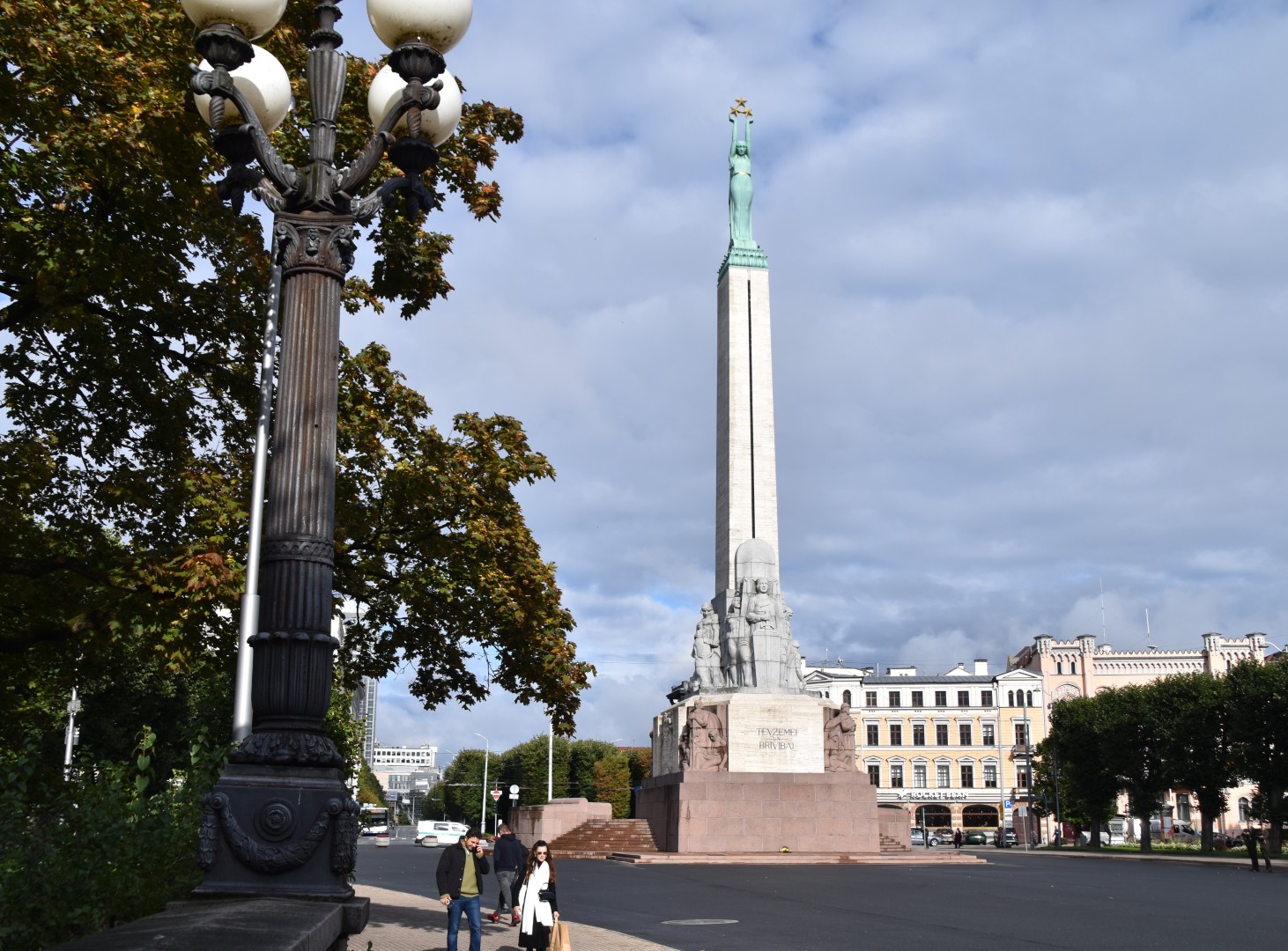
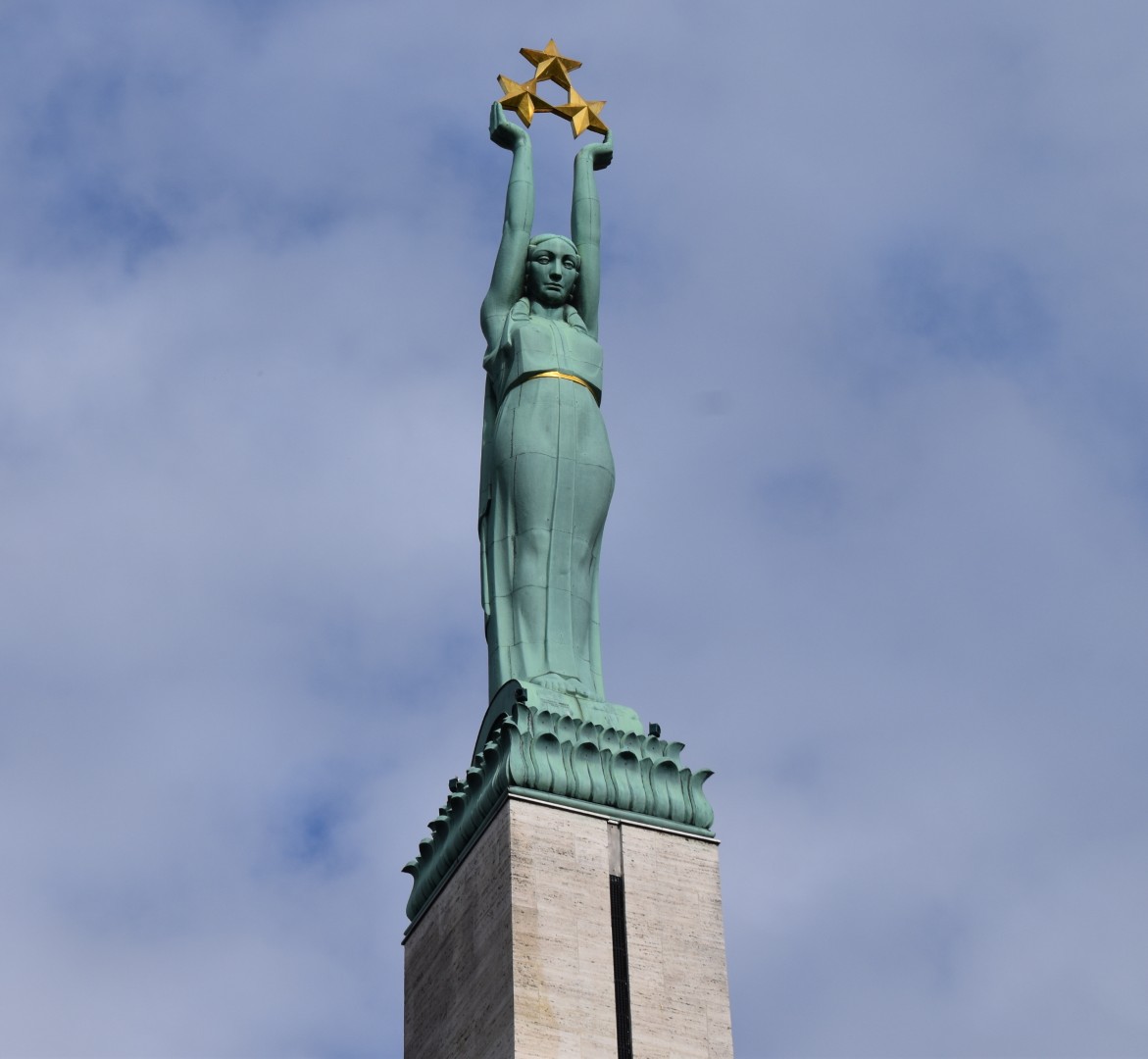
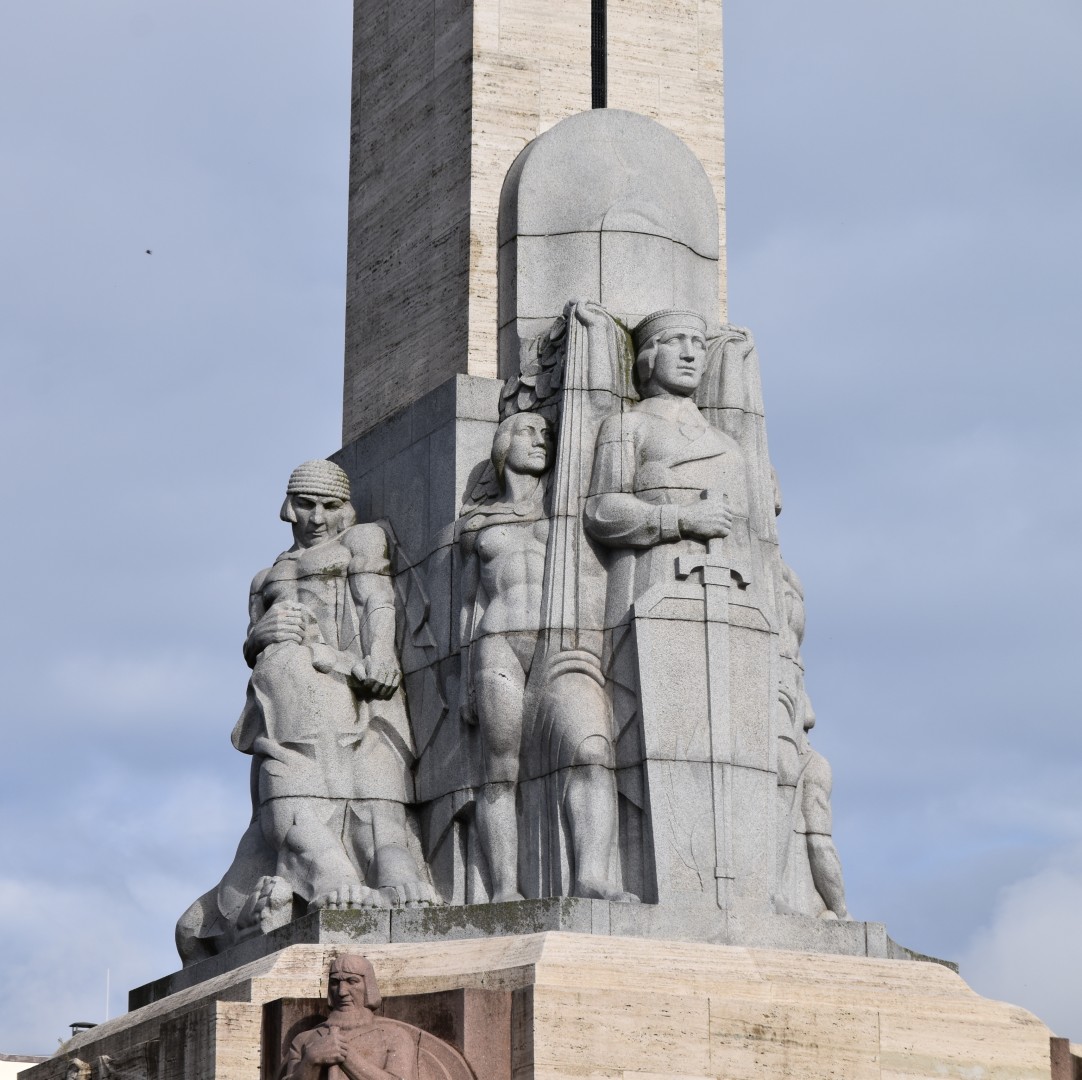
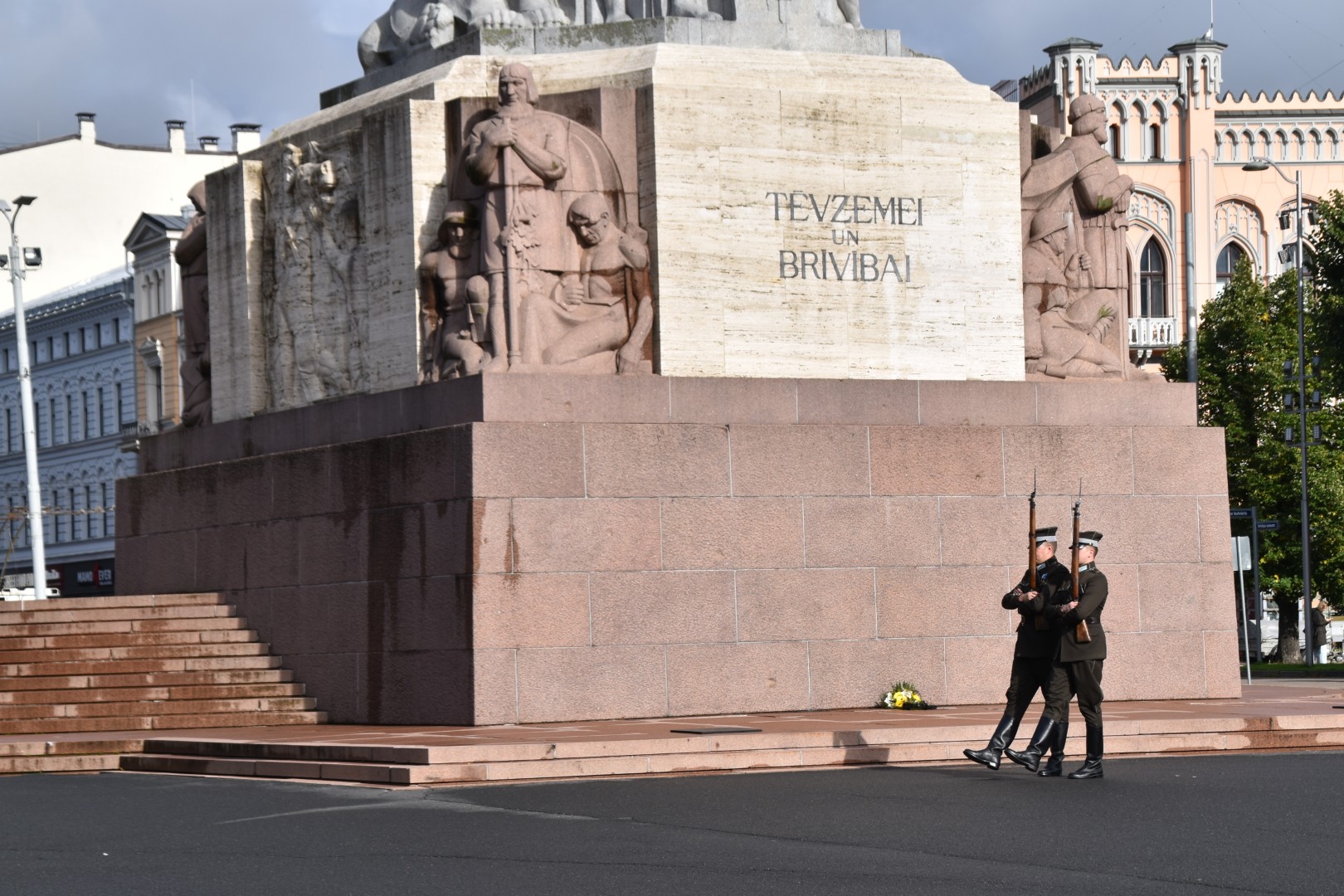
We were now on our own again, and the sun was making an appearance at last. We visited the Freedom Monument, which has served as the rallying point for uprisings during the 20th century, including the one which finally saw the Baltic states free of the USSR. We made quick stops at the House of the Black Heads and the Cat House, but medieval history is distant to us. Latvia’s, and Europe’s, recent history is still immediate and present. I will always admire beautiful architecture from any era, but history that you grow up with, or that involved friends and family, just hits differently.


The Silver man is unnerving. A very interesting account of the visit with a mixture of emotions.
Thank you. Ilze’s tears and pride when she saw what the Russians and Nazis had done to her beautiful homeland remain forever fresh in my mind. Pete.