Regular readers will not doubt recall that we like to mix a little family history with our travels. So when we found ourselves planning to visit the Midlands part of England, it was clear that a lot of aviation history would be on our bucket list. Particularly after we discovered a museum that had one of a very small number of surviving Halifax bombers.
In WW2 the Midlands was covered with hundreds of airfields supporting the RAF and US air forces. These days many of the airfields have gone but many (or parts of many) still survive, often with an aviation museum attached to them.
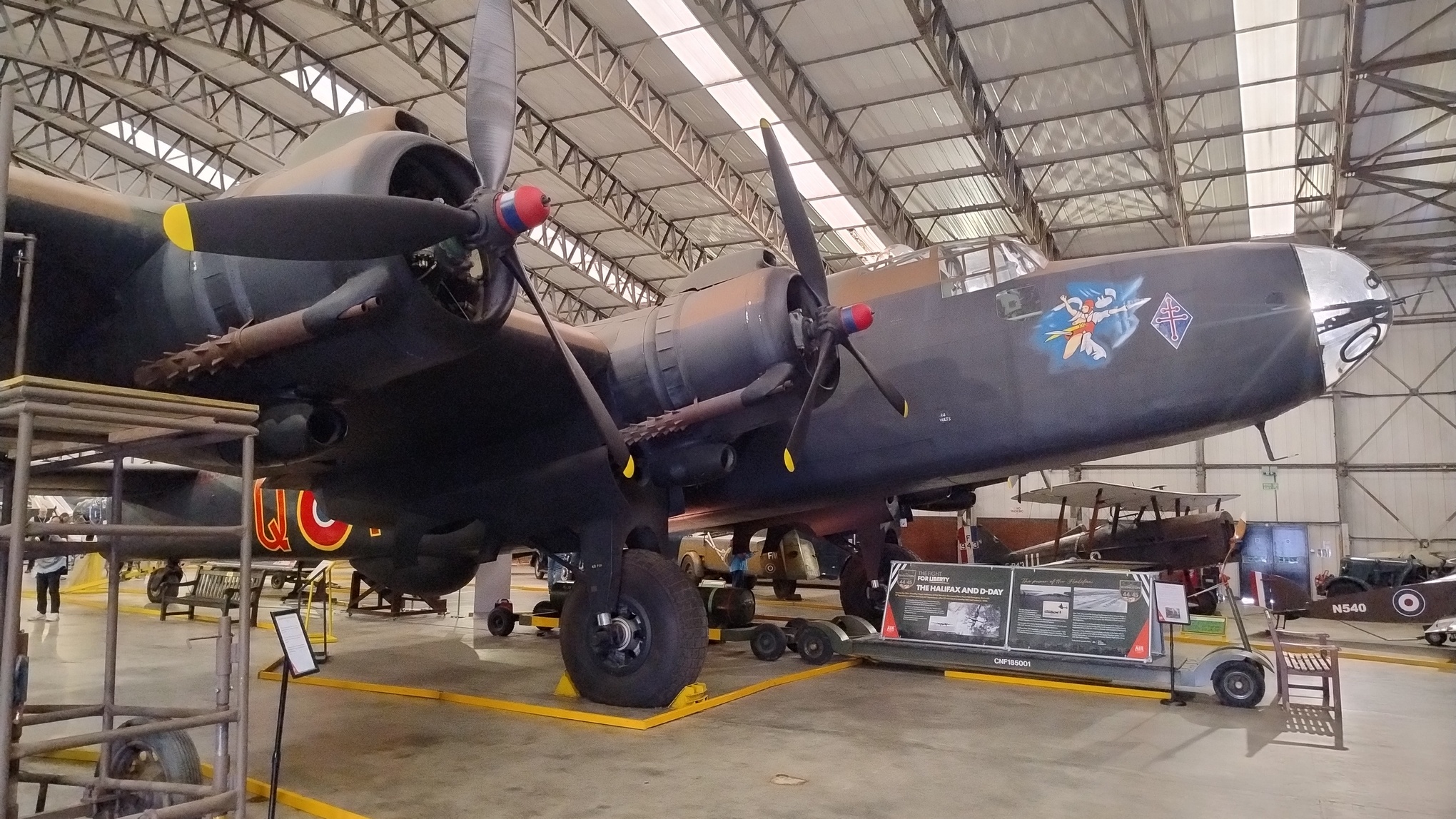
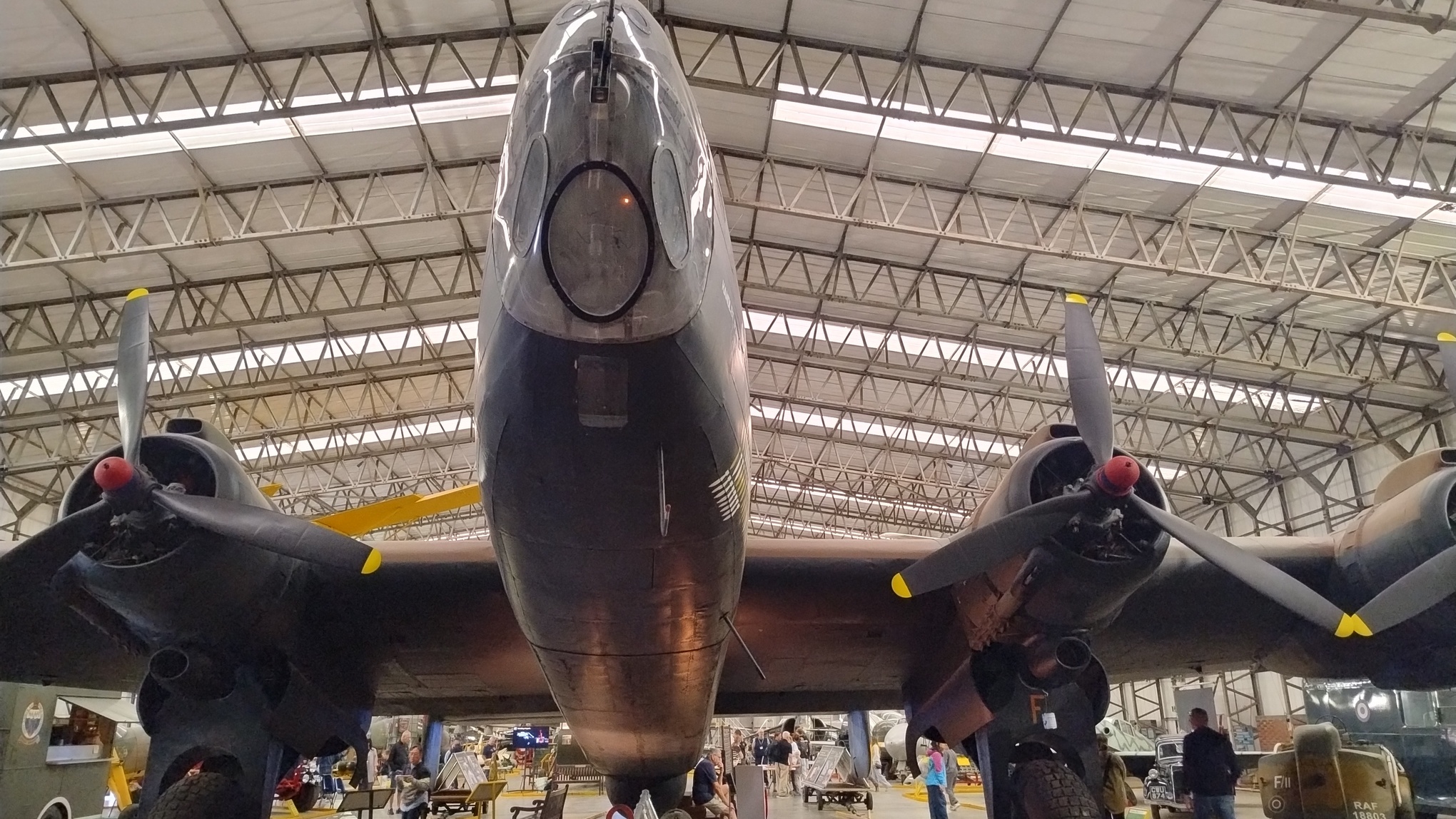
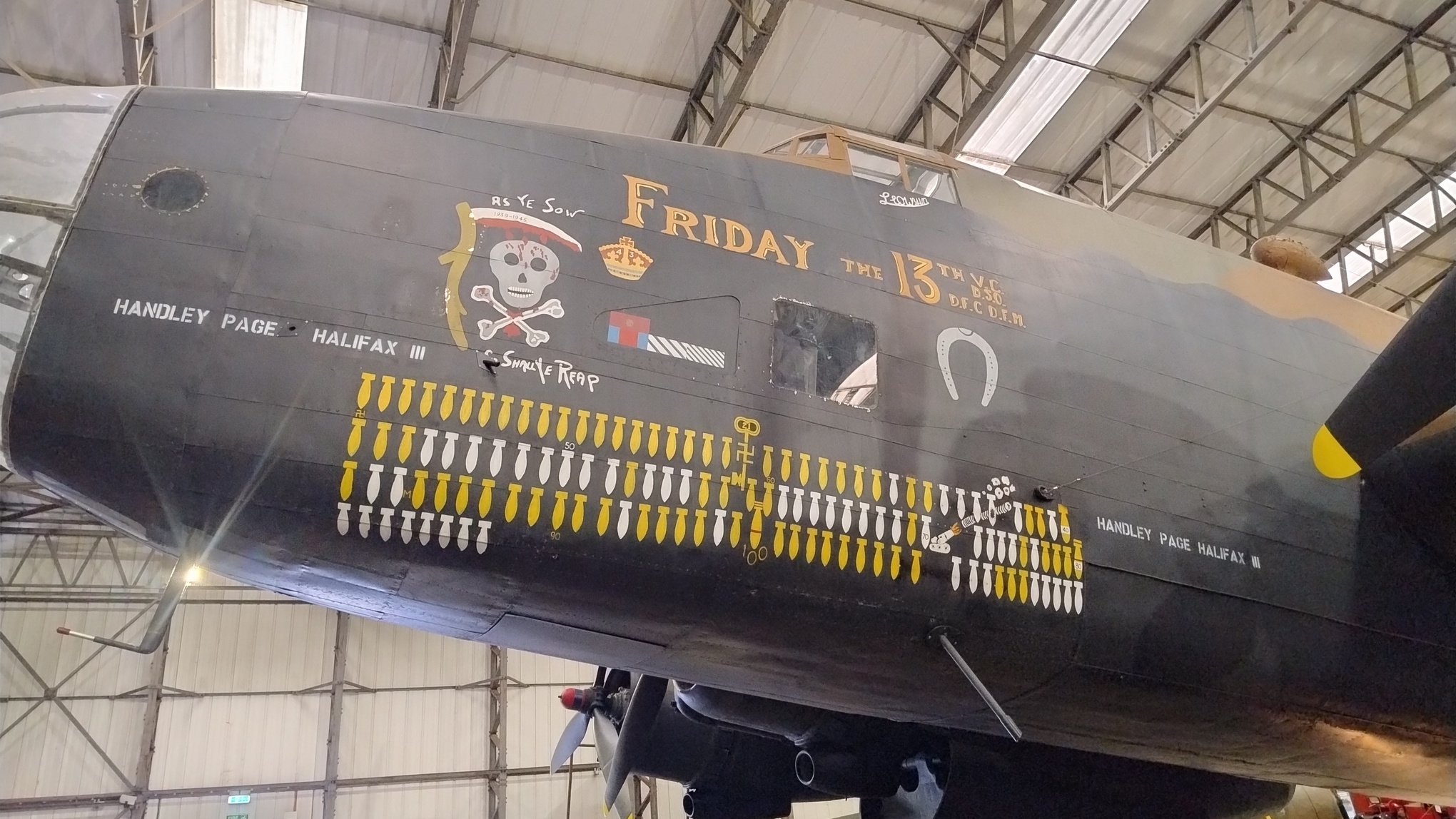
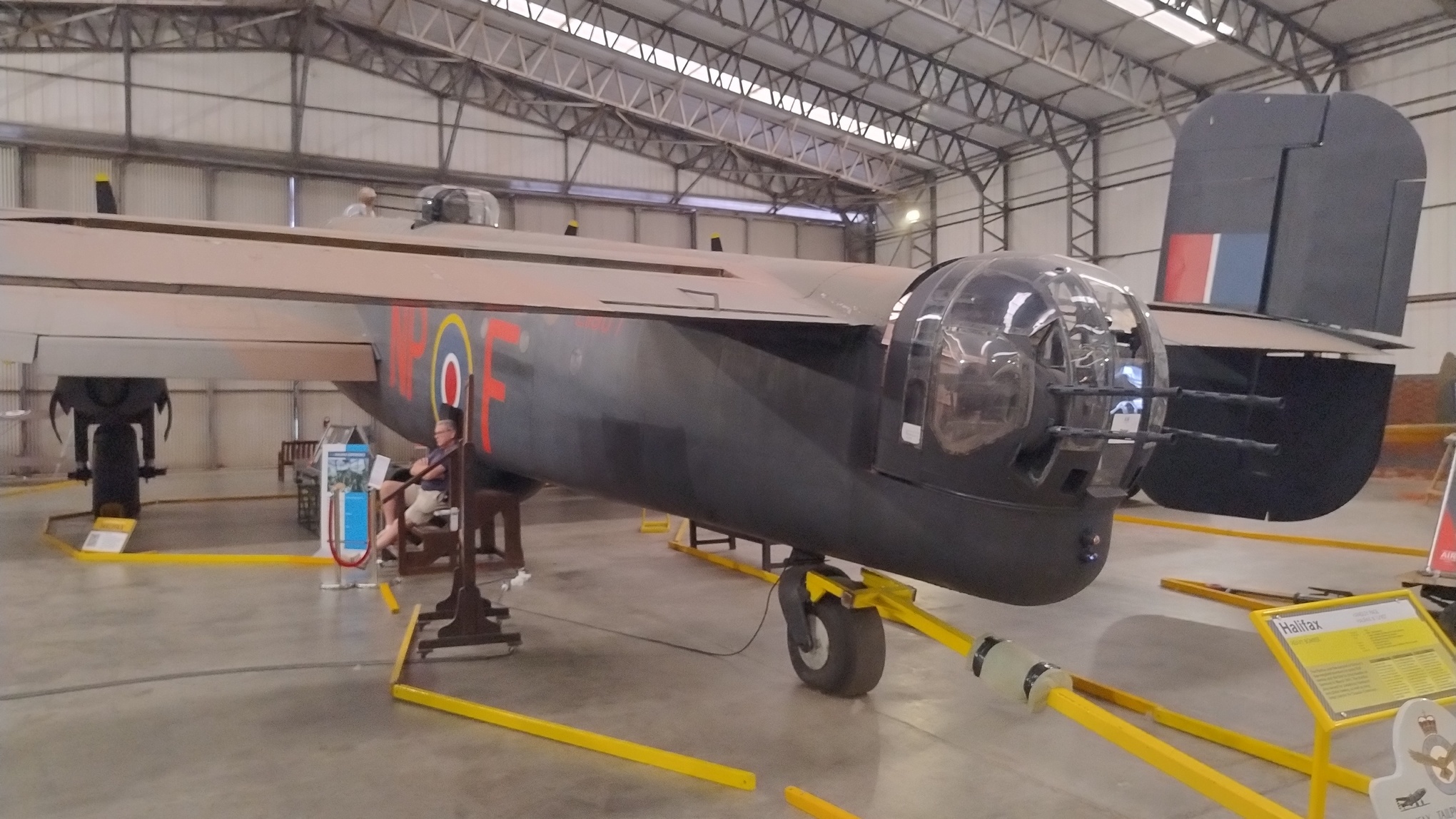
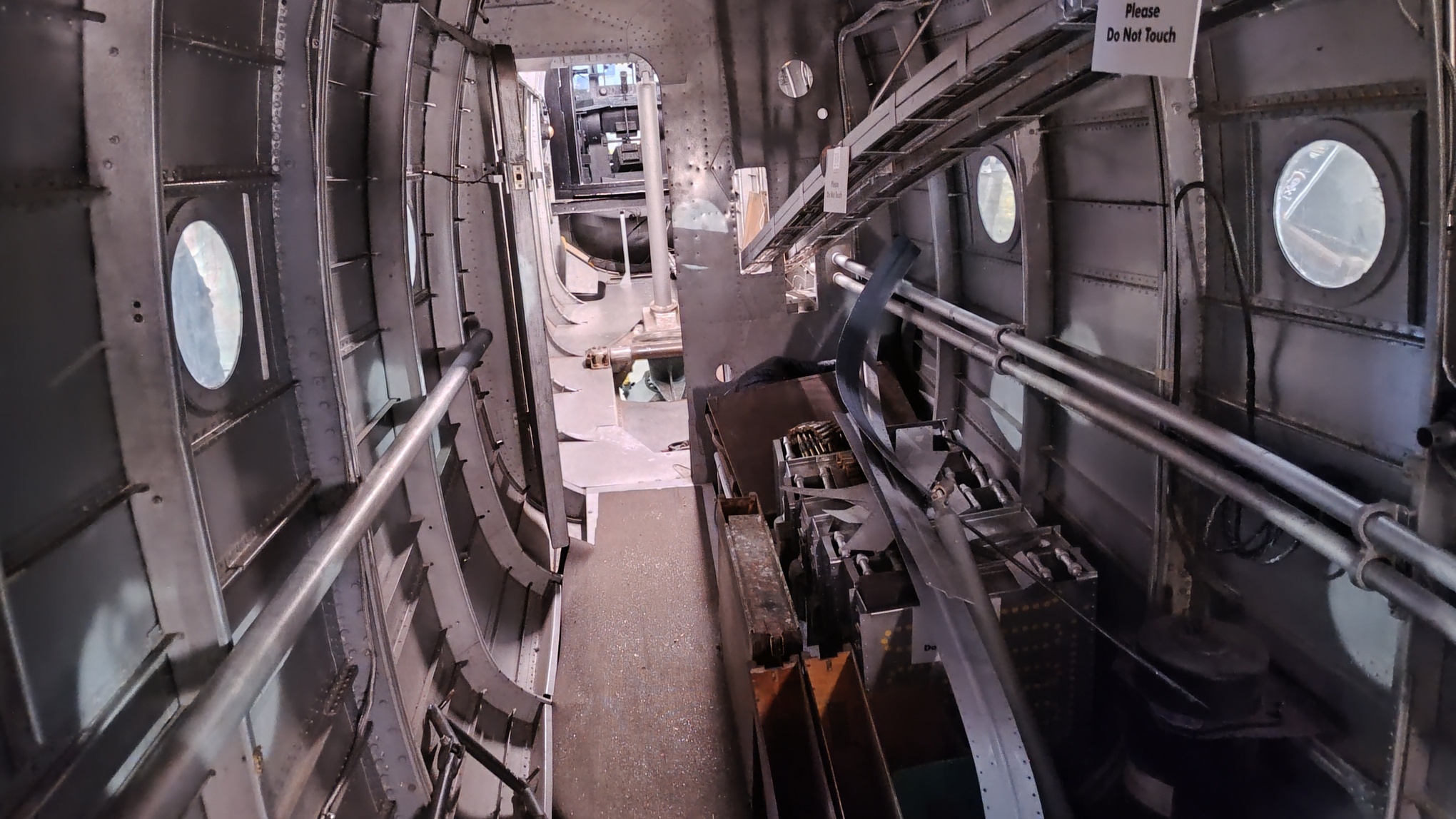
Today I would visit the Yorkshire Air Museum in Elvington (near the major city of York). Whilst Debbie walked the walls of historic York, I would be doing a specially booked internal guided tour of their Halifax Mk III, nick-named Friday the 13th after a famous Halifax that held the record for the number of sorties completed. This aircraft was assembled by the museum staff and volunteers from parts scrounged across the UK over a 10+ year period, as no Halifax was otherwise available to display. For instance, a large piece of the main fuselage was found on a farm being used as a hen house!
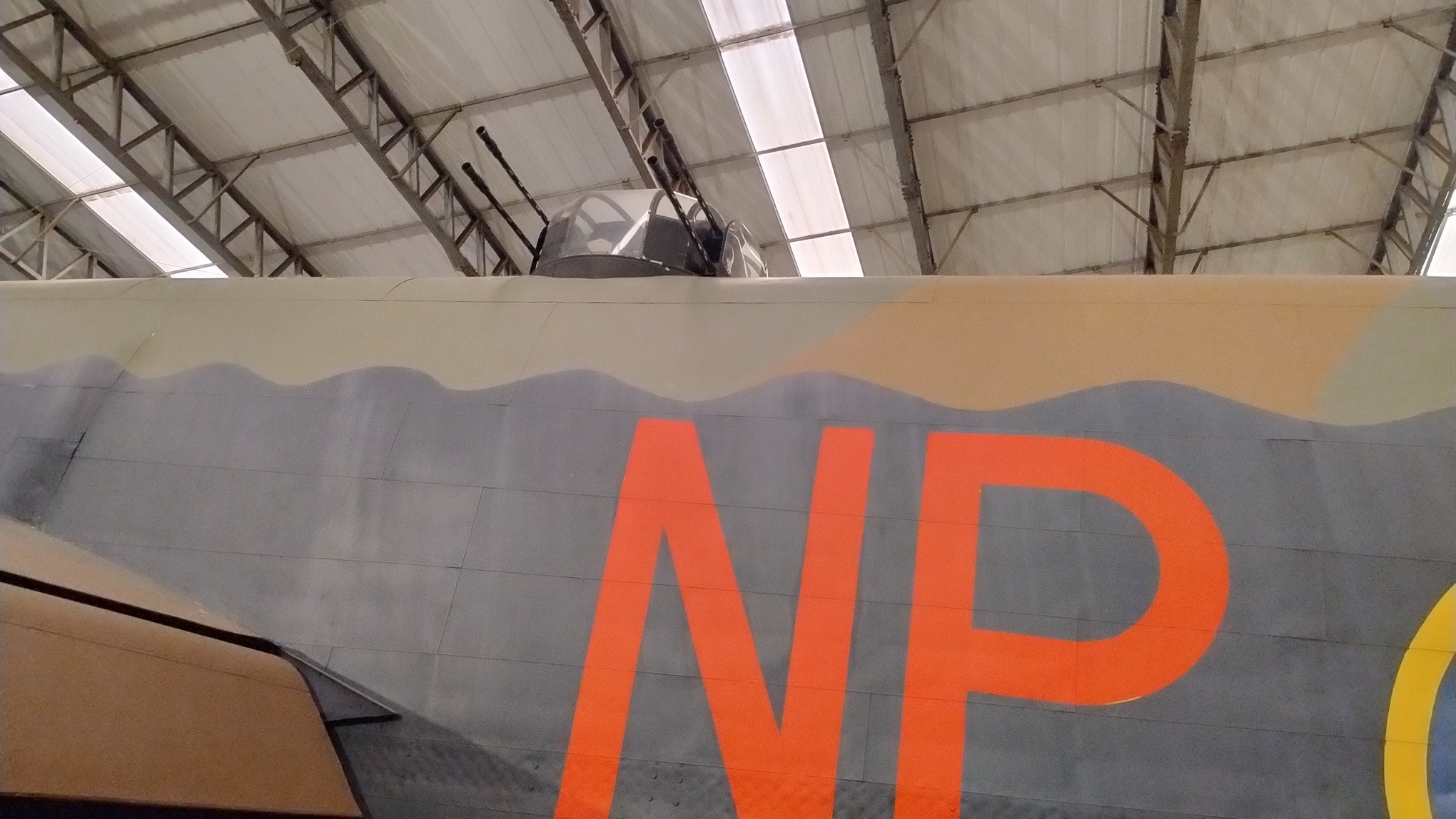
The Handley Page Halifax Mk III is important to the museum as it was the type of plane that flew from Elvington base during the war. The plane is important to me as it is the type that my uncle crewed during his service with the RAAF in 1944. This was a real once-in-a-lifetime chance to find out exactly what flying over Germany in 1944 was like. (Spoiler alert: it was not much fun.)
Uncle Brian was the third son of my great-grandparents George and Alice Skinner (my mother’s side of my family). He was the first child born in Australia (1922 in Mildura), the rest of the young Skinner family having emigrated from London the year before in 1921. When WW2 broke out in 1939 he was just 17 and too young to enlist. His elder brother and a brother-in-law would soon be in the AIF (Australian Army) but Brian wanted to join the RAAF – it probably sounded a lot more exciting than trench warfare!
You needed parental permission to enlist in WW2 in Australia if you were under 21. First he had to finish school and get a job before he could nag his parents into allowing him to join up. Not the type to try to forge a false application, he was working as a junior industrial chemist with the large paper manufacturer APM, when, at age 19 ½, he was finally allowed to join the RAAF in June 1942. A major task of the RAAF (and the Canadian Airforce) was training crew to be sent to Britain (“for the defence of the motherland”). After a year of basic training in Australia, he duly embarked for the UK in May 1943. After a further 10 months of training on different aircraft in England in April 1944, he was finally posted to operations as part of 78 Squadron Bomber Command. He would later say that the delays from being too young, then years of training saved his life: around 44% of all Bomber Command crew died in service and the more sorties (missions) you flew, the worse your odds were.
Time for a few generalised facts for those not so familiar with WW2 history. As a member of the Australian RAAF in the UK you were assigned to serve as part of the RAF in either Fighter Command or Bomber Command. Many new recruits fancied being fighter pilots, but few succeeded and most recruits became general crew members. Many joined the air force when their dads, who had experienced trench warfare in WW1, said don’t join the army. Ironically it would be the air forces in WW2 with the higher death rates than the army!
By the end of the war, the most famous plane in Fighter Command would be the Spitfire and the most famous heavy (four engined) bomber would be the Lancaster. Ironically, the Hurricane would actually be the most successful fighter and the Halifax the most useful bomber. So much for PR over actual factual history! The Halifax was a similar size to the Lancaster, the main difference being the Lancaster had a higher payload (bomb) capacity. Both had a crew of 7.
The RAF had developed a unique and successful way of making up bomber crews. At the end of training everyone (who had passed) was in one big room and told to make up crews (of 7). So you could become crew with any friends you had made during training or just blokes you liked the look of. No surprise then that Uncle Brian found himself in a crew of 7 Australians (some from his home town of Melbourne) who would become a very tight group, led by W.D. (“Wally”) Collet as pilot. Uncle Brian qualified as a wireless (radio) operator/air gunner. He was nicknamed “Skinny”, obviously a play on his surname.
The rest of the crew were:
Navigator H. J. Trevenen (“Herb”)
Bomb Aimer C. Fisher (“Fish”)
Flight Engineer C. Martindale
Gunners L.R. Tapper (“Les”) and G.V. Creek
At this point some readers might be wondering who was the co-pilot? Well, the RAF saw co-pilots as unnecessary. There was only one seat in the cockpit and no dual controls. A second pilot was a luxury that the RAF could not afford in its bomber aircraft.
This all-Australian crew were assigned aircraft MZ762. Records suggest that this plane came from 346 Squadron but that squadron was only formed a couple of months later in June 1944 (coincidently at Elvington), so perhaps it was assigned to 346 but diverted to 78 Squadron when 346 was still being trained. I suspect it was a fairly new plane when they got it. The Halifax was given the designation “EY-P”, EY being 78 squadron and P being its individual aircraft designation or call sign. It was soon nicknamed Popeye’s Purge and had nose art showing the famous Popeye cartoon character.
At that time 78 squadron was based at Breighton airfield (not too far from Elvington). It was also not too far from the coastal city of Hull.
As I sat in the Halifax with my guide Steve, we ran through the main duties of each member of a bomber crew.
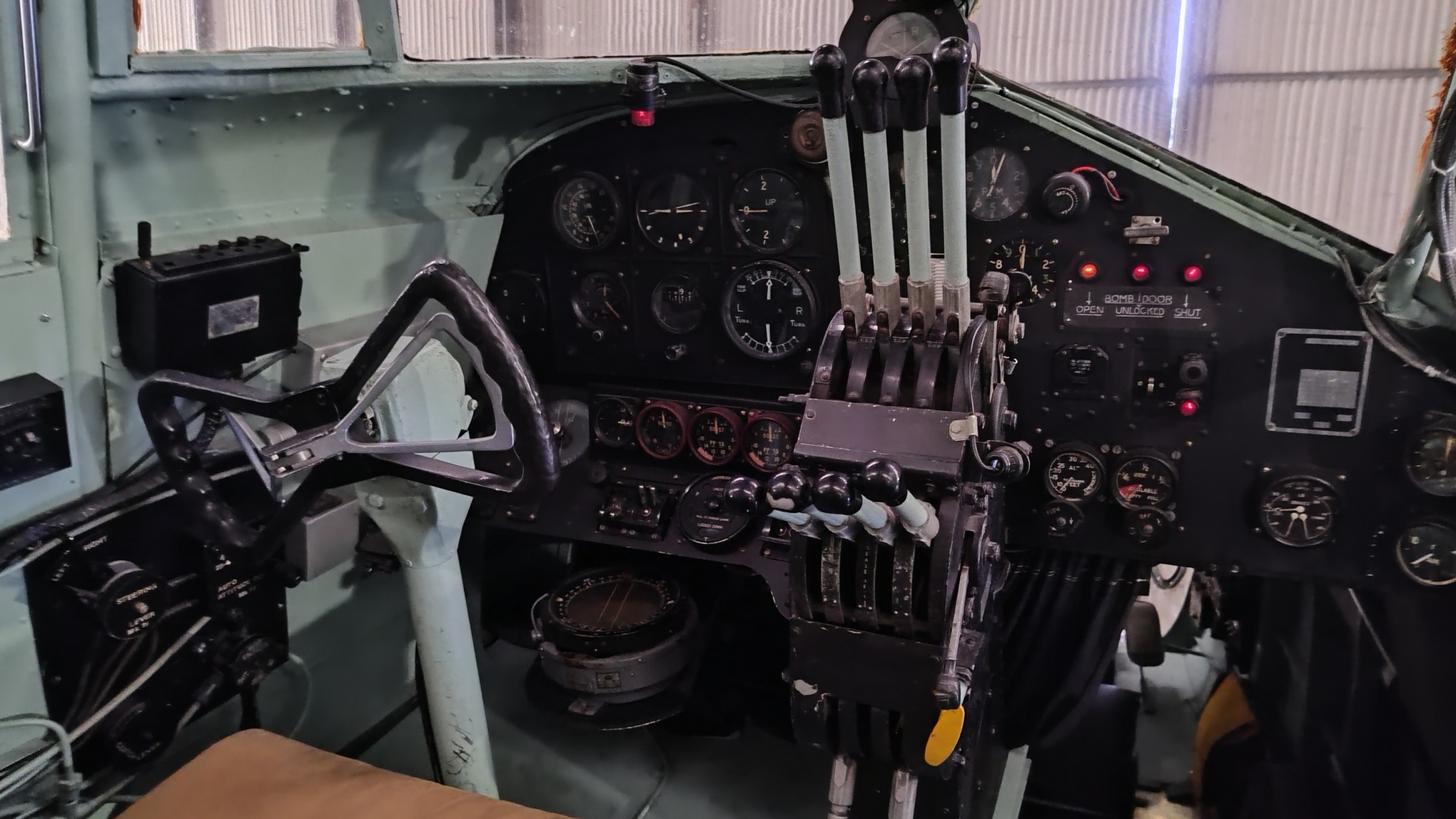
The pilot flew the plane. No auto pilot, no computers, no help. He sat in an elevated and somewhat protected seat (on top of his parachute). He listened to the crew (mostly Navigator and Bomb Aimer) and tried to keep his aircraft in the so-called bomber stream travelling that night to the targeted parts of enemy territory. Real stick and rudder work. All in the dark (RAF bombers on sortie flew mostly at night). Aircraft that fell out of the main stream of bombers would be targeted and picked off by roving enemy fighters.
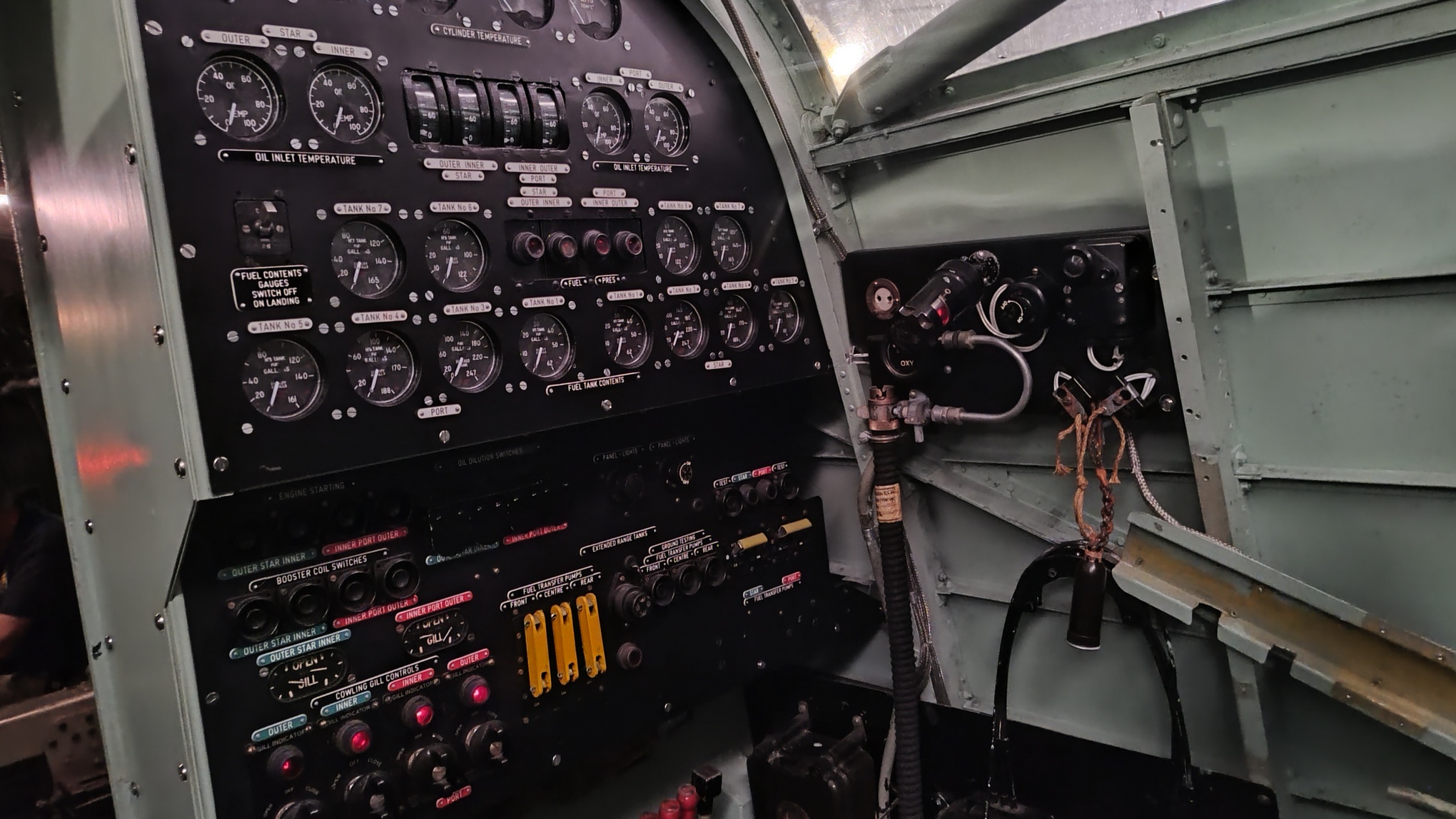
The flight engineer did everything else to fly the plane. He had NO SEAT and had to stand the whole time, constantly checking the four engines, moving fuel around the different tanks to keep the plane balanced, and working the plane engine speed throttles. He even had to lower the bomb doors and the landing wheels.
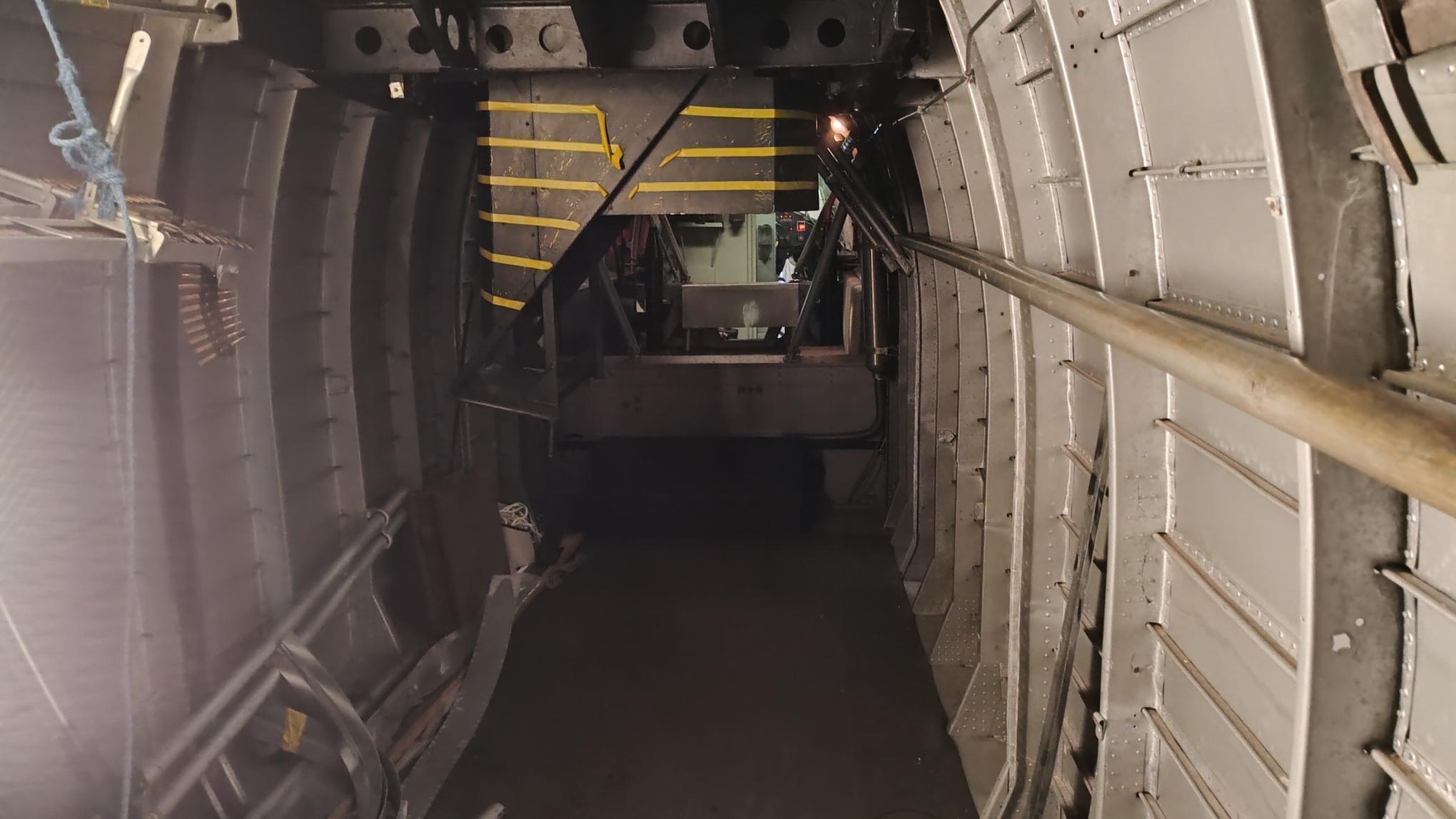
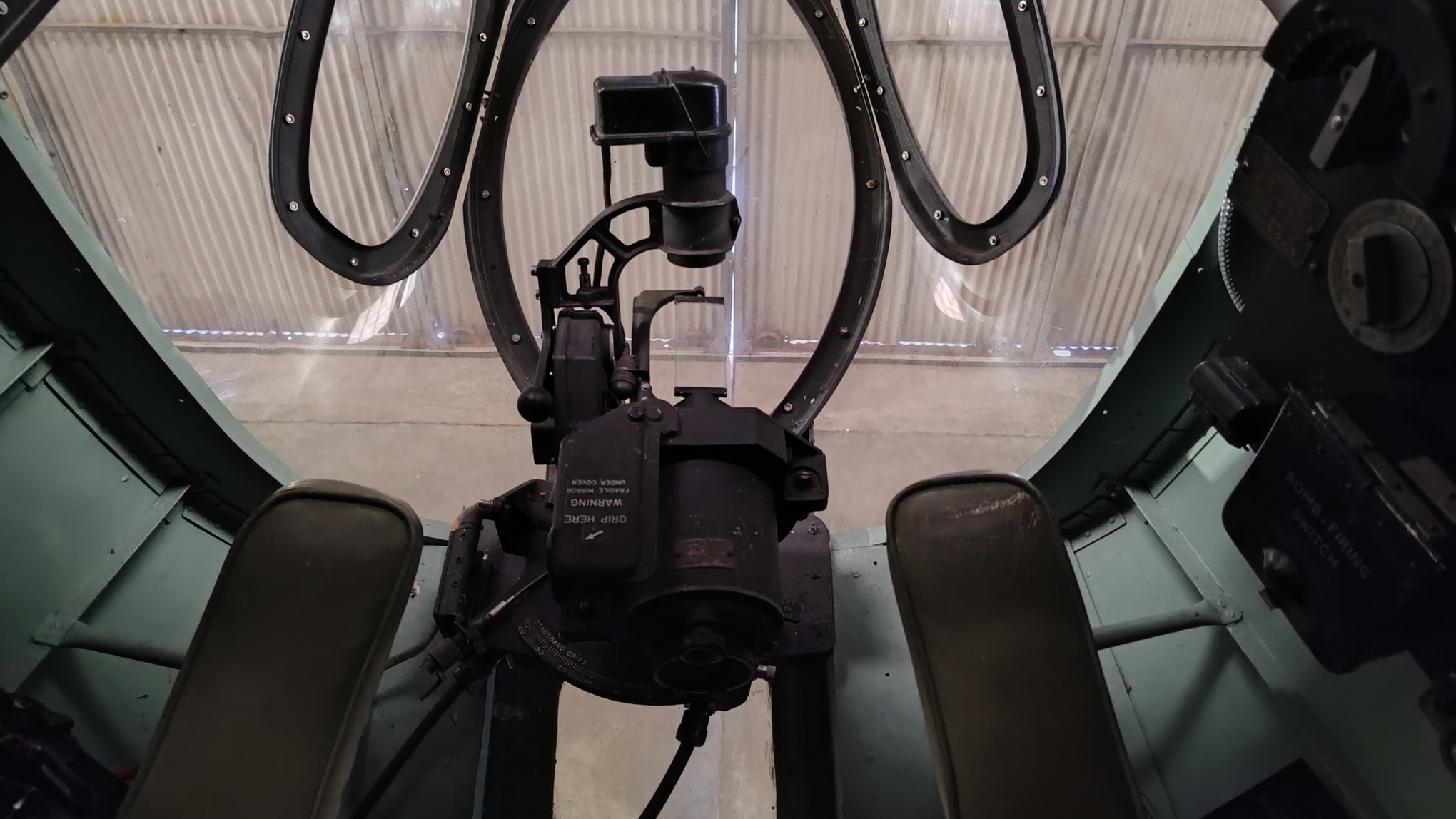
The rest of the crew sat in the crew rest area at take-off, as this was the strongest part of the airframe. At 1,000 feet they got up and went to their assigned spots. The Navigator and Bomb Aimer had a small bench at the very front of the plane where they could use their (secret) navigational aids and equipment to get to the target and drop the bombs as instructed, on the correct spot. The navigator had to wait until the bombs hit, take a picture and then tell the captain to head for home. No photo meant no credit for the sortie towards your tour.
The gunners went to their assigned turret – either at the back or the upper turret. They had to climb into these cramped turrets and spend the next 6 or so hours looking for enemy fighters. They had guns and ammunition – about 2 minutes worth – so you did not waste it.
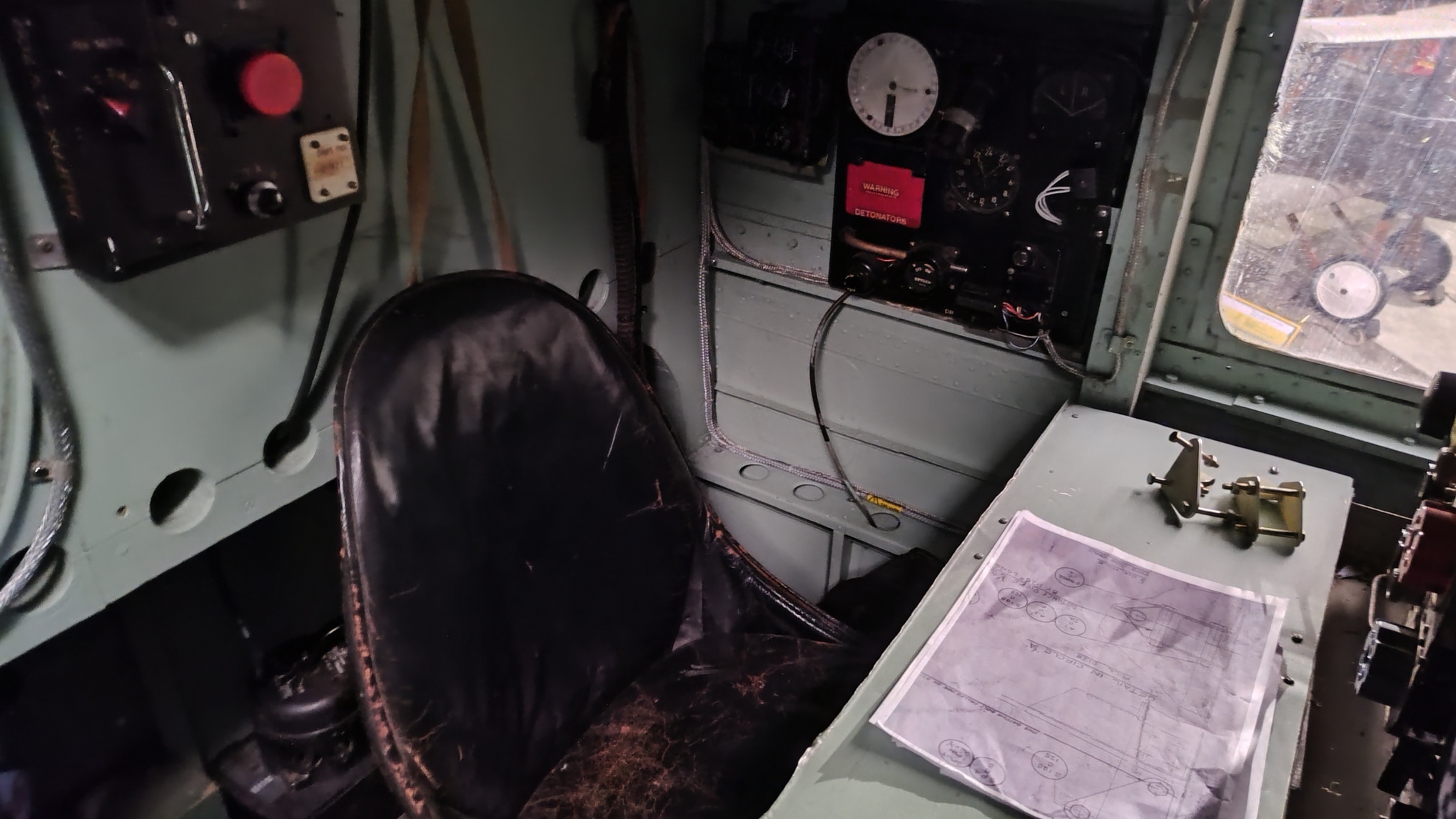
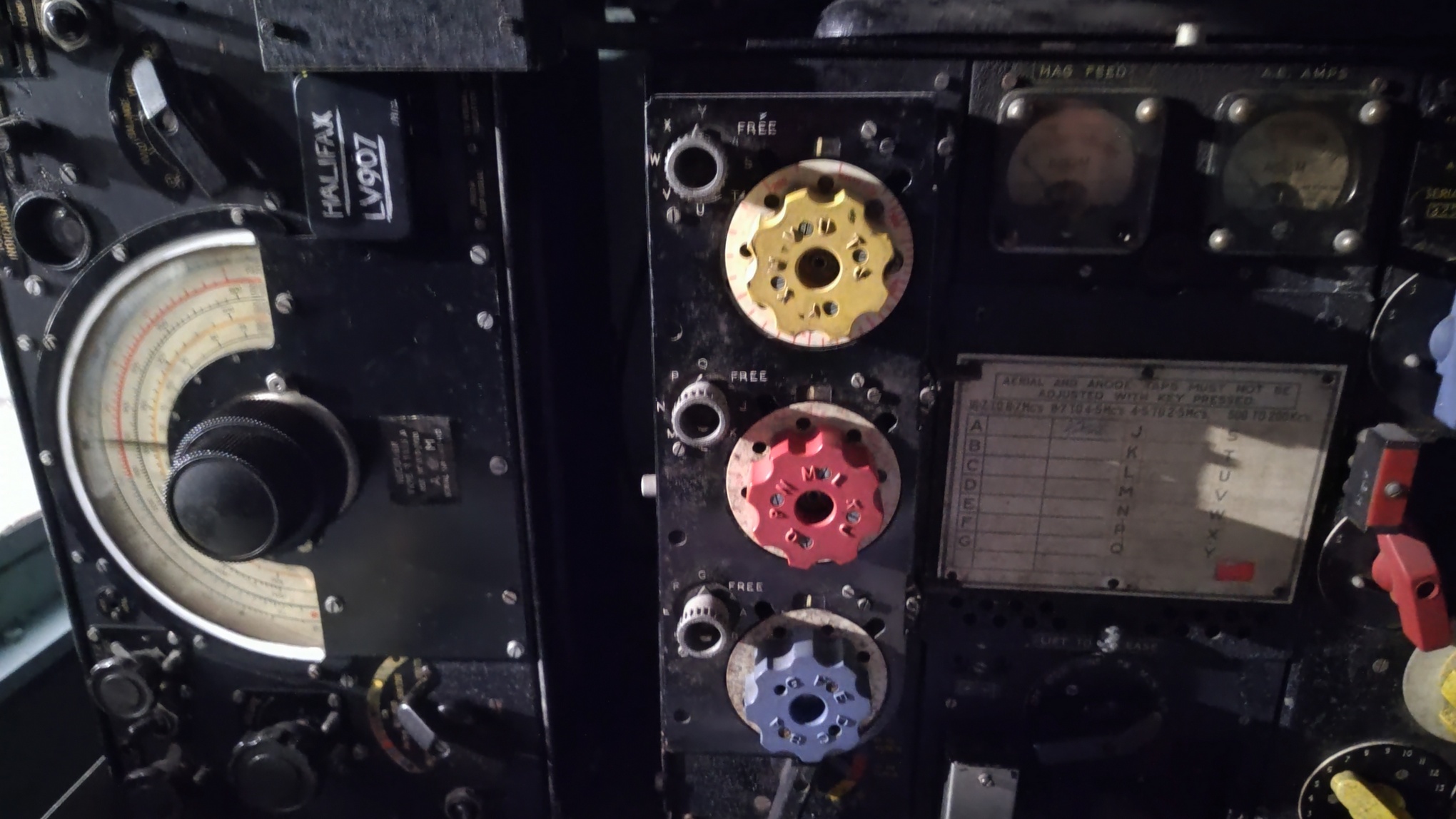
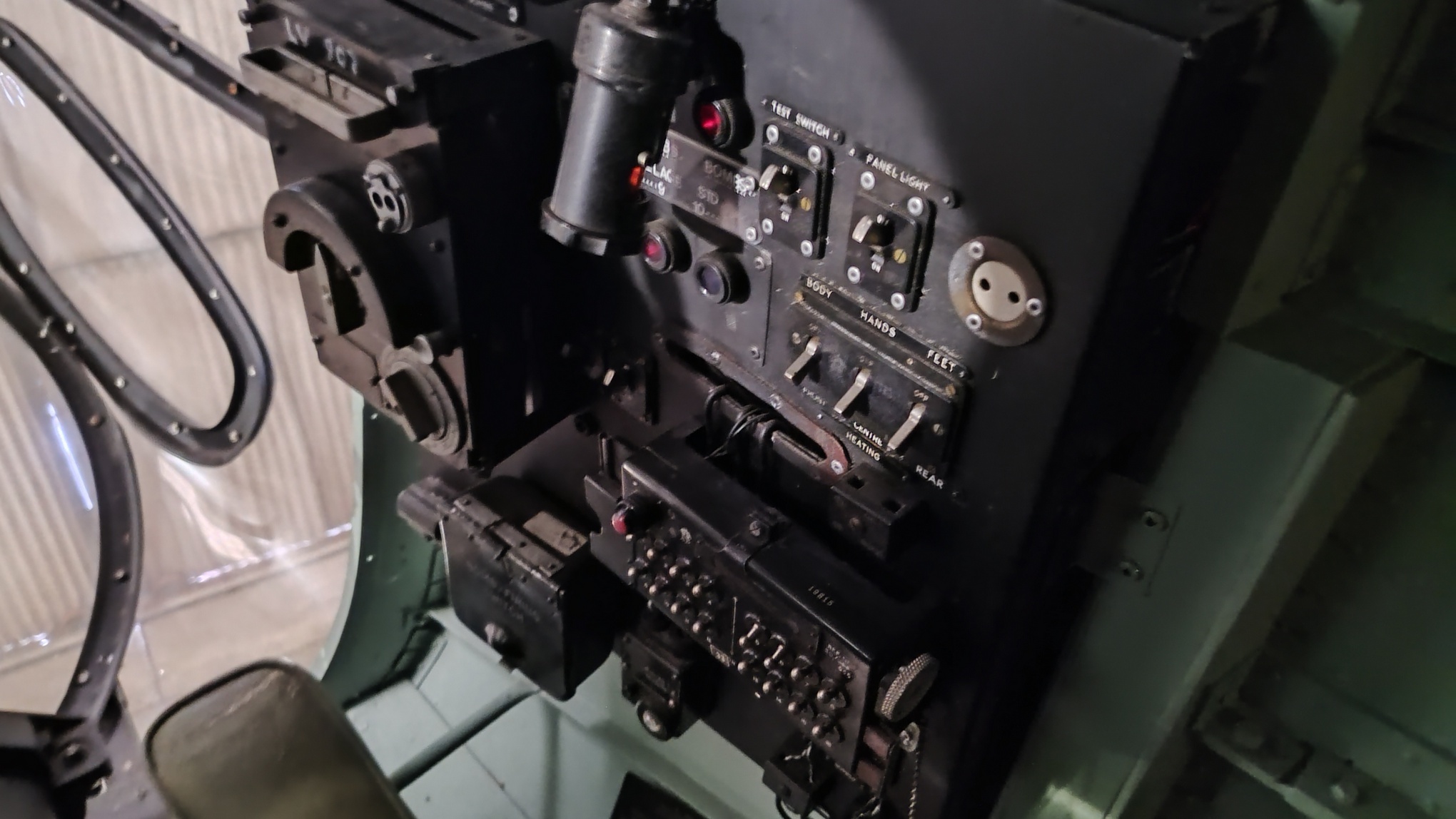
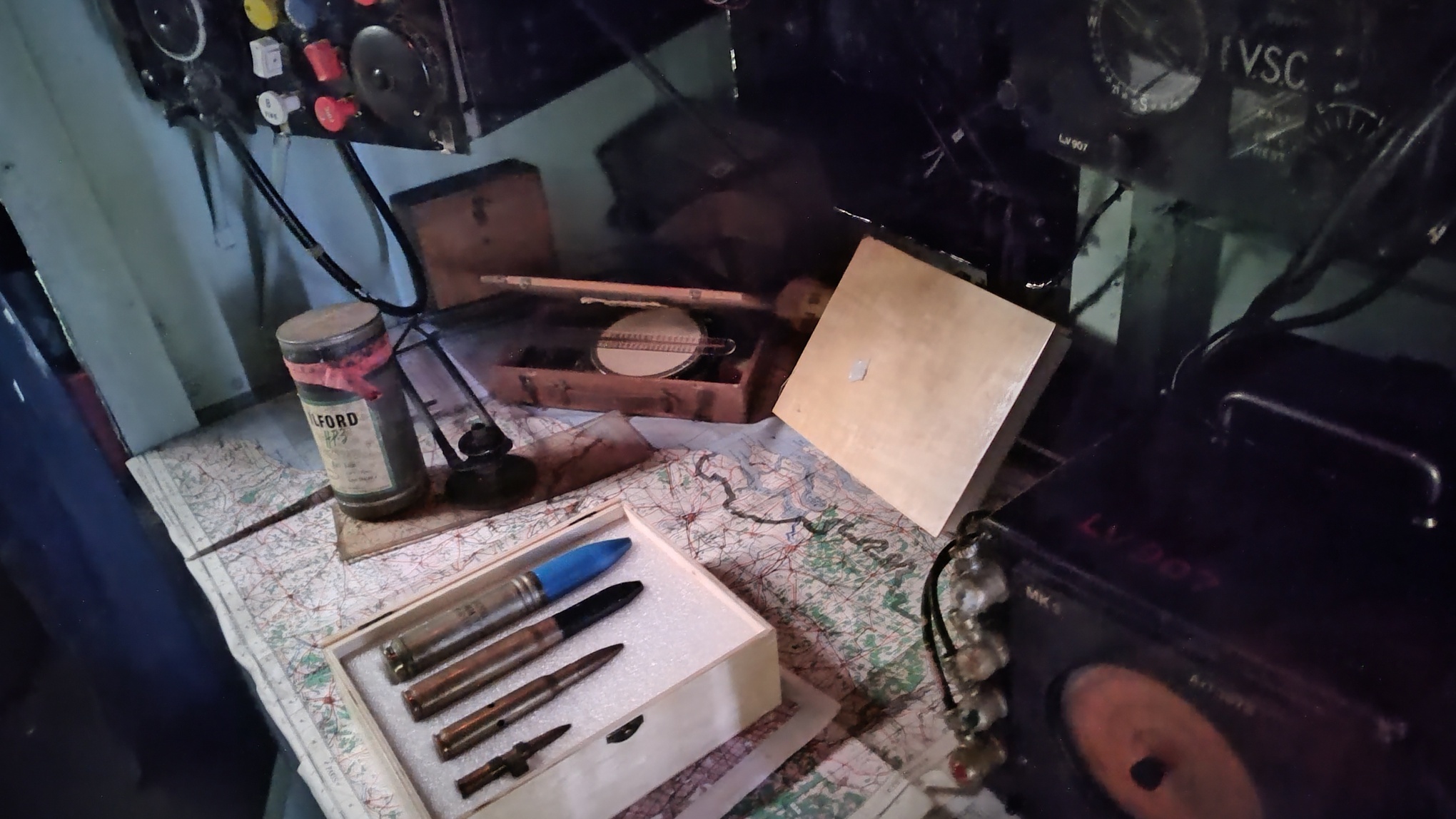
The radio operator had a relatively nice hutch directly under the pilot. He had to listen to the radio and write down what he heard (in morse code). It might be an updated weather report, new instructions from base, or a mayday from another plane which he had to help triangulate for later rescue (maybe). He did not send any messages. The enemy was listening and he did not want to be located. The exception to this rule was if he needed to send a mayday call himself for his plane. He also had to be able to disassemble and fix radio parts (in the dark) if something broke in his radio sets. Finally, if he was going to leave the plane (e.g. bail out) he had to set the inbuilt charges to blow up secret equipment like the radios and navigational equipment. He had 10 minutes to get out before the charges blew.
I sat in the radio hutch as my uncle must have done many times. Except it wasn’t 40 degrees below with 240 mph winds coming through and gaps or holes in the fuselage. I wasn’t having to breathe through antiquated oxygen masks. The plane wasn’t bouncing around and the four engines – none very far away and none with any noise dampening – were not running full speed. It wasn’t dark and no one was shooting cannon fire at me from a German night fighter or trying to spot me with searchlights from the ground. And then Steve mentioned that the pilot sitting above me – who could not leave his position – probably needed to pee at some point and was not going to use the tube provided, what with all his flying suit on and the temperature so cold and the plane bouncing around. So I’d better watch out for a sudden downpour!
A tour of duty in Bomber Command was 30 sorties or missions over enemy territory. The most dangerous were the first 5 – brand new crews had the least experience so that made sense. The last 5 were also considered extra risky. It was common for crews to have lucky mascots, charms and traditions to help cope with the whole randomness of fate. The original Halifax named Friday the 13th was an F designation and the last seven F-for-Freddy’s in the squadron had not come back. This one did, so its crew adorned it with every unlucky thing they could to “break the jinx”. Eventually it completed a record 128 sorties and was put on display in London after the war. Then, like so many other planes it was scrapped.
The average crew lasted 15 missions – a long way short of the required 30. Many accepted that they would not make it to the end. But Popeye’s Purge beat the odds and my uncle eventually recorded 39 sorties – about 1-2 per week for the six months he was operational. The crew of Popeye may have been late to the war but they would have quickly found themselves bombing parts of France in preparation for the D-day landings coming in June. Heavy bombers were tasked to destroy rail and other links that might allow German forces to build up to repel the D-day landings. Later indications are that they made sorties deep into Germany and probably all the way to Berlin.
After their tour, the crew look to have been assigned to training duties, probably training new crews. They were promoted and the pilot, Wally, was awarded the Distinguished Flying Cross (DFC). After a few months in training units, Germany surrendered and soon after they returned to Australia. Their Halifax – later flown by other crews – also seems to have survived at least 60 missions by the end of the war, but was scrapped in 1947.
I mentioned Hull earlier for a reason. My uncle met a local lass from Hull, probably at a dance or such and they became engaged. After my uncle survived his tour they married in England and my aunt, Jean, followed my uncle to Australia to join the reunited Skinner family in the Melbourne suburb of St Kilda. All the brothers survived the war (albeit some with injuries), having served in all the branches of the Australian military.
If any cousins read this and have corrections or additional information please contact me or comment below.


Thanks Ian. This was really interesting – our neighbour in Eltham did something similar (except he was a fighter pilot)